Tag: strength training

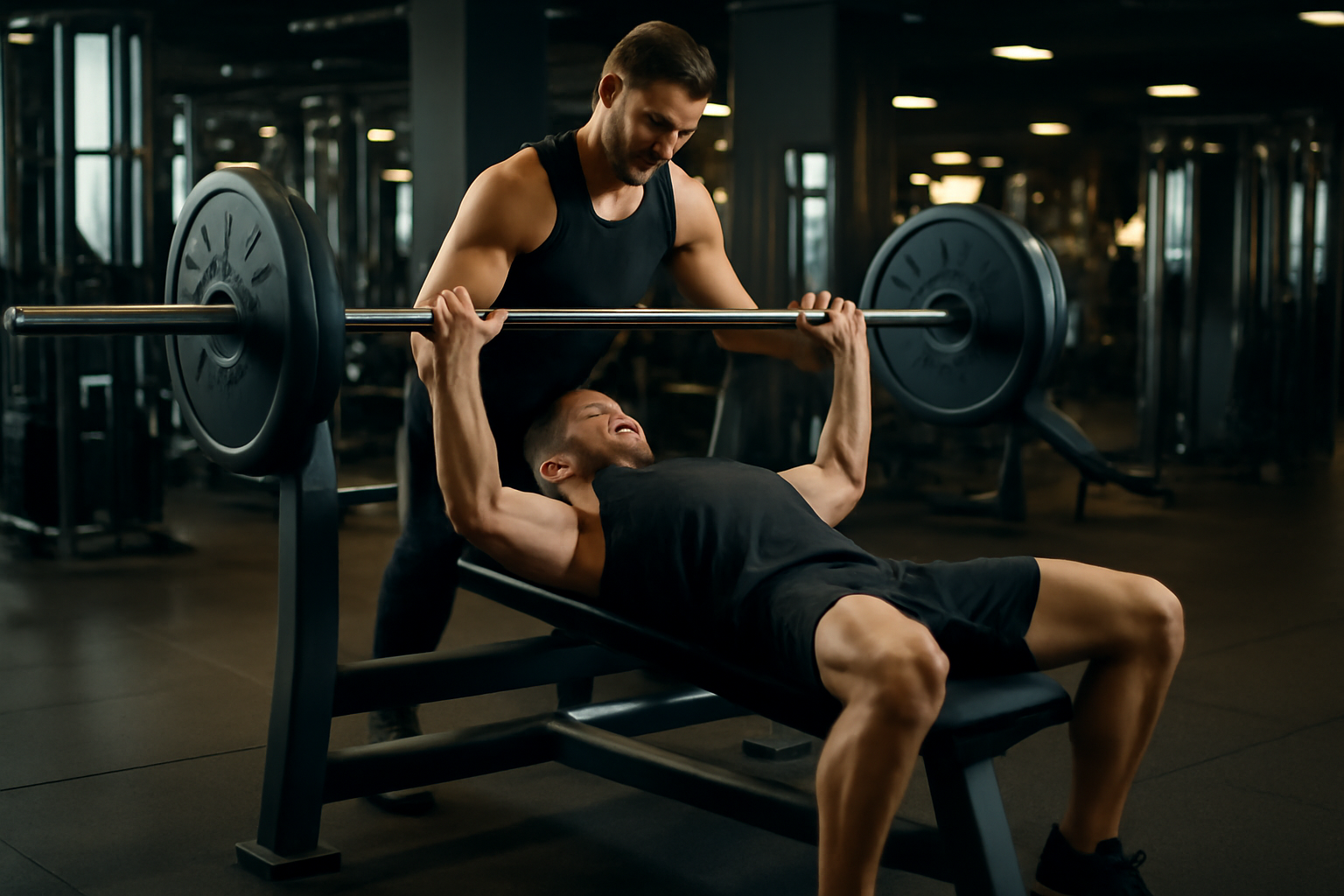
  • How to Bench Press With Proper Form: From Setup to Lockout

    How to Bench Press With Proper Form: From Setup to Lockout

    This post contains affiliate links. As an Amazon Associate, I earn from qualifying purchases at no extra cost to you.

    The bench press is the single most popular exercise in the gym — and also one of the most commonly butchered. Walk into any commercial gym on a Monday and you’ll see dozens of people loading up the bar, flaring their elbows, bouncing the bar off their chest, and wondering why their shoulders ache every Tuesday morning. Learning how to bench press correctly isn’t just about ego or aesthetics. It’s about building real, transferable upper body strength while keeping your shoulders, wrists, and elbows healthy for years to come. Whether you’re a complete beginner or someone who’s been training for years with sloppy habits, this guide will break down every element of bench press form from the ground up.

    Bench Press Setup: The Foundation of a Good Rep

    Most people treat the setup like an afterthought — they lie down, grab the bar, and go. That’s a mistake. The setup determines everything. A solid, repeatable setup is what separates lifters who progress consistently from those who stall and get hurt.

    Foot Position

    Plant your feet flat on the floor, roughly hip-width apart, and drive them into the ground throughout the entire lift. Your legs aren’t just sitting there — they’re actively contributing to stability and leg drive. Some lifters tuck their feet back toward their hips to increase arch and lat engagement, which is valid, but beginners should start with a flat-footed stance until the rest of the movement is dialed in.

    Back Arch

    Let’s clear something up: a natural arch in the lower back is not only acceptable during the bench press — it’s correct. A flat back with your spine pressed into the bench is actually a less stable, less powerful position that puts more stress on the anterior shoulder. You’re not trying to do a full powerlifting arch off the bench; you’re simply maintaining the natural curve of your lumbar spine. Your glutes and upper back should stay in contact with the bench at all times.

    Shoulder Blades: Retracted and Depressed

    Before you touch the bar, squeeze your shoulder blades together and pull them down toward your back pockets. This is what coaches call the “packed” or “pockets” position. Doing this shortens the range of motion slightly, creates a stable shelf for the bar path, and — most importantly — protects your rotator cuff by keeping the shoulder joint in a mechanically sound position. If your shoulder blades are winging off the bench during the press, you’ve lost your base.

    Grip Width

    A grip roughly 1.5 times your shoulder width works well for the majority of lifters. On a standard Olympic bar, most people end up with their index fingers just outside the smooth center knurling, or with their pinkies on the power rings. A grip that’s too wide increases shoulder stress; a grip that’s too narrow shifts load entirely to the triceps and changes the movement pattern entirely. Find your width, mark it mentally, and use it consistently every session.

    Unracking the Bar

    Lock your arms out completely before you lift the bar off the hooks. Then shift it horizontally so it’s positioned directly over your chest — not your face, not your belly. This is your starting position. Every rep begins and ends here.

    One thing I always tell my clients before they even touch the bar: protect your wrists. If you’re pressing any meaningful weight, your wrists will take a beating if they’re allowed to hyperextend backward under load. This is where a quality pair of wrist wraps makes a genuine difference. I personally recommend the Fitgriff® Wrist Wraps for Weightlifting (18″) for anyone who is serious about their bench press setup. The 18-inch length gives you enough coverage to keep the wrist locked in a neutral position without restricting hand movement, and the heavy-duty material holds up under repeated use. I keep a pair in my gym bag and hand them to clients the moment they start working with heavier loads.

    How to Bench Press: Step-by-Step

    Now that you’re set up correctly, here’s exactly how to bench press through the full range of motion.

    Step 1: Lower the Bar with Control

    Take a deep breath into your belly (not your chest), brace your core like you’re about to take a punch, and begin lowering the bar. The bar should travel in a very slight diagonal arc — not perfectly straight down. Your elbows should track at roughly 45 to 75 degrees from your torso. The exact angle will depend on your anatomy, but the key rule is this: elbows should never flare out to 90 degrees. That position is a direct path to shoulder impingement. Think “tuck slightly” rather than “flare out.”

    Step 2: Touch the Chest

    Lower the bar to your nipple line — the lower portion of the chest, not the collarbone. The bar should make light contact with your chest on every rep. No bouncing. No half-reps. A brief, controlled pause at the bottom is one of the best ways to build honest strength and eliminate momentum from the equation.

    Step 3: Press Up and Back

    Drive the bar up and very slightly back toward the rack, returning it to the lockout position over your chest. Keep your shoulder blades packed throughout the press. At the top, arms are extended — not hyperextended — and the bar is back over your starting position, ready for the next rep.

    Step 4: Use Your Legs

    Leg drive isn’t just a powerlifting technique. Even as a recreational lifter, actively pressing your feet into the floor during the concentric phase creates full-body tension that translates into a stronger, more stable press. Think about pushing the floor away from you as you press the bar up. It takes practice, but once you feel it, you won’t press without it.

    If you’re someone who wants to work on specific portions of the lift — say, the lockout or the bottom range — press blocks are an incredibly underrated tool. Most of my clients who plateau mid-lift get a lot of value from adjustable board work. The Bench Press Block Press Boards (Adjustable 2-5 Board) let you limit the range of motion in a controlled way, helping you overload specific sticking points without compromising form. The adjustable 2-to-5 board design means you get multiple training variations out of a single piece of equipment — that’s smart value for a home gym setup.

    Common Bench Press Mistakes That Cause Injury

    Understanding proper bench press form also means understanding what breaks it. These are the five mistakes I see most often — and the ones most likely to put you on the injured list.

    • Flared elbows at 90 degrees: This is the number one cause of bench-related shoulder injuries. When your elbows are perpendicular to your torso, the shoulder joint is in an impingement-prone position under heavy load. Tuck your elbows to a 45–75 degree angle and your shoulders will thank you.
    • Pressing with a completely flat back: As I mentioned in the setup section, removing the natural arch from your lower back actually increases anterior shoulder stress and reduces your ability to generate force. Maintain your natural lumbar curve.
    • Bouncing the bar off your chest: This turns a strength exercise into a momentum exercise. It also risks serious rib and sternum injury under heavy load. Lower under control, pause, and press.
    • Uneven grip or lopsided pressing: If one hand drifts wider than the other, your bar path will rotate and one shoulder will take disproportionate load. Use the knurling marks on the bar as a reference point every single set.
    • No spotter or safety pins: Training to failure alone on a flat bench is genuinely dangerous. Always use a spotter, or set your safeties at chest height if you’re in a power rack. No lift is worth a dropped bar.

    For lifters who are also incorporating barbell work on bench day — hip thrusts, squats, or lunges as accessory movements — I want to mention one piece of kit that doesn’t get nearly enough credit. The POWER GUIDANCE Square Hip Thrust Pad Barbell Squat Pad is something I recommend to almost everyone doing barbell hip thrusts or heavy squats on the same training day. The square design keeps it from rolling off the bar mid-set, and the dense foam padding distributes barbell pressure evenly so you’re not fighting discomfort during an already demanding movement. It fits both standard and Olympic bars, which makes it a practical addition to any gym setup.

    How to Increase Your Bench Press

    Once your bench press form is solid, the next question is always: how do I add weight? Here’s what actually works.

    Progressive Overload

    If you’re a beginner or early intermediate, you should be adding 2.5 to 5 pounds to the bar every week or every other week. This is the most evidence-backed principle in strength training. Don’t add weight until you can complete all prescribed reps with clean form — but once you can, add the weight. Small plates (1.25 lb) are your best friend here.

    Strengthen Your Triceps

    The triceps are the primary mover in the top half of the bench press. If your lockout is weak, your triceps are the bottleneck. Close-grip bench press, weighted dips, and skull crushers are your best accessories for building the tricep strength that carries over directly to your competition-style bench.

    Attack Your Weak Points

    Pause reps build bottom-end strength and reinforce proper bench press form by eliminating the stretch reflex. Pin press from the bottom of the rack builds raw starting strength. Board press — pressing to a board or block on your chest — isolates the mid-to-top range. Figure out where you fail and train that range directly.

    On the topic of wrist support during heavy accessory work and max-effort pressing, I also keep a pair of Gymreapers Weightlifting Wrist Wraps (Competition Grade, 18″) on hand for my heavier sessions. These are competition-grade wraps that meet the quality standards of serious powerlifters, and the heavy-duty thumb loop makes them easy to position quickly between sets without losing tension. If you’re pushing into heavier weight territory and want a step up in wrist support, these are the ones I reach for personally.

    Final Thoughts on How to Bench Press Correctly

    Learning how to bench press with proper technique is a skill, and like any skill, it takes deliberate repetition before it becomes automatic. Start lighter than you think you need to, nail the setup every single rep, and build the habit of good form before you start chasing numbers. The lifters who bench press for decades without injury aren’t the ones who skipped the fundamentals — they’re the ones who committed to them early. Do the same, and the numbers will follow.

  • How to Deadlift With Proper Form: The Complete Technique Guide

    How to Deadlift With Proper Form: The Complete Technique Guide

    This post contains affiliate links. As an Amazon Associate, I earn from qualifying purchases at no extra cost to you.

    If I could only teach one exercise for the rest of my coaching career, it would be the deadlift — no contest. No other movement builds raw strength through the posterior chain, improves posture, and transfers directly to real-world function quite like this one. Knowing how to deadlift properly is one of the most valuable physical skills you can develop. But here’s the catch: the deadlift is also one of the most frequently butchered exercises in any gym. Poor deadlift form doesn’t just limit your progress — it puts serious stress on your lumbar spine, knees, and hips in ways that can sideline you for months. This guide walks you through every detail of setup, execution, and common mistakes so you can pull heavy and pull safely for years to come.

    Deadlift Setup: Getting Into Position

    The setup is where most lifters lose the rep before it even begins. Get this right and the lift almost takes care of itself.

    Foot Position

    Stand with your feet roughly hip-width apart — that’s narrower than most people think. Your mid-foot should be directly under the bar, which means the bar is sitting about an inch from your shins when you look down. Do not walk up and press your shins into the bar before you’ve hinged. That error forces the bar forward before the lift even starts.

    Grip

    Reach down and grip the bar just outside your knees. A double overhand grip is my default recommendation for anyone under 80–85% of their max — it builds balanced grip strength. For heavier sets, a mixed grip (one hand over, one under) adds security. Hook grip is another option for advanced lifters willing to tolerate some thumb discomfort.

    Hip Hinge — Not a Squat

    This is the single most misunderstood element of deadlift form. To get into position, push your hips back — don’t sit down. Your hips should be higher than your knees, and your shoulders slightly in front of the bar. If your hips drop too low, you’ve turned the movement into a squat, which changes the mechanics entirely and shifts the bar away from your center of mass.

    Brace and Engage

    Before you pull, take a deep diaphragmatic breath and brace your core as if you’re about to take a punch. Engage your lats by thinking “protect your armpits” or “bend the bar around your legs.” This lat engagement is critical — it keeps the bar tight to your body and prevents rounding. Your spine should be neutral, not excessively arched or rounded.

    One thing that makes an enormous difference in your setup is your footwear. Thick, cushioned running shoes create an unstable base and actually increase the distance the bar has to travel. I recommend training in flat, minimal shoes whenever possible. The MANUEKLEAR Deadlift Shoes are specifically designed for exactly this purpose. They feature a barefoot-style, zero-drop sole that puts you directly in contact with the floor �� improving your proprioception, stability, and force transfer through the lift. Most of my in-person clients have made the switch after struggling with balance in their old runners, and the difference in their setup position is immediately noticeable. The forest green colorway also happens to look sharp, which is a bonus.

    If you prefer a slip-on option that’s just as effective, the relxfeet Men’s Minimalist Barefoot Shoes are another solid pick I keep recommending. They have a wide toe box that lets your foot spread naturally under load — important for maintaining a strong, stable base — along with a zero-drop sole and lightweight construction. This is what I keep in my gym bag on travel days when I’m training in unfamiliar gyms. They pack flat, they’re versatile enough for warming up and conditioning work, and they perform exactly as a lifting shoe should during heavy pulls.

    How to Deadlift: Step-by-Step Execution

    Now that you’re set up, here’s how to deadlift through the full range of motion with control and intention.

    The Pull

    Think “push the floor away” rather than “pull the bar up.” This mental cue activates your leg drive and keeps your hips from shooting up too fast. Before the bar leaves the ground, pull the slack out of the bar first — you’ll hear a subtle clunk as the plates settle and tension builds in the bar. Then initiate the drive. Rushing this step and jerking the bar creates a shock load on your spine that serves no one.

    Bar Path and Hip/Shoulder Rise

    The bar should stay in contact with your legs the entire way up. This is non-negotiable. The moment the bar drifts away from your body, your leverage gets worse and your lower back takes on disproportionate load. Your hips and shoulders should rise at exactly the same rate — the angle of your torso stays constant until the bar passes the knee. If your hips rise faster than your shoulders, you’ve essentially turned the deadlift into a stiff-leg RDL mid-rep, which is a recipe for strain.

    Lockout and Lowering

    At the top, stand tall and squeeze your glutes hard. Do not hyperextend your lower back in an attempt to “finish” the rep — that’s unnecessary spinal loading that adds zero strength benefit. Simply stand upright, hips through, glutes contracted. To lower the bar, reverse the movement: push your hips back first, keeping the bar close to your legs, then bend your knees once the bar passes them.

    For lifters working at heavier loads, a quality lifting belt is a legitimate performance and safety tool — not a crutch. A belt gives your core something to brace against, increasing intra-abdominal pressure and protecting your spine at near-maximal efforts. The Dark Iron Fitness Genuine Leather Weightlifting Belt is one I’ve used personally and recommended to dozens of clients. It’s four inches wide, constructed from genuine leather with reinforced stitching, and uses a double prong buckle that locks in securely without the fuss of a lever. The leather stiffness gives you excellent feedback — you can really feel yourself bracing into the belt — which actually teaches better bracing mechanics over time.

    Common Deadlift Form Mistakes

    • Rounding the lower back: This is the number-one injury risk in the deadlift. It typically happens because the weight is too heavy, the lats aren’t engaged, or the lifter doesn’t brace before pulling. Fix it by lightening the load and focusing on a neutral spine before the bar moves.
    • Squatting the deadlift: When the hips drop too low, the bar is forced forward and your quads take over a movement that should be hip-dominant. Keep your hips higher than your knees in the setup — this is a hinge, not a squat.
    • Bar drifting forward: If the bar is swinging away from your body during the pull, you’re losing mechanical advantage. Engage your lats harder and think about keeping the bar “dragging” up your shins and thighs.
    • Jerking the bar off the floor: Slack must be removed from the bar before you drive. Explosively yanking at the bar creates a sudden, uneven load spike that stresses your spine and often breaks your position immediately.
    • Hyperextending at the top: Leaning back aggressively at lockout is not a sign of strength — it’s a sign of poor motor control. Stand tall, not backward. Glutes contracted, ribs down.

    If you’re training at higher intensities where a belt becomes appropriate, another excellent option worth considering is the RDX Weight Lifting Belt. What sets this one apart is the choice between 4-inch and 6-inch padded options in genuine cowhide leather, plus 10 adjustable holes that give you a very precise fit — something that matters more than most people realize when you’re bracing hard under a heavy bar. I’ve found the extra padding particularly useful for clients who are newer to belt training and find the hard edge of a standard powerlifting belt uncomfortable during the learning curve. It’s a well-built belt at a fair price point for serious recreational lifters.

    Conventional vs Sumo Deadlift: Which Is Right for You?

    The conventional deadlift — feet hip-width, hands outside the knees — is the standard starting point and works well for most body types. The sumo deadlift uses a much wider stance with the hands gripping inside the legs, which shortens the range of motion and shifts more demand onto the hips and adductors while reducing lower back stress.

    Lifters with longer torsos and shorter femurs often do well with conventional. Lifters with longer femurs or limited hip mobility frequently find sumo more comfortable and biomechanically advantageous. Neither is universally superior — both build serious strength when performed with proper deadlift form. My recommendation: learn conventional first to build foundational hip hinge mechanics, then experiment with sumo to see which feels stronger and more natural for your structure. Many competitive powerlifters have found their best numbers only after trying both over several training cycles.

    How Much Should You Deadlift? (Strength Standards)

    Knowing where you stand relative to general strength standards is useful for setting realistic goals and programming appropriately. These are rough guidelines based on bodyweight multipliers for the conventional deadlift:

    • Beginner (less than 1 year of training): 1x bodyweight
    • Novice (1–2 years): 1.5x bodyweight
    • Intermediate (2–4 years): 2x bodyweight
    • Advanced (4+ years): 2.5x bodyweight
    • Elite: 3x+ bodyweight

    These numbers should inform your training, not define your worth as a lifter. Body proportions, training history, age, and genetics all play a role. What matters most is consistent progress over time with sound mechanics. A 1.5x bodyweight deadlift with perfect form is worth far more than a 2x bodyweight pull that destroys your lower back every session.

    Final Thoughts

    Understanding how to deadlift with precision is a skill that pays dividends across every area of your training and daily life. The setup, the brace, the hip hinge, the bar path — every detail compounds into a lift that’s either building you up or gradually breaking you down. Invest the time to nail proper deadlift form before chasing numbers, choose your equipment wisely, and approach progressive overload with patience. The deadlift rewards those who respect it. Start light, move well, and build from there — your future self will thank you.

  • Gym Workout Plan for Beginners: Your First 12 Weeks

    Gym Workout Plan for Beginners: Your First 12 Weeks

    This post contains affiliate links. As an Amazon Associate, I earn from qualifying purchases at no extra cost to you.

    Walking into a gym for the first time can feel like showing up to a party where everyone else knows the dress code and you definitely don’t. The machines look complicated, the free weight area feels like it belongs to someone else, and you’re not quite sure where to start. Here’s the truth: every single person in that building had their first day. Every one of them stood exactly where you’re standing right now. The difference between people who stick with it and people who don’t usually comes down to one thing — having a plan. A solid gym workout plan for beginners removes the guesswork, gives you purpose the moment you walk through the door, and makes the whole experience about ten times less intimidating. That’s exactly what this guide is designed to give you.

    Before You Start: What Beginners Actually Need to Know

    Before we get into the workouts themselves, let’s clear up a few things that stop a lot of people from ever getting started in the first place.

    You do not need supplements, a perfect wardrobe, or some baseline level of fitness before you show up. The gym is not a reward for already being fit — it’s the tool you use to get there. A decent pair of trainers and whatever comfortable clothes you already own are genuinely all you need on day one. Nobody is checking your pre-workout brand or your leggings label.

    More importantly, your only job in the early weeks is to learn movements — not to lift heavy. Every exercise in this guide has a learning curve, and the smartest thing you can do is respect that curve. Lighter weight with good form will build more strength, prevent injury, and produce better long-term results than loading up a bar before your body knows what it’s doing. Progress in this context means moving better, not moving more weight. That shift in mindset is genuinely everything.

    And finally — nobody is watching you. I know it feels that way. But the reality of any gym is that the other members are focused almost entirely on themselves. They’re checking their own form in the mirror, thinking about their next set, or zoning out to their playlist. You have far more freedom to learn, make mistakes, and figure things out than you probably realize.

    One practical thing that genuinely helps in those early sessions: protecting your hands. When you’re learning to grip barbells, dumbbells, and cables, the skin on your palms hasn’t toughened up yet, and blisters are a real nuisance that can interrupt your training. Most of my clients start out using the HOZMOZ Ventilated Weight Lifting Gloves with Full Palm Protection & Grip & Shock Absorption. What I like about these specifically is the thick palm padding combined with the ventilated design — your hands stay comfortable and protected without overheating mid-set. They’re suitable for both men and women, and they make a real difference when you’re building up grip tolerance in those first few weeks of pulling and pressing movements.

    The 12-Week Beginner Gym Workout Plan

    This beginner workout plan is structured in three four-week phases, each one building logically on the last. You’ll start with full-body training three days a week, and by week nine you’ll be ready for a more structured upper/lower split. Rest at least one day between each training day — your body gets stronger during recovery, not during the workout itself.

    Weeks 1–4: Learn the Movements (Full Body, 3x/Week)

    Your entire focus in month one is technique. Choose weights that feel almost too easy. You should be able to complete every rep with full control and finish every set feeling like you had two or three more in you. This is deliberate — it protects you from injury and builds the neuromuscular patterns that make heavier lifting possible later.

    • Goblet Squat — 3 sets of 10 reps
    • Romanian Deadlift (dumbbells) — 3 sets of 10 reps
    • Dumbbell Bench Press — 3 sets of 10 reps
    • Cable or Dumbbell Row — 3 sets of 10 reps
    • Dumbbell Overhead Press — 3 sets of 10 reps
    • Plank — 3 sets of 20–30 seconds

    Rest 60–90 seconds between sets. Three sessions per week with a rest day in between is the ideal structure — Monday, Wednesday, Friday works well for most people.

    Weeks 5–8: Build on the Foundation (Full Body, 3x/Week)

    By now the movements should feel familiar. It’s time to add a little weight and introduce one or two new exercises. Aim to increase the load slightly every session or every other session — even small jumps matter. This phase is where you’ll start to notice real changes in how you feel and how the exercises feel.

    • Barbell or Goblet Squat — 3 sets of 8 reps
    • Romanian Deadlift (barbell or dumbbells) — 3 sets of 8 reps
    • Dumbbell or Barbell Bench Press — 3 sets of 8 reps
    • Cable Row — 3 sets of 8 reps
    • Overhead Press — 3 sets of 8 reps
    • Lat Pulldown — 3 sets of 10 reps
    • Dumbbell Lateral Raise — 3 sets of 12 reps
    • Plank or Dead Bug — 3 sets of 30 seconds

    Weeks 9–12: Upper/Lower Split (4x/Week)

    This phase adds a fourth training day and separates your sessions into upper body and lower body focus days. More volume, more frequency for each muscle group, and a structure that serious lifters use at every level. You’re ready for it by this point.

    Upper Body Day (2x/week — e.g., Monday & Thursday):

    • Barbell Bench Press — 4 sets of 6–8 reps
    • Cable Row — 4 sets of 8 reps
    • Overhead Press — 3 sets of 8 reps
    • Lat Pulldown — 3 sets of 10 reps
    • Dumbbell Lateral Raise — 3 sets of 12 reps
    • Tricep Pushdown — 3 sets of 12 reps
    • Dumbbell Curl — 3 sets of 12 reps

    Lower Body Day (2x/week — e.g., Tuesday & Friday):

    • Barbell Squat — 4 sets of 6–8 reps
    • Romanian Deadlift — 4 sets of 8 reps
    • Leg Press — 3 sets of 10 reps
    • Leg Curl — 3 sets of 12 reps
    • Calf Raise — 3 sets of 15 reps
    • Ab Wheel or Plank Variation — 3 sets

    Tracking your workouts through all three phases is one of the most underrated habits a beginner can build. Writing down your sets, reps, and weights means you always know whether you’re progressing, and it keeps you accountable to the plan. I recommend the Fitness Workout Journal for Women & Men — A5 Workout Log Book Planner for Tracking, Progress, and Achieving Your Wellness Goals. It’s compact enough to throw in a gym bag and specifically laid out for logging training sessions rather than being a generic notebook. Having a dedicated space to record your progress makes the habit stick in a way that a phone note or random scrap of paper just doesn’t.

    The 5 Exercises Every Beginner Should Master First

    These are the foundation of this entire gym workout plan for beginners — and honestly, of most effective strength programs at any level. Master these and you have a toolkit that will serve you for years.

    1. Squat

    Start with the goblet squat — hold a dumbbell or kettlebell at your chest and focus on sitting your hips back and down while keeping your chest tall. Once this feels natural, transition to a barbell back squat. The goblet variation teaches you the movement pattern with far less risk, and it’s genuinely where I start every new client regardless of their age or background.

    2. Deadlift

    Begin with the Romanian deadlift rather than a conventional deadlift. You’ll hinge at the hips, keep a slight bend in the knees, and feel a strong stretch in your hamstrings as the weight lowers. It’s a safer starting point that builds the hip hinge pattern you need before loading up a conventional pull from the floor.

    3. Bench Press

    Dumbbell pressing is an excellent starting point because it requires each side of your body to work independently, which corrects imbalances early. Once you’re comfortable, move to the barbell bench press. Focus on keeping your shoulder blades retracted and your feet flat on the floor throughout the movement.

    As you progress to heavier pressing movements in weeks five through twelve, grip comfort becomes increasingly important. This is where a well-made glove earns its place. The HOZMOZ Ventilated Weight Lifting Gloves with Full Palm Protection, Grip & Shock Absorption are what I keep in my own gym bag for heavier pressing and pulling sessions. The shock absorption padding is particularly noticeable on barbell work — it takes the edge off the pressure on your palms without reducing your sense of grip control, which matters a lot when the weights start to climb.

    4. Row

    Rows train the muscles of your back and are the essential counterpart to pressing exercises. The cable row and dumbbell single-arm row are both great beginner options. Focus on pulling your elbow back and squeezing your shoulder blade at the end of each rep rather than just yanking the weight with your arm.

    5. Overhead Press

    Pressing a weight directly overhead trains your shoulders, upper traps, and triceps while also demanding core stability. Start with dumbbells seated or standing, and ensure you’re pressing the weight in a straight vertical path. Keep your core braced and avoid flaring your ribs upward as you press.

    Alongside your gloves, keeping a structured log of your progress on these five movements is one of the most motivating things you can do. The Nextnoid Hardcover Fitness Journal Workout Planner for Men & Women — A5 Sturdy Workout Log Book to Track Gym & Home Workouts is a great option if you want something built to last. The hardcover construction means it holds up in a gym bag over months of use, which a standard notebook simply doesn’t. Being able to flip back to week one and see how far your lifts have come is genuinely one of the most satisfying experiences in training — and this journal is built for exactly that purpose.

    Common Beginner Mistakes to Avoid

    Even with the best beginner workout plan, a few common habits can quietly undermine your progress. Here’s what to watch for.

    Program Hopping

    This is the single most common thing I see derail beginners. You try a plan for two weeks, see someone else’s routine on social media, and switch. Then you switch again. Twelve weeks later you’ve done fragments of six different programs and made progress in none of them. Commit to one gym workout for beginners and follow it for the full twelve weeks. Results take time and consistency — not novelty.

    Too Much Volume Too Soon

    Soreness is not a reliable measure of a good workout. Doing twice as many sets as prescribed won’t get you results twice as fast — it’ll just leave you too sore to train the next session. The volume in this plan is calibrated to be productive without being excessive. Trust the structure.

    Skipping Warm-Ups

    Five to ten minutes of light cardio followed by a couple of warm-up sets at a lower weight before your working sets is non-negotiable. Cold muscles and joints are significantly more vulnerable to injury, and injury is the fastest way to lose months of progress. Warm-ups also improve performance — you’ll lift better with prepared muscles than without.

    Comparing Yourself to Others

    The person squatting twice your weight has been training for years. The person with the impressive physique didn’t build it in twelve weeks. Your only relevant comparison is the version of yourself from last month. This gym workout for beginners is designed to make you better than you were — and that’s the only benchmark that matters.

    Consistency Beats Perfection Every Time

    You’re not going to nail every session. Some days the weights will feel heavier than they should. Some weeks life will get in the way. That’s completely normal and it doesn’t mean the plan isn’t working. What matters is that you keep showing up. Three imperfect sessions a week, week after week, will produce dramatically better results than occasionally perfect sessions with long gaps in between. Follow this gym workout plan for beginners, track your progress, protect your hands, and give yourself the full twelve weeks. You will be genuinely surprised by what you’re capable of — and so will everyone who said the gym wasn’t for them.

  • Best Exercises for Weight Loss: A Trainer’s Honest Ranking

    Best Exercises for Weight Loss: A Trainer’s Honest Ranking

    This post contains affiliate links. As an Amazon Associate, I earn from qualifying purchases at no extra cost to you.

    Let me be direct with you upfront: if you’re exercising your way to weight loss while ignoring your diet, you’re fighting an uphill battle with both hands tied behind your back. Research consistently shows that nutrition accounts for roughly 80% of your weight loss results. You cannot out-train a bad diet. I’ve seen people spend years grinding through daily cardio sessions, stepping on the scale, and wondering why nothing is changing — and almost every time, the problem is what’s happening in the kitchen, not the gym.

    That said, the RIGHT exercises for weight loss genuinely accelerate your results, preserve lean muscle, and reshape your body in ways that dieting alone never will. Choosing the wrong exercises, on the other hand, can actually slow your progress, increase muscle loss, and leave you smaller but still soft. This guide breaks down exactly which weight loss exercises work, which ones are a waste of your time, and how to structure your week for maximum fat loss.

    Why Strength Training Beats Cardio for Long-Term Weight Loss

    The fitness industry has spent decades telling people to hop on a treadmill to lose fat. That advice is outdated and incomplete. Cardio burns calories while you’re doing it — and then largely stops. Strength training does something fundamentally different: it builds and preserves metabolically active muscle tissue, which increases the number of calories your body burns around the clock, even while you’re sitting at your desk or sleeping.

    Skeletal muscle is one of the most metabolically expensive tissues in your body. A pound of muscle burns roughly 6–10 calories per day at rest, compared to roughly 2 calories per day for a pound of fat. That difference compounds significantly as you add lean mass over months and years. This is why two people can weigh exactly the same but have vastly different resting metabolic rates — muscle mass is the key variable.

    There’s also the afterburn effect to consider, formally known as Excess Post-exercise Oxygen Consumption (EPOC). After an intense resistance training session, your body continues burning elevated calories for 24 to 48 hours as it repairs muscle fibers, replenishes glycogen stores, and restores hormonal balance. Multiple studies, including research published in the European Journal of Applied Physiology, have confirmed that resistance training produces a significantly greater EPOC response than steady-state cardio. A 45-minute lifting session doesn’t just burn calories for 45 minutes — it keeps your metabolism elevated well into the next day.

    The Best Exercises for Weight Loss (Ranked)

    Not all exercises are created equal when fat loss is the goal. Here’s how I rank them based on calorie expenditure, muscle recruitment, hormonal response, and metabolic impact.

    Tier 1: Compound Barbell Lifts

    These are the best exercises for weight loss, full stop. Squats, deadlifts, bench press, and barbell rows recruit the largest muscle groups in your body simultaneously, triggering a significant hormonal response — particularly testosterone and growth hormone — that directly supports fat burning and muscle retention. A heavy set of deadlifts taxes your quads, hamstrings, glutes, back, core, and grip all at once. No isolation exercise comes close to that level of systemic demand. If you’re not building your program around these movements, you’re leaving results on the table.

    Tier 2: HIIT — Sprints, Battle Ropes, and Kettlebell Swings

    High-Intensity Interval Training earns its reputation as one of the most effective exercises for weight loss, particularly for those who want cardiovascular conditioning alongside fat burning. Sprints, battle ropes, and kettlebell swings done in interval format produce a substantial EPOC effect similar to resistance training, and they’re brutally efficient — 20 minutes of real HIIT delivers more metabolic impact than 45 minutes of moderate-paced jogging. Jump rope training absolutely belongs in this tier as well. It’s high-intensity, full-body, and burns a serious number of calories in a short window.

    For jump rope training, I keep the Redify Weighted Jump Rope for Workout Fitness (1LB) in my gym bag. The added weight — thanks to the 9MM fabric cotton and solid PVC rope combination — increases upper body and core activation compared to a standard rope, which means more calories burned per session. The aluminum handle and tangle-free ball bearing system make it genuinely enjoyable to use, and the adjustable length means it fits virtually anyone. If you’re doing HIIT circuits, this rope adds real resistance to what most people treat as a warm-up tool.

    If you prefer a lighter, faster option for pure speed work, most of my clients train with the Jump Rope with Tangle-Free Rapid Speed Cable and Ball Bearings. The steel cable and precision ball bearings make double-unders and rapid skipping intervals significantly easier to sustain, and the foam handles reduce grip fatigue during longer HIIT sets. It’s adjustable for men, women, and kids, so it works across the board. Speed-focused jump rope intervals are among the most underrated weight loss exercises in any training program.

    Tier 3: Low-Intensity Steady State (LISS)

    Walking, cycling, and swimming at a comfortable pace aren’t glamorous, but they’re genuinely useful for weight loss when used correctly. LISS primarily burns fat as fuel (rather than glycogen), is easy to recover from, and doesn’t interfere with your strength training adaptations the way excessive high-intensity cardio can. I recommend daily walking as a non-negotiable habit — 7,000 to 10,000 steps per day adds meaningful calorie expenditure without stressing your body’s recovery capacity.

    Monitoring your heart rate during LISS work is more important than most people realize. Staying in the right intensity zone — roughly 60–70% of your maximum heart rate — ensures you’re burning fat efficiently without accidentally pushing into a zone that depletes glycogen and increases cortisol. I personally use the Polar H10 Heart Rate Monitor Chest Strap for this. It connects via both ANT+ and Bluetooth, it’s fully waterproof (which matters if you’re swimming or sweating heavily), and it’s consistently rated as one of the most accurate consumer heart rate monitors available. Knowing your actual heart rate — not a wrist sensor estimate — takes the guesswork out of every cardio session.

    Tier 4: Isolation Exercises

    Bicep curls, tricep pushdowns, and leg extensions have their place in a well-rounded program, but they rank last among weight loss exercises in terms of calorie burn and metabolic impact. They recruit small, single muscle groups and produce minimal hormonal or metabolic response compared to compound movements. Use them as accessory work after your main lifts — don’t build your fat loss program around them.

    A Weekly Exercise Plan for Weight Loss

    Here’s the template I use with clients whose primary goal is fat loss while preserving or building muscle. It’s built around three strength days, two cardio days, and daily walking.

    • Monday: Full-body strength training — squats, deadlifts, bench press, barbell rows (45–60 minutes)
    • Tuesday: HIIT — 20-minute jump rope intervals or sprint session + 30-minute walk
    • Wednesday: Full-body strength training — Romanian deadlifts, overhead press, pull-ups, dumbbell rows (45–60 minutes)
    • Thursday: LISS cardio — 40-minute walk, bike ride, or easy swim
    • Friday: Full-body strength training — front squats, trap bar deadlifts, dips, cable rows (45–60 minutes)
    • Saturday: Active recovery — long walk, light yoga, or recreational activity
    • Sunday: Rest + daily step goal (7,000–10,000 steps minimum)

    Tracking your heart rate across all of these sessions — strength, HIIT, and LISS alike — gives you data that makes your training dramatically more effective. For serious tracking, I recommend the Garmin HRM 600 Premium Heart Rate Monitor. What sets it apart from basic chest straps is its built-in running dynamics metrics, standalone activity recording (no phone or watch required), and highly accurate HRV data. If you want to understand how hard you’re actually working and how well you’re recovering, this is the tool for it. Knowing whether you’re overtraining or undertraining each week is one of the most undervalued variables in a fat loss program.

    Exercises to Avoid If Weight Loss Is Your Goal

    Knowing what not to do is just as important as knowing the best exercises for weight loss. These common approaches consistently produce disappointing results.

    • Hours of daily steady-state cardio: Running for 90 minutes every day is one of the most counterproductive things you can do for fat loss long-term. Your body adapts rapidly by becoming more fuel-efficient — burning fewer calories for the same distance over time. Chronic excessive cardio also elevates cortisol, which actively promotes muscle breakdown and fat storage, particularly around the midsection.
    • Exclusively doing ab exercises: There is no such thing as spot reduction. A thousand crunches will not burn the fat covering your abs. Ab exercises strengthen your core, which is valuable, but they contribute almost nothing to overall calorie burn or fat loss. Your abs are revealed in the kitchen, not on the floor of your gym.
    • Machine-only routines: Resistance machines are not inherently bad, but they require significantly less stabilizer muscle activation than free weights, which means less total muscle recruited and fewer calories burned per exercise. A barbell squat burns substantially more calories than a leg press. If machines are your entire program, you’re missing a large portion of the metabolic benefit that makes strength training so effective for fat loss.

    Final Thoughts

    The right exercises for weight loss work by building metabolically active muscle, creating a sustained afterburn effect, and keeping your calorie expenditure elevated across the entire week — not just during your workout. Lead with heavy compound lifts, use HIIT strategically for conditioning, walk every single day, and stop wasting hours on chronic cardio that your body will simply adapt around. Combine this approach with a solid nutrition strategy and you will lose fat faster, look better, and actually keep the results long-term. That’s the evidence-based approach — and it’s the only one worth following.

  • Full Body Workout Routine: The Most Efficient Way to Build Muscle

    Full Body Workout Routine: The Most Efficient Way to Build Muscle

    This post contains affiliate links. As an Amazon Associate, I earn from qualifying purchases at no extra cost to you.

    If you’re still running a chest-on-Monday, back-on-Tuesday, legs-on-Friday bro split, I want you to stop and ask yourself one question: how’s that actually working for you? For most people — busy professionals, parents, anyone juggling a real life outside the gym — the answer is “not as well as I’d like.” A well-structured full body workout performed three days per week is, for the vast majority of lifters, a more effective and more efficient path to building muscle and strength. I’ve trained hundreds of clients, and the shift to full body training is one of the highest-leverage changes I recommend. This guide covers the science, gives you a complete full body workout routine, and shows you how to progress so you’re actually getting stronger month after month.

    Why Full Body Workouts Build More Muscle

    The core argument against bro splits is rooted in training frequency. When you train chest once per week on a traditional split, you stimulate muscle protein synthesis once — and that elevated synthesis window largely closes within 48–72 hours. The rest of the week, that muscle group is sitting idle. A full body workout approach changes that equation completely by hitting each muscle group three times per week.

    A 2016 meta-analysis published in the Journal of Strength and Conditioning Research by Schoenfeld, Ogborn, and Krieger found that training a muscle group twice or three times per week produced significantly greater hypertrophy compared to once per week, even when total volume was equated. In other words, frequency itself is a driver of muscle growth, not just how much total work you do. Spreading your sets across three sessions rather than cramming them into one creates more frequent protein synthesis spikes, and more spikes mean more cumulative growth over time.

    There’s also a practical efficiency argument. If you’re working out three days per week and hitting every muscle group each session, you never have a “wasted” workout. Miss your leg day on a traditional split? You’ve gone two weeks without training legs. Miss a Wednesday on a full body plan? You’re back at it Friday. The redundancy built into a full body workout schedule acts as a buffer against real-life disruption.

    The Full Body Workout Routine (3 Days Per Week)

    This full body workout routine uses an A/B alternating template across Monday, Wednesday, and Friday. Week one looks like A/B/A, week two looks like B/A/B, and so on. This gives you slightly more frequency on alternating lifts without overloading any single movement pattern. Both days train the full body — they just use different exercises to provide variety, manage fatigue, and develop more complete musculature.

    Day A

    • Barbell Back Squat — 4 sets x 6 reps
    • Barbell Bench Press — 3 sets x 8 reps
    • Barbell Row — 3 sets x 8 reps
    • Overhead Press — 3 sets x 10 reps
    • Bicep Curls — 2 sets x 12 reps

    Day B

    • Deadlift — 3 sets x 5 reps
    • Incline Dumbbell Press — 3 sets x 10 reps
    • Pull-ups — 3 sets x AMRAP (as many reps as possible)
    • Leg Press — 3 sets x 12 reps
    • Tricep Pushdowns — 2 sets x 12 reps

    To execute this full body workout plan properly at home, you need a rack that can handle heavy squats, bench press, overhead press, and pull-ups without compromise. The ULTRA FUEGO Power Cage Multi-Functional Power Rack with J-Hooks, Dip Handles, Landmine Attachment and Optional Cable Pulley System covers every exercise in this program and then some. What I appreciate most about this rack is the landmine attachment — it opens up rotational pressing and rowing variations that a basic squat stand simply can’t offer. The dip handles mean your tricep work doesn’t require a separate station, and the optional cable pulley system brings the pushdowns and cable rows from Day B into your home gym without needing a commercial cable machine. If you’re serious about running this program long-term, this is the rack I’d put in my own garage.

    For lifters who want more cable variety — particularly for the pull-down and crossover movements that complement a full body workout — the GOIMU DP01 Power Cage 2000LBS Squat Rack with Cable Crossover and Dual Independent Pulley System is a serious upgrade worth considering. The dual independent pulley system is the standout feature here — it lets you perform cable crossovers, independent cable rows, and unilateral cable work that a single-stack system simply can’t replicate. A 2000 lb weight capacity means you’ll never outgrow it no matter how strong you get. Most of my more advanced clients who train at home end up in a rack like this eventually, and the GOIMU DP01 punches well above its price point for what it delivers.

    Of course, neither rack does much without quality plates and a solid barbell. For beginners and intermediate lifters building their home gym around this program, the CAP Barbell 160 lb Economy Olympic Weight Set with 7ft Chrome Barbell and Black Bumper Plates with Color Logo is an excellent starting point. The bumper plates are the key detail here — they protect your floors on deadlifts and allow you to drop the bar safely if you miss a lift, which matters when you’re training alone at home. A 160 lb total capacity is plenty of iron to run Day A and Day B as a beginner, covering squats, presses, rows, and deadlifts through the early months of linear progression.

    How to Progress on a Full Body Program

    The program above is only as good as the progression model driving it. Exercises don’t build muscle — progressive overload does. Here’s how I structure progression depending on training age.

    Beginners: Linear Progression

    If you’ve been lifting consistently for less than a year, you’re in the most privileged position in all of strength training: you can add weight to the bar every single session. Add 5 lbs per session on upper body lifts and 10 lbs per session on lower body lifts. It sounds aggressive, but your nervous system adapts faster than your muscles at this stage, and failing to push load progression is the single biggest mistake beginners make. Track every session in a notebook or app, and do not skip planned weight increases unless you genuinely failed to complete your reps.

    Intermediates: Double Progression

    Once linear progression stalls — you can’t add weight every session anymore — shift to double progression. This means you work within a rep range rather than a fixed rep target. Take bench press at 3×8 as an example: start at the bottom of the range (say, 3×6) and work up over multiple sessions until you hit 3×8 with clean form. Only then do you add 5 lbs and drop back to 3×6. This slower ramp allows you to accumulate more volume before jumping weight, which is appropriate once you’re no longer a rapid responder to every new stimulus.

    Deloads Every 4–6 Weeks

    Every 4–6 weeks, take a deload week. Drop your working weights by 40–50% and reduce volume by half. This isn’t optional softness — it’s a deliberate tool for managing accumulated fatigue and allowing connective tissue to recover. Research consistently shows that supercompensation — the performance rebound after a period of reduced training — produces strength and size gains that wouldn’t occur without the recovery phase. Come back after your deload and you’ll almost always hit new personal records.

    As your strength grows and you’re regularly deadlifting and squatting at heavier loads, your starting weight set may no longer be sufficient. The CAP Barbell 260 LB Economy Olympic Bumper Plate Set with Color Logo in Black gives you the iron to train at intermediate and advanced loads without compromising on plate quality. The bumper construction remains intact for deadlift drops, and 260 lbs of total capacity means you’re equipped for heavy squats, deadlifts, and loaded presses well into your intermediate training career. This is the set I’d recommend upgrading to once you’ve outgrown a starter kit — it’s straightforward, durable, and gives you room to grow.

    Full Body Workout at Home

    No barbell? No problem. A full body workout at home is completely viable with bodyweight and a pair of adjustable dumbbells. Here’s how to adapt the same structure:

    Home Day A

    • Goblet Squat or Bulgarian Split Squat — 4 sets x 8–10 reps
    • Dumbbell Floor Press or Push-ups (weighted vest) — 3 sets x 10–12 reps
    • Dumbbell Row — 3 sets x 10 reps each side
    • Dumbbell Overhead Press — 3 sets x 10–12 reps
    • Dumbbell Curl — 2 sets x 12–15 reps

    Home Day B

    • Romanian Deadlift (dumbbells) — 3 sets x 10–12 reps
    • Incline Push-ups or Dumbbell Incline Press — 3 sets x 10–12 reps
    • Pull-ups or Inverted Rows — 3 sets x AMRAP
    • Dumbbell Reverse Lunge — 3 sets x 10 reps each leg
    • Overhead Tricep Extension (dumbbell) — 2 sets x 12–15 reps

    The same progression principles apply here. Add reps until you hit the top of your rep range, then increase dumbbell weight. The home version is genuinely effective — I’ve seen clients build significant muscle training exclusively this way for months before transitioning to a barbell setup.

    Final Thoughts

    A well-programmed full body workout three days per week is not a compromise — it’s a smart, evidence-based training strategy that outperforms low-frequency splits for the majority of natural lifters. You’re hitting every muscle group more often, stimulating protein synthesis more frequently, and building in structural redundancy that keeps progress moving even when life gets in the way. Whether you’re training in a commercial gym, building a home setup around one of the power racks above, or working with nothing but dumbbells and your bodyweight, the framework in this guide will get you stronger. Run this full body workout routine, track your progress, add weight consistently, and deload when scheduled. That’s the whole system — and it works.

  • Strength Training After 50: How to Build Muscle Safely Without Wrecking Your Joints

    Strength Training After 50: How to Build Muscle Safely Without Wrecking Your Joints

    I started running sophomore year of college less for fitness and more because I needed something to clear my head during finals — and what I discovered about training along the way changed everything, including how I think about lifting weights now that I’m on the other side of 50. Back then, I assumed strength training was for younger bodies; now I hear that same hesitation from readers every week: “Won’t lifting weights wreck my knees, my back, my everything?” Here’s what all those years of figuring out my own body taught me: strength training after 50 isn’t just safe — it’s one of the smartest investments you can make in your energy, your health, and your long-term independence. The real danger was never picking up a weight in your 50s, 60s, or beyond — the real danger is convincing yourself you shouldn’t.

    This post contains affiliate links. As an Amazon Associate, I earn from qualifying purchases. This means if you click a link and make a purchase, I may earn a small commission at no extra cost to you. I only recommend products I genuinely think are worth your time and money.

    Why Strength Training After 50 Is Non-Negotiable

    Here’s a hard fact most people don’t want to hear: after age 30, you naturally start losing muscle mass at a rate of about 3–8% per decade. After 60, that rate accelerates. This process is called sarcopenia — basically, your muscles shrinking from disuse and hormonal shifts. Less muscle means a slower metabolism, weaker bones, worse balance, and a higher risk of injury from everyday activities like carrying groceries or climbing stairs.

    The good news? Research consistently shows that resistance training directly reverses sarcopenia. A landmark study published in the Journal of Applied Physiology found that older adults who trained with weights two to three times per week significantly increased muscle mass, strength, and functional movement — even participants in their 70s and 80s. Your muscles don’t know how old you are. They respond to the right stimulus no matter what your birthday says.

    Strength Training After 50 Safe: The Rules That Actually Matter

    Training smart after 50 isn’t about doing less — it’s about doing it right. Here are the principles I coach every client on when they walk through the door past their 50th birthday.

    1. Start With Movement Quality, Not Weight

    Before you load a barbell, you need to earn the right to lift it. Focus first on your range of motion and form. A squat with perfect depth and a neutral spine using just your bodyweight is worth ten times more than a heavy squat that rounds your lower back and grinds your knees. Spend your first few weeks dialing in your movement patterns. Trust me — your joints will thank you later.

    2. Embrace Resistance Bands as a Foundation Tool

    Resistance bands are genuinely underrated for older lifters. Unlike free weights, bands provide accommodating resistance — meaning the tension increases as you extend through a movement, which actually reduces stress on joints at their most vulnerable angles. Bands are also incredibly versatile and low-impact, making them perfect for building a foundation before progressing to heavier equipment.

    3. Prioritize Recovery More Than You Think You Need To

    After 50, your recovery window is longer. Full stop. Your body needs more time to repair muscle tissue between sessions. Training three days per week with at least one rest day between sessions is a sustainable, effective approach. Sleep, hydration, and protein intake are your best recovery tools — aim for 0.7–1 gram of protein per pound of bodyweight daily to support muscle repair.

    4. Warm Up Like You Mean It

    A five-minute warm-up isn’t optional at this stage — it’s mandatory. Dynamic stretching (leg swings, arm circles, hip rotations) and light cardio get blood flowing to your joints and lubricate them before you load them. Cold joints and heavy weights are a recipe for injury. Give yourself 10–15 minutes to prepare, and your workouts will feel exponentially better.

    The Best Exercises for Lifters Over 50

    You don’t need a complex program to see serious results. The best exercises for this age group hit multiple muscle groups, build functional strength, and respect joint health. Here’s what I recommend building your program around:

    • Seated or standing rows — builds upper back strength critical for posture
    • Lat pulldowns — develops the back and shoulders without overhead pressing stress
    • Goblet squats — knee-friendly squat variation that naturally encourages good form
    • Resistance band chest press — builds pushing strength with joint-friendly resistance
    • Hip hinges and deadlifts — strengthens the posterior chain (glutes, hamstrings, lower back) for injury prevention
    • Chair-supported exercises — excellent for beginners or anyone managing balance issues

    Gear I Recommend for Strength Training After 50

    You don’t need a commercial gym membership to train effectively. Here’s the equipment I point my older clients toward — all of it practical, joint-friendly, and worth every dollar.

    Best for Beginners or Anyone Starting From Scratch

    If you’re just getting started or coming back from an injury, the Healthy Seniors Chair Exercise Program is a fantastic entry point. It comes with two resistance bands, handles, and a printed exercise guide — everything you need to start building real strength from a chair. It’s also a thoughtful gift idea if you have a parent or grandparent you want to help get moving safely.

    Similarly, the Relaxgiant 2-Piece Resistance Band Set with Handles is another solid option for chair-based training. It comes in two resistance levels (yellow and green) so you can start light and progress as you get stronger. Simple, effective, and easy to use anywhere.

    Best Resistance Bands for Full-Body Workouts

    Once you’re ready to expand your training, the WHATAFIT Resistance Bands Set is one of the best values out there. These come in multiple resistance levels with comfortable handles, making them versatile enough for rows, presses, curls, squats, and more. They’re durable, stackable, and perfect for a home gym setup.

    Best for Home Gym Cable Training

    Cable machines are some of the most joint-friendly pieces of

  • Dumbbell vs Barbell Training: Which One Builds More Muscle for Your Goals

    Dumbbell vs Barbell Training: Which One Builds More Muscle for Your Goals

    Back in college, I was the guy eating peanut butter straight from the jar to hit my protein macros because I had zero budget and even less time — which meant every decision I made in the gym had to actually matter. I couldn’t afford to waste sessions on the wrong equipment, so I became obsessed with figuring out whether the beat-up dumbbells in my apartment complex gym were holding me back compared to the barbells at the campus rec center. That obsession eventually led me deep into the dumbbell vs barbell training debate — one of the most common questions in strength training, and honestly, one of the most worth having. Because the answer isn’t as simple as “one beats the other” — it depends on your goals, your experience level, and how you’re structuring your training. Let me break it all down for you.

    This post contains affiliate links. As an Amazon Associate, I earn from qualifying purchases.

    Dumbbell vs Barbell Training Comparison: Understanding the Key Differences

    Before we crown a winner, let’s talk about what makes each tool unique. A barbell loads both hands on a single fixed bar — this lets you move heavier weight overall because your stronger side can compensate for your weaker side. That’s great for raw strength, but it can also mask muscle imbalances over time. Dumbbells, on the other hand, require each arm or leg to work independently. That independence is a huge deal when it comes to correcting imbalances and building functional, real-world strength.

    Here’s another big factor: range of motion. When you do a dumbbell bench press, your hands can travel further down and across your chest compared to a barbell, which stops at your sternum. More range of motion typically means more muscle fiber recruitment — and more muscle fiber recruitment means more growth stimulus. Studies on muscle activation back this up, showing that free-weight exercises performed through a full range of motion produce greater hypertrophy (that’s just a fancy word for muscle growth) compared to restricted-range movements.

    When Barbells Have the Edge

    Let me be straight with you — if your goal is maximum strength and you want to lift the heaviest weight possible, barbells win. Exercises like the barbell squat, deadlift, and bench press are the gold standard for building raw, foundational strength. You can progressively overload (gradually increase the weight over time) more easily with a barbell because the increments are smaller and the range of available weights is virtually unlimited.

    Barbells also shine for compound movements that target multiple muscle groups at once. A heavy barbell deadlift works your hamstrings, glutes, lower back, traps, and core all in one shot. That kind of total-body tension is hard to replicate with dumbbells. If you’re training for powerlifting, athletic performance, or just want to move serious weight, the barbell is your best friend.

    Best Barbell Exercises for Muscle Building

    • Barbell Back Squat — king of lower body strength
    • Conventional Deadlift — total posterior chain builder
    • Barbell Bench Press — upper body mass staple
    • Barbell Row — back thickness and pulling strength
    • Overhead Press — shoulder and upper body power

    When Dumbbells Have the Edge

    Here’s where it gets interesting — and where a lot of people underestimate dumbbells. For hypertrophy (building muscle size), dumbbells are incredibly effective, sometimes even more so than barbells. Why? Because of that unilateral training benefit I mentioned. Each side of your body has to pull its own weight, literally. This forces your stabilizer muscles — smaller muscles that support joints and control movement — to work harder. Over time, that means more balanced, symmetrical muscle development.

    Dumbbells are also significantly safer for solo training. There’s no barbell to get pinned under if you miss a rep. For beginners especially, learning movement patterns with dumbbells first builds the body awareness and joint stability needed before loading up a barbell. And for home gym training? Dumbbells are practical, space-efficient, and versatile enough to cover almost every muscle group.

    Best Dumbbell Exercises for Muscle Building

    • Dumbbell Romanian Deadlift — hamstrings and glutes with great control
    • Single-Arm Dumbbell Row — corrects back imbalances fast
    • Dumbbell Bench Press — deeper chest stretch than barbell
    • Dumbbell Lunges — lower body unilateral strength and balance
    • Dumbbell Shoulder Press — natural wrist rotation reduces joint stress

    Gear I Recommend: The Best Dumbbells for Home and Gym Training

    Whether you’re training at home or setting up a solid workout space, having the right dumbbells makes a massive difference. Here are my top picks depending on your budget and needs:

    If you’re just starting out or want a compact, affordable option, the Adjustable Dumbbells Set 25LB is a solid entry-level pick. It covers five weight settings from 5 to 25 pounds with an anti-slip handle — perfect for beginners working on form and building that strength base.

    Ready to level up? The 2026 Latest Adjustable Dumbbell Set (110LB total) is a beast of a home gym investment. With a total of 110 pounds of weight and 3–6 pound increments, you have plenty of room to progressively overload and keep those gains coming. The included tray keeps everything tidy too.

    For serious lifters who want maximum versatility in one set, check out the TYZDMY Adjustable Dumbbells 52.5LB Pair (105LB total). This 15-in-1 system replaces an entire rack and works for both men and women. If space is tight but your ambitions aren’t, this one delivers.

    Prefer traditional hex dumbbells? The CAP 150 LB Rubber Coated Hex Dumbbell Set with Vertical Storage Rack gives you a full set with a sleek rack to keep your space organized. Rubber coating protects your floors and the chrome handles feel great in hand during heavy sets.

    The summer before my sophomore year of college, I worked a warehouse job and trained every morning before my shift — and that brutal combination taught me more about how the body adapts than any article I’d ever read. I was moving heavy boxes for eight hours a day, then grinding through workouts on top of it, and somewhere around week six I hit a wall so hard I couldn’t add a single pound to the bar no matter how much I willed it. What I didn’t understand then, but have spent years since learning to apply consistently, is that strength gains don’t happen by accident — they happen because of one specific, non-negotiable principle. If you’ve been showing up to the gym for months, putting in real work, and still watching the barbell weight stay exactly where it was, the culprit is almost always the same thing: you’ve stopped applying progressive overload. It’s not a complicated concept reserved for elite athletes — it’s actually the most fundamental driver behind every bit of strength you’ve ever built, and I’m going to break down exactly how it works.

    This post contains affiliate links. As an Amazon Associate, I earn from qualifying purchases. If you click a link and make a purchase, I may earn a small commission at no extra cost to you. I only recommend gear I genuinely believe in.

    What Is Progressive Overload and Why Does It Drive Every Strength Gain?

    Progressive overload is the practice of gradually increasing the demand you place on your muscles over time. Your body is incredibly smart — and lazy. Once it adapts to a given workload, it stops changing. It has no reason to build more muscle or get stronger if the challenge stays the same. To keep making progress, you have to keep raising the bar — sometimes literally.

    The science behind this goes back decades. In the 1940s, physician Thomas DeLorme developed progressive resistance exercise to help rehabilitate injured soldiers. He discovered that systematically increasing resistance led to faster, more consistent strength improvements than fixed-load training. Modern sports science has confirmed this over and over again — progressive overload is not optional if you want to get stronger. It’s the mechanism.

    Here’s the key thing most people miss: progressive overload doesn’t just mean adding weight to the bar every single session. That’s one method, and it’s a great one, but it’s not the only tool in the box.

    Progressive Overload Strength Training: 6 Ways to Apply It

    Let’s talk about the actual methods you can use. These are practical, real-world strategies you can start implementing this week.

    1. Add More Weight

    The most straightforward approach. If you squatted 185 lbs for 3 sets of 5 last week, try 190 lbs this week. Small, consistent jumps beat big sporadic leaps every time. This is where fractional plates become an absolute game-changer, especially on lifts where even a 5 lb jump feels too big. More on those in the gear section below.

    2. Do More Reps

    If you hit 3 sets of 8 last week, try going for 3 sets of 9 or 10 this week at the same weight. Once you hit the top of your rep range consistently, that’s your green light to increase the load.

    3. Add More Sets

    Increasing total training volume — the total amount of work you do — is another proven overload method. Going from 3 sets to 4 sets on your main lifts can drive serious gains over time.

    4. Reduce Rest Time

    Doing the same work in less time increases training density, which is its own form of overload. Gradually cutting rest from 3 minutes to 2 minutes challenges your body in a different but very real way.

    5. Improve Range of Motion

    Going deeper on a squat or getting a fuller stretch on a Romanian deadlift increases the muscular demand even at the same weight. Better range of motion means more muscle fiber recruitment — that counts as overload.

    6. Slow Down the Eccentric Phase

    The eccentric phase is the lowering portion of a lift — think lowering the bar to your chest on a bench press. Slowing this down (called “tempo training”) increases time under tension, which is a powerful overload stimulus even without adding a single pound.

    Gear I Recommend for Progressive Overload Training at Home

    If you’re training at home or building out a garage gym, having the right equipment makes applying progressive overload so much easier. Here’s what I personally recommend.

    Build Your Foundation with a Quality Bumper Plate Set

    You can’t progressively overload without enough weight to actually progress with. If you’re starting out or expanding your home gym, the CAP Barbell 160 lb Economy Olympic Weight Set with 7ft Chrome Barbell and Black Bumper Plates is a solid all-in-one starting point. You get a full bar and enough plates to get serious work done.

    Once you’re ready to go heavier, I’d look at the CAP Barbell 260 LB Economy Olympic Bumper Plate Set with Color Logo or the CAP Barbell Economy Speckled Olympic Bumper Plate Set, also 260 lbs. Both give you a serious weight range to keep progressing for a long time. The speckled version has a great look if aesthetics matter to you in your training space.

    Fractional Plates: The Secret Weapon for Consistent Progress

    This is the piece of equipment most home gym lifters don’t have but absolutely should. Fractional plates let you make micro-jumps in weight — as small as 0.25 lbs per side — instead of being forced to jump 5 or 10 lbs at a time. This is especially crucial on upper body lifts like overhead press or bench press where big jumps can stall progress fast.

    Two great options here: the EVERYMATE Fractional Weight Plates Set of 8 and the GOLDNITE Fractional Micro Weight Plates Set of 8. Both sets include 0.25 lb, 0.5 lb, 0.75 lb, and 1 lb pairs, fitting standard Olympic barbells. If you’ve ever felt stuck on a lift, adding fractional plates to your setup could be the unlock you’ve been looking for. Seriously — don’t sleep on these.

    Common Progressive Overload Mistakes (And How to Avoid Them)

    Even once people understand the concept, they tend to make a few predictable mistakes. Here’s what to watch out for.

    • Trying to
  • How to Build a Beginner Strength Training Program That Actually Sticks

    How to Build a Beginner Strength Training Program That Actually Sticks

    I spent two years paying a personal trainer $75 an hour before I finally started asking the questions that actually mattered. Not “how many reps?” or “which machine do I use?” — but why certain exercises were chosen, how sessions fit together over time, and what made a program something you could actually stick to versus something you’d abandon by week three. Once I understood the structure behind it all, I realized the trainers I’d hired weren’t failing me on purpose — I just never had the framework to make sense of what they were teaching. The hard truth is that most beginners don’t quit because they lack motivation or discipline; they quit because nobody ever showed them how to build a proper beginner strength training program — one that’s simple enough to follow through on, but structured enough to deliver real results. That’s exactly what we’re going to fix today.

    This post contains affiliate links. As an Amazon Associate, I earn from qualifying purchases. This helps keep WorkoutAnswers.com running at no extra cost to you — I only recommend gear I’d genuinely point a client toward.

    Why Most Beginners Quit Before They See Results

    Here’s the hard truth: most beginner programs fail not because they’re too hard, but because they’re too complicated. People jump into six-day splits (training different muscle groups on six separate days), try to track fifteen different exercises, and burn out before their body even has a chance to adapt. The science here is actually on your side — research consistently shows that beginners respond incredibly well to simple, full-body training performed three days per week. You don’t need complexity. You need consistency.

    The other big mistake? Going too heavy too fast. Progressive overload — the practice of gradually increasing the weight, reps, or difficulty of your exercises over time — is the single most important principle in strength training. But it only works if you start at a manageable level. Think of your first few weeks as building the foundation. You’re teaching your nervous system how to move, developing coordination, and creating habits. The strength gains come after that foundation is solid.

    How to Build a Beginner Strength Training Program That Actually Works

    Let me give you the framework I use with new clients. It’s straightforward, it’s backed by exercise science, and most importantly — it’s sustainable.

    Step 1: Train Three Days Per Week

    Three non-consecutive days is the sweet spot for beginners. Think Monday, Wednesday, Friday — or any combination that gives you a rest day in between. These rest days aren’t wasted time; they’re when your muscles actually repair and grow stronger. Skipping them is one of the fastest ways to stall your progress or end up injured.

    Step 2: Focus on Compound Movements

    Compound movements are exercises that work multiple muscle groups at the same time. These are your best friend as a beginner. Here are the core movements to build your program around:

    • Squat — builds your quads, hamstrings, glutes, and core
    • Deadlift — works your entire posterior chain (the muscles along your backside)
    • Bench Press or Dumbbell Press — chest, shoulders, and triceps
    • Bent-Over Row — upper back and biceps
    • Overhead Press — shoulders and upper body stability

    You don’t need to do all five every session. Pick three or four per workout and rotate. Each session should hit your whole body in some way.

    Step 3: Use Sets and Reps That Match Your Goal

    For building strength and muscle as a beginner, the research strongly supports working in the 3 sets of 8–12 reps range for most exercises. This rep range builds both strength and muscle size (called hypertrophy) simultaneously — which is exactly what you want early on. Rest about 60–90 seconds between sets. When you can complete all your reps with good form and it feels manageable, increase the weight slightly the next session. That’s progressive overload in action.

    Step 4: Track Everything

    Use a notebook, your phone notes, or a free app to log your exercises, weights, sets, and reps every single session. This feels tedious at first, but it becomes your roadmap. When you can look back and see that you deadlifted 10 more pounds than you did three weeks ago, that’s real, measurable progress ��� and it’s incredibly motivating.

    Gear I Recommend for Getting Started at Home or the Gym

    You don’t need a fully equipped commercial gym to run a solid beginner program. A good set of adjustable dumbbells or a basic barbell setup can get you 80% of the way there. Here’s what I’d point you toward depending on your setup and budget.

    Best for Beginners — Adjustable Dumbbells

    Adjustable dumbbells are hands-down the most space-efficient and cost-effective way to start training at home. Instead of buying an entire rack of dumbbells, you get one set that adjusts to multiple weights.

    If you’re just starting out and want something lightweight and easy to use, the Adjustable Dumbbells Set 25LB is a great entry point. It adjusts from 5 to 25 lbs per dumbbell, has an anti-slip handle, and covers the weight range most beginners will actually use in their first several months of training.

    Ready to go heavier from the start — or planning to grow into your program? The TYZDMY Adjustable Dumbbells Set gives you up to 52.5 lbs per dumbbell (105 lbs total), with 15 weight settings. This is a smart investment if you want a single set that will last you well beyond the beginner stage.

    For something genuinely versatile, the FITPLAM 4-in-1 Adjustable Dumbbell Set is worth a serious look. At 45 lbs, it converts into a kettlebell, barbell, and push-up stand — meaning one piece of equipment covers a huge range of exercises. Ideal if you want maximum versatility in a small space.

    Best for Barbell Training at Home

    If you want to go the barbell route — which I highly recommend eventually, since barbells allow for the most efficient progressive overload — here are two solid options.

    The