Category: Cardio & Endurance Training

  • VO2 Max: What It Is, Why It Predicts Your Health, and How to Improve It

    VO2 Max: What It Is, Why It Predicts Your Health, and How to Improve It

    • Sleep: Deep sleep is when your cardiovascular system repairs and adapts. Consistently getting 7–

      Let me guess — you’ve heard someone at the gym throw around the term “VO2 max” like it’s the holy grail of fitness, and you nodded along while secretly thinking, “What does that actually mean for me?” You’re not alone. Most people either dismiss it as something only elite runners care about, or they obsess over the number without knowing how to move it. Here’s the truth: understanding how to VO2 max improve cardio fitness is one of the most powerful things you can do for your long-term health — and you don’t need to be an Olympic athlete to benefit from it.

      This post contains affiliate links. As an Amazon Associate, I earn from qualifying purchases. This means if you click a link and make a purchase, I may earn a small commission at no extra cost to you. I only recommend products I genuinely believe in.

      What Is VO2 Max and Why Does It Matter?

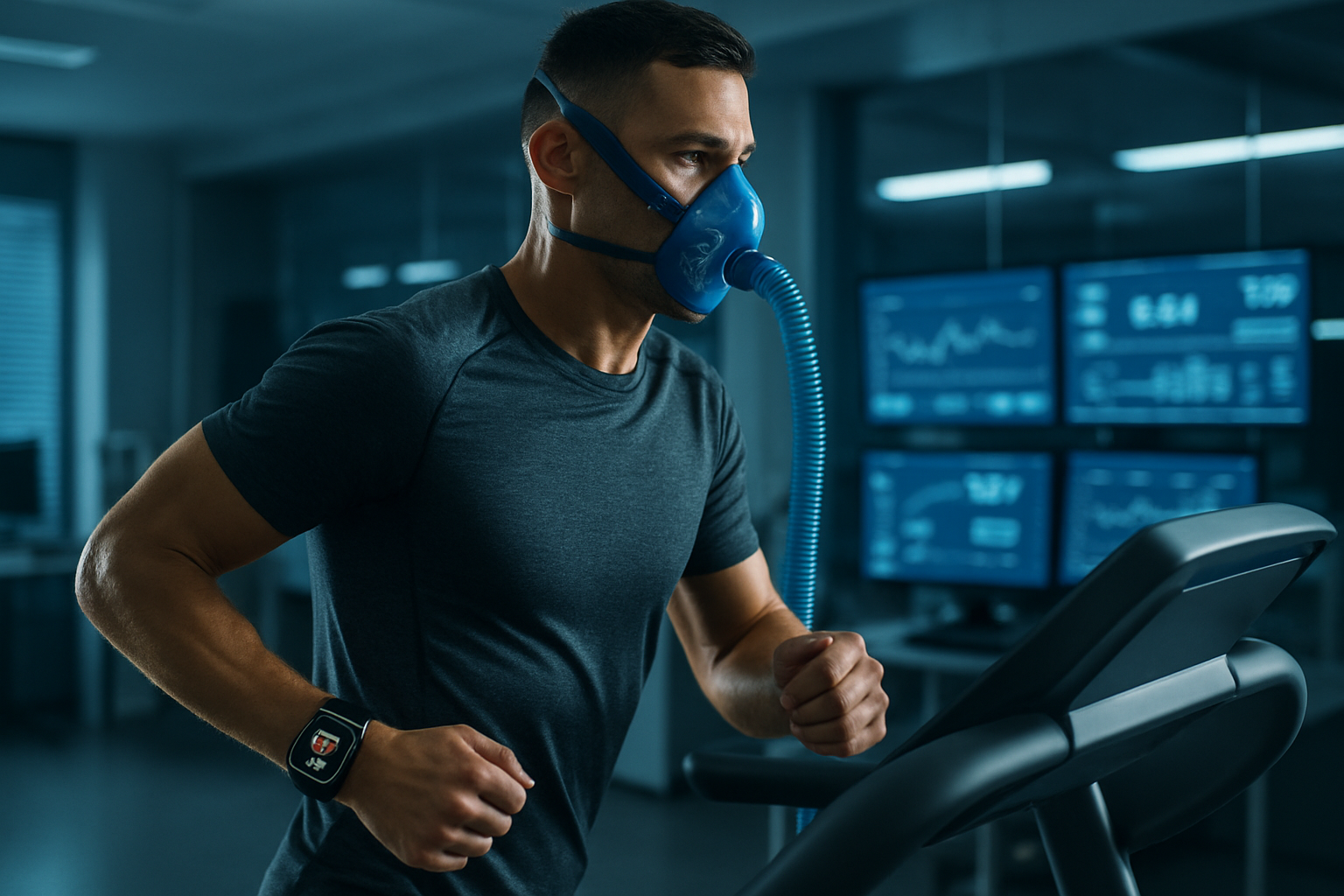
      VO2 max is your body’s maximum capacity to consume and use oxygen during intense exercise. Think of it like the engine size in a car — the bigger and more efficient the engine, the more power it can produce. In human terms, a higher VO2 max means your heart, lungs, and muscles work together more efficiently to deliver and use oxygen when you’re pushing hard. It’s measured in milliliters of oxygen per kilogram of body weight per minute (mL/kg/min), but honestly, the number matters less than the trend — are you improving, or are you declining?

      Here’s why this isn’t just a fitness nerd stat: research consistently links higher VO2 max scores with a reduced risk of cardiovascular disease, type 2 diabetes, and even early death. A landmark study published in JAMA found that low cardiorespiratory fitness was one of the strongest predictors of mortality — stronger than smoking, obesity, or high blood pressure in some groups. That’s not a small thing. Your VO2 max is essentially a snapshot of how well your cardiovascular system is functioning right now.

      How to Improve VO2 Max and Cardio Fitness: Proven Training Methods

      Good news — VO2 max responds well to training. It’s not fixed. Whether you’re starting from a low baseline or trying to push past a plateau, these are the approaches that actually work.

      High-Intensity Interval Training (HIIT)

      HIIT is the most time-efficient method to raise your VO2 max. Short bursts of near-maximum effort followed by recovery periods force your cardiovascular system to adapt fast. A classic protocol: 4 rounds of 4 minutes at 90–95% of your max heart rate, with 3 minutes of easy recovery between each. Do this two to three times a week and you’ll see measurable changes within six to eight weeks.

      Zone 2 Aerobic Base Training

      Don’t sleep on easy, steady-state cardio. Zone 2 training — the kind where you can hold a conversation but you’re definitely working — builds the aerobic base that makes everything else possible. It improves your mitochondrial density (the number of energy-producing units in your muscle cells) and teaches your body to use fat as fuel efficiently. Aim for three to four hours per week of Zone 2 work spread across multiple sessions. This is the foundation elite endurance athletes build on, and it works just as well for regular people.

      Tempo Runs and Threshold Work

      Running or cycling at your lactate threshold — the pace you can sustain for roughly 30 to 60 minutes — pushes your body to clear lactic acid faster and sustain higher intensities longer. Incorporating one tempo session per week alongside your HIIT and Zone 2 work creates a well-rounded program that attacks VO2 max from multiple angles.

      Gear I Recommend for Tracking and Improving VO2 Max

      You can train smart or train blind — I know which one gets results faster. Having the right tools to monitor your heart rate zones, track estimated VO2 max, and analyze your training data takes the guesswork out of the process. Here are the products I recommend at different price points.

      Budget-Friendly Smartwatch Option

      If you want solid VO2 max tracking without breaking the bank, the Amazfit Bip 5 Smart Watch is a fantastic entry point. It features GPS, built-in Amazon Alexa, heart rate monitoring, VO2 max tracking, and an impressive 10-day battery life. For runners and cyclists who want data-driven feedback without a premium price tag, this watch punches well above its weight.

      A Stylish Option With Serious Features

      The kececo Smartwatch brings a beautiful 1.32″ AMOLED display together with built-in GPS, VO2 max tracking, HRV monitoring, blood oxygen tracking, and women’s health features — all in an elegant gold 43mm design. It’s a great pick if you want a watch that transitions from the gym to everyday life without looking out of place.

      Premium Pick for Serious Athletes

      For those ready to invest in their training, the Garmin Vívoactive 5 is hard to beat. With an AMOLED display, up to 11 days of battery life, advanced health tracking, and Garmin’s industry-leading GPS accuracy, this watch gives you the kind of detailed cardio data that lets you train with real precision. Garmin’s VO2 max estimates are among the most validated on the consumer market — your data actually means something.

      For Runners Who Want to Go Deeper

      If you’re serious about running performance, pair your watch with the Garmin Running Dynamics Pod. This small clip-on device captures advanced running metrics like cadence, ground contact time, and vertical oscillation — all factors that affect how efficiently you run and, by extension, how well you develop your aerobic capacity. And if you really want to understand the science behind training with power and data, grab a copy of Run with Power: The Complete Guide to Power Meters for Running. It changed the way I think about effort and training load entirely.

      Lifestyle Factors That Support VO2 Max Gains

      Training is only part of the equation. Your VO2 max is also influenced by factors you control outside of workouts.

      • Sleep: Deep sleep is when your cardiovascular system repairs and adapts. Consistently getting 7–
  • Cycling for Cardio: Indoor vs Outdoor and How to Get Maximum Fitness Gains

    Cycling for Cardio: Indoor vs Outdoor and How to Get Maximum Fitness Gains

    Let me guess — you’ve been debating whether to finally buy that indoor bike gathering dust in your cart, or just stick to your weekend outdoor rides. Maybe you’re wondering if spinning classes actually count as “real” cardio, or whether hitting the road on your road bike is the only way to see serious results. I hear this constantly, and here’s the truth: both approaches deliver powerful cycling cardio fitness benefits — but the way you structure your training makes all the difference. Let’s break it all down so you can stop second-guessing and start pedaling with purpose.

    This post contains affiliate links. As an Amazon Associate, I earn from qualifying purchases. This helps keep the site running at no extra cost to you — and I only recommend gear I’d actually use myself.

    Why Cycling Is One of the Best Cardio Workouts You Can Do

    Cycling checks almost every box when it comes to cardiovascular training. It’s low-impact (meaning it’s easier on your joints than running), it’s scalable for all fitness levels, it torches serious calories, and it strengthens your heart and lungs over time. Studies published in the Journal of the American Heart Association have linked regular cycling to reduced risk of cardiovascular disease, improved VO2 max (that’s your body’s ability to use oxygen during intense exercise — a key marker of cardio fitness), and better metabolic health.

    Whether you’re trying to lose weight, build endurance, or just get healthier, cycling delivers. A 155-pound person can burn roughly 500–600 calories per hour at a moderate pace outdoors, and a vigorous indoor cycling session can push even higher depending on resistance and intensity. The key is consistency and structure — and that’s exactly what we’re going to talk about.

    Indoor vs Outdoor Cycling: Cycling Cardio Fitness Benefits Compared

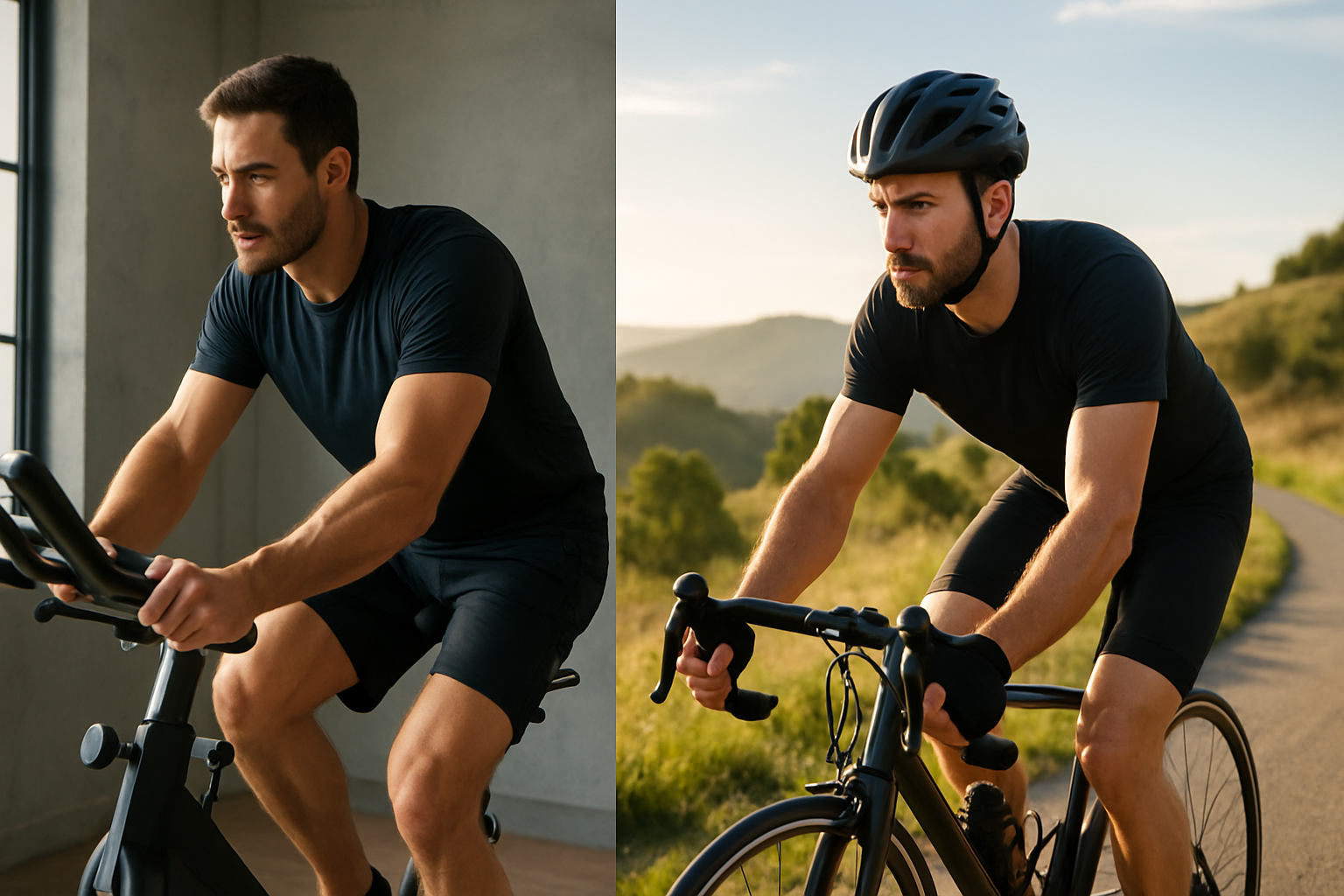
    The Case for Outdoor Cycling

    Outdoor cycling is dynamic by nature. Your body constantly adapts to terrain changes, wind resistance, elevation, and real-world obstacles — and that variability is a genuine fitness advantage. Riding uphill builds leg strength alongside cardiovascular endurance. Navigating different surfaces engages stabilizer muscles you simply don’t activate on a stationary bike. There’s also a mental health bonus: fresh air, scenery, and sunlight have been shown to reduce cortisol (your stress hormone) and boost mood more effectively than indoor exercise.

    The downside? Weather, traffic, and logistics. You can’t always control when or where you ride, which can make consistency difficult — and consistency is the #1 factor in long-term fitness progress.

    The Case for Indoor Cycling

    Indoor cycling wins on consistency, safety, and control. Rain or shine, 6 AM or midnight, you can get your workout in. You can dial in exact resistance levels, follow structured programs, and track your metrics precisely. For people targeting weight loss or building a base level of fitness, this kind of structured, repeatable training is incredibly effective.

    Modern stationary bikes with app connectivity take this even further — you can follow live classes, ride virtual routes, and get real-time coaching without leaving your house. That’s a game-changer for busy schedules.

    Bottom line: If you can do both, do both. Outdoor riding builds functional strength and mental resilience. Indoor training builds consistency and precision. Together, they create a well-rounded cyclist and a seriously fit cardiovascular system.

    How to Structure Your Cycling Training for Maximum Fitness Gains

    Here’s where most people go wrong: they hop on the bike and pedal at the same moderate pace every single time. That’s better than nothing, but it’s not going to keep producing results. Your body adapts quickly, and you need to challenge it in different ways to keep improving. Here’s a simple weekly structure that works for both indoor and outdoor riders:

    • 1–2 days: HIIT sessions — High-Intensity Interval Training alternates between short bursts of maximum effort (30–60 seconds) and recovery periods. This spikes your heart rate, burns more fat, and improves VO2 max faster than steady riding.
    • 1–2 days: Endurance/Zone 2 riding — This is longer, steady-state riding at a conversational pace (you could hold a conversation but it’s slightly challenging). Zone 2 training builds your aerobic base and teaches your body to burn fat more efficiently.
    • 1 day: Strength-focused ride — Crank up the resistance (or find a hilly route) and focus on power output. This builds muscle and improves overall cycling performance.
    • 1–2 days: Active recovery or rest — Don’t skip this. Recovery is when your body actually gets fitter.

    Tracking your cadence (how fast your legs are spinning, measured in RPM — rotations per minute) is one of the best ways to optimize each of these workouts. Most coaches recommend 80–100 RPM for endurance work and higher cadences for intervals. If you’re not tracking it, you’re leaving gains on the table.

    Gear I Recommend for Getting the Most from Cycling Cardio

    You don’t need a $3,000 setup to get serious results. Here are the tools I’d actually point a friend toward:

    Best Indoor Bikes

    The Merach Exercise Bike is one of my top picks for home riders who want a feature-packed experience without breaking the bank. It uses a combination of brake pad and magnetic resistance, connects to an exclusive app with guided fitness courses, supports up to 270 lbs, and even includes a dumbbell rack so you can add upper body work to your routine. It’s a genuinely smart setup for weight loss and full-body conditioning.

    If you want a heavier-duty option, the YOSUDA PRO Magnetic Exercise Bike supports up to 350 lbs and features a silent belt drive system — meaning it’s whisper quiet, which matters if you’re riding early morning or late at night. The comfortable seat cushion is a real plus for longer endurance sessions.

    For a budget-friendly but capable option, check out the CHAOKE Quiet Magnetic Resistance Stationary Bike. It’s app-compatible, holds up to 300 lbs, and comes with a clear digital display so you can monitor your stats during every ride. A solid no-fuss pick for beginners and intermediate riders.

    Cadence Sensors for Outdoor and Indoor Tracking

    If you ride outdoors — or want to connect a non-smart indoor bike to apps like Zwift or Wah

  • Jump Rope Training: The Most Underrated Cardio Tool You’re Probably Ignoring

    Jump Rope Training: The Most Underrated Cardio Tool You’re Probably Ignoring

    Let me guess — you walk past that dusty jump rope in the corner of your gym every single time you head straight for the treadmill. Maybe you tried jumping rope once, tripped over it after fifteen seconds, and decided it “wasn’t for you.” I hear this constantly. But here’s the truth: you’re leaving one of the most powerful jump rope cardio training benefits on the table every single time you skip it (pun intended). Jump rope isn’t just for boxers and kids on the playground. It’s a full-body, calorie-torching, coordination-building cardio tool that can completely transform your conditioning — and it fits in a drawer.

    This post contains affiliate links. As an Amazon Associate, I earn from qualifying purchases. This means if you click a link and make a purchase, I may earn a small commission at no extra cost to you. I only recommend products I genuinely think are worth your money.

    Why Jump Rope Cardio Training Benefits Are Seriously Underrated

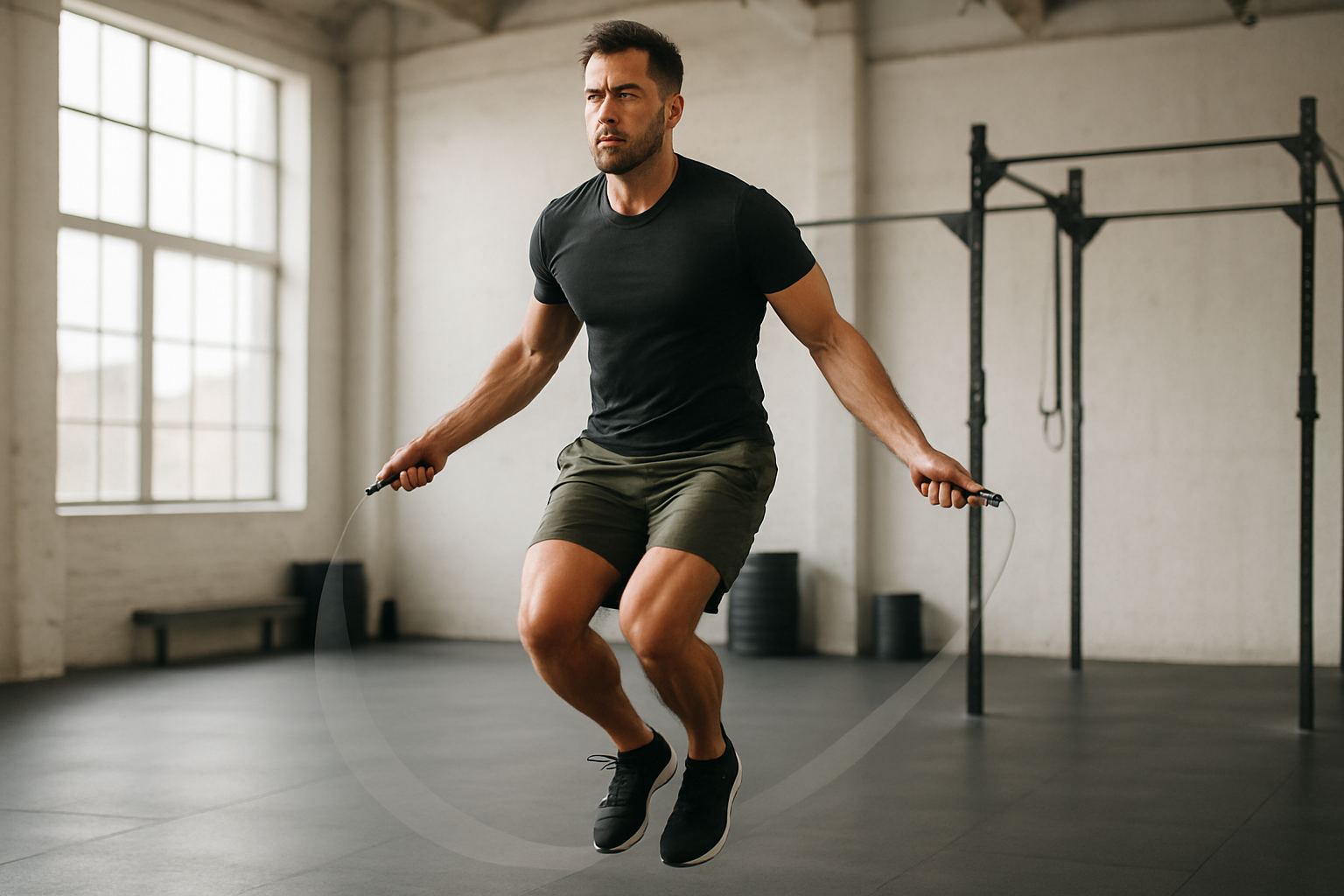
    Here’s a stat that tends to wake people up: research published in the Research Quarterly for Exercise and Sport found that ten minutes of jump rope was roughly equivalent to thirty minutes of jogging in terms of cardiovascular benefit. Ten minutes. Let that sink in. And beyond just heart health, jumping rope engages your calves, quads, glutes, shoulders, and core all at once. You’re not just doing cardio — you’re building athleticism.

    Here’s a breakdown of the real reasons I push my clients toward jump rope training:

    • Calorie burn: Depending on your intensity and body weight, jumping rope can burn between 10–16 calories per minute. That’s on par with running an 8-minute mile.
    • Coordination and agility: Jump rope forces your brain and body to sync up. Over time, this improves your overall athletic performance, reaction time, and balance.
    • Bone density: Jumping is a weight-bearing activity, which means it stimulates bone growth. Studies have shown consistent jump training can improve bone mineral density, especially important as we age.
    • Portability: A rope weighs ounces and costs less than a single month of most gym memberships. Hotel room, backyard, parking lot — your cardio comes with you.
    • Low barrier to entry: You don’t need to be fit to start. You start where you are and build from there.

    How to Actually Get Started (Without Tripping Every Five Seconds)

    The number one reason people give up on jump rope is bad form right out of the gate. So let’s fix that before it becomes a habit.

    Get Your Rope Length Right

    Stand in the middle of your rope and pull both handles up. They should reach roughly to your armpits. Too long and it’ll be slow and sloppy. Too short and you’ll be catching it on your heels constantly. Most quality ropes are adjustable — which is why I always recommend starting with an adjustable-length option.

    Master the Basic Bounce First

    Keep your elbows close to your sides. The rotation comes from your wrists — not your whole arm. Land softly on the balls of your feet, not flat-footed. Jump just high enough to clear the rope — an inch or two is all you need. Once you can do 30 seconds without stopping, you’re already making progress.

    Build With Intervals

    I tell beginners to try this simple starter workout: jump for 30 seconds, rest for 30 seconds, repeat for 10 rounds. That’s just 10 minutes of total work. Do that three times a week and you’ll notice a difference in your conditioning within two to three weeks. As you improve, push toward 45 seconds on, 15 seconds off — or try HIIT-style (High-Intensity Interval Training) sets where you go all-out for 20 seconds and recover for 10.

    Light vs. Weighted Jump Ropes: Which One Should You Use?

    This is a question I get all the time, and the honest answer is: it depends on your goal. Speed ropes — lightweight with thin cables — are great for cardiovascular conditioning, fast footwork, and learning advanced techniques like double-unders (where the rope passes under your feet twice in one jump). Weighted ropes add resistance, which increases the muscular demand on your shoulders, arms, and core. They burn more calories per session and are excellent for building upper body endurance. My recommendation? Start with a speed rope, and add a weighted rope once you’re comfortable.

    Gear I Recommend

    I’ve tested a lot of ropes over the years, and here are the ones I actually stand behind. Whether you’re just starting out or leveling up your training, there’s something here for you.

    Best All-Around Starter Rope

    If you’re new to jump rope training or just want a reliable, no-fuss option, the Tangle-Free Rapid Speed Jump Rope with Ball Bearings is a fantastic starting point. The ball bearing system (a small rotating mechanism inside the handle that allows the rope to spin smoothly) gives you a fast, consistent rotation without the tangles. The foam handles are comfortable and the steel cable is durable. It’s adjustable to fit your height, making it great for men, women, and even kids.

    Best Entry-Level Weighted Rope

    For anyone ready to add some resistance without going overboard, the Redify 1LB Weighted Jump Rope is a solid pick. At one pound, it’s heavy enough to feel the difference in your shoulders and arms without wrecking your timing. The aluminum handles feel premium, and the fabric-cotton rope gives you a satisfying, controlled swing. This one’s popular in boxing and MMA training circles for a reason.

    Best High-Speed Rope for Intermediate to Advanced Users

    If you’ve got the basics down and you’re chasing double-unders or faster HIIT sessions, check out the New 2026 Version High Speed Weighted Jump Rope. The self-locking, screw-free design means zero wobble and zero maintenance headaches. It’s built for CrossFit, home workouts, and serious conditioning work. This is the kind of rope you grow into — and then can’t imagine training without.

    Best Heavy Rope for Strength-Focused Training

    For those who really want to

  • How to Build Cardiovascular Endurance From Zero: A 12-Week Blueprint

    How to Build Cardiovascular Endurance From Zero: A 12-Week Blueprint

  • Zone 2 Cardio: The Low-Intensity Training Method That Elite Athletes Swear By

    Zone 2 Cardio: The Low-Intensity Training Method That Elite Athletes Swear By

    You know that person at the gym who’s always going full throttle — sprinting on the treadmill, gasping for air, looking like they’re one step away from calling an ambulance? I used to be that person. I thought harder, faster, and more painful meant better results. Then I discovered zone 2 cardio training benefits, and it completely changed how I train — and honestly, how I feel. If you’ve been grinding through high-intensity workouts and wondering why you’re always exhausted, injured, or stuck at a plateau, this post is for you.

    This post contains affiliate links. As an Amazon Associate, I earn from qualifying purchases. If you click a link and make a purchase, I may earn a small commission at no extra cost to you. I only recommend gear I genuinely believe in.

    What Is Zone 2 Cardio, Exactly?

    Let’s break it down simply. Your heart rate has five training zones, ranging from very light effort (Zone 1) to maximum effort (Zone 5). Zone 2 sits right in that comfortable middle ground — roughly 60–70% of your maximum heart rate. At this intensity, you should be able to hold a conversation without gasping, but you’re definitely working. Think of a brisk walk, a relaxed jog, or an easy bike ride where you feel warm and steady but not wrecked.

    To find your approximate maximum heart rate, use the simple formula: 220 minus your age. So if you’re 35, your max heart rate is around 185 beats per minute (bpm). Zone 2 for you would be roughly 111–130 bpm. That number is your sweet spot for this type of training.

    Zone 2 Cardio Training Benefits: Why Elite Athletes Build Their Base Here

    Here’s where it gets really interesting. Elite endurance athletes — marathon runners, Tour de France cyclists, triathletes — typically spend 80% of their total training time in Zone 2. That’s not a coincidence. The science behind zone 2 cardio training benefits is rock solid, and it comes down to what’s happening at the cellular level inside your muscles.

    It Builds Your Aerobic Engine

    Zone 2 training targets your slow-twitch muscle fibers and forces your body to become more efficient at burning fat for fuel. Over time, it increases the number and function of mitochondria — the tiny powerhouses inside your cells that produce energy. More mitochondria means more endurance, faster recovery, and better overall athletic performance. This is your aerobic base, and without it, everything else suffers.

    It Accelerates Recovery

    One of the most underrated zone 2 cardio training benefits is how it supports recovery between harder training sessions. Because the intensity is low enough to avoid excessive stress hormones like cortisol, your body can actually repair and adapt instead of just trying to survive. A 45-minute easy ride or jog the day after a tough strength session can flush out metabolic waste and reduce soreness without digging you into a deeper hole.

    It Improves Heart Health Long-Term

    Research consistently shows that sustained aerobic training at moderate intensity improves cardiac output, lowers resting heart rate, and reduces the risk of cardiovascular disease. This isn’t just about performance — it’s about living longer and feeling better every single day. Zone 2 cardio done consistently is one of the most powerful things you can do for your long-term health.

    How to Do Zone 2 Cardio the Right Way

    The biggest mistake people make with Zone 2 is going too hard. Without tracking your heart rate, it’s incredibly easy to drift into Zone 3 or 4 without realizing it — especially if you’re fit. You need to know your numbers, and that means monitoring your heart rate accurately throughout your session.

    Here are the basics to get started:

    • Duration: Aim for 30–90 minutes per session. Longer sessions build more aerobic base, but even 30 minutes is worth doing.
    • Frequency: 3–5 sessions per week is ideal for most people. Remember, elite athletes build their whole program around this.
    • Activities: Walking, jogging, cycling, rowing, swimming, or the elliptical all work great. Pick something you enjoy.
    • The talk test: If you can speak in full sentences without gasping, you’re probably in the right zone. If you can only get out a few words, you’re too hard.
    • Be patient: Zone 2 adaptations take weeks and months — not days. Stick with it.

    Gear I Recommend for Zone 2 Training

    You absolutely need accurate heart rate monitoring to do Zone 2 properly. Wrist-based heart rate on most smartwatches can be unreliable during exercise — chest straps are far more accurate. Here’s what I recommend at different price points:

    Best Chest Straps for Accurate Heart Rate Monitoring

    My top pick is the Polar H10 Heart Rate Monitor Chest Strap. The Polar H10 is widely considered the gold standard for accuracy — it’s what many sports scientists use as a reference device. It connects via Bluetooth and ANT+, is fully waterproof, and works with virtually every fitness app and platform out there. If you’re serious about training in the right zone, this is the one to get.

    If you want excellent accuracy without the premium price, the Powr Labs Bluetooth and ANT+ Heart Rate Monitor Chest Strap is a fantastic option. It connects seamlessly with Polar, Garmin, Peloton, and Wahoo, and users consistently rave about its all-day comfort — a big deal when you’re doing longer Zone 2 sessions.

    Looking for a budget-friendly pick that still delivers? Check out the COOSPO Bluetooth Heart Rate Monitor Chest Strap H808S. It’s IP67 waterproof, supports both ANT+ and BLE, and works great for running, cycling, and gym workouts. Solid performance at a very accessible price.

    Smartwatches Worth Considering

    If you prefer an all-in-one wrist device for general fitness tracking and heart rate monitoring, I’ve got two solid picks. The March 29, 2026