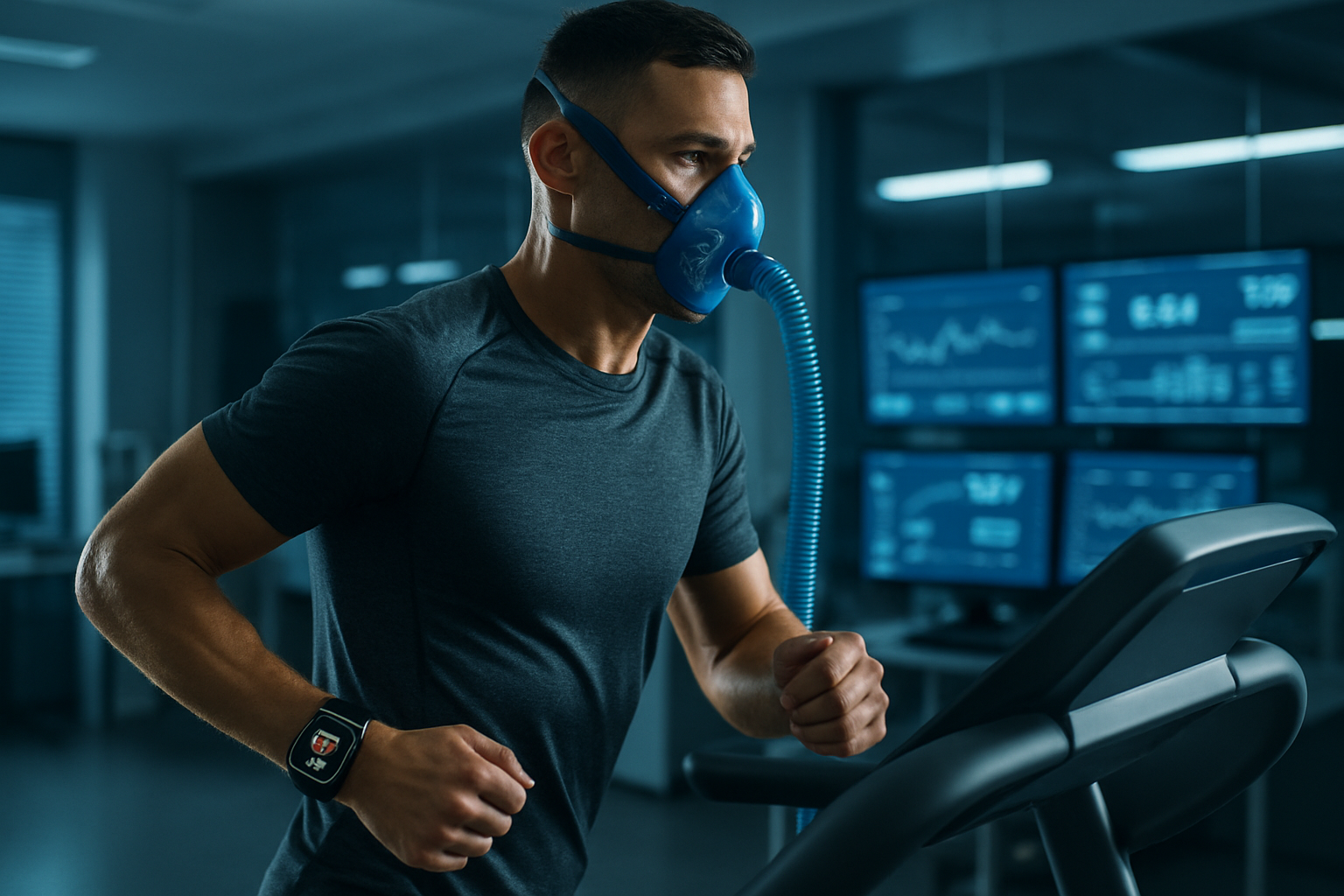

Most people treat VO2 max as either an obscure metric for distance runners or something they’ve never encountered at all. The reality is that paying attention to how efficiently your body processes oxygen—rather than fixating solely on appearance—reveals something far more valuable about your overall fitness. I wish I’d grasped this earlier: grasping what VO2 max represents, recognizing why it stands as one of the best indicators of lifelong health outcomes, and knowing the concrete steps to elevate it can reshape your entire approach to training — and you don’t need elite-level ambitions to benefit.
What Is VO2 Max and Why Does It Matter?
VO2 max represents the upper limit of oxygen your body can take in and utilize during intense physical work. Imagine it as your cardiovascular system’s processing power — a larger, more efficient system extracts more oxygen from each breath and moves it through muscle tissue faster. Specifically, it’s expressed in milliliters of oxygen absorbed per kilogram of body weight per minute (mL/kg/min), though what truly matters isn’t the absolute number but whether that number is moving upward or backward over time.
This metric deserves real attention because scientific evidence repeatedly demonstrates that elevated VO2 max correlates with lower odds of heart disease, type 2 diabetes, and premature mortality. A major study in JAMA established that diminished cardiorespiratory fitness was among the most reliable mortality indicators — occasionally exceeding the predictive power of smoking status, excess body weight, or elevated blood pressure in particular populations. Your VO2 max essentially functions as a window into your cardiovascular health at this very moment.
Building Your VO2 Max: Training Approaches That Deliver Results
The encouraging part is that VO2 max improves with proper stimulus. It’s not a static trait. Whether you’re beginning from a low point or breaking through a training stall, these methods have genuine backing.
High-Intensity Interval Training (HIIT)
HIIT produces the quickest gains in VO2 max per unit of time invested. Alternating explosive effort phases with recovery windows forces your cardiovascular system to adapt rapidly. A tried-and-tested setup: 4 rounds of 4 minutes at 90–95% of your max heart rate, with 3 minutes of easy recovery between each. Perform this twice or thrice weekly and observable improvements appear in six to eight weeks.
Zone 2 Aerobic Base Training
Neglecting moderate-intensity steady cardio is a mistake. Zone 2 work — intensities where speech remains possible but effort is unmistakable — establishes the aerobic foundation that enables superior performance across all training modalities. It increases mitochondrial density (the density of cellular structures responsible for energy generation) and conditions your muscles to burn fat as a primary fuel source. Target three to four cumulative hours each week in this zone, distributed across separate sessions. This forms the bedrock that top endurance athletes rely on, and the same approach works equally well for everyday athletes.
Tempo Runs and Threshold Work
Training at your lactate threshold — the intensity you can maintain for roughly half an hour to an hour — teaches your body to neutralize lactic acid more rapidly and tolerate higher workloads for extended periods. One threshold session per week, paired with your HIIT and Zone 2 sessions, produces a comprehensive training structure that targets VO2 max through multiple pathways.
Equipment for VO2 Max Assessment and Training Advancement
You can rely on intuition or use data — I know which strategy produces better outcomes faster. Equipping yourself with instruments that quantify heart rate distribution, estimate VO2 max values, and record workout information removes uncertainty from your programming. Below are my picks across various budgets.
The Device That Makes VO2 Max Visible in Real Time
Progress requires visibility, and most fitness devices either hide VO2 max information deep in an application or update it so unpredictably that the figures lose credibility. I wanted a tool showing immediate aerobic feedback during hard work — accessible without stopping to check my phone.
Strengths
- VO2 max recalculates following strenuous sessions and surfaces on the watch immediately—zero waiting for app synchronization, zero menu diving to confirm training effectiveness
- Power lasts far beyond a single week when tracking through demanding training phases; I questioned whether smartwatch reliability could handle sustained use, yet this unit performs across extended training cycles without demanding frequent recharging
- Interval heart rate detection performs reliably enough that zone boundaries stay trustworthy—it captures intensity swings and drops with the precision of a dedicated strap, minus the skin irritation
Limitations
- Display visibility drops sharply in daylight conditions during exterior training, undermining the advantage of accessible real-time information when outdoors
- VO2 max calculations depend on wrist-based pulse tracking, which cannot match the accuracy of an actual lab metabolic assessment—useful for spotting directional shifts, not laboratory precision
I almost returned it after the first run because the HR reading seemed erratic during sprint intervals, but I realized I’d paired it wrong and the connection needed a full reset. Once I got past that friction, it became my actual reference point. Amazfit Bip 6 Smart Watch, 1.97″ AMOLED Display, GPS, iOS/Android
Frequently Asked Questions
How quickly does VO2 max improve with HIIT training?
Observable improvements appear in six to eight weeks when performing HIIT twice or thrice weekly. A tried-and-tested setup is 4 rounds of 4 minutes at 90–95% of your max heart rate, with 3 minutes of easy recovery between each round. HIIT produces the quickest gains in VO2 max per unit of time invested.
How many hours per week should I do Zone 2 aerobic training?
Target three to four cumulative hours each week in Zone 2, distributed across separate sessions. Zone 2 work occurs at intensities where speech remains possible but effort is unmistakable. This moderate-intensity steady cardio establishes the aerobic foundation that enables superior performance across all training modalities and increases mitochondrial density.
Why is VO2 max considered a health predictor?
Scientific evidence repeatedly demonstrates that elevated VO2 max correlates with lower odds of heart disease, type 2 diabetes, and premature mortality. A major study in JAMA established that diminished cardiorespiratory fitness was among the most reliable mortality indicators—occasionally exceeding the predictive power of smoking status, excess body weight, or elevated blood pressure in particular populations.
How often should I do lactate threshold training?
Perform one threshold session per week, paired with your HIIT and Zone 2 sessions. Training at your lactate threshold—the intensity you can maintain for roughly half an hour to an hour—teaches your body to neutralize lactic acid more rapidly and tolerate higher workloads for extended periods.
About This Article

Written by Jordan Ellis. Jordan Ellis isn't a certified personal trainer — just someone who's been genuinely obsessed with training for over eight years and turned it into building smarter home gyms. He focuses on home fitness: effective training spaces, equipment that earns its price, and programs that work in a spare room or basement, not just a commercial gym. More about this site.
Scope and limits. Jordan is not a certified personal trainer, and nothing here is medical advice. Check with a physician before starting a new program, and prioritize form over load on every lift described.
Verify this against a primary source
Specifics change, and your situation may differ from the one described here. These are the authorities worth checking directly:
- Physical Activity Guidelines for Americans (HHS) — the federal physical activity guidelines
- American College of Sports Medicine — exercise prescription and position stands
- NSCA — strength and conditioning research