
Studies comparing compound movements show the squat generates more neuromuscular demand and muscle recruitment across the posterior chain than almost any other barbell exercise available. For the beginner and the advanced lifter alike, mastering this movement is foundational. The complication: technique precision makes or breaks the squat. Performed correctly, it builds substantial strength and resilience. Performed carelessly, it leads straight into knee pain, lumbar stress, and wasted effort. Getting the mechanics right from day one isn’t just helpful—it’s essential. This guide will break down every component of proper squat form, so you can lift with confidence, move through fuller ranges, and protect your joints across a long training life.
Squat Setup: Bar Position, Stance, and Grip
Your setup choices cascade through the entire lift. What you establish before the bar leaves the rack determines the mechanical efficiency of both the descent and the ascent.
High Bar vs. Low Bar
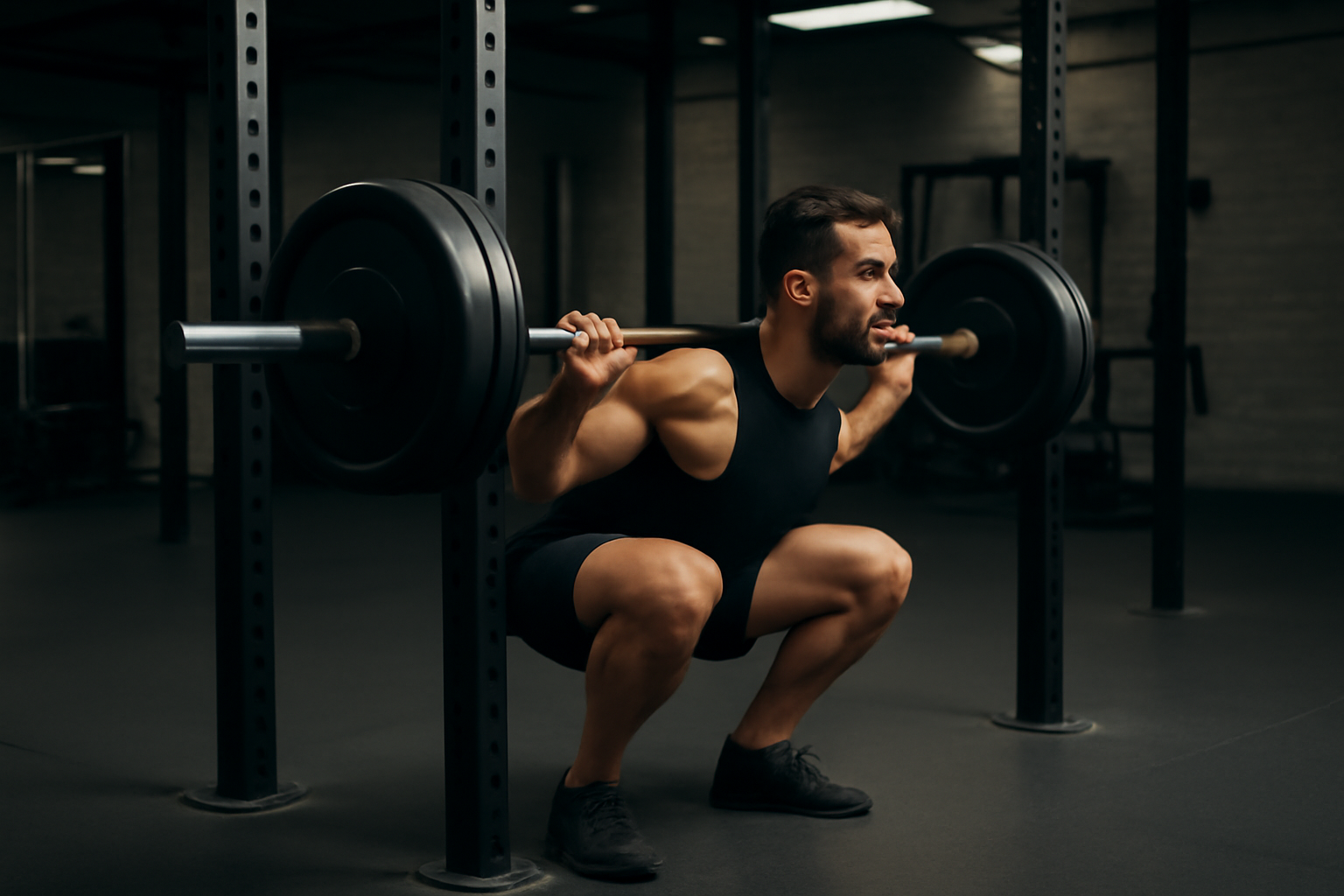
The high bar position rests the barbell on your upper trapezius, nestled beneath the neck base. This allows a more vertical spinal angle and is the standard choice for Olympic weightlifters, competitive athletes, and those training for general fitness outcomes. Low bar positioning drops the bar two to three inches lower, settling across the posterior deltoids. This forward-angled torso position increases load carryover and is favored by powerlifters chasing maximum totals. Neither approach is inherently correct. Choose high bar if your focus is athletic transfer or aesthetic muscle development. Choose low bar if your primary pursuit is absolute strength and competitive powerlifting.
Stance Width and Foot Angle
The optimal stance width varies from person to person—it’s determined by your skeletal structure. A width approximating shoulder width works for the majority of lifters, though those with broad hip structure or pronounced hip socket depth may find a somewhat wider position more natural. Spend time testing variations across the range of shoulder width to moderately wider. Regarding foot angle: orient your toes outward in the 15 to 30 degree range. This external rotation alignment mirrors your femur’s natural inclination and ensures your knees stay positioned directly above your toes throughout the movement. Keeping feet perfectly straight is a frequent setup error that diminishes movement range and creates unnecessary compression at the knee.
Grip and Wrist Position
Your grip span should accommodate comfortable elbow positioning—specifically, the ability to drive your elbows downward and rearward without shoulder irritation. Many lifters employ a thumbless grip, though a standard grip with thumb underneath is equally viable. The decisive factor is wrist alignment: your wrist must remain neutral, never bent backward beneath the load. Hyperextended wrists under tension generate chronic pain in the forearm and elbow. If you struggle to hold neutral wrist position comfortably, increase your grip width and dedicate effort to shoulder and thoracic flexibility work.
How to Squat: Step-by-Step Execution
The Walkout
Extract the barbell from the rack using no more than two or three deliberate steps. Retreat with your first foot, position your second foot to match your intended squat stance, and execute a single small positional refinement if necessary. That covers it. Every additional footfall represents squandered energy and a moment where stability can slip away. Once you occupy your position, remain still—no forward creep, no lateral shuffling. Commit fully to your setup before initiating descent.
Bracing
On every repetition without exception, draw a full breath into your abdominal cavity—direct the air downward and outward, not upward into the chest—then contract your entire midsection with maximum intensity, as if preparing to absorb a forceful impact. This abdominal pressure locks your spine into a stable structural framework. Don’t merely inhale; pressurize your core in every direction—front, back, and sides. This technique, known as the Valsalva maneuver, is mandatory for secure lifting of heavy loads.
The Descent
Begin the movement by unlocking both hip and knee joints in synchrony—not by leading with knee extension, nor by initiating as a pure hip hinge. Activate both simultaneously. Throughout the lowering phase, maintain an elevated chest position, ensure your knee joints stay directly above your foot midline without inward collapse, and keep your weight evenly distributed across the entire plantar surface—from heel through midfoot to toes, all in continuous floor contact. Use the mental image of “pushing the ground apart” with your feet as you lower. This instruction engages gluteal muscles and maintains ideal knee tracking.
Depth
Sound squat mechanics require descending until you reach a minimum of parallel position—the hip crease arriving at or moving lower than the knee line. At this depth, glute and hamstring involvement peaks. Partial-range repetitions lack this mechanical completeness. Should mobility constraints prevent you from achieving this range, the detailed mobility section further down addresses this directly. Target the hip crease meeting or dipping below the knee.
The Shoe That Finally Locked My Feet Into Position
Many lifters overlook the significance of foot stability inside the squat. I spent considerable time working with lifters who exhibited sound mechanics in their hips, spinal position, and abdominal bracing, yet their feet were shifting and collapsing, which triggered downstream problems like inward knee deviation and ankle instability. I came to understand that a dedicated lifting shoe featuring a dense sole and a raised heel isn’t merely optional gear—it’s a functional tool that permits your movement quality to realize its full potential.
What works
- The dense sole eliminates foot collapse and lateral wobbling across the rep—the stability becomes instantly apparent when you drive upward from the bottom position, and the effect is magnified when handling serious weight.
- The raised heel naturally progresses your shin angle forward, substantially simplifying the achievement of full depth without compensatory lower back hyperextension or valgus knee position.
- The reinforced midfoot enclosure anchors your mass directly above the foot’s center, preserving composure and balance under heavy axial load—instead of the sensation of balancing across a thin line, you feel rooted.
What doesn’t
- They possess considerably more rigidity than everyday athletic footwear, and this stiffness registers as unfamiliar initially—your ankle stabilizers and calf musculature must adjust to the elevated heel position and the locked-in feeling.
- An initial adaptation window is unavoidable; I experienced minor friction at my heel during an early heavy session and second-guessed my sizing choice, though the discomfort dissolved completely after a handful of training sessions.
I almost returned mine after that first session because I wasn’t used to the rigid platform and thought I’d made a mistake, but by week two I was hitting depth with zero ankle wobble and my knees tracked perfectly. If you’re serious about squat technique, grab the MANUEKLEAR Deadlift Shoe – Weight Lifting Shoes for Men Women.
Frequently Asked Questions
Should I use high bar or low bar squat position?
High bar positions the barbell on your upper trapezius and allows a more vertical spinal angle—choose this for athletic transfer or muscle development. Low bar drops the bar two to three inches lower across your posterior deltoids with a forward-angled torso, increasing load carryover and favoring absolute strength and powerlifting. Neither is inherently correct; your primary training goal determines the better choice.
What foot angle should I use when squatting?
Orient your toes outward in the 15 to 30 degree range. This external rotation mirrors your femur’s natural inclination and keeps your knees positioned directly above your toes throughout the movement. Keeping feet perfectly straight is a frequent setup error that diminishes movement range and creates unnecessary knee compression.
How deep should I squat for proper form?
Descend until you reach a minimum of parallel position—the hip crease arriving at or moving lower than the knee line. At this depth, glute and hamstring involvement peaks. Partial-range repetitions lack this mechanical completeness. If mobility constraints prevent full depth, dedicated mobility work can address this.
How many steps should I take walking the bar out?
Extract the barbell from the rack using no more than two or three deliberate steps. Position your feet to match your intended squat stance, and execute a single small positional refinement if necessary. Every additional footfall represents squandered energy and a moment where stability can slip away.
About This Article

Written by Jordan Ellis. Jordan Ellis isn't a certified personal trainer — just someone who's been genuinely obsessed with training for over eight years and turned it into building smarter home gyms. He focuses on home fitness: effective training spaces, equipment that earns its price, and programs that work in a spare room or basement, not just a commercial gym. More about this site.
Scope and limits. Jordan is not a certified personal trainer, and nothing here is medical advice. Check with a physician before starting a new program, and prioritize form over load on every lift described.
Verify this against a primary source
Specifics change, and your situation may differ from the one described here. These are the authorities worth checking directly:
- Physical Activity Guidelines for Americans (HHS) — the federal physical activity guidelines
- American College of Sports Medicine — exercise prescription and position stands
- NSCA — strength and conditioning research