You stepped on the scale this morning, and the number didn’t move — or worse, it went up. You’ve been eating right, hitting the gym four times a week, and pushing yourself harder than ever. Sound familiar? I hear this all the time, and my answer is always the same: the scale is one of the worst tools you can rely on alone to track fitness progress beyond the scale. That’s not me being dramatic. That’s just the truth, backed by science and years of watching people quit great programs because a number didn’t cooperate.
This post contains affiliate links. As an Amazon Associate, I earn from qualifying purchases. This means I may earn a small commission if you purchase through my links, at no extra cost to you. I only recommend products I genuinely believe in.
Why the Scale Lies to You (And Why That’s Not Your Fault)
Here’s what’s actually happening when that number frustrates you. Your body weight at any given moment is a combination of muscle, fat, water, food in your digestive system, glycogen (stored carbohydrates in your muscles), and even the weight of your bones. That number swings by 2 to 5 pounds in a single day based on hydration, sodium intake, hormones, and whether you’ve used the bathroom yet. Women especially see significant fluctuations throughout the month due to hormonal changes alone.
More importantly, when you start a solid resistance training program, something incredible and frustrating happens simultaneously — you may be building lean muscle tissue while losing body fat at almost the same rate. Your weight stays the same or even increases, but your body composition (the ratio of fat to lean mass) is transforming. You’re getting leaner, stronger, and healthier. But the scale? It has no idea. It just sees weight, not what that weight is made of.
Better Ways to Track Fitness Progress Beyond the Scale
Let’s get practical. Here are the methods I recommend to my clients, and the ones I use myself. Use a combination of these and I promise your results will feel a lot more real — because they are.
1. Body Measurements
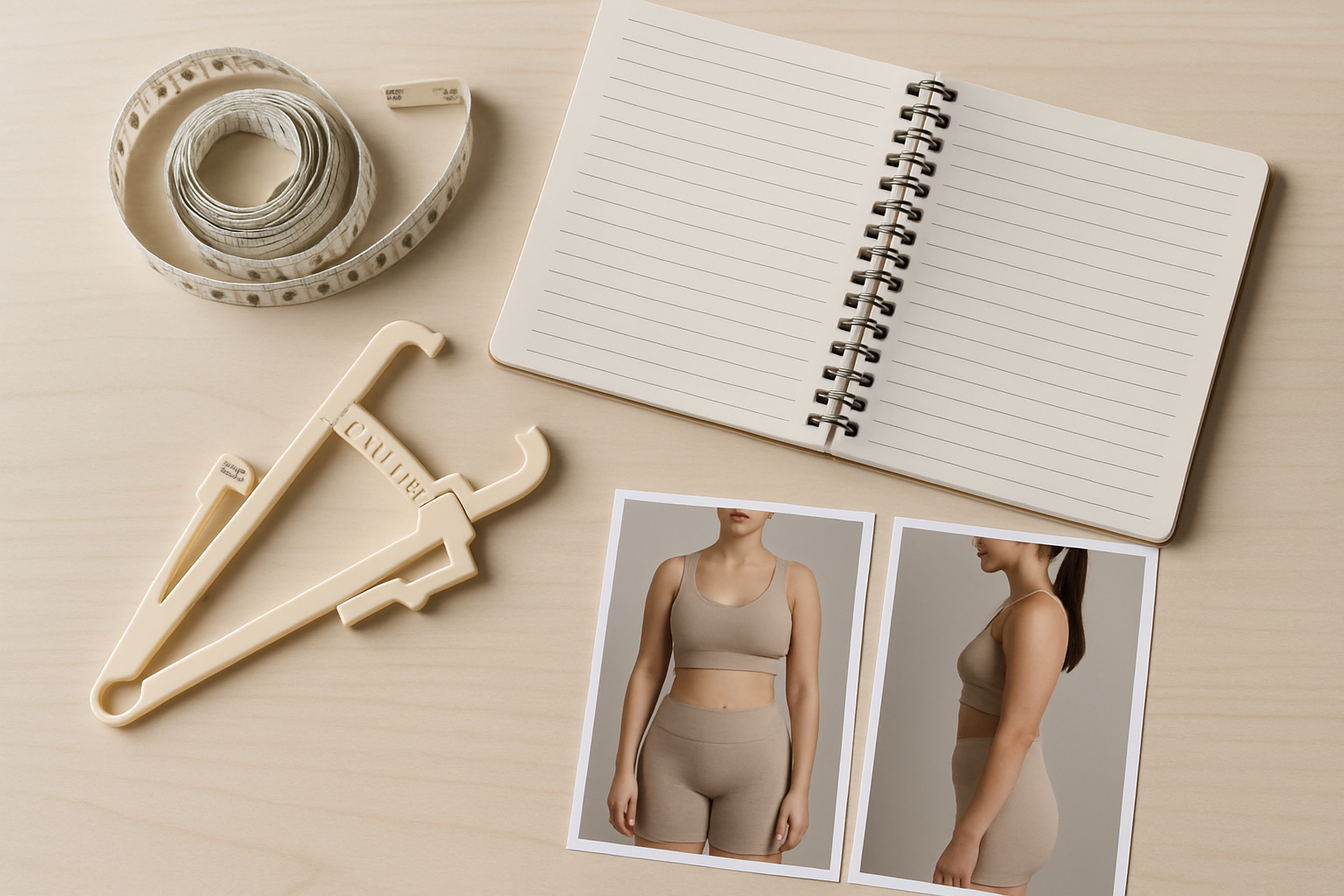
Grab a flexible measuring tape and take circumference measurements of your waist, hips, chest, arms, and thighs. These numbers tell you exactly where your body is changing. Losing an inch off your waist is a real, tangible result even if the scale doesn’t budge. I recommend measuring every two to four weeks under the same conditions — same time of day, before eating, after using the bathroom.
2. Body Fat Percentage
This one is a game-changer. Knowing your body fat percentage gives you a far more accurate picture of your composition than scale weight alone. Skinfold calipers are a reliable, affordable way to estimate body fat at home — you pinch specific sites on your body (typically the tricep, abdomen, and thigh) and plug those measurements into a chart. It takes a little practice, but it becomes quick and consistent over time.
3. Performance Metrics
Are you lifting more weight than you could last month? Running a mile faster? Doing more push-ups without stopping? Performance improvements are powerful indicators that your training is working. I log these obsessively because watching your strength and endurance climb over time is one of the most motivating things in fitness. Don’t skip this one.
4. Progress Photos
Take a front, side, and back photo in the same lighting, same clothes, same time of day every two to four weeks. Your eyes will catch changes your hands and tape measure might miss — posture improvements, muscle definition, overall leanness. People are often shocked by their own before-and-after photos even when they thought “nothing was happening.”
5. How Your Clothes Fit
This is simple and brutally honest. When your jeans start feeling loose in the waist and tighter in the thighs and glutes, your body is recomposing — losing fat and building muscle in all the right places. Pick one or two “benchmark” clothing items and check in every few weeks.
6. Energy Levels, Sleep Quality, and Mood
These are often overlooked but critically important markers of fitness improvement. Better sleep, more consistent energy throughout the day, reduced stress, and improved mood are direct outcomes of improved cardiovascular health, hormonal balance, and reduced inflammation. If you feel better than you did 60 days ago, that is progress — full stop.
Gear I Recommend for Tracking Progress at Home
You don’t need a fancy gym membership or expensive equipment to track your body composition and fitness accurately. Here are a few tools I genuinely recommend:
Body Fat Calipers and Measuring Tapes
The MEDca Body Fat Caliper and Measuring Tape is a solid, affordable combo that gives you both skinfold measurement capability and a body tape measure in one package. It’s straightforward to use and ideal for beginners who want to start tracking body fat percentage and circumference measurements right away.
If you want a step up in precision, the Sequoia Trimcal 4000 Body Fat Caliper with Tape Measure features a dual-sided design built for accuracy and durability. It’s a favorite among people who take their tracking seriously. Sequoia also offers the Trimcal 4000 with a Body Fat Percentage Chart included — super helpful if you’re new to interpreting caliper readings and want a quick visual reference right out of the box.
Workout and Progress Journals
You cannot improve what you don’t track — and a dedicated workout journal makes all the difference. The Nextnoid Hardcover Fitness Journal is a well-built A5 log book with a sturdy cover that holds up to gym bag life. It works for both gym and home workouts and has plenty of space to log sets, reps, weights, and notes.
I also like the Fitness Logbook in Black — an undated A5 workout journal with a durable plastic cover and thick paper that won’t bleed through. It covers weight loss, muscle gain, gym exercises, and bodybuilding-style tracking all in one clean format. Undated means you can start it anytime without wasting pages.