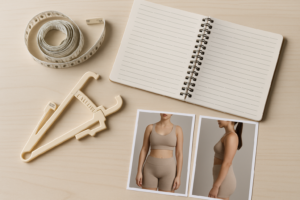

You’ll encounter two competing pieces of advice about fat loss: one says to cut calories hard and fast, the other warns you’ll destroy your metabolism if you’re not careful. The first approach torches results initially—then crashes. The second reflects a real biological truth, but it’s often used to justify staying in such a shallow deficit that progress stalls entirely. The reality sits between them: a modest, calculated deficit works because it preserves the metabolic machinery that keeps you burning calories while the fat comes off. The goal isn’t to starve yourself or to tippy-toe around eating so little you make no progress—it’s to find the intersection where you lose fat consistently, keep your energy up, maintain muscle, and don’t need a medical intervention afterward.
What Is a Caloric Deficit and Why Does It Matter for Fat Loss?
Start with the fundamentals. A caloric deficit is simply eating fewer calories than what your body expends over the course of a day. Your body requires a baseline amount of energy just to maintain core functions—respiration, circulation, cellular repair—this baseline is your Basal Metabolic Rate (BMR). Layer in movement throughout the day, occupational activity, and exercise, and you arrive at your Total Daily Energy Expenditure (TDEE). Consume fewer calories than this number, and your body must access stored energy reserves—ideally, your fat stores.
This is where the strategy falls apart for most people: they approach the deficit as deprivation. They slash intake to skeletal levels, suffer through it, shed both fat and muscle simultaneously, and then find themselves spinning their wheels after a few weeks. That’s not sustainable fat loss—that’s metabolic stress that compounds over time.
Building a Caloric Deficit That Actually Sticks
The science points to a deficit of 300–500 calories daily below your TDEE as the reliable zone for fat loss. This deficit translates to roughly 0.5 to 1 pound of fat loss per week—incremental, yes, but that consistency protects muscle tissue and avoids the metabolic nosedive that comes with aggressive restriction.
Step 1: Establish Your TDEE
Begin with an online TDEE calculator. Enter your age, body weight, height, and how active you are. This calculation gives you a working baseline. I’m emphasizing “working baseline” because metabolism isn’t identical across bodies—use this figure as your starting reference point and refine it as you gather real-world data.
Step 2: Apply Your Deficit
If your TDEE reads 2,400 calories, target between 1,900 and 2,100 daily. Under no circumstances should intake drop below 1,200 calories for women or 1,500 calories for men without direct medical oversight. Lower thresholds don’t accelerate fat loss—they accelerate muscle depletion and hormone dysregulation, both of which work against your goal.
Step 3: Make Protein Non-Negotiable
Establish a protein target of 0.7–1 gram per pound of body weight within your calorie window. Protein extends satiety, defends lean mass during energy restriction, and demands more metabolic energy to break down than either carbohydrate or fat. It’s the single most important macronutrient when you’re in a deficit.
Why Your Progress Plateaus Even When You’re Compliant
You’re hitting your numbers consistently, yet the scale hasn’t moved in weeks. Behind this frustration lies two interrelated mechanisms: as body mass decreases, your TDEE decreases proportionally—a lighter body requires less total energy. Simultaneously, metabolic adaptation kicks in. Your system becomes more efficient over time, burning fewer calories to accomplish the same physical tasks. Your central nervous system also downregulates spontaneous movement—unconscious fidgeting, steps taken between activities—which silently erodes your calorie expenditure without conscious effort.
The solution involves two actions: refresh your TDEE calculation every 4–6 weeks as your weight shifts. Insert scheduled maintenance weeks—eating at your baseline TDEE for 7 days—because research demonstrates this pattern improves long-term fat loss outcomes. Maintain resistance training throughout, because trained muscle tissue burns calories at rest and acts as a buffer against metabolic decline.
Accuracy Over Intuition: How Calorie Counting Actually Works
The uncomfortable fact I return to repeatedly: most people estimate their intake at 1,800 calories when they’re genuinely consuming 2,300. Research consistently shows that people miscalculate their calorie intake by 20–40 percent. This isn’t a character flaw—it’s an information problem. The answer is straightforward: weigh your food.
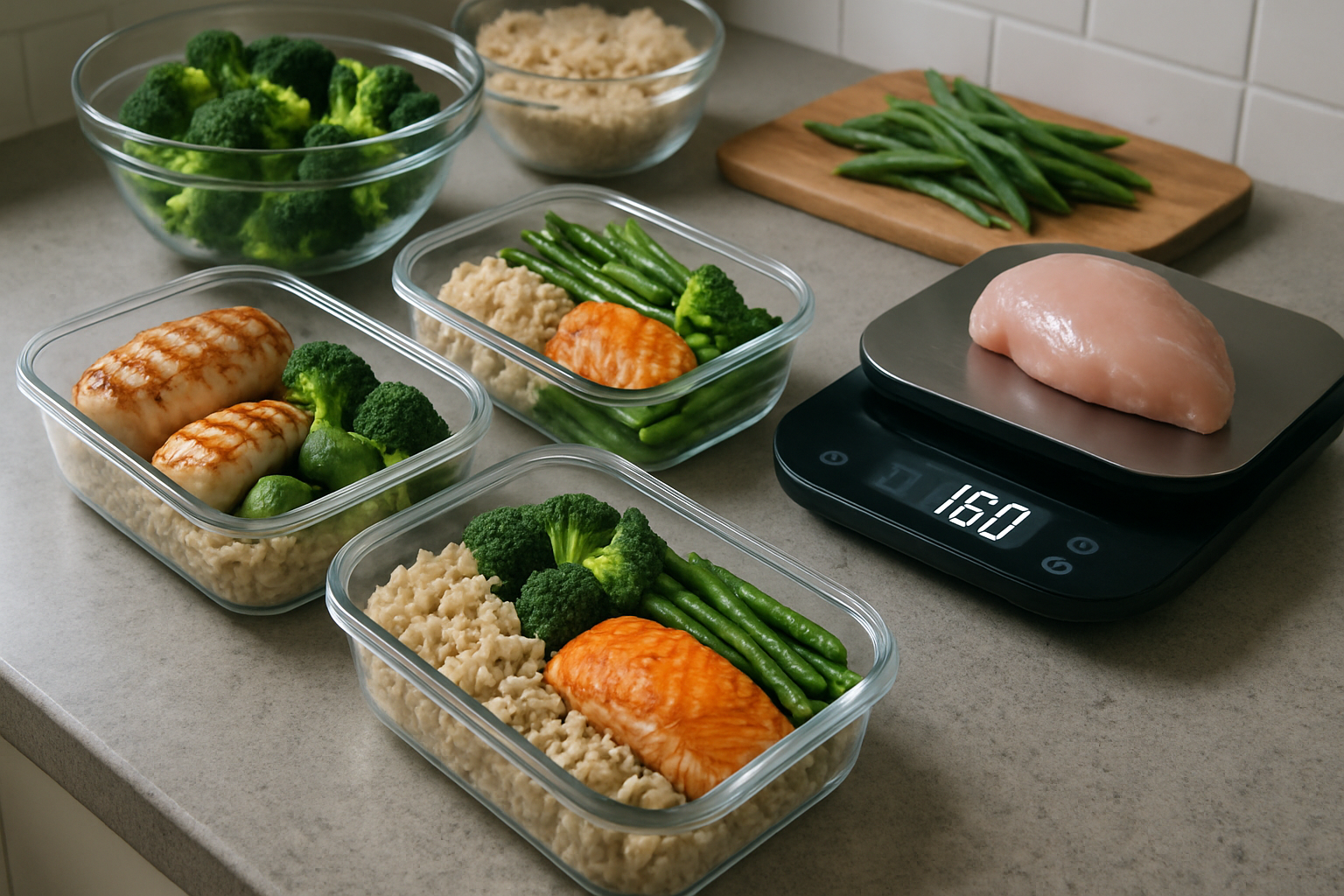
Using approximations like “one cup” or “a handful” introduces massive variability, especially with calorie-dense items like nuts, cooking oils, and grain products. Measuring in grams on a scale eliminates estimation and gives you data you can depend on.
Products Worth Trying
These tools take the friction out of tracking and meal preparation. I stick to what actually delivers results without unnecessary complexity.
Ditch the Guesswork — The Food Scale Changed My Deficit Game
A deficit only produces results when you’re actually aware of your intake, and visual estimation kept me in a rut for years. A dependable food scale became the single biggest variable I could control in my deficit protocol.
What works
- Readings stay rock-solid across repeated measurements—weigh the same portion of protein multiple times and you get the same result each time.
- Precise enough at smaller quantities that I can dial in macros to the individual gram, which matters more than most people realize when tracking is your system.
- Designed to be used, not stored—simple enough that I reach for it during every prep session instead of letting it collect dust.
What doesn’t
- Battery consumption accelerates when you’re weighing several meals per day—replacement happens sooner than anticipated.
- Occupies kitchen real estate, and cleanup becomes routine when liquid or residue gets on the platform during food preparation.
I almost returned it the first week because the readings seemed too precise and I questioned whether I actually needed that level of detail — then I realized that precision was exactly why my deficit finally started working. Grab the Etekcity Food Kitchen Scale and stop letting guesswork kill your results.
Frequently Asked Questions
What caloric deficit should I use for fat loss?
A deficit of 300–500 calories daily below your TDEE is the reliable zone for fat loss. This translates to roughly 0.5 to 1 pound of fat loss per week, which preserves muscle tissue and avoids the metabolic problems that come with aggressive restriction.
How much protein do I need while in a caloric deficit?
Establish a protein target of 0.7–1 gram per pound of body weight within your calorie window. Protein extends satiety, defends lean mass during energy restriction, and demands more metabolic energy to break down than carbohydrate or fat.
How often should I recalculate my TDEE during fat loss?
Refresh your TDEE calculation every 4–6 weeks as your weight shifts. As body mass decreases, your TDEE decreases proportionally, so recalculating keeps your deficit accurate and prevents progress plateaus.
What is the minimum calorie intake without medical oversight?
Intake should not drop below 1,200 calories for women or 1,500 calories for men without direct medical oversight. Lower thresholds accelerate muscle depletion and hormone dysregulation, both of which work against your fat loss goal.
About This Article

Written by Jordan Ellis. Jordan Ellis isn't a certified personal trainer — just someone who's been genuinely obsessed with training for over eight years and turned it into building smarter home gyms. He focuses on home fitness: effective training spaces, equipment that earns its price, and programs that work in a spare room or basement, not just a commercial gym. More about this site.
Scope and limits. Jordan is not a certified personal trainer, and nothing here is medical advice. Check with a physician before starting a new program, and prioritize form over load on every lift described.
Verify this against a primary source
Specifics change, and your situation may differ from the one described here. These are the authorities worth checking directly:
- Physical Activity Guidelines for Americans (HHS) — the federal physical activity guidelines
- American College of Sports Medicine — exercise prescription and position stands
- NSCA — strength and conditioning research