Category: Flexibility & Mobility

  • Should You Stretch Before or After a Workout? The Evidence Finally Has an Answer

    Should You Stretch Before or After a Workout? The Evidence Finally Has an Answer

    Picture this: you walk into the gym, toss your bag down, and immediately start cranking out squats or sprinting on the treadmill — no warm-up, no prep, just straight into the fire. Sound familiar? Or maybe you’re the person who spends 20 minutes doing deep static stretches before a single rep, thinking you’re doing everything right. I’ve seen both scenarios play out thousands of times, and both approaches have some real problems. The question of should you stretch before or after a workout is one of the most common things I get asked — and honestly, the answer is more nuanced than most fitness content lets on. Let’s settle this once and for all with what the research actually says.

    This post contains affiliate links. As an Amazon Associate, I earn from qualifying purchases.

    Why the “Just Stretch First” Advice Is Only Half the Story

    For years, the standard advice was simple: stretch before you exercise, stretch after. Done. But sports science has come a long way, and that blanket recommendation doesn’t hold up anymore. The key is understanding that there are two completely different types of stretching, and they serve completely different purposes — which means the timing matters a lot.

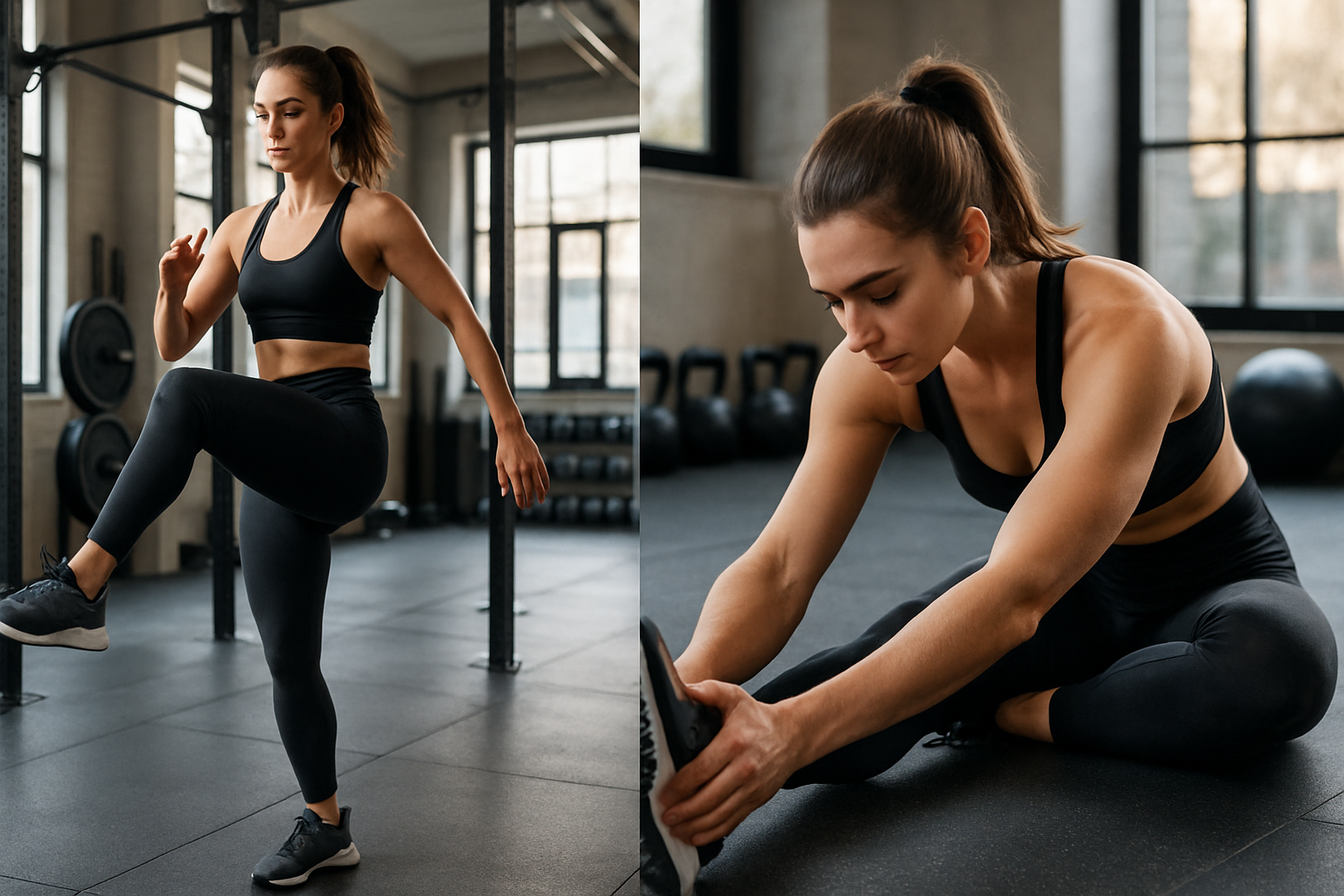
    Static stretching is what most people picture when they think of stretching. You hold a position — like a hamstring reach or a quad pull — for 20 to 60 seconds without moving. Dynamic stretching, on the other hand, involves controlled, active movements that take your joints through their full range of motion — think leg swings, arm circles, hip rotations, or walking lunges. These two types of stretching have very different effects on your body, especially when done right before a workout.

    Should You Stretch Before or After a Workout? Here’s What the Science Says

    Let’s talk about the research, because this is where things get really interesting. A significant body of evidence — including a widely cited meta-analysis published in the Scandinavian Journal of Medicine and Science in Sports — found that static stretching performed immediately before exercise can actually reduce muscle strength, power, and performance. We’re talking measurable decreases in explosive ability, sprint speed, and force output. That’s the opposite of what you want before a heavy lifting session or a tough run.

    Why does this happen? When you hold a static stretch for an extended period, you’re essentially telling your nervous system to relax that muscle. That temporary reduction in muscle tension and neuromuscular activation is great for recovery and flexibility gains — but terrible for performance right before you need to produce force.

    Dynamic stretching before a workout, however, tells a completely different story. Research consistently shows that dynamic warm-up routines improve range of motion, increase muscle temperature, activate the nervous system, and can actually enhance performance. Your muscles are primed, your joints are lubricated, and your body is ready to move explosively and efficiently. That’s the warm-up you want.

    Before Your Workout: Dynamic Stretching Is Your Best Friend

    Before any workout, your goal is to raise your core temperature, get blood flowing to your working muscles, and wake up your nervous system. A solid 5-to-10-minute dynamic warm-up does all of that. Here are some go-to moves I recommend for almost any workout:

    • Leg swings (front-to-back and side-to-side) — opens up the hips
    • Hip circles — loosens the hip flexors and glutes
    • Arm circles and shoulder rolls — preps the upper body
    • Bodyweight walking lunges — activates the quads, hamstrings, and glutes
    • Inchworms — stretches the posterior chain while building core stability
    • High knees or jumping jacks — elevates heart rate and temperature

    Spend time here. This is not optional. This is the foundation of a safe and effective workout.

    After Your Workout: This Is When Static Stretching Shines

    Post-workout is when static stretching becomes genuinely valuable. Your muscles are warm, pliable, and much more receptive to lengthening. Holding stretches for 30 to 60 seconds after exercise can help reduce post-workout tightness, gradually improve your flexibility over time, promote a sense of calm and recovery, and support better posture and joint health. This is your cool-down window, and it’s one of the most underused parts of any training program. I see people sprint out the door the second their last set is done — don’t be that person. Give yourself 5 to 10 minutes to bring your body back to baseline.

    Gear I Recommend for Stretching and Mobility Work

    You don’t need a lot of equipment to stretch effectively, but the right tools make the experience significantly more comfortable and productive. Here’s what I personally use and recommend:

    First, you need a quality mat. If you’re doing floor stretches, a thin or hard surface is a quick way to make the whole process miserable. The Amazon Basics 1/2 Inch Extra Thick Exercise Yoga Mat is a reliable, affordable option that gives you solid cushioning without breaking the bank. For something with a bit more premium feel and extra thickness, the Retrospec Solana Yoga Mat (1″ Thick) is excellent — especially if you’re doing longer stretching or mobility sessions on harder floors. And if you want a classic, durable option trusted by a ton of fitness enthusiasts, the Gaiam Premium Yoga Mat is a great go-to with a solid non-slip surface.

    For assisted stretching and mobility work, resistance bands are a game-changer. The Pull Up Resistance Bands are perfect for deeper hamstring and hip flexor stretches, helping you gradually increase your range of motion without forcing it. For lighter, more targeted work — especially around the hips, glutes, and ankles — the Fit Simplify Resistance Loop Bands (Set of 5) give you multiple resistance levels so you can progress at your own pace. These are also great for activation exercises as part of your dynamic warm-up.

    The Simple Rule to Remember Going Forward

    Here it is, plain and simple: dynamic stretching before, static stretching after. Warm up with movement, cool down with stillness. This approach protects your performance, reduces your injury risk, and sets you up for real, long-term flexibility gains over time. Whether you’re a runner, a lifter, a yogi, or just someone trying to stay active and feel good in your body — this principle applies universally.

  • Thoracic Spine Mobility: The Missing Link in Your Overhead Press and Posture

    Thoracic Spine Mobility: The Missing Link in Your Overhead Press and Posture

    Picture this: you’re setting up for an overhead press, you drive the bar up, and your coach or training partner tells you to “get your head through” — but no matter how hard you try, it just won’t happen. Or maybe you’ve noticed that your posture has started to resemble a question mark after years of desk work. If either of those sounds familiar, I can almost guarantee that thoracic spine mobility exercises are the missing piece you’ve been overlooking. I’ve seen this pattern with hundreds of people, and once we address the t-spine, everything from pressing strength to everyday posture clicks into place fast.

    Affiliate Disclosure: This post contains affiliate links. As an Amazon Associate, I earn from qualifying purchases. This comes at no extra cost to you, and I only recommend products I genuinely believe in.

    What Is the Thoracic Spine and Why Does It Get So Stiff?

    Let’s get clear on anatomy real quick — don’t worry, I’ll keep it simple. Your spine has three main sections: the cervical spine (your neck), the thoracic spine (mid-back, running from roughly your shoulder blades down to your lower ribs), and the lumbar spine (your lower back). The thoracic spine is made up of 12 vertebrae, and unlike the lumbar spine, it’s designed to rotate and extend. The problem? Modern life is absolutely terrible for it.

    Sitting at a desk, hunching over a phone, long drives, even heavy bench pressing without balancing it with pulling work — all of it pushes the thoracic spine into a rounded, flexed position called kyphosis. Over time, the joints, muscles, and connective tissue adapt to that position and essentially “lock in” there. You lose extension (the ability to arch back) and rotation, and that’s when everything upstream and downstream starts to suffer.

    How a Stiff T-Spine Wrecks Your Overhead Press and Posture

    Here’s the connection most people don’t realize: when you press something overhead, your body needs to create a straight line from your hips through your shoulders to your wrists. To do that efficiently and safely, your thoracic spine has to extend. If it can’t, your body compensates — usually by dumping into your lower back (lumbar hyperextension) or flaring your ribs aggressively. Both patterns increase injury risk and limit how much weight you can move.

    Research backs this up. A study published in the Journal of Strength and Conditioning Research found that thoracic mobility directly influences shoulder mechanics and overhead performance. When the t-spine is restricted, the scapula (shoulder blade) can’t rotate properly, which puts excess stress on the rotator cuff and limits the range of motion you need for a safe, strong press.

    And posture? A stiff thoracic spine is the engine driving that forward-head, rounded-shoulder look. Your neck and lower back don’t cause that posture — they’re just reacting to what’s happening in the middle of your back. Fix the t-spine, and the rest tends to follow.

    Thoracic Spine Mobility Exercises You Should Be Doing

    Alright, let’s get into the good stuff. These are the movements I come back to again and again with clients, and they work. Aim to do this routine three to five times per week — it only takes about 10 to 15 minutes.

    1. Foam Roller Thoracic Extension

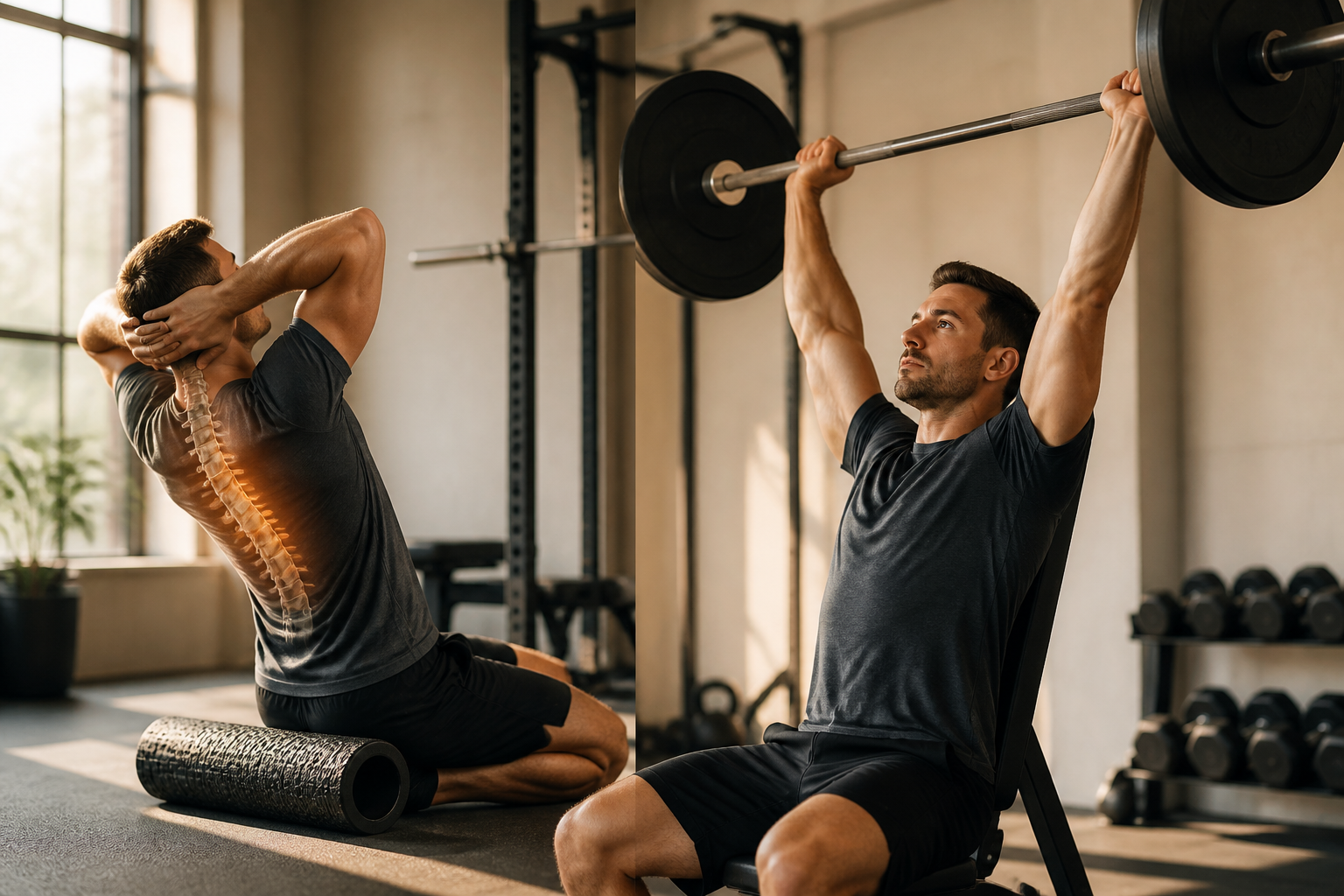
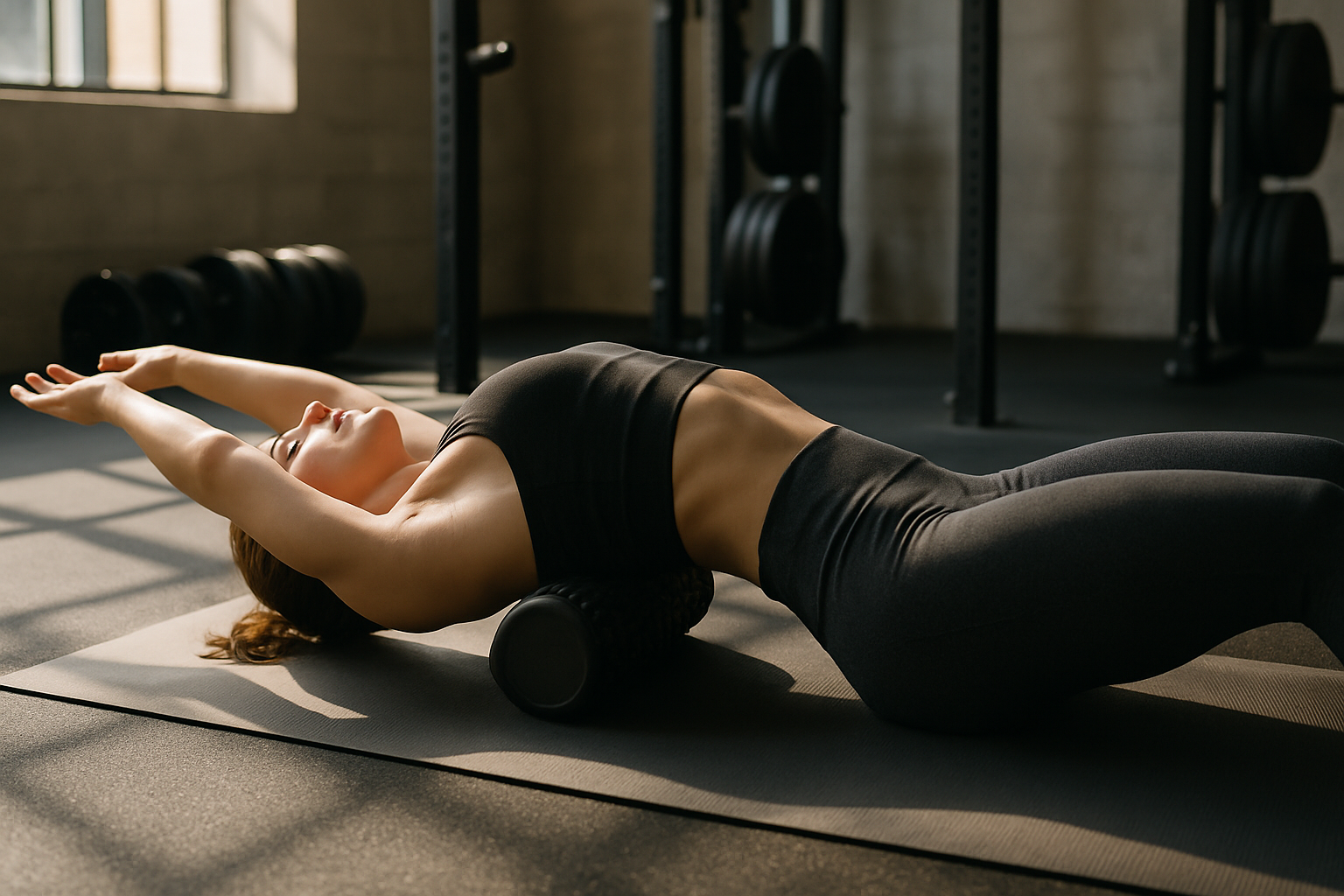
    This is the foundational drill. Place a foam roller horizontally across your mid-back, support your head with your hands, and gently extend backward over the roller. Hold each position for a few seconds, then shift the roller up or down an inch and repeat. You’re mobilizing each segment of the thoracic spine individually, which is exactly what it needs. Do two to three passes up and down the t-spine.

    2. Thread the Needle

    Start on all fours. Take one arm and slide it along the floor underneath your other arm, rotating your upper body toward the floor. This is a killer thoracic rotation drill. Hold for two seconds at the end range, return, and repeat for eight to ten reps per side. You’ll feel this one immediately.

    3. Open Book Stretch

    Lie on your side with your knees stacked and bent at 90 degrees. Extend your arms straight out in front of you. Take the top arm and rotate it open toward the floor behind you, following it with your eyes and letting your chest open up. Hold two to three seconds, return, and go for eight reps per side. This is one of the best drills for thoracic rotation you’ll ever find.

    4. Doorway or Stick-Assisted Overhead Reach

    Grip a mobility stick or dowel rod with both hands overhead and work on pressing up while cuing your ribs down and your t-spine into extension. This bridges mobility work directly into the overhead press pattern. Brilliant drill for anyone who presses regularly.

    Gear I Recommend for Thoracic Mobility Work

    You don’t need a ton of equipment, but the right tools make this work noticeably more effective. Here’s what I actually use and recommend.

    Chirp Wheel Foam Roller — This thing is a game-changer for targeted spinal work. The narrow, spine-channeling design means the pressure hits the muscles on either side of your vertebrae rather than directly on the bone, which is far more comfortable and effective than a standard flat roller. It supports up to 500 lbs and the foam density is just right. Check out the Chirp Wheel on Amazon.

    RAD Roller Stiff Peanut Massage Ball — Think of this as a more targeted version of the foam roller. The double-ball “peanut” shape straddles your spine so you get direct pressure into the thoracic paraspinals without grinding on vertebrae. It’s excellent for getting into specific stuck segments. Grab the RAD Roller Peanut on Amazon.

    Amazon Basics High-Density Foam Roller (18 Inch) — If you’re just getting started and want a no-frills, reliable option that does the job, this is it. High density means it won’t go soft on you after a few weeks, and the 18-inch size is ideal for thoracic work. Solid value. Pick up the Amazon Basics Foam Roller here.

    Mobility Mentor Yoga Stick — For the stick-assisted overhead drills I mentioned above, this bamboo mobility stick is a fantastic tool. It’s sturdy, comfortable to grip, and long enough to give you the leverage you need for thoracic extension and overhead patterning work. See the Mobility Mentor Yoga Stick on Amazon.

    Scisum Adjustable Yoga

  • Hip Flexor Stretches That Actually Work (And the Tools That Make Them Better)

    Hip Flexor Stretches That Actually Work (And the Tools That Make Them Better)

    • Minutes 1–2: Light hip circles and leg swings to warm up the joint before you stretch.
    • Minutes 3–6: 90/90 lunge stretch, 60 seconds each side.

      You stretch every day. You foam roll. You do yoga twice a week. And yet the moment you stand up from your desk or hit the bottom of a squat, that deep pull in the front of your hip reminds you that something still isn’t right. Sound familiar? If you’ve been searching for hip flexor stretches that work — not just feel good in the moment but actually create lasting change — you’re in the right place. I’m going to break down exactly why your hip flexors get so tight, which stretches are backed by real results, and the simple tools that take everything to the next level.

      This post contains affiliate links. As an Amazon Associate, I earn from qualifying purchases. This helps keep the lights on at WorkoutAnswers.com — and I only recommend gear I’d actually use myself.

      Why Your Hip Flexors Are Always Tight (Even When You Stretch)

      Here’s the thing most people miss: stretching a muscle that’s both tight and weak is like pulling on a rubber band that’s already fraying. Your hip flexors — primarily the psoas major and iliacus (together called the iliopsoas) and the rectus femoris — are designed to lift your knee and flex your trunk toward your thigh. When you sit for long periods, these muscles stay shortened. Over time, the nervous system actually “learns” that shortened position as the new normal, which is why passive stretching alone often doesn’t cut it.

      The solution isn’t to stretch harder. It’s to stretch smarter — combining lengthening with light activation so your body learns to accept and own that new range of motion. That’s the principle behind everything I’m recommending below.

      Hip Flexor Stretches That Work: The Core Four

      1. The 90/90 Hip Flexor Lunge Stretch

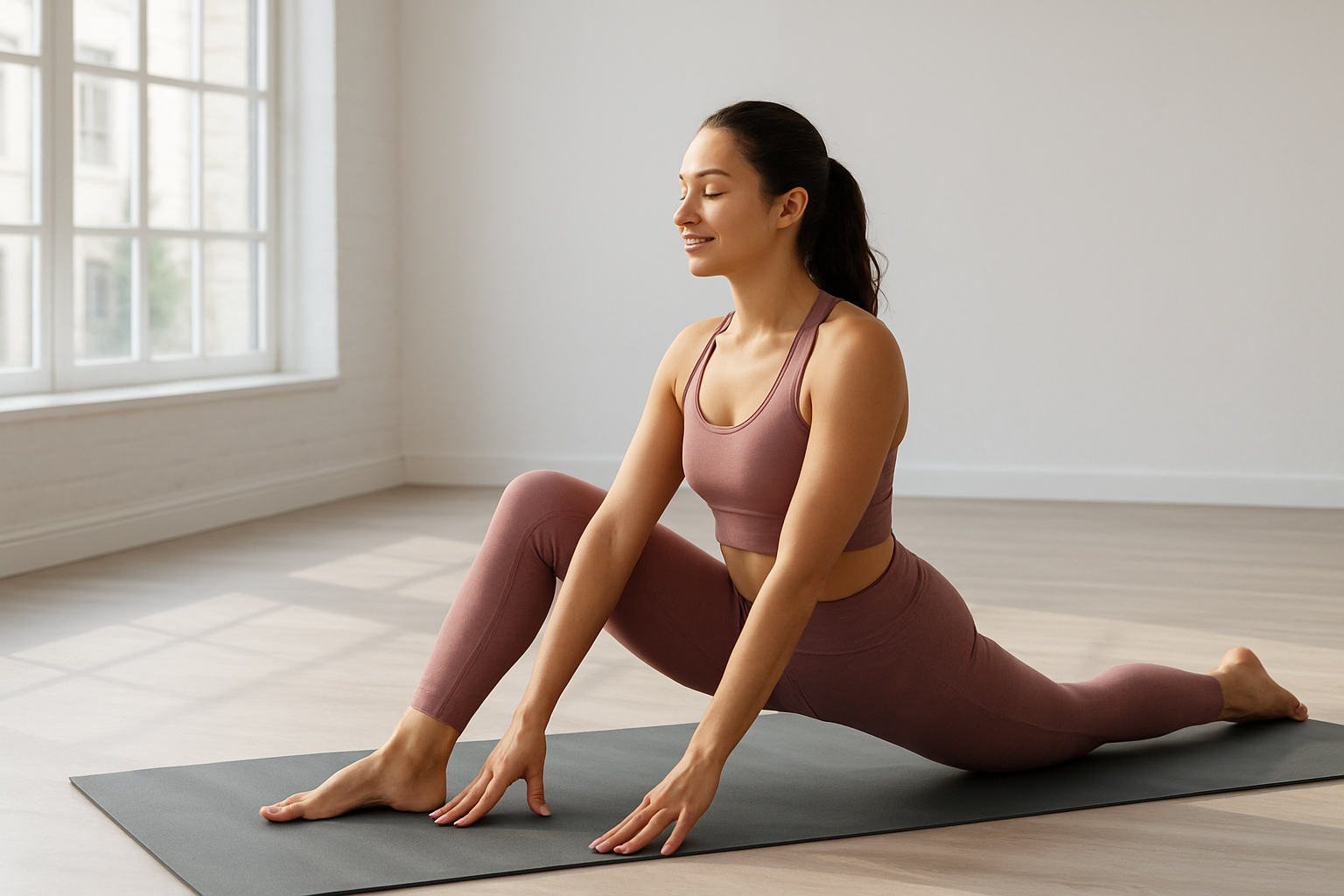
      This is your bread and butter. Drop into a half-kneeling position — one knee on the floor, the other foot planted in front at 90 degrees. Tuck your pelvis slightly (think: gently squeezing the glute of the back leg) and shift your hips forward until you feel a deep stretch along the front of that back hip. Hold for 45–60 seconds. That posterior pelvic tilt is critical — without it, you’re just arching your lower back instead of actually lengthening the psoas.

      2. The Couch Stretch

      This one earned its name from being done against a couch, but a wall works just as well. Bring your shin up against a wall or elevated surface behind you while your front foot is planted. It’s intense, and that’s the point — it targets the rectus femoris (the part of your quad that also crosses the hip) in a way most stretches completely skip. Start with 30 seconds and build from there.

      3. Supine Hip Flexor Stretch with Strap Assist

      Lie on your back, loop a stretch strap around one foot, and extend that leg straight up. Lower the opposite leg flat on the floor — or as close as you can get. The goal is to keep that bottom leg pressed down; if it floats up, your hip flexor is telling you exactly where the tightness lives. A quality strap lets you gradually coax the leg down without yanking, which keeps you safe and in control. I’ll get to the tools I recommend in just a moment.

      4. Active Hip Flexor Release with Resistance

      This one bridges the gap between stretching and strengthening. Using a hip flexor training strap anchored to a door, you can perform slow, controlled hip flexion and extension against light resistance. This teaches your hip flexors to generate force through their full range — which is how you lock in the gains from passive stretching. Think of it as teaching your body to “own” the new length you’ve worked hard for.

      Gear I Recommend for Getting the Most Out of These Stretches

      You don’t need a fully stocked gym. You need a few smart tools that make the right positions easier to get into and hold. Here’s what I actually use and recommend:

      • For block-supported lunges and couch stretch variations: The Gaiam Essentials Yoga Block 2 Pack & Yoga Strap Set gives you both blocks and a strap in one affordable bundle. Placing a block under your back knee during half-kneeling stretches immediately reduces joint pressure and lets you focus on the stretch instead of discomfort.
      • For a complete beginner or home workout setup: The Simgoing 14-Piece Yoga Kit includes blocks, a strap, resistance bands, a massage lacrosse ball, a knee pad, and more. If you’re building out a home mobility routine from scratch, this kit covers almost everything you need at a price that makes sense.
      • For dancers, gymnasts, or anyone who wants guided stretching: These Non-Slip EVA Foam Yoga Blocks with Strap and Guide come with a stretching guide included, which is great if you’re newer to mobility work and want direction on form and sequencing.
      • For the supine strap stretch and general flexibility work: The Trideer Stretching Strap with 10 Loops is one of my favorites for controlled, progressive flexibility work. The multiple loops mean you can gradually inch your hand position closer as your range improves — it’s basically a built-in progress tracker.
      • For active resistance work on the hip flexors: The Hip Flexor Training Strap with Door Anchor and Resistance Bands is specifically designed for hip flexor strengthening and mobility work. This is the tool that takes you from “I stretched today” to “my hips are actually changing.”

      How to Put It All Together: A Simple Daily Routine

      You don’t need an hour. Ten to fifteen minutes done consistently beats an hour once a week every single time. Here’s a simple structure you can follow:

      • Minutes 1–2: Light hip circles and leg swings to warm up the joint before you stretch.
      • Minutes 3–6: 90/90 lunge stretch, 60 seconds each side.
  • A 10-Minute Daily Mobility Routine That Fixes the Damage Sitting Does to Your Body

    A 10-Minute Daily Mobility Routine That Fixes the Damage Sitting Does to Your Body

    You know that stiff, achy feeling you get after sitting at your desk for three or four hours straight? Your hips feel locked up, your lower back is screaming, and your shoulders are basically living somewhere near your ears? Yeah, I’ve been there — and so have most of my clients. The good news is that a daily mobility routine for sitting doesn’t have to take an hour or require a gym membership. In fact, 10 minutes a day is genuinely enough to start reversing the damage that prolonged sitting does to your body. Let me show you exactly how to do it.

    This post contains affiliate links. As an Amazon Associate, I earn from qualifying purchases. This means I may earn a small commission if you purchase through my links — at no extra cost to you. I only recommend gear I actually believe in.

    Why Sitting Is Wrecking Your Body (And What Mobility Actually Does)

    Here’s the hard truth: the human body was not designed to sit for 8 to 10 hours a day. When you’re parked in a chair, your hip flexors — the muscles that connect your hips to your spine — are in a constantly shortened position. Over time, they tighten up and start pulling on your lower back, which is a major reason so many desk workers deal with chronic lumbar pain. Meanwhile, your glutes essentially “forget” how to fire correctly (trainers call this gluteal amnesia, and yes, it’s a real thing), your thoracic spine — the middle part of your back — loses its ability to rotate, and your chest tightens while your upper back weakens.

    Mobility work addresses all of this. Mobility isn’t the same as stretching, by the way. Stretching is passive — you hold a position and let the muscle lengthen. Mobility is active — you’re moving through a full range of motion while your muscles are engaged, which trains your nervous system to actually use that range. That’s what makes it so effective for counteracting sitting posture.

    The 10-Minute Daily Mobility Routine for Sitting Damage

    Do this sequence once a day — morning works great, but right after work is honestly ideal because you’re addressing the damage you just did. All you need is a mat and a few feet of floor space. Move slowly and with control. This isn’t a race.

    1. 90/90 Hip Stretch — 60 Seconds Per Side

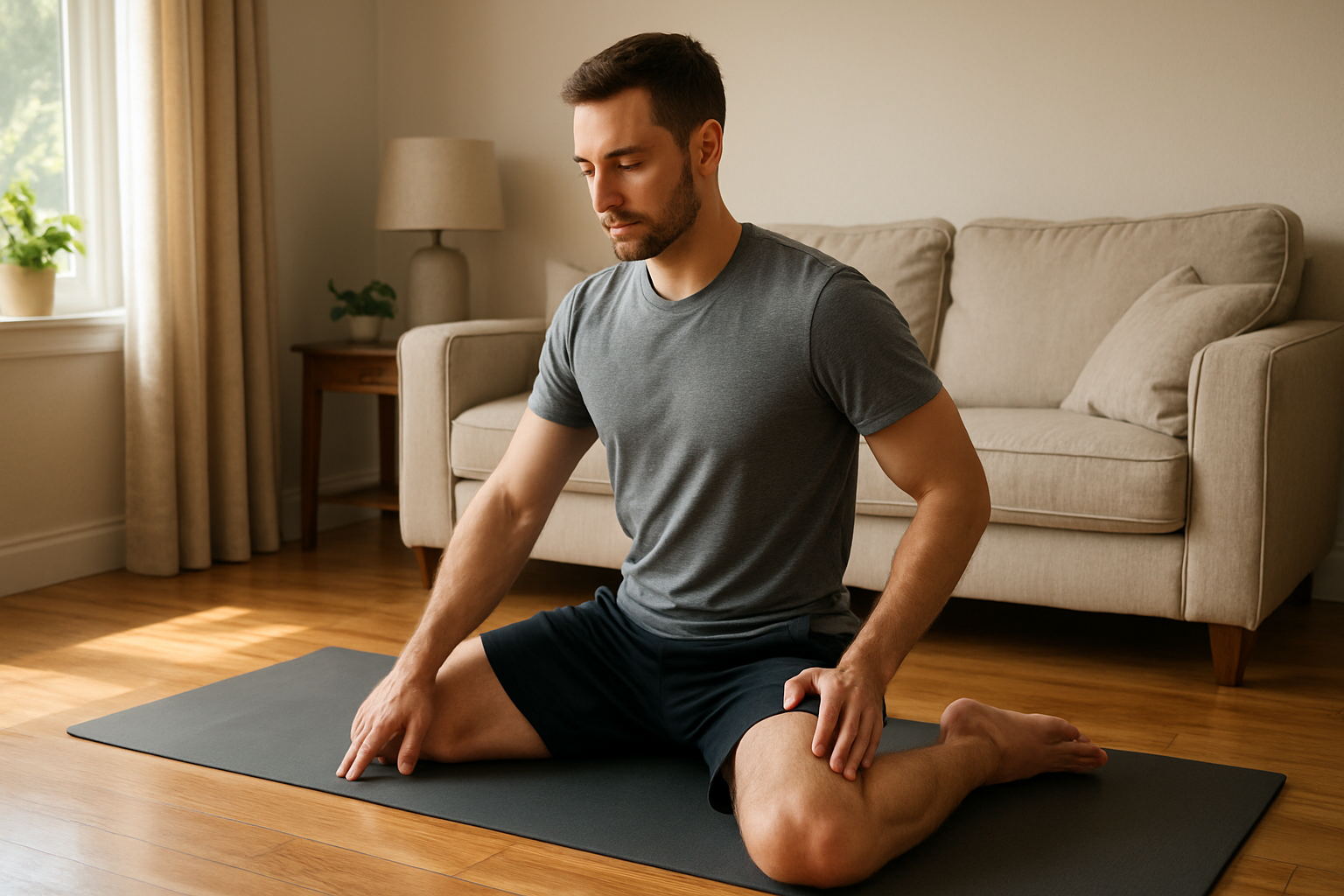
    Sit on the floor with both legs bent at 90-degree angles — one in front of you, one to the side. Keep your spine tall and gently hinge forward over your front leg. This is one of the best exercises on the planet for restoring hip rotation, which sitting absolutely destroys. Don’t collapse your back. Breathe into the stretch.

    2. World’s Greatest Stretch — 5 Reps Per Side

    Start in a lunge position with your right foot forward. Place your right hand on the ground inside your right foot, then rotate your left arm up toward the ceiling and open your chest. Return and repeat. This single movement hits your hip flexors, thoracic rotation, hamstrings, and groin all at once. It earned its name for a reason.

    3. Cat-Cow — 10 Reps

    Get on all fours. Inhale as you drop your belly toward the floor and lift your head (cow). Exhale as you round your spine toward the ceiling and tuck your chin (cat). Move slowly and breathe deliberately. This rehydrates your spinal discs and restores movement to a spine that’s been compressed in a chair all day.

    4. Thoracic Spine Rotation — 10 Reps Per Side

    Lie on your side with knees stacked at 90 degrees. Keep your hips still and rotate your top arm open toward the opposite side, letting your upper back follow. Hold briefly at end range. This directly targets the mid-back stiffness that causes that hunched-over desk posture and is crucial for shoulder and neck health.

    5. Glute Bridge — 15 Reps

    Lie on your back, feet flat on the floor, hip-width apart. Drive your heels into the ground and squeeze your glutes as you lift your hips toward the ceiling. Hold for two seconds at the top. This wakes up those sleeping glutes and counteracts the anterior pelvic tilt (forward tipping of the hips) that comes from chronic sitting.

    6. Deep Squat Hold — 60 Seconds

    Feet shoulder-width apart, toes slightly turned out. Lower into the deepest squat you can manage while keeping your heels on the floor. Hold onto a doorframe if needed. This position restores ankle mobility, opens the hips, and decompresses the lower spine. Most adults in Western cultures have completely lost this position. Get it back.

    Gear I Recommend for This Routine

    You don’t need much equipment, but having the right gear makes a real difference in consistency. If your setup is comfortable, you’ll actually do the work.

    For Your Mat: The floor exercises in this routine are so much more comfortable with a quality mat under you. I like the Grey Blue/Black Eco Friendly Non Slip Yoga Mat (6mm) — it’s thick enough to cushion your spine during bridges and rotations without being so squishy that you lose stability. If you prefer a different color, the Matcha Green/Black version is the same quality mat with a fresh look. Both come with a carrying strap, which is a small thing that actually keeps you accountable. If you want something with a little more visual flair, the Gaiam Premium Print Sublime Sky Mat (6mm) is a fan favorite and holds up extremely well to daily use.

    For Recovery and Tissue Work: After your mobility routine — or on rest days — doing some self-myofascial release (basically, using tools to massage your own soft tissue) can speed up how fast you feel results. The Foam Roller Set with Muscle Roller Stick, Massage Balls, and Stretching Strap gives you everything you need in one affordable kit — I especially like using the massage balls on the bottoms of the feet and glutes. If you want something with a bit more structure, the Krightlink 5-in-1 Foam Roller Set includes a resistance band and a carry bag, making it easy to keep everything organized and even take it with you when you travel.

    How Long Before You Feel a Difference?

    Most people notice a reduction in lower back tightness and hip tension within the first week. Seriously —

  • The Difference Between Flexibility and Mobility (And Why You Need Both)

    The Difference Between Flexibility and Mobility (And Why You Need Both)

    Here’s a scene I see all the time: someone finishes a tough workout, drops to the floor, reaches for their toes in a quick stretch, holds it for ten seconds, and calls it a day. They’re “working on their flexibility,” they tell me. And sure, that’s part of it — but if you’ve ever wondered why you still feel stiff, achy, or limited in your movements even after months of stretching, understanding the flexibility vs mobility training difference might be the missing piece of your fitness puzzle. These two terms get tossed around like they mean the same thing, but they don’t — and knowing the distinction can completely change how you train, recover, and move through daily life.

    This post contains affiliate links. As an Amazon Associate, I earn from qualifying purchases. This means I may earn a small commission if you click through and make a purchase — at no extra cost to you. I only recommend products I genuinely think are worth your time and money.

    Flexibility vs Mobility Training Difference: Let’s Break It Down

    Let’s start with the basics so we’re all on the same page.

    Flexibility refers to the ability of your muscles and connective tissues to lengthen passively. Think of it as how far a muscle can be stretched when an outside force — gravity, a strap, another person — is applied. When you hold a static hamstring stretch on the floor, you’re working on flexibility. Your muscle is being lengthened, but your body isn’t necessarily doing the work to get there.

    Mobility, on the other hand, is about how well a joint moves through its full range of motion — actively, under your own muscle control. It’s not just whether your hip can get into a certain position, but whether you have the strength and neuromuscular control to move it there and hold it on your own. Mobility is functional. It’s what actually shows up in your squats, lunges, overhead presses, and everyday movements like bending down to pick something up.

    Here’s the key distinction: you can be flexible without being mobile, but you can’t be truly mobile without a base of flexibility. A dancer might have incredible passive flexibility — they can be pushed into a full split — but if they don’t have the active strength to control that range, they’re at a higher risk of injury. Flexibility without mobility is like having a wide road with no guardrails.

    Why Most People Only Train One (And Why That’s a Problem)

    The fitness world tends to put stretching in a box labeled “cool-down” and leaves it at that. Static stretching after a workout? Good habit. But if that’s the only work you’re doing for your range of motion, you’re leaving a massive gap in your training.

    Research published in the Journal of Human Kinetics has shown that while static stretching improves passive range of motion, it doesn’t necessarily translate to improved active joint control. That’s why someone can touch their toes in a stretch but still can’t hit depth in a squat or perform a pain-free hip hinge. The muscle can be lengthened passively, but the nervous system hasn’t been trained to own that range actively.

    Common signs you’re neglecting mobility work include:

    • Tight hips that limit your squat depth
    • Shoulder stiffness that affects your pressing and pulling movements
    • Lower back pain during or after workouts
    • Feeling “flexible” in stretches but stiff during actual exercise
    • Recurring minor injuries in the same joints

    If any of those sound familiar, it’s time to be more intentional about training both sides of the equation.

    How to Train Flexibility and Mobility Together

    The good news? You don’t need a completely separate workout to address both. You just need to be strategic about the types of stretching and movement work you’re doing.

    For Flexibility: Use Static and PNF Stretching

    Static stretching — holding a position for 20 to 60 seconds — is still one of the most effective ways to increase muscle length over time. PNF stretching (Proprioceptive Neuromuscular Facilitation), where you contract and relax the muscle while in a stretched position, is even more effective and is widely used in physical therapy settings. A stretching strap is one of the best tools you can own for both of these techniques because it lets you isolate specific muscle groups safely and progressively without needing a partner.

    For Mobility: Use Dynamic Movement and Active Range Work

    Mobility training involves moving through ranges of motion under your own control. Think hip circles, leg swings, thoracic rotations, deep squat holds with active engagement, and controlled articular rotations (CARs). These movements teach your nervous system to own the range your muscles are capable of reaching. Include these as part of your warm-up — dynamic mobility work before training is far more effective at preparing your body than static stretching alone.

    A solid weekly plan might look like this: dynamic mobility work before every session (5 to 10 minutes), and dedicated static stretching on rest days or after training (10 to 20 minutes). Consistency over weeks and months is what moves the needle — not one marathon stretching session after a stressful Monday.

    Gear I Recommend for Flexibility and Mobility Training

    You don’t need a fully equipped gym to build serious flexibility and mobility. A quality stretching strap is honestly one of the most versatile and underrated tools out there. Here are a few I recommend depending on your style and budget:

    The Abiarst Stretching Strap is a solid go-to. It features 10 loops for adjustable positioning, which makes it great for targeting different muscle groups with precision — especially useful for hamstrings, quads, and hip flexors. It’s non-elastic by design, which is actually what you want for controlled static and PNF stretching. No bounce, just a clean, stable hold.

    If you want something with a bit more polished presentation — especially if you’re buying as a gift or just like your gear to look sharp — the Trideer Stretching Strap comes in aesthetic packaging and works equally well. It’s a non-elastic, 10-loop band that works for home workouts, Pilates, gymnastics, and physical therapy routines. Great for men and women who want a clean, functional tool that doesn’t look like it came out of a hospital supply closet.

    Another excellent option is this purple stretching strap with a built-in workout guide. If you’re newer to flexibility training and aren’t sure how to use a strap effectively, having a