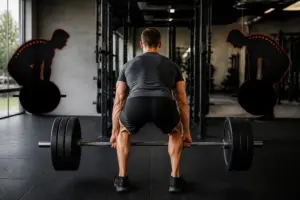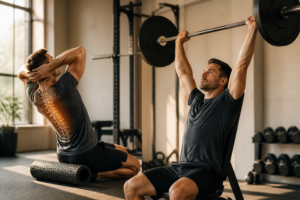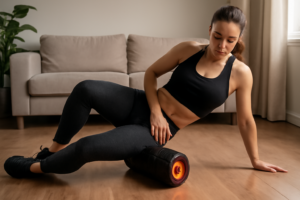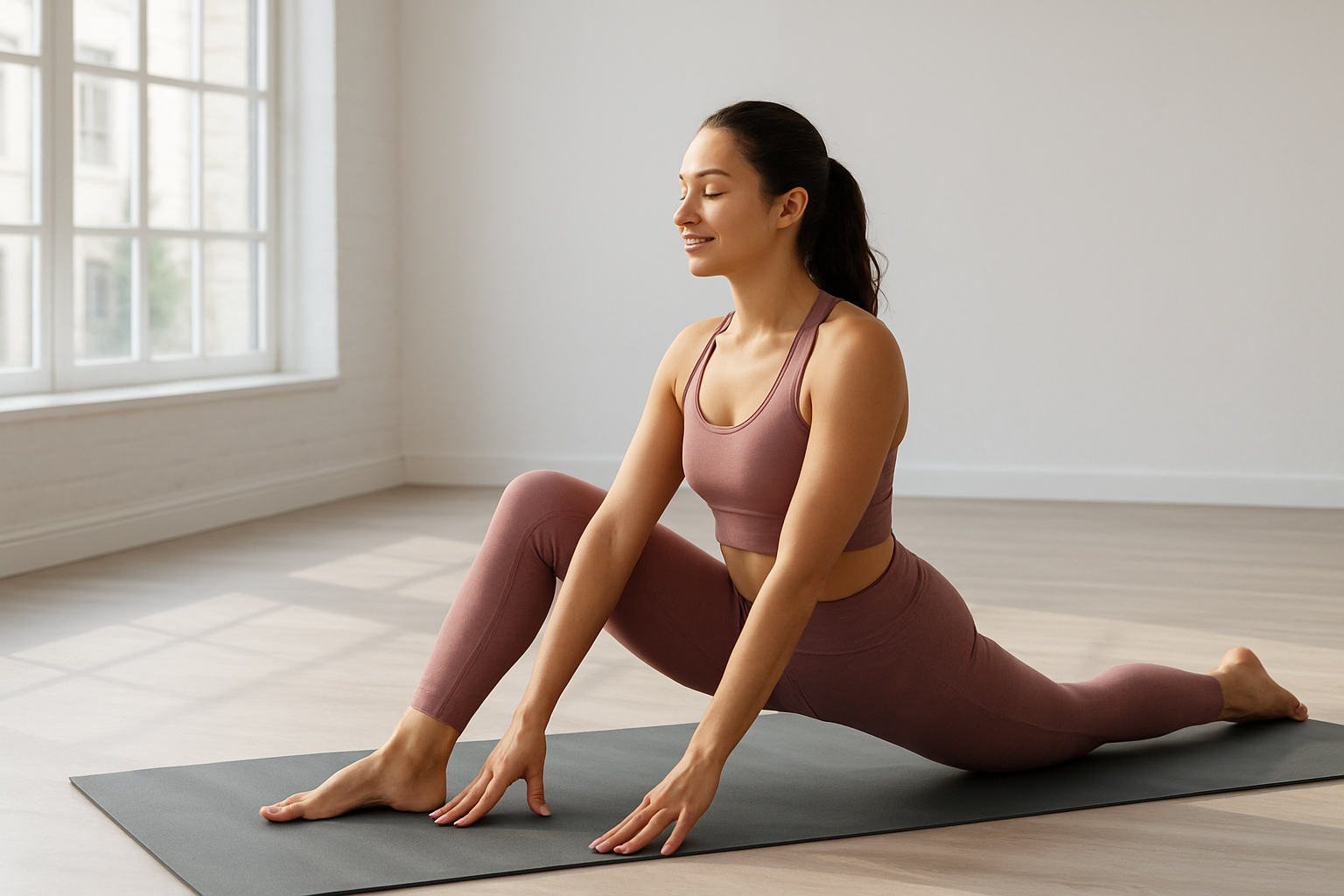

Halfway through my junior year of college, balancing pre-med prerequisites with serious gym time meant that every training session had to count — and few things sabotaged a workout faster than that relentless tightness deep in the front of my hip, whether I was loading a heavy squat or simply standing up from my desk in the library. I experimented with stretching routines, rolled out with foam, even committed to a yoga session despite my packed schedule, yet the problem persisted. That persistent frustration drove me to investigate what actually causes hip flexors to remain chronically restricted — and critically, how to achieve genuine, sustained improvement rather than momentary relief. If you’re caught in that same pattern of stretching without seeing real progress, I’ll show you which hip flexor stretches produce measurable results, plus the equipment upgrades that amplify their effectiveness.
Why Your Hip Flexors Are Always Tight (Even When You Stretch)
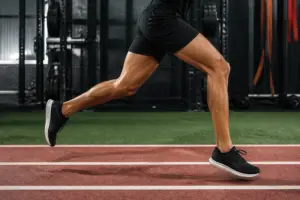
Here’s what most training articles overlook: attempting to stretch a muscle that’s simultaneously tight and deconditioned is akin to pulling on a rubber band that’s already starting to fray. Your hip flexors — chiefly the psoas major and iliacus (collectively known as the iliopsoas) and the rectus femoris — are responsible for lifting your knee upward and drawing your trunk toward your thigh. When you remain seated throughout the day, these muscles stay in a shortened state. The nervous system gradually accepts that compressed position as its baseline, which explains why merely stretching in a passive manner frequently falls short.
The answer isn’t intensity. It’s strategy — pairing lengthening movements with subtle strengthening so the body recognizes and maintains that expanded range. That’s the core idea behind all the approaches I outline here.
Hip Flexor Stretches That Actually Deliver Results: Four Proven Options
1. The 90/90 Hip Flexor Lunge Stretch
This is the foundation. Position yourself in a half-kneeling stance — rear knee down on the ground, front leg bent and foot planted ahead at 90 degrees. Engage a slight posterior pelvic tilt (picture: gently firing the glute of your back leg) and push your hips forward until you notice a pronounced stretch running along the front of your rear hip. Sustain this for 45–60 seconds. That posterior pelvic tilt matters enormously — without it, you’re just overarching your lumbar spine instead of meaningfully extending the psoas.
2. The Couch Stretch
This stretch takes its name from being performed with a couch, though any raised surface behind you serves the same purpose. Position your rear shin upward against a wall or sturdy furniture while your front foot grounds itself on the floor. The sensation is marked, which signals you’re hitting the target — it isolates the rectus femoris (the quadriceps head that also spans the hip joint) in a manner that standard stretches entirely overlook. Begin with 30 seconds and gradually extend your duration.
3. Supine Hip Flexor Stretch with Strap Assist
Lie flat on your back, secure a stretching strap around one foot, and raise that leg toward the ceiling. Let your opposite leg rest flat against the ground — or as near to it as possible. The key is maintaining downward pressure with that bottom leg; when it begins to lift, your hip flexor is signaling where restriction lives. Using a proper strap lets you progressively ease the leg down without forcing, keeping the whole movement controlled and injury-free. I’ll cover specific tool recommendations shortly.
4. Active Hip Flexor Release with Resistance
This approach sits at the intersection of lengthening and activating. With a hip flexor training strap secured to a door frame, you can execute slow, deliberate hip flexion and extension against modest load. This conditions your hip flexors to work effectively across their complete range — ensuring that passive stretching gains actually stick. Frame it this way: you’re training your body to feel competent and strong in that expanded position.
Why a Quality Strap Transformed My 90/90 Lunge From Guesswork Into Real Stretching
Stubborn hip flexor restriction doesn’t respond to improvisation—you need reliable, even tension throughout the entire movement, and without the right assist, most people either strain their lower back or abbreviate the stretch. A purpose-built stretching strap provides the precision to target that anterior hip engagement without unwanted movement patterns.
What performs well
- The graduated grip points allow you to customize the degree of support—I began using loop 3 and shifted progressively toward the fixed end as my hip mobility improved across several weeks.
- Employing it during the 90/90 lunge eliminated unwanted spinal compensation; I finally experienced the stretch in the precise location where it belonged instead of defaulting to lower-back extension.
- The construction holds up to frequent daily stretching without deteriorating or losing its grip surface, regardless of whether I was warming up cold (not ideal, but practical reality between sets).
Where it falls short
- The loop markers are present, yet the print is barely legible and deteriorates fast when exposed to sweat and heat—I ended up creating my own tracking system.
- Calibrating proper tension involved some experimentation; insufficient tension means you’re simply holding fabric, excessive tension means you’re fighting against the stretch rather than allowing yourself to sink deeper.
I almost abandoned it after my first week because I was yanking the strap too hard and feeling more strain than relief—until I realized I needed to use it more as a guide than a pulley. Pick up the Trideer Stretching Strap with 10 Loops and give yourself at least three sessions to dial it in.
Frequently Asked Questions
How long should I hold a 90/90 hip flexor lunge stretch?
Hold the 90/90 lunge for 45–60 seconds. Position your rear knee on the ground with your front leg bent at 90 degrees, then engage a slight posterior pelvic tilt by firing your glute and push your hips forward until you feel a pronounced stretch along the front of your rear hip.
What’s the difference between couch stretch and 90/90 lunge?
The couch stretch isolates the rectus femoris—the quadriceps head that spans the hip joint—by positioning your rear shin upward against a wall or furniture. Start with 30 seconds and extend duration gradually. The 90/90 lunge targets the iliopsoas through a half-kneeling position with anterior pelvic tilt.
Can I use a stretching strap for hip flexor stretches?
Yes. A stretching strap lets you progressively ease your leg down during supine hip flexor stretches without forcing the movement, keeping it controlled and injury-free. The graduated grip points allow you to customize support level as your hip mobility improves over several weeks.
Why do hip flexors stay tight even after stretching?
Hip flexors that are tight and deconditioned don’t respond to passive stretching alone. Your nervous system accepts the shortened position as baseline from prolonged sitting. The solution pairs lengthening movements with subtle strengthening so your body recognizes and maintains that expanded range.
About This Article

Written by Jordan Ellis. Jordan Ellis isn't a certified personal trainer — just someone who's been genuinely obsessed with training for over eight years and turned it into building smarter home gyms. He focuses on home fitness: effective training spaces, equipment that earns its price, and programs that work in a spare room or basement, not just a commercial gym. More about this site.
Scope and limits. Jordan is not a certified personal trainer, and nothing here is medical advice. Check with a physician before starting a new program, and prioritize form over load on every lift described.
Verify this against a primary source
Specifics change, and your situation may differ from the one described here. These are the authorities worth checking directly:
- Physical Activity Guidelines for Americans (HHS) — the federal physical activity guidelines
- American College of Sports Medicine — exercise prescription and position stands
- NSCA — strength and conditioning research