I Tested the Hyperice Vyper 3 Vibrating Foam Roller on My IT Band

I Tested the Hyperice Vyper 3 Vibrating Foam Roller on My IT Band

This post contains affiliate links. As an Amazon Associate, I earn from qualifying purchases at no extra cost to you.

If you’ve ever coached endurance athletes, you know the IT band is a relentless troublemaker. Three years ago, one of my longest-standing clients — a 42-year-old recreational marathon runner — showed up to our session barely able to descend a flight of stairs. Classic lateral knee pain. Classic iliotibial band syndrome. We’d been here before, and honestly, I was frustrated. This is exactly what pushed me into writing this Hyperice Vyper foam roller review.

We’d tried standard foam rollers. We’d tried lacrosse balls. We’d tried manual soft tissue work before every session. Progress was slow, and my client’s training was suffering. She was running 35 miles per week in preparation for her fourth marathon. Missing recovery days wasn’t an option. I needed something that actually moved the needle — fast.

That frustration sent me down a rabbit hole of vibrating recovery tools. After weeks of research and a few costly mistakes with cheaper alternatives, I landed on something that genuinely changed how I approach soft tissue work with my athletes.

Why I Chose the Hyperice Vyper 3

My first instinct was to ask around. I train out of a commercial gym with a strong community of coaches, physical therapists, and competitive athletes. The Hyperice name came up repeatedly. Specifically, the Vyper 3 kept getting recommended by two sports PTs I respect. That carries weight with me.

Beyond word-of-mouth, I dug into the specs. The Hyperice Vyper 3 – Powerful High-Intensity Vibrating Foam Roller and Hypersphere Go bundle caught my attention for one key reason: it paired the full-length vibrating roller with the Hypersphere Go massage ball. That combination addressed both the broad tissue of the IT band and the tighter, pinpoint work around the TFL and glute med — two muscles that directly influence IT band tension.

In my experience, most recovery tools do one thing adequately. This bundle promised two complementary tools in one purchase. That’s a practical value proposition for a trainer who works with multiple clients daily. I also compared it against the TheraGun WaveRoller — more on that later — but the vibration intensity specs and the included ball sealed the deal.

First Impressions Out of the Box

The packaging is clean and premium. That matters, because it signals quality control before you even turn the device on. The Vyper 3 roller itself is 12.5 inches long and weighs about 2.9 pounds. It feels dense and solid — not hollow or flimsy like budget rollers. The surface texture has a dual-zone pattern: a smoother central channel and more aggressive ridges along the outer thirds.

Charging is via USB-C, which I appreciate. No proprietary cables to lose. The Hypersphere Go ball is compact — roughly the size of a lacrosse ball — but noticeably heavier due to its motor. Three vibration speeds are accessible directly on the device. No app required, which keeps things simple during an actual training session.

My first impression was honestly skeptical. I’ve used vibrating rollers before that promised a lot and delivered a mediocre buzz. However, when I switched the Vyper 3 to speed three — the highest setting — the difference was immediate. The vibration is deep, not surface-level. You feel it penetrating into the tissue, not just rattling on the skin. That first use converted me within about 90 seconds.

Build Quality Notes

  • Hard outer shell feels durable and gym-floor ready
  • Three vibration frequencies: 33 Hz, 40 Hz, and 53 Hz
  • Battery life rated at approximately 2 hours per charge
  • The Hypersphere Go charges separately — two charging cables included
  • No Bluetooth on this model — straightforward, on-device controls only

How I Tested It — My Exact Protocol

I tested this bundle over eight weeks with three clients and used it personally before my own lower-body training sessions. My own program during this period was a four-day upper/lower split. Lower days included heavy squats (working sets between 225–275 lbs), Romanian deadlifts at 185 lbs for 4×8, and single-leg press work.

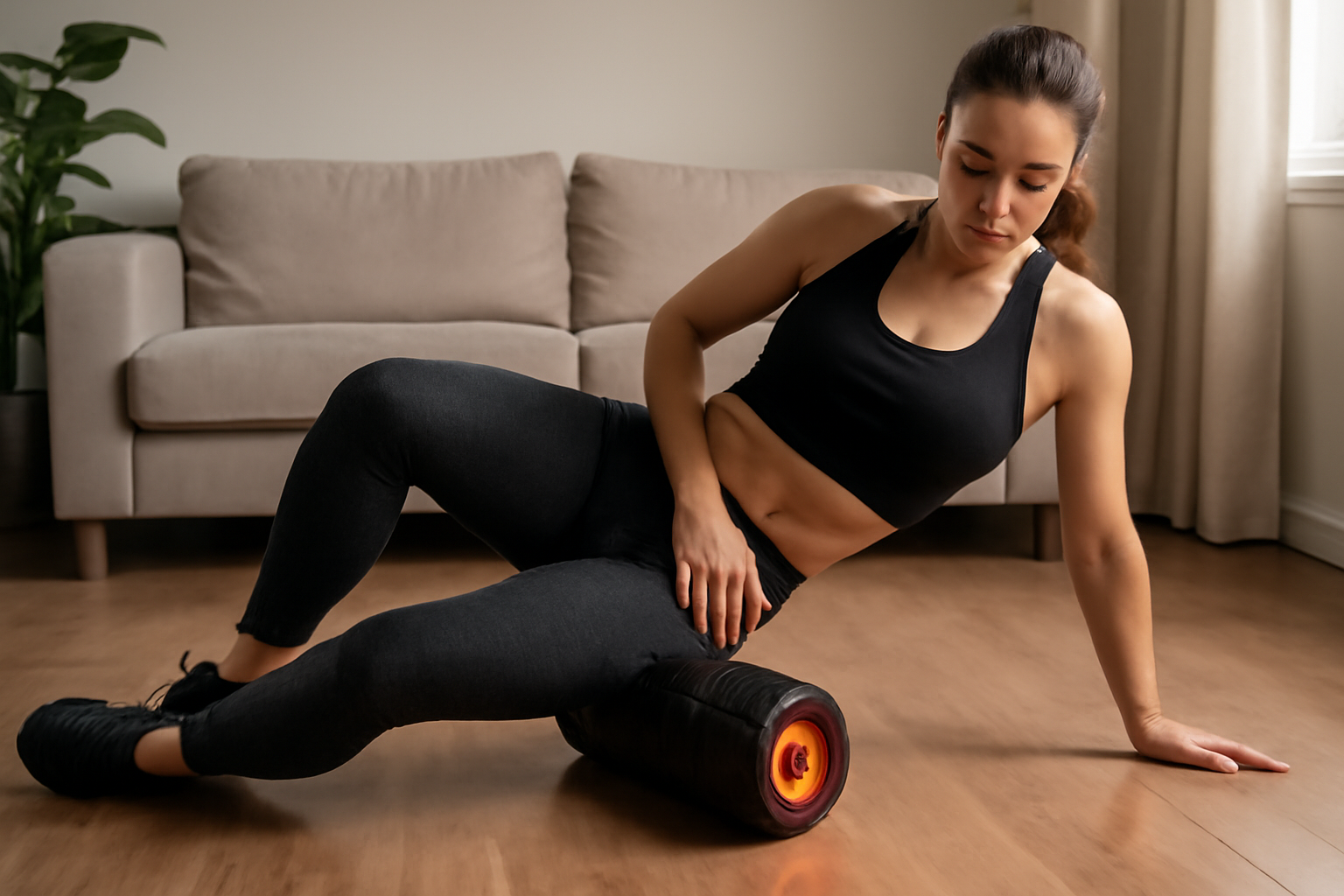
For my marathon client with the IT band issue, I incorporated the roller into her warm-up and cool-down protocol six days per week. Each session lasted 8–12 minutes total. We used the Vyper 3 roller on the lateral quad and IT band region — 60 seconds per side at speed two, then 90 seconds at speed three. The Hypersphere Go followed for targeted TFL and glute med work — 45 seconds of sustained pressure on each trigger point.

For my second test client — a 28-year-old CrossFit athlete with recurring calf tightness — I used the roller post-WOD, three times per week. Sessions were shorter: 5–6 minutes total, focusing on the posterior lower leg and peroneals. My third subject was myself, specifically targeting my left hip flexor and lateral glute, which were chronically stiff from years of heavy deadlifting.

Measurement Approach

I kept things practical. For my marathon client, we tracked pain levels on a 1–10 scale before each session, plus she logged any stair or running discomfort in her training diary. For my CrossFit athlete, I monitored ankle dorsiflexion using a simple wall test — measuring the distance her foot could be from the wall while maintaining contact during a knee-to-wall test. For myself, I tracked hip internal rotation range using a goniometer before and after rolling sessions.

What Actually Changed — Honest Results

By week three, my marathon client’s pre-session pain score dropped from a 6/10 to a 3/10. That’s significant. She completed two 18-mile long runs in weeks five and six with zero lateral knee complaints — something that hadn’t happened in over four months. I won’t attribute all of that to the roller alone. We also adjusted her hip strengthening program. However, the consistent soft tissue work with the Vyper 3 was clearly part of the improvement.

My CrossFit client’s wall dorsiflexion test improved by approximately 1.5 inches over six weeks. She also reported her squat cleans feeling more stable coming out of the bottom position. Anecdotal? Sure. But that kind of functional carryover is exactly what I’m looking for.

Personally, my left hip rotation improved noticeably. I measured a 12-degree gain in internal rotation after four weeks of consistent rolling — five days per week, about 6 minutes per session targeting the posterior hip capsule area. My heavy squat sessions also felt cleaner in terms of lateral hip stability. That may sound like a small thing, but at 275 lbs, hip positioning matters enormously.

The Hypersphere Go Surprised Me

Honestly, I expected the roller to be the star. The Hypersphere Go earned its place quickly. For trigger point work on the glute med and TFL, it’s more effective than a standard lacrosse ball because the vibration keeps the tissue from guarding. That’s a real physiological advantage. It allows you to sustain pressure longer without the client bracing against discomfort, which ultimately means better results.

The Downsides You Should Know

No product is perfect. Here’s where I had reservations with the Hyperice Vyper 3 – Powerful High-Intensity Vibrating Foam Roller and Hypersphere Go.

First, the noise level on speed three is significant. In a quiet home gym or apartment, it’s noticeable. In a commercial gym setting, it blends in fine. However, if your training space is shared — particularly early mornings — this could be an issue worth considering.

Second, the roller length of 12.5 inches is shorter than a standard 18-inch foam roller. For larger athletes or clients with broader frames, you may need to adjust your positioning more frequently than you’d like. It’s not a dealbreaker, but it’s a real ergonomic consideration for coaching taller individuals.

Third, the price point is premium. This bundle is not a casual purchase. If you’re only going to roll once a week after an occasional workout, a $30 foam roller will serve you fine. The Vyper 3 bundle makes sense when you’re using it consistently and specifically — six or more days per week, for targeted recovery work on problem areas.

Who This Is NOT For

  • Casual gym-goers who roll occasionally and inconsistently
  • Athletes with no specific chronic tightness or injury history
  • Anyone on a tight budget who needs a basic recovery tool
  • Individuals sensitive to noise in their training environment
  • Very tall athletes (6’3″ and above) who need a longer roller for efficient coverage

There was also one moment mid-testing where I genuinely doubted the investment. Around week two, my marathon client reported the vibration felt too intense on a particularly inflamed session day. We dialed back to speed one and reduced pressure. That worked, but it was a reminder — vibrating tools are not a substitute for rest when tissue is acutely irritated. They work best as a proactive maintenance tool, not a rescue device during a flare-up.

Hyperice Vyper Foam Roller Review — Final Verdict

After eight weeks of structured testing across three clients and my own training, my verdict on this Hyperice Vyper foam roller review is straightforward. This is a serious tool for serious athletes and coaches.

The Hyperice Vyper 3 – Powerful High-Intensity Vibrating Foam Roller and Hypersphere Go delivers measurable results when used consistently and intelligently. The vibration depth on speed three is genuinely superior to most competitors I’ve tested. The included Hypersphere Go adds real functional value — it’s not a gimmick. Together, they cover the full range of soft tissue needs: broad surface work and precision trigger point release.

Buy It If:

  • You have a chronic problem area — IT band, hip flexors, calves, thoracic spine
  • You train six or more days per week and recovery is a performance priority
  • You’re a coach or trainer working with multiple athletes daily
  • You’ve already tried standard foam rollers and hit a plateau in results
  • You want a vibrating roller and a massage ball without buying two separate products

Skip It If:

  • You roll once or twice a week without a specific target area
  • You’re looking for a basic introductory recovery tool
  • Budget is your primary constraint right now

The Runner-Up Alternative Worth Considering

If the Hyperice bundle is out of your current budget, the TheraGun Therabody WaveRoller is a solid alternative. It offers five customizable vibration frequencies via Bluetooth and the Therabody app, which some athletes will find more versatile for programming specific recovery protocols. The WaveRoller is also a full 18 inches — a notable advantage for taller users or those who prefer broader coverage without repositioning.