Last spring, my garage gym took a direct hit. A pipe burst overnight and destroyed my cable machine — the one piece of equipment I relied on for pulling work, rotator cuff rehab drills, and tricep finishers. Replacing it wasn’t in the budget for at least three months. So I did what any stubborn lifter does: I figured out another way. That decision kicked off a serious resistance bands home training review that genuinely changed how I program for myself and friends training at a distance.
I’ve been training seriously for over eight years. In that time, I’ve used resistance bands mostly as warm-up tools or rehab aids — never as a primary training method. Honestly, I had some bias going in. Bands always felt like a “better than nothing” option. Twelve weeks later, my opinion shifted significantly. Not completely, but enough to matter.
The Band Set That Filled the Cable Machine Gap Without Frustration
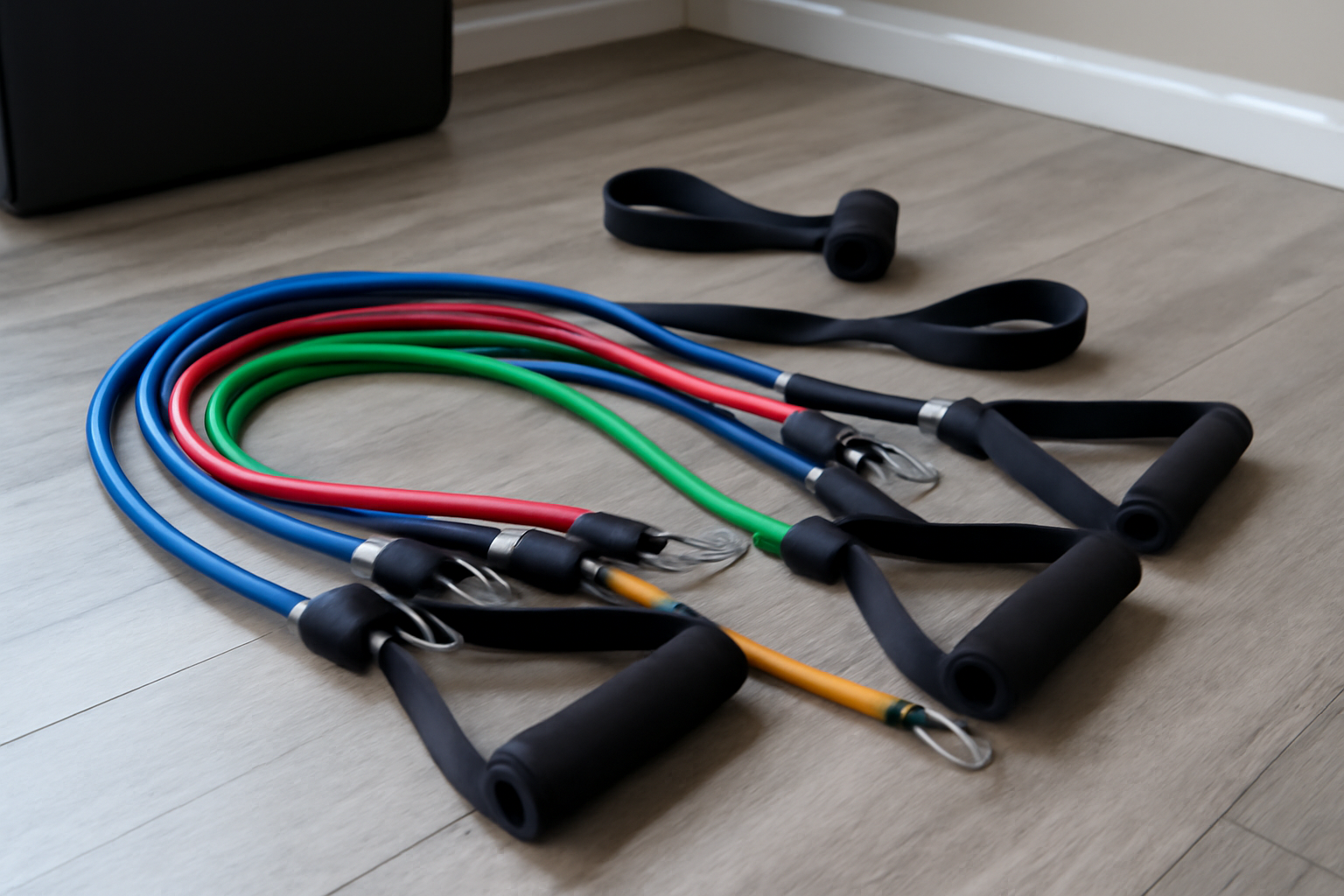
When my cable machine died, I needed something that could replicate the constant tension and directional resistance I’d relied on for pulling work and shoulder rehab—without requiring a complete equipment overhaul. Generic single bands weren’t going to cut it; I needed a full system with handle attachments and anchor points.
What works
- The door anchor actually held during heavy pulling movements—no slipping or rocking, which meant I could program chest flyes, face pulls, and rows with real confidence in load consistency.
- Five resistance levels let me layer bands for heavier compound work without having to hunt down additional equipment; I could stack them for leg press variations and loaded carries.
- The ankle straps turned lower-body work into something programmable—leg curls, glute kickbacks, and lateral raises actually felt like training, not just going through the motions.
What doesn’t
- The handles are thinner than I’d prefer for heavy pulling—by week eight, my grip was getting fatigued before my back was, which forced me to wrap them with tape or use gloves.
- Resistance curve changes mid-rep in ways a cable doesn’t; the band gets noticeably harder at full extension, which broke my rhythm on upper-body pressing until I adapted my tempo.
I almost ditched the bands in week three when a handle cracked during a heavy face pull—turns out I’d over-tensioned it on the door frame—but a quick replacement solved it and I realized the actual engineering was solid. Check out the WHATAFIT Resistance Bands, Exercise Bands, Workout Bands with Handles, Door Anchor and Ankle Straps, 5 Resistance Levels Fitness Bands if you’re building a home setup from scratch.
Frequently Asked Questions
Can resistance bands replace a cable machine for pulling work?
Over 12 weeks, a band system with door anchor and handles successfully replicated pulling work and shoulder rehab without a cable machine. The door anchor held during heavy pulling movements without slipping, letting me program chest flyes, face pulls, and rows with load consistency. Bands aren’t identical to cables—resistance increases noticeably at full extension—but they filled the gap reliably.
How many resistance levels do I need for compound lifts?
Five resistance levels allowed stacking bands for heavier compound work without hunting for additional equipment. I could layer them for leg press variations and loaded carries. Stacking multiple levels provided enough resistance for lower-body movements to feel like actual training rather than going through the motions.
What problems did I face using resistance bands for 12 weeks?
Handles were thinner than ideal for heavy pulling—by week eight, grip fatigue set in before back fatigue, forcing me to wrap handles with tape or use gloves. The resistance curve changes mid-rep, getting noticeably harder at full extension, which broke my rhythm on upper-body pressing until I adapted my tempo.
Do resistance band handles crack under heavy tension?
A handle cracked during a heavy face pull in week three when I over-tensioned it on the door frame. A quick replacement solved it, and I discovered the actual engineering was solid. The issue was improper setup, not poor construction.
About This Article

Written by Jordan Ellis. Jordan Ellis isn't a certified personal trainer — just someone who's been genuinely obsessed with training for over eight years and turned it into building smarter home gyms. He focuses on home fitness: effective training spaces, equipment that earns its price, and programs that work in a spare room or basement, not just a commercial gym. More about this site.
Scope and limits. Jordan is not a certified personal trainer, and nothing here is medical advice. Check with a physician before starting a new program, and prioritize form over load on every lift described.
Verify this against a primary source
Specifics change, and your situation may differ from the one described here. These are the authorities worth checking directly:
- Physical Activity Guidelines for Americans (HHS) — the federal physical activity guidelines
- American College of Sports Medicine — exercise prescription and position stands
- NSCA — strength and conditioning research