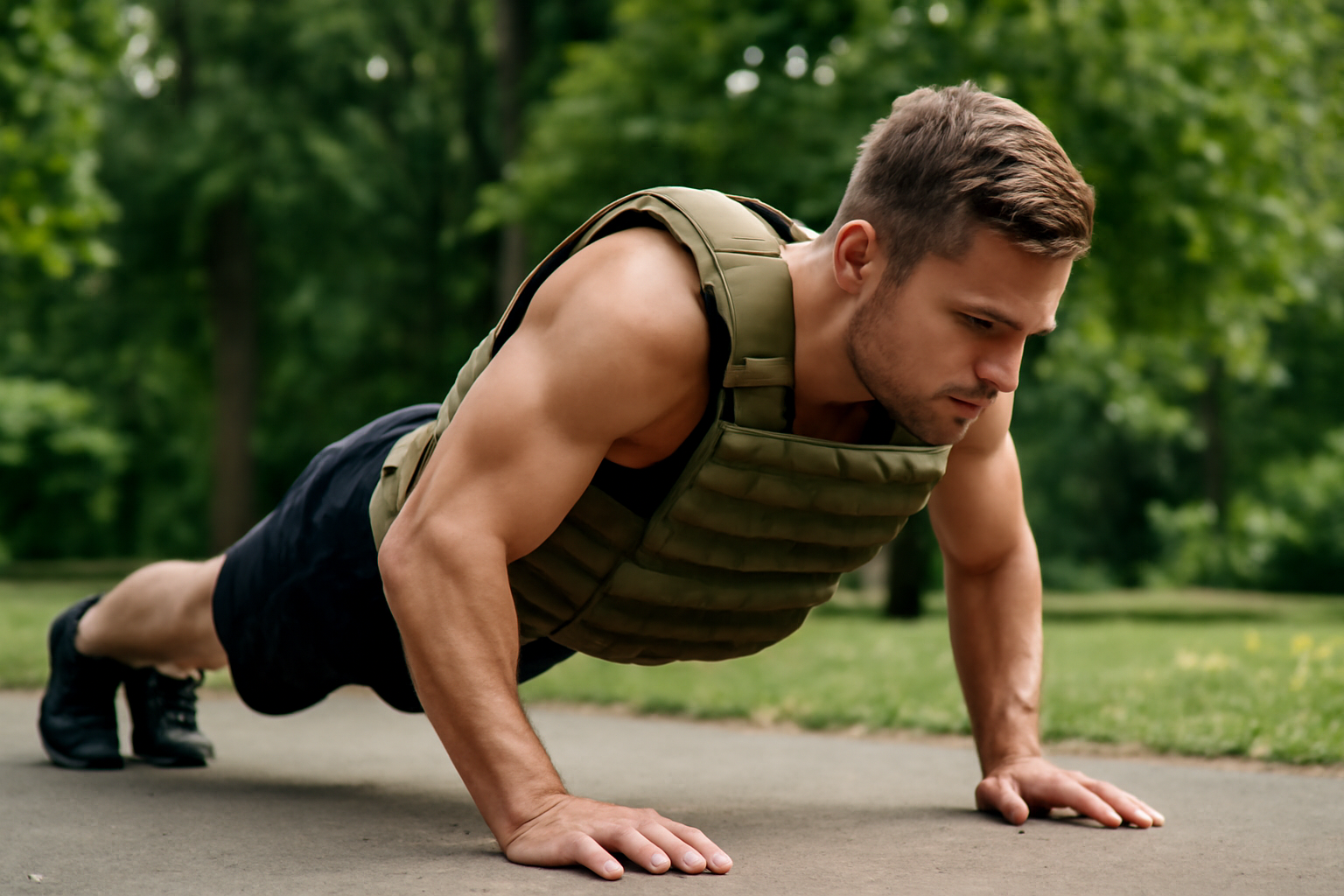
Most fitness content glosses over what actually happens when you layer resistance onto bodyweight training and casual movement—the small friction points, the real-world adjustments, the weeks it takes to know if something actually works. Around the start of spring, I found myself in a situation many trainers face: my daily walks had lost their spark, and my calisthenics work had hit a genuine ceiling. After eight years of training in my own gym, I understand plateau mechanics and the principle behind progressive overload. But here’s what wasn’t sitting right—I’d spent years pointing people toward weighted vests as a tool for breaking through, yet I’d never run one through a serious, systematic test on myself. That changed when I committed to a deliberate six-week protocol with a vest, walking it through my actual training schedule.
The opportunity was there. People had been asking questions about raising energy expenditure through lower-impact training without stacking on extra sessions. I needed hands-on evidence, not theory. That pushed me to dig into what actually makes an adjustable vest functional for real-world use.
The Vest That Made Bodyweight Training Feel Heavy Again
Having pointed countless people toward weighted vests for breakthrough moments on walks and bodyweight work, I’d never actually put one through a full training arc myself. My own calisthenics progression had stalled, and I was looking for a load increase that didn’t require me to acquire equipment I didn’t need.
What delivers
- The modular loading approach (six separate iron-sand pockets) meant I could adjust resistance for each stimulus—10 lbs during walks, 15-18 lbs for pressing and pulling movements—without needing multiple pieces of equipment.
- The load dispersed uniformly across torso and shoulders during all planes of motion, so there was no asymmetric pressure or unilateral fatigue like I’d initially anticipated.
- When drenched after intense effort, the vest maintained its position and didn’t slip downward or bunch up, meaning workout focus stayed on the movement itself rather than equipment adjustment.
What falls short
- The shoulder attachments pressed uncomfortably into my collarbone area during the opening weeks—I had to improvise padding, something that should come solved from the manufacturer.
- Beyond 18 lbs, the vest migrates downward during quick, vertical movements like jump squats, which shifts how the resistance applies to your body throughout the rep.
I nearly sent it back after a brutal walk in week one when the shoulder discomfort made me question whether weighted vests were worth the hassle at all. But after I figured out the padding fix, it became my go-to tool for breaking through that plateau. Grab the ExtreSpo Adjustable Weighted Vest for Women and Men, 11-20lb Weight Vest with 6 Ironsand Weights if you need progressive overload without the rack.
Frequently Asked Questions
What weight should I use in a weighted vest for walking?
For walks, start with 10 lbs. The article describes using this load during casual walking sessions over the six-week protocol. You can adjust based on how the vest feels and your fitness level, but 10 lbs is a practical starting point for daily walks.
What weight works best for pressing and pulling with a vest?
The article used 15-18 lbs for pressing and pulling movements during the six-week test. The modular design allowed adjusting between the 10 lbs used for walks and the heavier 15-18 lbs for upper-body resistance work without needing multiple vests.
Does a weighted vest slip during intense movement?
The ExtreSpo vest tested maintained its position during intense effort and didn’t slip downward or bunch up when drenched with sweat. However, beyond 18 lbs the vest migrated downward during quick vertical movements like jump squats, shifting how resistance applied throughout the rep.
Can you adjust a weighted vest for different exercises?
Yes. The six separate iron-sand pockets allow adjusting resistance for different stimuli—10 lbs for walks, 15-18 lbs for pressing and pulling—without buying multiple vests. This modular loading approach lets you match the load to each workout’s demands.
About This Article

Written by Jordan Ellis. Jordan Ellis isn't a certified personal trainer — just someone who's been genuinely obsessed with training for over eight years and turned it into building smarter home gyms. He focuses on home fitness: effective training spaces, equipment that earns its price, and programs that work in a spare room or basement, not just a commercial gym. More about this site.
Scope and limits. Jordan is not a certified personal trainer, and nothing here is medical advice. Check with a physician before starting a new program, and prioritize form over load on every lift described.
Verify this against a primary source
Specifics change, and your situation may differ from the one described here. These are the authorities worth checking directly:
- Physical Activity Guidelines for Americans (HHS) — the federal physical activity guidelines
- American College of Sports Medicine — exercise prescription and position stands
- NSCA — strength and conditioning research