My garage gym had turned into an obstacle course by last year. One wall held nothing but fixed dumbbells—10s through 45s, each pair taking up precious floor space. As someone who trains people in a confined area, I couldn’t ignore how much square footage was going to dead weight. When multiple people looking to build home setups started asking me which adjustable dumbbells were actually worth buying, I realized I needed hands-on experience with the category before I could give a solid answer. That meant testing a set myself and saying goodbye to the fixed rack.
The problem went beyond just space. Fixed dumbbells accumulate cost fast—every new weight means another purchase, another pair sitting idle on the floor. People working within tighter budgets kept coming back asking whether adjustables could really replace a traditional collection. I needed to know the answer firsthand, not from spec sheets.
The Adjustable Set That Finally Killed My Fixed-Dumbbell Clutter Problem
Training multiple sessions in a small garage demands efficiency. Wasting time shuffling around a wall of iron defeats the whole point. The question wasn’t whether adjustables could save space—it was whether they could hold up under the actual load and rep schemes my strength-focused people needed to follow.
Where they deliver
- Weight increments stay small enough that programming progressive overload doesn’t turn into a guessing game—you won’t hit those frustrating gaps where the next step up feels too big.
- Under load during rows and presses, the handle holds firm with zero flex or shift—your form doesn’t suffer because the tool itself is falling apart.
- Moving fluidly between dumbbell pressing, kettlebell work, and barbell movements cuts down rest between exercises when you’re chaining compound movements into supersets.
Where they fall short
- Changing the load involves a specific twist-and-lock action that demands intention—skip that step or rush it, and you’ll catch yourself fumbling between sets.
- The top end tops out at 45 lbs per side, which doesn’t cover all the stronger training partners’ pressing work, so I’ve kept a pair of fixed 50s around for those accessory days when the load needs to go higher.
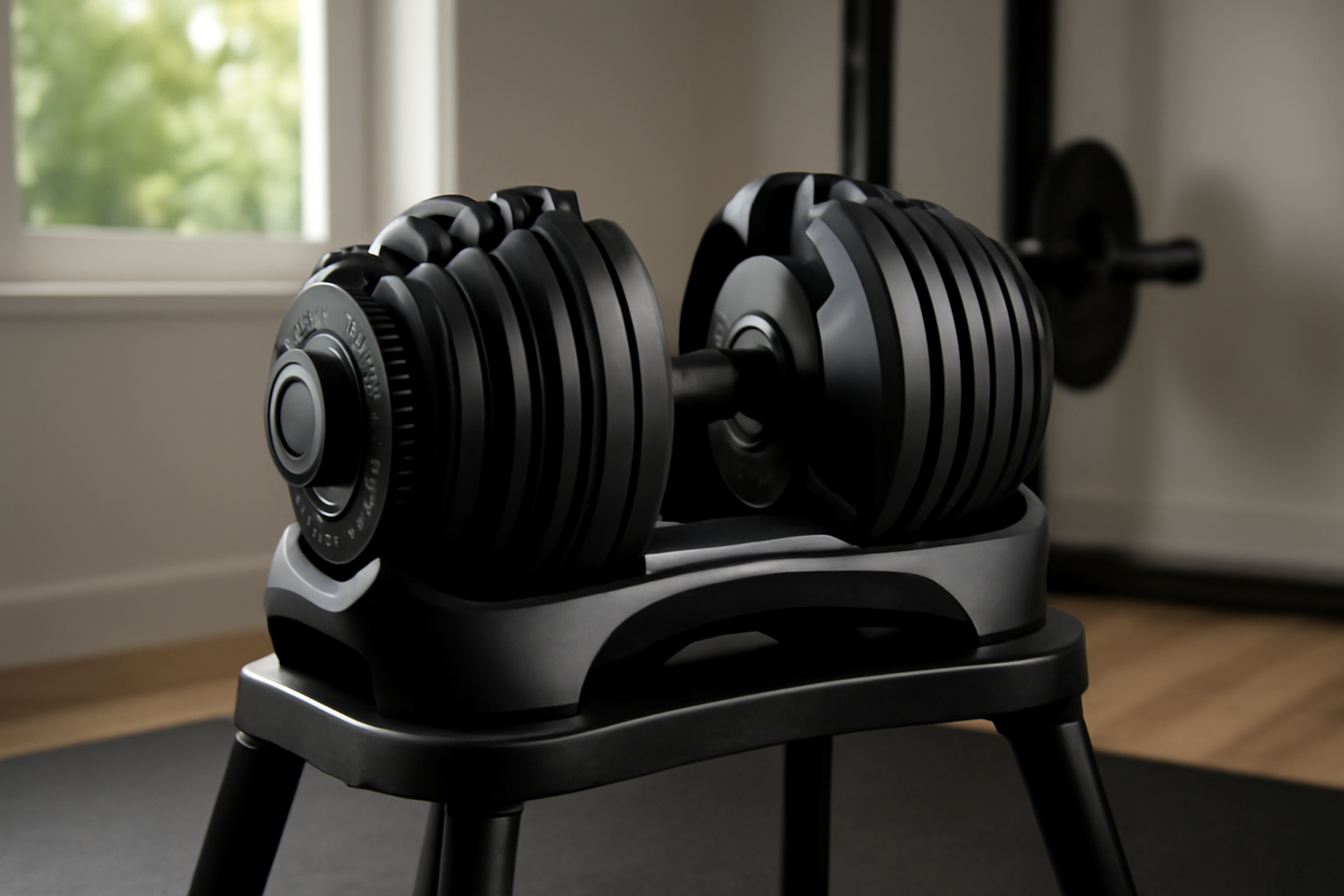
I questioned whether the durability would hold up during a brutal overhead press session where I was loading hard on the pin—three months in, zero rattle or looseness. FDS1 Adjustable Dumbbell Set, 45lbs Free Weights Set with Upgraded Nut, 5 in 1 Weight Set Used as Kettlebells, Barbell, Push Up Stand, Fitness Exercise for Home Gym Suitable Men/Women
Frequently Asked Questions
Do adjustable dumbbells work for heavy rowing?
Yes. Under load during rows, the handle holds firm with zero flex or shift, so your form doesn’t suffer. After three months of heavy overhead press loading, there was zero rattle or looseness in the FDS1 set tested.
What weight increments does the FDS1 adjustable set have?
Weight increments stay small enough that programming progressive overload doesn’t turn into a guessing game—you won’t hit those frustrating gaps where the next step up feels too big.
What’s the maximum weight on adjustable dumbbells?
The FDS1 set tops out at 45 lbs per side, which doesn’t cover all stronger training partners’ pressing work, so a pair of fixed 50s were kept around for accessory days when the load needs to go higher.
How much time does changing adjustable dumbbell weight take?
Changing the load involves a specific twist-and-lock action that demands intention. Skip that step or rush it, and you’ll catch yourself fumbling between sets.
About This Article

Written by Jordan Ellis. Jordan Ellis isn't a certified personal trainer — just someone who's been genuinely obsessed with training for over eight years and turned it into building smarter home gyms. He focuses on home fitness: effective training spaces, equipment that earns its price, and programs that work in a spare room or basement, not just a commercial gym. More about this site.
Scope and limits. Jordan is not a certified personal trainer, and nothing here is medical advice. Check with a physician before starting a new program, and prioritize form over load on every lift described.
Verify this against a primary source
Specifics change, and your situation may differ from the one described here. These are the authorities worth checking directly:
- Physical Activity Guidelines for Americans (HHS) — the federal physical activity guidelines
- American College of Sports Medicine — exercise prescription and position stands
- NSCA — strength and conditioning research