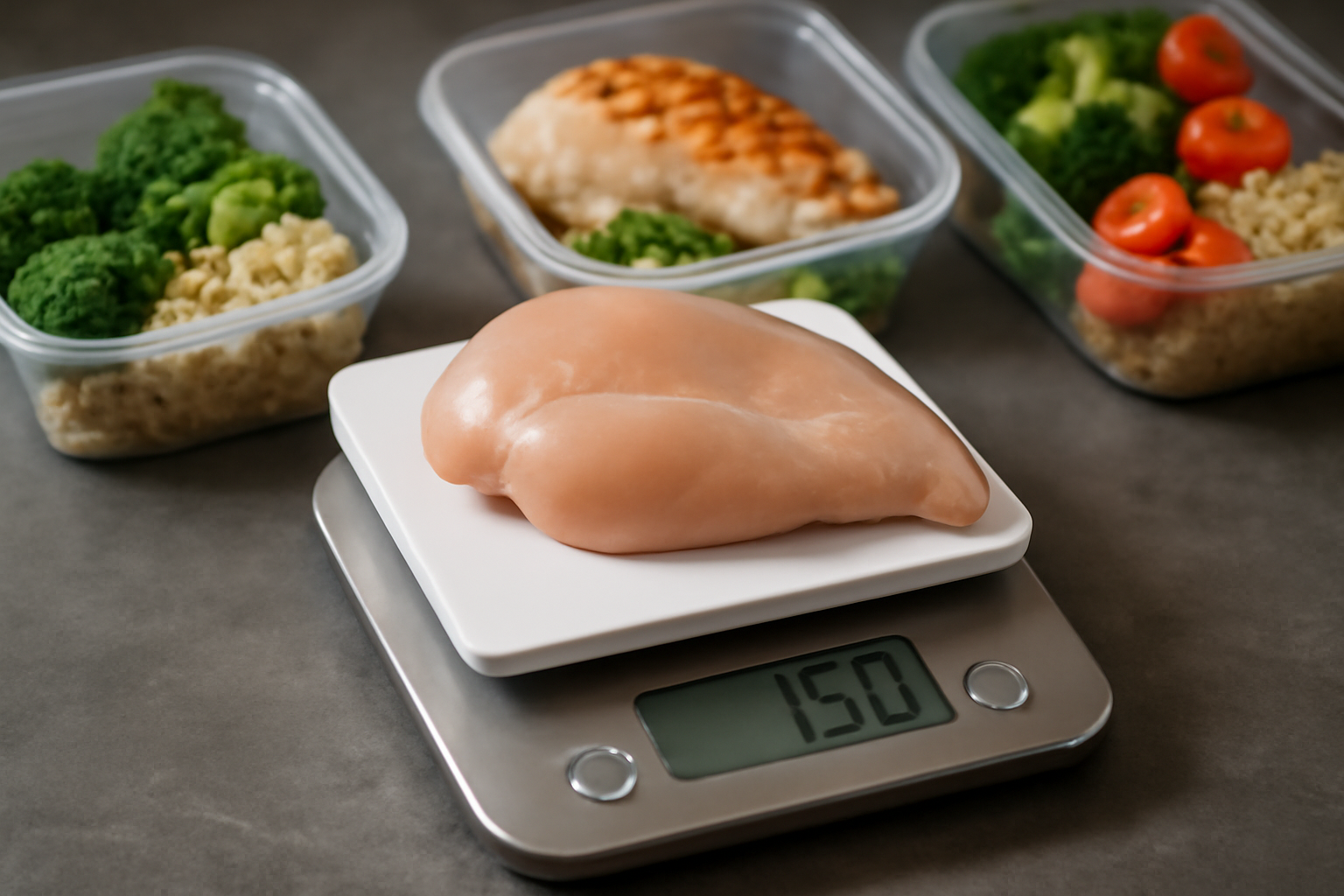
Right now, sitting on my kitchen counter next to my blender, is a digital scale that’s become non-negotiable for how I handle nutrition coaching. Over the past eight years training with other people, I’ve watched the same obstacle derail progress repeatedly: most people operate on a fantasy version of their protein intake. Ditching the guesswork and actually weighing food turned out to be the fastest route past that plateau—faster than any tracking app, custom meal plan, or pep talk I could offer. The gap between what people think they’re eating and what they’re actually consuming? The numbers were often shocking.
Take Marcus as an illustration. Three years back, he showed up ready to work—39 years old, training four times weekly on his own programming. He was running a push/pull/legs split with solid foundational lifts: bench press, rows, and squats all performed regularly. The numbers themselves weren’t bad—185 lbs bench, 225 lbs squat. Yet muscle growth had gone dormant for 90 straight days. His claim: 180 grams of protein every single day.
The reality was far different. A single week of actual food weighing revealed he was landing somewhere around 112 grams daily. That 68-gram shortfall was the answer to his stalled gains. It sparked something in me—what if I spent 30 days running the same experiment on myself, meticulously weighing each protein source? The insights that followed restructured my entire coaching approach to macronutrition.
The Scale That Stopped Me From Lying to Myself About Protein
Portion estimation had been my default for years, and I leaned on feel and memory for gram counts—my results and my training partners’ results both paid the price for that approach. The moment I started putting everything on a scale, my numbers revealed how dramatically off I’d been. That shift in precision changed everything.
What works
- Dual-unit display toggles between grams and ounces seamlessly—no mental math between portions when you’re prepping bulk quantities of chicken and beef across multiple days.
- Stainless construction holds up to the wear of everyday kitchen use without losing accuracy—three months of consistent daily weighing and mine still matches my reference scale exactly.
- Numbers on the screen stay legible from multiple angles and heights, eliminating the need to crouch down to read your portion size—a small mercy when you’re halfway through your meal-prep session and fatigue from training is already setting in.
What doesn’t
- Platform dimensions run tight—anything larger than a single chicken breast means repositioning the item mid-weigh, which becomes a repetitive hassle when you’re dividing portions across bowls or containers.
- Battery-dependent operation means it can power down unexpectedly mid-session if you’re careless about checking charge status—it happened to me a couple times before I started stocking AAs in a kitchen drawer specifically for this.
I almost ditched it after that battery failure on a busy Sunday when I had six people’ meal plans to finalize, but the cost was too low and the accuracy too reliable to justify switching. Get the Etekcity Food Kitchen Scale, Digital Grams and Ounces for Weight Loss, Baking, Cooking, Keto and Meal Prep, LCD Display, Medium, 304 Stainless Steel and actually use it for two weeks—you’ll see why your progress stalled.
Frequently Asked Questions
How much protein was Marcus actually eating versus what he claimed?
Marcus claimed 180 grams of protein daily, but a week of actual food weighing revealed he was consuming around 112 grams daily—a 68-gram shortfall that explained his stalled muscle growth over 90 straight days.
What kitchen scale does Jordan recommend for tracking protein?
Jordan uses and recommends the Etekcity Food Kitchen Scale with dual-unit display. It toggles between grams and ounces, maintains accuracy through extended use, and displays numbers legibly from multiple angles.
Why did Jordan experiment with weighing his own protein for 30 days?
After watching Marcus discover a massive gap between estimated and actual protein intake, Jordan spent 30 days meticulously weighing each protein source himself to test the approach and restructure his entire coaching method around the findings.
What’s the main drawback of the Etekcity scale according to Jordan?
The platform dimensions are tight, requiring repositioning items mid-weigh for portions larger than a single chicken breast. The scale is also battery-dependent and can power down unexpectedly if you neglect charge status.
About This Article

Written by Jordan Ellis. Jordan Ellis isn't a certified personal trainer — just someone who's been genuinely obsessed with training for over eight years and turned it into building smarter home gyms. He focuses on home fitness: effective training spaces, equipment that earns its price, and programs that work in a spare room or basement, not just a commercial gym. More about this site.
Scope and limits. Jordan is not a certified personal trainer, and nothing here is medical advice. Check with a physician before starting a new program, and prioritize form over load on every lift described.
Verify this against a primary source
Specifics change, and your situation may differ from the one described here. These are the authorities worth checking directly:
- Physical Activity Guidelines for Americans (HHS) — the federal physical activity guidelines
- American College of Sports Medicine — exercise prescription and position stands
- NSCA — strength and conditioning research