This post contains affiliate links. As an Amazon Associate, I earn from qualifying purchases at no extra cost to you.
I’ll be honest with you. For years, I coached clients through squat progressions while wearing flat cross-trainers and never thought twice about it. Then one of my longtime clients — a 42-year-old guy named Marcus — came in one Tuesday morning wearing a pair of proper lifting shoes. His squat depth improved by the end of that single session. That moment kicked off my deep dive into this lifting shoes squat form review, and it completely changed how I think about footwear on the platform.
I’ve been a personal trainer and strength coach for over 15 years. In that time, I’ve coached hundreds of people through squats, deadlifts, and Olympic lifts. Footwear always felt secondary to programming, cues, and mobility work. Watching Marcus squat with noticeably better mechanics in one session forced me to reconsider that assumption fast.
So I went out and tested a pair myself. Specifically, I spent six weeks putting the MANUEKLEAR Strong Anti-Slip Deadlift Lifting Squat Shoes for Men through real training sessions — heavy squats, pulls, accessory work, the whole deal. Here’s exactly what happened.
The Problem That Led Me Here
My squat has always been a work in progress. Even after 15 years of coaching, my own ankle mobility is limited. That limitation forces my torso forward under heavier loads. It also pushes my knees in slightly at the bottom of the movement. I’ve spent time on mobility work, foam rolling, and calf stretching. Progress was slow.
The fundamental issue is biomechanical. When ankle dorsiflexion is restricted, your body compensates. The torso tips forward, depth suffers, and knee tracking goes sideways. Lifting shoes solve this with an elevated heel — typically somewhere between 0.6 and 1 inch. That heel raise effectively gives you more functional range of motion without requiring perfect ankle mobility.
I knew this in theory. However, I kept defaulting to my existing training shoes. After watching Marcus, I had no more excuses. It was time to actually test whether lifting shoes made a measurable difference — not just for my clients, but for me.
Why I Chose the MANUEKLEAR Lifting Shoes
I didn’t just grab the first pair I found. Choosing the right shoe took about two weeks of research. I read through gym forums, watched YouTube comparisons, and asked three other coaches in my network what they recommended for a first pair.
Premium options like the Adidas Powerlift or Reebok Legacy Lifter kept coming up. For a first-time test, though, spending $120 to $200 felt unnecessary. I wanted to confirm that lifting shoes actually addressed my specific issues before committing that kind of money.
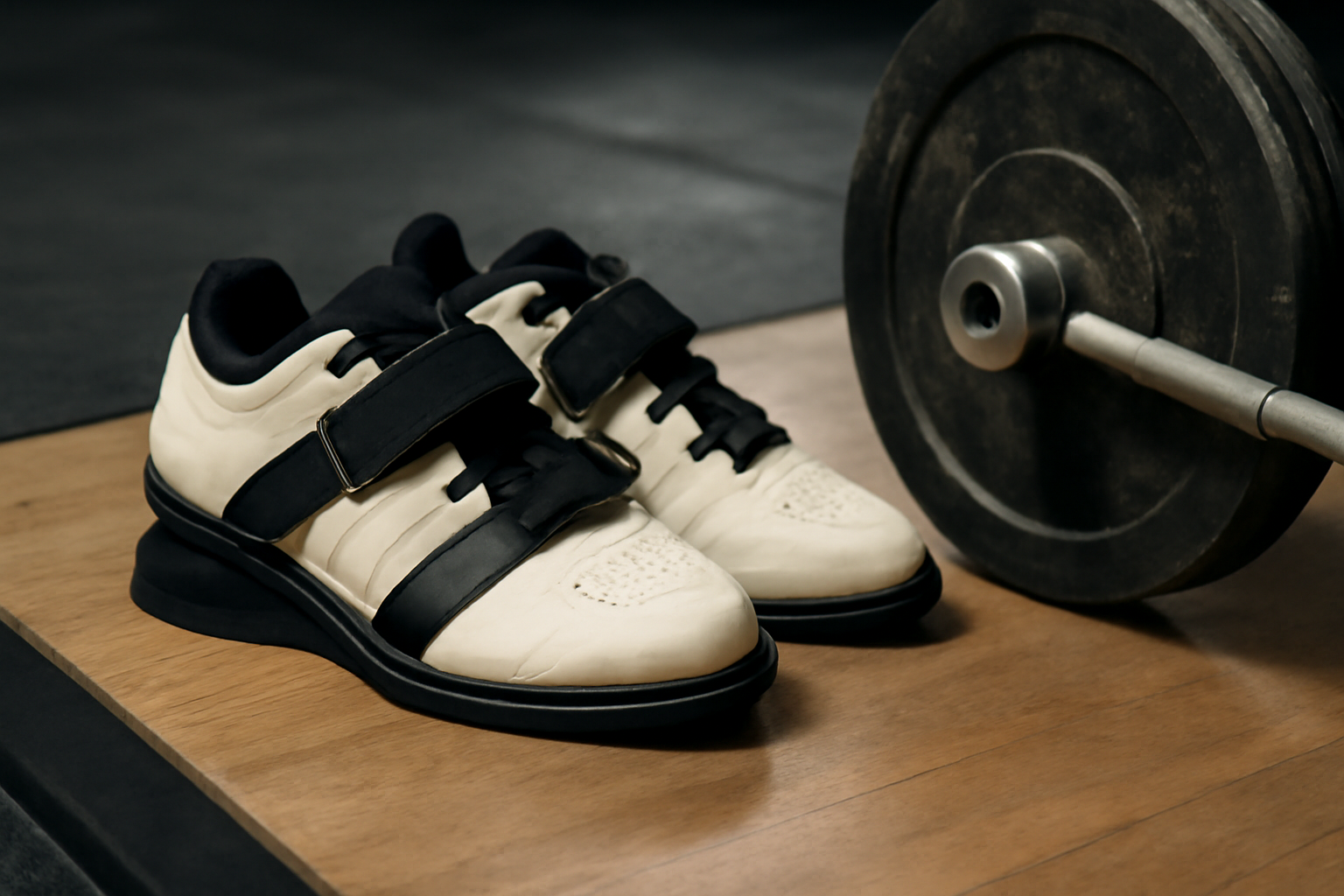
The MANUEKLEAR Strong Anti-Slip Deadlift Lifting Squat Shoes for Men, Professional Training Weightlifting Shoes for Men and Women with Rubber Non-Slip Sole Obsidian Black checked several boxes immediately. The rubber non-slip sole was a big one for me. Stability on the platform matters enormously during heavy lifts. The price point was reasonable. The Obsidian Black colorway looked clean and professional. Reviews from verified purchasers mentioned a snug, secure fit — which is exactly what you need when you’re handling near-maximal loads.
Two coaches I respect had used budget-friendly lifting shoes successfully before upgrading. That gave me enough confidence to pull the trigger on this pair.
First Impressions Out of the Box
The shoes arrived well-packaged. My first impression was that they felt more substantial than I expected. Picking them up, they have real weight and density — not the hollow, cheap feeling you sometimes get with budget training gear.
The rubber sole is noticeably firm and flat. That’s intentional. A compressible sole is dangerous under heavy loads because it creates instability. This sole does not compress. Standing in them immediately feels different from a standard sneaker — stable, planted, and grounded in a way that’s hard to describe until you experience it.
Sizing and Fit
I ordered my standard size and the fit was accurate. The toe box has enough room to avoid cramping, but the midfoot and heel lockdown feel secure. There’s minimal lateral movement inside the shoe, which is important when you’re shifting weight during a squat.
My one fit note: if you’re between sizes, I’d suggest going up half a size. The fit runs slightly narrow in my experience, and you want comfort without constriction during long training sessions.
The heel elevation is modest but perceptible. Standing in them, I could feel the subtle forward tilt of my ankle. That small change had a noticeable effect on how my hips sat even while just standing still. That was promising before I even touched a barbell.
How I Tested These Shoes Over Six Weeks
I ran a focused six-week testing block. My programming during this period was a modified 5/3/1 lower-body focus, with squat as the primary movement and Romanian deadlifts, leg press, and goblet squats as accessories.
Here’s how the testing broke down specifically:
- Weeks 1–2: Back squats at 65–75% of my training max (185–210 lbs), 3 sets of 8–10 reps. Focus on establishing baseline depth and knee tracking.
- Weeks 3–4: Intensity increased to 80–85% (225–240 lbs), 5 sets of 3–5 reps. Heavier loads where form breakdown typically shows up.
- Weeks 5–6: Working near my current training max (255–265 lbs), 3 sets of 1–3 reps. Stress-testing stability and form under real load.
- Accessory work: Goblet squats (4 sets of 12 at 60 lbs), front squats (3 sets of 6 at 135 lbs), and box squats for positional reinforcement.
I filmed every primary squat session from a side angle. That gave me objective footage to compare across the six weeks. My training partner also provided real-time feedback on depth and knee tracking — he’s been coaching for 12 years, so his eye is reliable.
Lifting Shoes Squat Form Review: What Actually Changed
The results were measurable and consistent across the testing period. Here’s what I actually noticed:
Squat Depth Improved Immediately
In week one, my depth improved noticeably compared to my flat-shoe baseline. By week two, I was consistently hitting parallel or just below on every working set. Previously, I was hitting parallel roughly 60–70% of the time at moderate loads. That number climbed to near 100% with these shoes — even at higher intensities in weeks four and five.
Forward Lean Decreased
Reviewing my side-angle footage, my torso angle at the bottom of the squat changed noticeably. My forward lean decreased by what I estimate was around 10–15 degrees compared to my flat-shoe footage. That’s a meaningful postural shift. As a result, the load felt more balanced across my entire posterior chain rather than concentrated in my lower back.
Knee Tracking Cleaned Up
My lateral knee drift — the slight inward cave I mentioned earlier — largely disappeared at moderate weights. At higher intensities (85%+ of training max), I still needed to actively cue myself. However, the drift was less pronounced and easier to self-correct with a simple external cue.
Platform Stability Was Exceptional
The rubber non-slip sole on the MANUEKLEAR Strong Anti-Slip Deadlift Lifting Squat Shoes for Men performed exactly as advertised. Zero slippage across rubber gym flooring, hardwood, and standard commercial gym surfaces. At 255 lbs on the bar, that stability is not a small thing. It builds confidence in the movement, which translates to better force production.
The Downsides You Should Know
I want to be straight with you here because that’s how I coach my clients. These shoes are not perfect for every application.
Deadlifts are more nuanced. For conventional deadlifts, a heel elevation works against you — you generally want as flat a shoe as possible to reduce the bar’s range of motion. These shoes performed fine for Romanian deadlifts and accessory pulls. That said, if your primary focus is conventional deadlifting, a flat shoe serves you better.
They’re not running shoes. This sounds obvious, but worth stating. The rigid sole is completely unsuitable for cardio, lateral movement, or any dynamic conditioning work. Wear them to lift, then change out.
My moment of doubt came in week three. At 230 lbs for sets of five, I had one session where the heel elevation felt almost too pronounced — like I was fighting to stay balanced over my midfoot. That feeling went away after I adjusted my stance width slightly outward. It was a reminder that even good equipment requires a learning curve.
Not for lifters with no ankle restriction. If your ankle mobility is already excellent and your squat form is clean with flat shoes, the heel elevation may actually disrupt your natural mechanics rather than help them.
Final Verdict: Who Should Buy These
After six weeks of structured testing, this lifting shoes squat form review lands in a clear place for me. These shoes deliver real, measurable improvements for the right athlete.
Buy the MANUEKLEAR Strong Anti-Slip Deadlift Lifting Squat Shoes for Men, Professional Training Weightlifting Shoes for Men and Women with Rubber Non-Slip Sole Obsidian Black if:
- You struggle with squat depth and suspect ankle mobility is limiting you
- You experience noticeable forward lean under heavier loads
- You want a dedicated lifting shoe without spending $150+ on your first pair
- You’re training back squats, front squats, goblet squats, or Olympic-style movements regularly
- You value platform stability above all else during loaded movements
Skip these if:
- Your primary training is conventional deadlifts or powerlifting pulls
- You already have excellent ankle dorsiflexion and clean squat mechanics
- You need a do-everything training shoe for mixed conditioning and lifting
For most intermediate lifters dealing with the same mobility limitations I had, this shoe punches well above its price point. Check the current price and availability on Amazon here.
The Runner-Up: Adidas Powerlift 5
If budget isn’t a concern and you want a premium option backed by decades of competitive lifting heritage, the Adidas Unisex-Adult Powerlift 5 Weightlifting Shoe is worth considering. The Powerlift 5 features a slightly more refined heel construction and a wider range of sizing options, including unisex fit across men’s and women’s sizes.