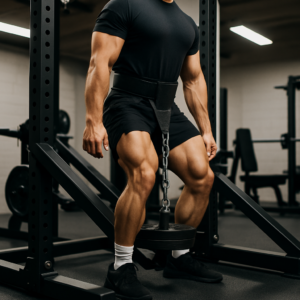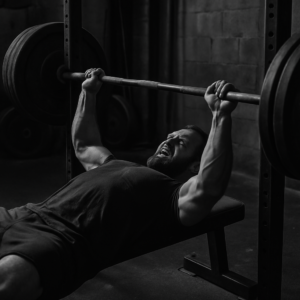

A colleague once told me she’d signed up at a commercial gym expecting the equipment to do the thinking for her. What she actually discovered was that machines came with numbers and pictures, but zero explanation of why those numbers mattered or how they connected to her actual goals. When she finally sat down and worked backward from what she wanted—to feel stronger, to move without pain, to know she could keep going—everything clicked. The frustration wasn’t about lacking willpower or discipline. The real problem was that she’d never been given a straightforward template for assembling a strength program that felt manageable and actually produced results. That’s what we’re tackling here.
| Multi-Joint Movement | Primary Muscles | Secondary Muscles |
|---|---|---|
| Squat | Quads, hamstrings, glutes | Core |
| Deadlift | Posterior chain (back, rear) | — |
| Bench Press or Dumbbell Press | Pecs, anterior shoulders | Triceps |
| Bent-Over Row | Lats, back muscles | Arms |
| Overhead Press | Deltoids | Pressing stability |
Why Most Beginners Quit Before They See Results
Most beginner programs crater not because the work is too demanding, but because the work is too messy. Someone downloads a six-day split (training different muscle groups on six separate days), commits to tracking a dozen different movements, and walks away by week two. The research actually tips in your favor—science consistently demonstrates that beginners adapt exceptionally well to uncomplicated, full-body work repeated three days each week. Simplicity beats sophistication every single time.
There’s also the problem of jumping into loads that your body isn’t prepared for. Progressive overload—the method of methodically ramping up weight, volume, or movement challenge as time passes—remains the foundation of strength development. Yet it only functions when you begin conservatively. Your opening weeks serve a different purpose: you’re wiring neural pathways, refining movement patterns, and establishing routines. Genuine strength gains emerge once that base is locked in.
Constructing Your First Real Strength Program
Here’s the template I walk through. It cuts through the noise, stands on solid science, and—this matters most—it’s something you can sustain.
Step 1: Commit to Three Sessions Weekly
Three spread-out days—Monday and Wednesday and Friday, or whatever spacing gives you recovery between efforts—is where beginners thrive. Those gaps separating workouts function the opposite of downtime; they’re the window when your tissues rebuild and fortify. Eliminating recovery is one of the quickest paths to stagnation or injury.
Step 2: Anchor Your Workouts in Multi-Joint Movements
Multi-joint movements engage numerous muscle groups in a single lift. For beginners, these are invaluable. Below are the movements your training should revolve around:
- Squat — engages quads, hamstrings, glutes, and core
- Deadlift — targets your whole posterior chain (the muscles running down your back and rear)
- Bench Press or Dumbbell Press — pecs, anterior shoulders, and triceps
- Bent-Over Row — lats and back muscles and arms
- Overhead Press — deltoids and pressing stability
Don’t attempt all five in one session. Select three or four and vary them. Every workout should load your entire body from at least one angle.
Step 3: Select Rep Schemes That Align With Your Purpose
To build both strength and muscle in your early phase, exercise science points strongly toward 3 sets of 8–12 reps across most lifts. This rep band produces simultaneous gains in power and tissue growth (hypertrophy)—the exact dual benefit you’re after starting out. Rest 60–90 seconds between rounds of work. Once you hit all your prescribed reps cleanly and the effort stays controlled, bump the weight up slightly at your next session. That’s progressive overload operating.
Step 4: Write Down Your Numbers
Document your lifts, loads, repetitions, and set counts in a notebook, phone note, or free tracking software every session. It feels cumbersome initially, but it becomes your compass. When you flip back and spot that you’re pulling 10 more pounds on your deadlift than three weeks prior, you’ve got tangible proof of advancement—and that proof is fuel.
Equipment That Supports Long-Term Program Adherence
Building a beginner strength template doesn’t require access to a packed commercial facility. Adjustable dumbbells or an entry-level barbell rig gets you to about 80 percent of your potential. Let me break down what I’d recommend depending on your situation and available funds.
Why Adjustable Dumbbells Become Essential When You’re Scaling a Program Over Weeks and Months
Building a beginner program that spans extended periods requires tools that grow alongside your capacity—without requiring you to stockpile pairs of static dumbbells or waste sessions changing weight configurations. Adjustable dumbbells remove obstacles to consistency (and obstacles destroy adherence faster than nearly anything else).
What works
- You transition between load settings in moments when running supersets or performing drop sets, allowing your program to unfold smoothly instead of turning into a weight-plate shuffling exercise that tanks your focus.
- Beginners get concrete proof of progress—moving from 10 to 15 to 20 pounds—without the mental friction of stepping up to “the next whole dumbbell” which might represent a 10-pound jump all at once.
- They consume roughly the floor space of two standard dumbbells, which means your home setup stays reasonable and your excuse to bail on the program shrinks.
What doesn’t
- The dial or selector pin occasionally catches when fatigue or velocity increases—precisely when you want things to run smoothly—I’ve wrestled with stuck adjustments mid-set more than a few times.
- Weight increments lock into fixed jumps (usually 5 or 10 pounds per model), so there’s no option if you specifically need, say, 12 pounds instead of the 10–15 spread available.
I almost ditched mine after three weeks when the selector felt stiff and I worried I’d made a $200 mistake on equipment that wouldn’t keep up with a real program. Then I realized the “stiffness” was just the mechanism being tight out of the box — it loosened up after normal use. If you’re building a beginner program you can stick to for months, grab the Adjustable Dumbbells Set 25LB and stop letting equipment logistics derail your consistency.
Frequently Asked Questions
Why do most beginner strength programs fail within two weeks?
Most crash because they’re too complicated, not too hard. Downloading a six-day split with a dozen movements overwhelms beginners. Science shows uncomplicated full-body work repeated three days weekly produces better results. Simplicity beats sophistication every time, and adherence matters more than program sophistication.
What rep range should beginners use to build strength and muscle?
Exercise science points strongly toward 3 sets of 8–12 reps across most lifts for beginners. This rep band produces simultaneous gains in strength and muscle growth, the exact dual benefit you’re after starting out. Rest 60–90 seconds between sets, then bump weight slightly once you hit all reps cleanly.
How often should I train per week as a beginner?
Three spread-out days each week is where beginners thrive. The gaps between workouts allow tissues to rebuild and fortify. Eliminating recovery is one of the quickest paths to stagnation or injury, so spacing matters as much as the work itself.
Can adjustable dumbbells work for a long-term beginner program?
Yes. Adjustable dumbbells remove obstacles to consistency and allow smooth weight progression without stockpiling pairs of static weights. They consume minimal floor space and let you transition between loads in moments. Weight increments lock into fixed jumps (usually 5 or 10 pounds), so check your model’s range suits your needs.
About This Article

Written by Jordan Ellis. Jordan Ellis isn't a certified personal trainer — just someone who's been genuinely obsessed with training for over eight years and turned it into building smarter home gyms. He focuses on home fitness: effective training spaces, equipment that earns its price, and programs that work in a spare room or basement, not just a commercial gym. More about this site.
Scope and limits. Jordan is not a certified personal trainer, and nothing here is medical advice. Check with a physician before starting a new program, and prioritize form over load on every lift described.
Verify this against a primary source
Specifics change, and your situation may differ from the one described here. These are the authorities worth checking directly:
- Physical Activity Guidelines for Americans (HHS) — the federal physical activity guidelines
- American College of Sports Medicine — exercise prescription and position stands
- NSCA — strength and conditioning research