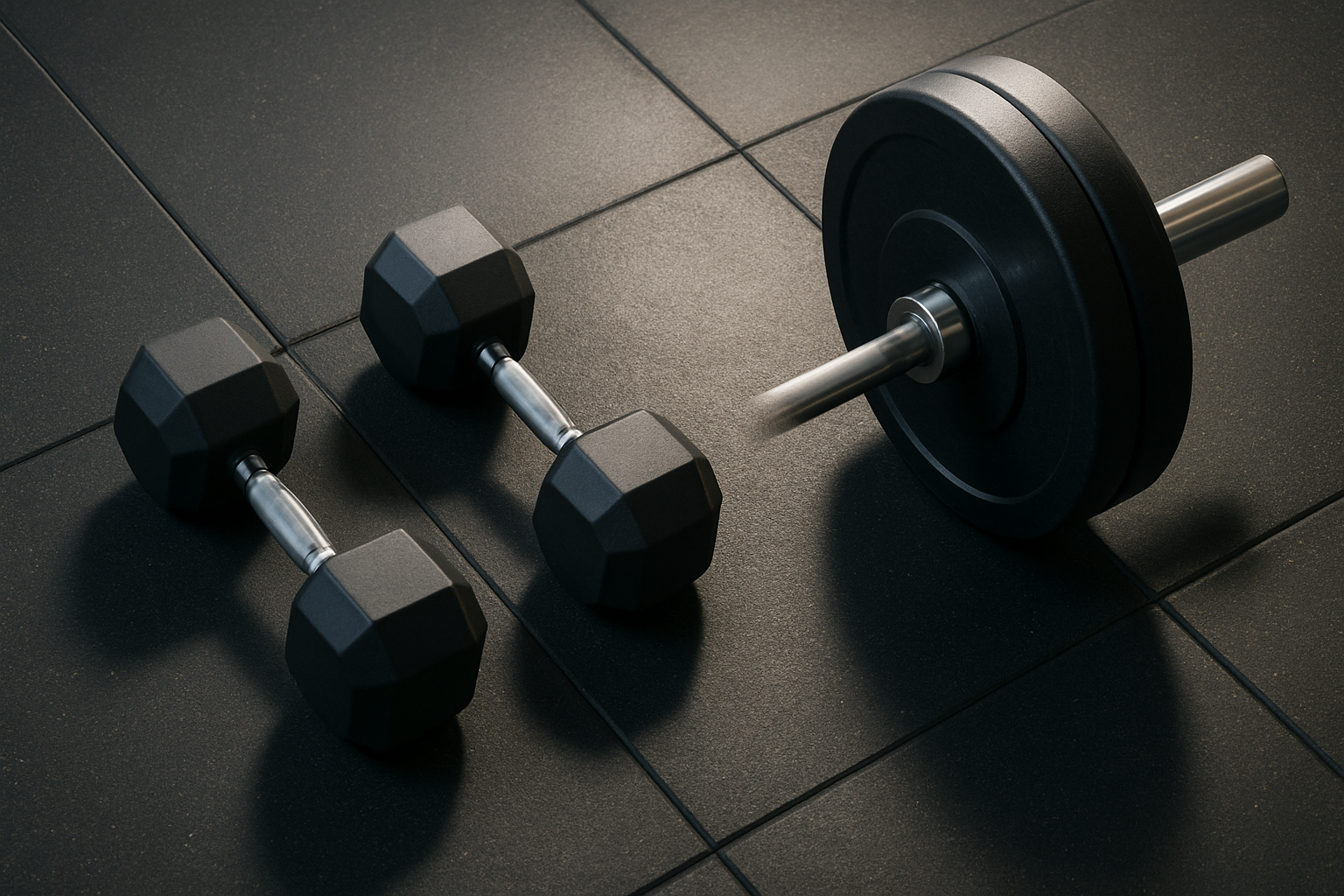

You’re standing between sets, hands still warm from the previous rep, thinking about whether the iron you’re holding is actually getting the job done. Equipment choices matter when your training time is finite and your margin for wasted effort is zero. That’s what drove my interest in understanding the fundamental differences between training with dumbbells and barbells — not as an abstract debate, but as a practical question about what actually moves the needle on muscle growth and strength. The reality is more nuanced than picking one tool and ignoring the other. Success depends on matching your equipment to your specific objectives, your current abilities, and the way you’re programming your sessions. Here’s what the evidence and experience show.
| Attribute | Barbell | Dumbbell |
|---|---|---|
| Load Distribution | Across both hands through one bar | Each limb bears own load |
| Absolute Weight Capacity | Substantially more total weight | Lower total load possible |
| Range of Motion | Terminates at rib cage | Hands descend lower and spread wider |
| Strength Asymmetry | Dominant side can compensate | Unilateral demand exposes imbalances |
| Stabilizer Muscle Engagement | Lower demand | More intense throughout movement |
| Training Alone Safety | Risk of being pinned under failed reps | No pinning risk |
| Progressive Loading | Weight plates in small denominations | Adjustable models: 2.5 lb increments |
| Best Primary Purpose | Absolute strength and foundational work | Hypertrophy and balanced development |
Dumbbell vs Barbell Training Comparison: Understanding the Key Differences
To understand which tool serves you better, you need to recognize how each one functions differently. A barbell distributes weight across both hands through one continuous bar — allowing you to load substantially more total weight because your dominant side can help compensate for any strength asymmetry. That’s valuable for absolute strength output, yet it can also conceal muscular weaknesses across time. Dumbbells eliminate that option: each limb bears its own load. That unilateral demand becomes crucial for identifying and fixing imbalances, as well as building strength that transfers to everyday movement patterns.
Motion capacity represents another critical distinction. Performing a dumbbell chest press permits your hands to descend lower and spread wider than a barbell allows, which typically terminates at your rib cage. Expanded motion usually triggers more complete muscle fiber activation — and complete muscle fiber activation produces a stronger hypertrophy signal. Research examining muscle engagement throughout movement patterns demonstrates that exercises performed across their full anatomical range generate larger growth responses than those performed within restricted ranges.
Where Barbells Deliver Superior Results
The barbell dominates when your primary outcome is moving the absolute most weight and building foundational strength. Movements like the barbell squat, conventional deadlift, and flat bench press represent the most efficient paths toward generating raw strength across large muscle groups. Progressive loading — incrementally adding weight session to session — becomes more straightforward with a barbell because weight plates come in small denominations and selection is essentially unlimited.
Barbell movements excel especially at compound work that demands simultaneous engagement of numerous muscle groups. A heavy barbell deadlift loads your posterior chain from your feet through your upper back — hamstrings, glutes, lower back, traps, and core all contract together. Creating that kind of systemic tension throughout the body proves considerably more difficult using dumbbells alone. Training for powerlifting competition, athletic preparation, or simply moving substantial loads requires the barbell as your primary tool.
Top Barbell Movements for Building Mass
- Barbell Back Squat — fundamental lower body strength builder
- Conventional Deadlift — comprehensive posterior chain developer
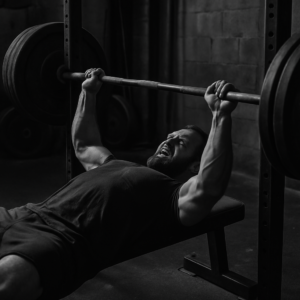
- Barbell Bench Press — primary upper body hypertrophy stimulus
- Barbell Row — back width and horizontal pulling capacity
- Overhead Press — overhead strength and shoulder development
Where Dumbbells Outperform Barbells
This is where dumbbells frequently surprise people — they produce exceptional muscle growth, and in many scenarios, they rival or surpass barbell results for hypertrophy specifically. The unilateral nature creates the mechanism: each arm and leg operates independently, forcing stabilizer musculature to engage more intensely throughout the movement. Smaller muscles responsible for joint integrity and movement control are placed under greater demand. The consequence over weeks and months is more symmetrical, balanced muscle development throughout your frame.
Dumbbells present another advantage many overlook: training safety when you’re training alone. Without a barbell across your shoulders or chest, the risk of being pinned under failed reps vanishes. Beginning lifters benefit especially from this — learning proper movement mechanics and developing joint stability through dumbbell patterns before progressing to barbell loading is a sensible progression. For home gym environments especially, dumbbells offer versatility and efficiency — they address virtually every movement pattern while consuming minimal space and money.
Top Dumbbell Movements for Building Mass
- Dumbbell Romanian Deadlift — posterior chain isolation with excellent movement control
- Single-Arm Dumbbell Row — rapidly addresses unilateral back imbalances
- Dumbbell Bench Press — superior pectoral stretch relative to barbell pressing
- Dumbbell Lunges — single-leg lower body strength and stability work
- Dumbbell Shoulder Press — allows natural wrist position and reduces joint loading
The Adjustable Pair That Solved the Weight Ceiling Problem
Home training spaces run into a hard limit quickly — not because dumbbells fail to generate muscle growth, but because static weights become too light and suddenly you’re trapped repeating high reps instead of progressively adding load. Adjustable dumbbells sidestep this constraint: you access a full weight spectrum without the space demands or expense of accumulating multiple fixed pairs.
Where they excel
- Switching between weights happens without leaving your working area, so transitions between isolation and compound movements stay seamless and your muscles remain under sustained tension rather than losing rhythm between exercises.
- Adding 2.5 lb increments to unilateral work prevents ego from dictating load while enabling consistent progression — these designs facilitate that methodical approach without requiring duplicate pairs for each jump.
- The footprint of a single dumbbell pair functions as five different pairs’ worth of progression range — invaluable when your training focus shifts between pure strength phases and muscle-building phases.
Where they fall short
- The dial or pin adjustment mechanism introduces a brief pause between load changes, which interrupts momentum during supersets or rapid dropset sequences — fixed dumbbells maintain better continuity there.
- Maxing out at 25 LB per hand means you’ll plateau if serious lower body strength or heavy upper body pressing becomes your focus; they function as a solid foundation tool, not the end point for strength-dominant training.
I almost sent these back after my first heavy pressing session when I second-guessed whether the adjustment dial would stay locked under load, but three months of consistent training proved it holds solid. If space and progressive overload are your real constraints, grab the Adjustable Dumbbells Set 25LB.
Frequently Asked Questions
Can dumbbells build as much muscle as barbells?
Yes. Dumbbells produce exceptional muscle growth and in many scenarios rival or surpass barbell results for hypertrophy specifically. The unilateral nature forces stabilizer musculature to engage more intensely, creating more symmetrical, balanced muscle development over weeks and months.
Why do dumbbells allow greater range of motion?
Performing a dumbbell chest press permits your hands to descend lower and spread wider than a barbell allows, which typically terminates at your rib cage. Expanded motion usually triggers more complete muscle fiber activation and produces a stronger hypertrophy signal.
What are adjustable dumbbells’ weight limit?
Adjustable dumbbells max out at 25 LB per hand, meaning you’ll plateau if serious lower body strength or heavy upper body pressing becomes your focus. They function as a solid foundation tool, not the end point for strength-dominant training.
Is training alone with dumbbells safer than barbells?
Yes. Without a barbell across your shoulders or chest, the risk of being pinned under failed reps vanishes. Beginning lifters especially benefit from learning proper movement mechanics with dumbbells before progressing to barbell loading.
About This Article

Written by Jordan Ellis. Jordan Ellis isn't a certified personal trainer — just someone who's been genuinely obsessed with training for over eight years and turned it into building smarter home gyms. He focuses on home fitness: effective training spaces, equipment that earns its price, and programs that work in a spare room or basement, not just a commercial gym. More about this site.
Scope and limits. Jordan is not a certified personal trainer, and nothing here is medical advice. Check with a physician before starting a new program, and prioritize form over load on every lift described.
Verify this against a primary source
Specifics change, and your situation may differ from the one described here. These are the authorities worth checking directly:
- Physical Activity Guidelines for Americans (HHS) — the federal physical activity guidelines
- American College of Sports Medicine — exercise prescription and position stands
- NSCA — strength and conditioning research