
You’ll hear contradictory fitness advice depending on who you ask: some sources treat foundational lifting as optional complexity, while others insist it’s the only path to real strength. The second group has the evidence behind them. I spent years chasing isolation work and machine circuits without making meaningful progress, only to discover that the bottleneck wasn’t effort—it was exercise selection. If your training feels unfocused, if you’re cycling through cable stations and single-joint movements but your actual strength isn’t climbing, the answer isn’t adding more volume — it’s shifting toward movements that matter. The squat, deadlift, bench press, and barbell row form the backbone of legitimate strength training for a reason, and restructuring your routine around them produces the kind of measurable gains that reinforce themselves.
What Are the Big 4 Compound Lifts and Why Do They Matter?
Any compound lift engages multiple muscle groups and joints in a single motion. Isolation exercises—say, a dumbbell curl—target only one muscle. The four primary compounds—squat, deadlift, bench press, and barbell row—activate enormous amounts of muscle tissue all at once, leading to greater strength gains, muscle growth, and caloric expenditure per repetition. Scientific literature repeatedly demonstrates that multi-joint compound exercises generate stronger hormonal shifts (elevated testosterone and growth hormone release) than single-joint alternatives. The practical upshot: you’re getting maximum benefit relative to the time you invest.
Here’s what each movement accomplishes and why it deserves a spot in your programming.
The Squat: Lower Body Foundation and Beyond
The barbell back squat demands work from your quads, hamstrings, glutes, core, and upper back simultaneously—it’s fundamentally a total-body lift that happens to load the legs heavily. Consistent heavy squatting produces strong, resilient hips and legs, enhances athletic capacity, and develops the deep core control needed for everyday tasks like lifting objects or moving explosively. Whether you favor a lower-bar or higher-bar position, the squat is indispensable for building a powerful physique and capable body.
The Deadlift: Posterior Chain Strength and Function
The deadlift stands as possibly the most efficient strength-building exercise available. You’re hoisting a loaded bar off the ground, engaging your hamstrings, glutes, lower back, traps, lats, forearms, and core in one integrated motion. This produces genuine functional strength that applies directly to real-world pulling and lifting tasks. It’s equally powerful at building dense muscle across your posterior chain—the back-side musculature most lifters substantially underdevelop. One critical point: setup and bracing precision matter enormously with deadlifts. Don’t rush the movement.
The Bench Press: Pushing Strength and Upper Body Development
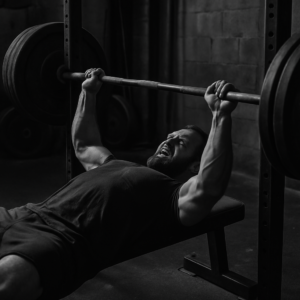
The bench press remains the standard upper body pressing movement. It targets your chest (pectorals), front shoulders (anterior deltoids), and triceps all together. Executed with consistent progressive overload—gradually increasing load or adding reps session to session—the bench press develops a strong, muscular chest and robust pressing muscles that protect shoulder longevity and improve pressing performance across sports. Remember that leg drive and proper arching are components of sound bench technique; the movement demands more full-body engagement than most assume.
The Barbell Row: The Essential Horizontal Pull
The barbell row gets overlooked far too often, and it shouldn’t. Heavy rowing builds your lats, rhomboids, rear delts, upper back, and biceps—the pulling muscles that generate pulling strength and support posture. It also directly counterbalances bench pressing, which is critical for maintaining shoulder integrity over time. If you press heavy but don’t row heavy, you’re creating a muscular imbalance that compounds into problems. Include substantial rowing work and you’ll notice your bench goes up, your posture shifts, and your back develops noticeable thickness.
Program Structure Around Compound Lifts
Your program shouldn’t be elaborate. Simplicity actually works best when strength is the goal. Here’s a straightforward template that serves both beginners and intermediate trainees:
- Aim for 3–4 training sessions weekly — Recovery is when adaptation happens. Additional volume doesn’t always equal better outcomes.
- Prioritize one of the big 4 at the start of each workout — Tackle your main compound when energy and focus are highest.
- Target 3–5 sets of 3–8 reps for strength and hypertrophy, making sure you incrementally challenge yourself each week.
- Include supplemental movements after compounds — Single-joint work such as curls, tricep extensions, or leg curls belongs in a program, but it’s secondary to the main compounds.
- Document your performance — Without measurement, progress remains invisible. Write down each session’s weights and reps, pushing to add load or reps over time.
Couple your squat sessions with row days, and your deadlift days with bench days. This strategy keeps your horizontal and vertical pull-push balanced and prevents consecutive overwork of the same muscle groups.
Essential Equipment for the Big 4
You won’t need extensive equipment to develop serious strength, but investing in a few solid pieces makes a real difference in both performance and injury prevention—particularly when lifting heavier loads. Here’s what I’d suggest:
The Belt: Non-Negotiable for Heavy Compound Pressing and Pulling
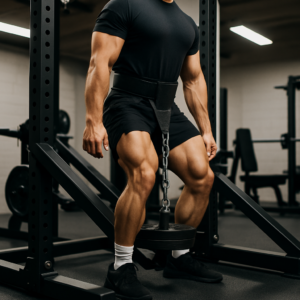
When you’re moving serious iron in any of the Big 4, your core needs reliable external reinforcement to maintain rigidity and stay secure—and a flimsy belt is worse than useless. I learned the hard way that achieving a solid squat and deadlift without proper equipment leaves you bracing less effectively, since most basic belts slip or lose tension mid-rep.
Strengths
- The lever buckle system remains tight throughout all reps—no constant readjustment between sets, so your bracing tension stays uniform across the squat, deadlift, bench, and row.
- At 10MM width, it provides sufficient rigidity for genuine bracing feedback without being so restrictive that it hampers your breathing or creates uncomfortable pressure on your ribs.
- Single-handed fastening and removal means you’re not spending half a minute wrestling with closures before your next heavy set.
Drawbacks
- The lever buckle catches on your hips if positioning isn’t precise—it took several sessions to locate the right spot for my anatomy.
- The cost point reflects a serious tool, not a casual add-on—meaning you need to actually use it regularly and learn proper wearing technique.
I questioned whether the extra cost over a velcro belt was worth it during my first heavy squat session, when I couldn’t get the lever positioned flush—but by week two, that snap-lock consistency made me realize I’d been leaving strength on the platform the whole time. If you’re serious about the Big 4, grab the Beast Power Gear Lever Buckle Lifting Belt (10MM).
Frequently Asked Questions
What rep range should I use for the Big 4 lifts?
Target 3–5 sets of 3–8 reps for strength and hypertrophy. The key is to incrementally challenge yourself each week by adding load or reps, and to document your performance so progress remains visible and measurable.
How many times per week should I train the Big 4?
Aim for 3–4 training sessions weekly. Recovery is when adaptation happens, and additional volume doesn’t always equal better outcomes. Couple squat sessions with row days, and deadlift days with bench days to keep pull-push balanced.
Why is the barbell row so important for bench pressing?
The barbell row directly counterbalances bench pressing, which is critical for maintaining shoulder integrity over time. If you press heavy but don’t row heavy, you create a muscular imbalance that compounds into problems and limits your bench progress.
Does a lifting belt really improve my squat and deadlift?
A proper belt provides reliable external core reinforcement to maintain rigidity and stay secure when moving serious iron. A flimsy belt is worse than useless, but a quality lever buckle system stays tight throughout all reps without constant readjustment between sets.
About This Article

Written by Jordan Ellis. Jordan Ellis isn't a certified personal trainer — just someone who's been genuinely obsessed with training for over eight years and turned it into building smarter home gyms. He focuses on home fitness: effective training spaces, equipment that earns its price, and programs that work in a spare room or basement, not just a commercial gym. More about this site.
Scope and limits. Jordan is not a certified personal trainer, and nothing here is medical advice. Check with a physician before starting a new program, and prioritize form over load on every lift described.
Verify this against a primary source
Specifics change, and your situation may differ from the one described here. These are the authorities worth checking directly:
- Physical Activity Guidelines for Americans (HHS) — the federal physical activity guidelines
- American College of Sports Medicine — exercise prescription and position stands
- NSCA — strength and conditioning research