Every guide to shoulder tendonitis tells you which presses to stop doing and then just stops talking. Nobody tells you what to do with the rest of your week. When I tweaked my own shoulder and got the standard “rest it, avoid overhead” advice, the part nobody mentioned was that half of lower body training loads the shoulder too. A back squat parks a loaded bar across your shoulders and demands external rotation just to hold it there. Walking lunges mean hanging heavy dumbbells off both arms for a full set. A kettlebell swing is a loaded arm hang at the bottom of every single rep. So when dealing with lower body exercises with shoulder injury, people either train legs anyway and quietly re-aggravate the thing every week, or they stop training entirely and throw away months of leg progress for no reason at all. Neither one is necessary. There is a whole category of lower body work that hammers the legs while keeping the shoulder completely out of the equation, and almost nobody bothers to write it down.
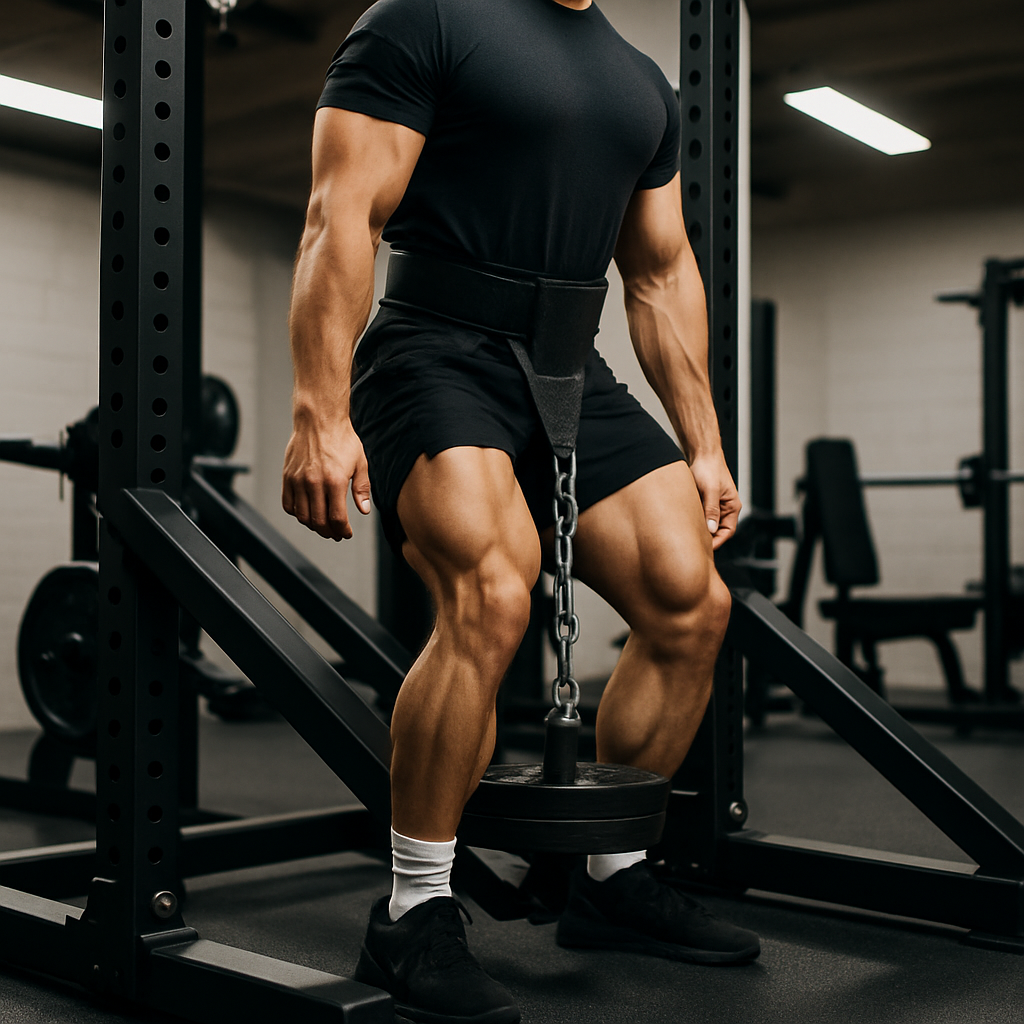
The Problem: Most Leg Exercises Hide a Shoulder Tax
When I first hurt my shoulder, I figured leg day would be untouched. I was wrong. The issue isn’t that legs directly load the shoulder—it’s that the standard ways we load legs do. Back squats require you to unrack the bar and stabilize it on your rear delts and traps. The moment you add weight, your shoulder external rotators have to fire to keep that bar from rolling forward off your back. Front squats are even worse; they demand a clean grip or crossed-arm position that puts your shoulder into flexion under load. Dumbbell lunges require grip strength and shoulder stability to prevent the weight from pulling your arm into internal rotation. Barbell deadlifts from the floor demand a loaded arm hang with the shoulder in a vulnerable position.
The reason nobody talks about this is that most fitness writing is written by people who train in commercial gyms where every machine under the sun is available. Home gym training—or training around an actual injury—requires you to think differently. You have to pick movements that load the legs *without* asking the shoulder to do anything but sit there.
Machine-Based Lower Body: The Safest Path Forward
If you have access to a leg press, hack squat, or Smith machine, use it. These machines lock the bar path and remove the stabilization demand on your shoulder entirely. Your legs still do 100% of the work; the machine just replaces the balance and shoulder tension. On a leg press, you can load 450 pounds and focus purely on quad and glute drive without a single shoulder fiber firing in stabilization.
The protocol I used: 4 sets of 6–8 reps on the leg press, loading as heavy as I could move with control. No shoulder involvement whatsoever. Then 3 sets of 8–12 reps on a hack squat or Smith machine squat, same logic. Finish with 3 sets of 15–20 reps on a leg extension machine if available. This is not a compromise; this is legitimate heavy leg training that just doesn’t use your shoulder.
The limitation is real: not everyone has a home gym with machines, and not everyone can visit a commercial gym during recovery. If that’s you, the next section is where your leg training actually happens.
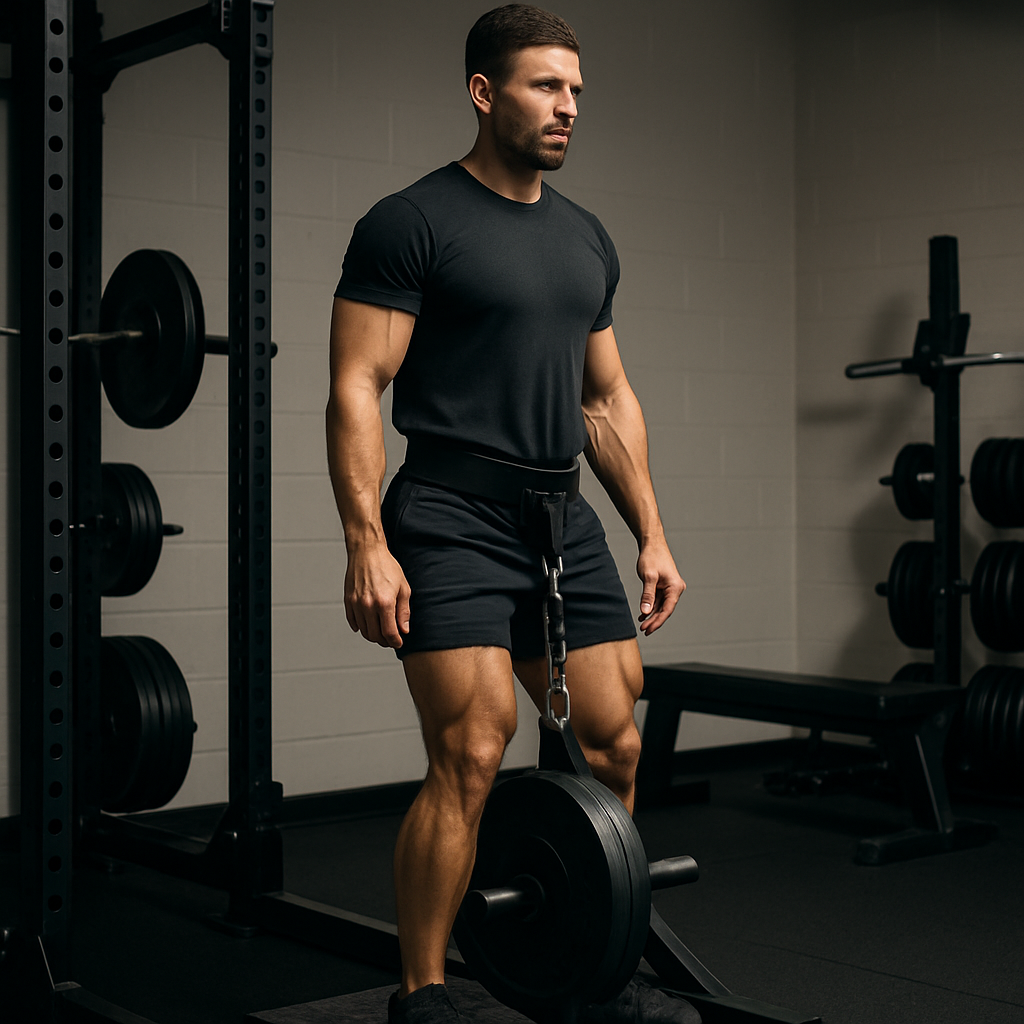
The Safety Squat Bar: Built for This Exact Problem
A safety squat bar is designed with padded arms that sit across your shoulders and chest, not a raw bar pressing into your traps. Instead of balancing the load on your shoulder, the bar’s design distributes the weight across a wider surface and through a more neutral shoulder position. I started using one when my shoulder was irritated, and I stopped thinking about shoulder pain during squats entirely. The bar forces you into a slightly more upright torso position, which shifts load slightly forward into the quads—not a bad trade when you’re already getting 300+ pounds on the bar.
The VEVOR Safety Squat Bar with 1,500 lbs capacity and padded shoulder/arm supports is a legitimate home gym option if you have a rack. The padded design removes the pinch and pressure that aggravates a healing shoulder. Load it for 5 sets of 5 reps at 70–80% of your normal back squat weight. Your legs won’t know the difference; your shoulder will thank you.
If you want a lighter, more affordable option, the VEVOR 700 lbs Safety Squat Bar with cambered design works identically—just rated for lower weight but still more than enough for most people training at home. The Bells of Steel option (Safety Squat Bar 4.0 with padded design and 1,500 lb capacity) is another solid choice if you want a premium feel.
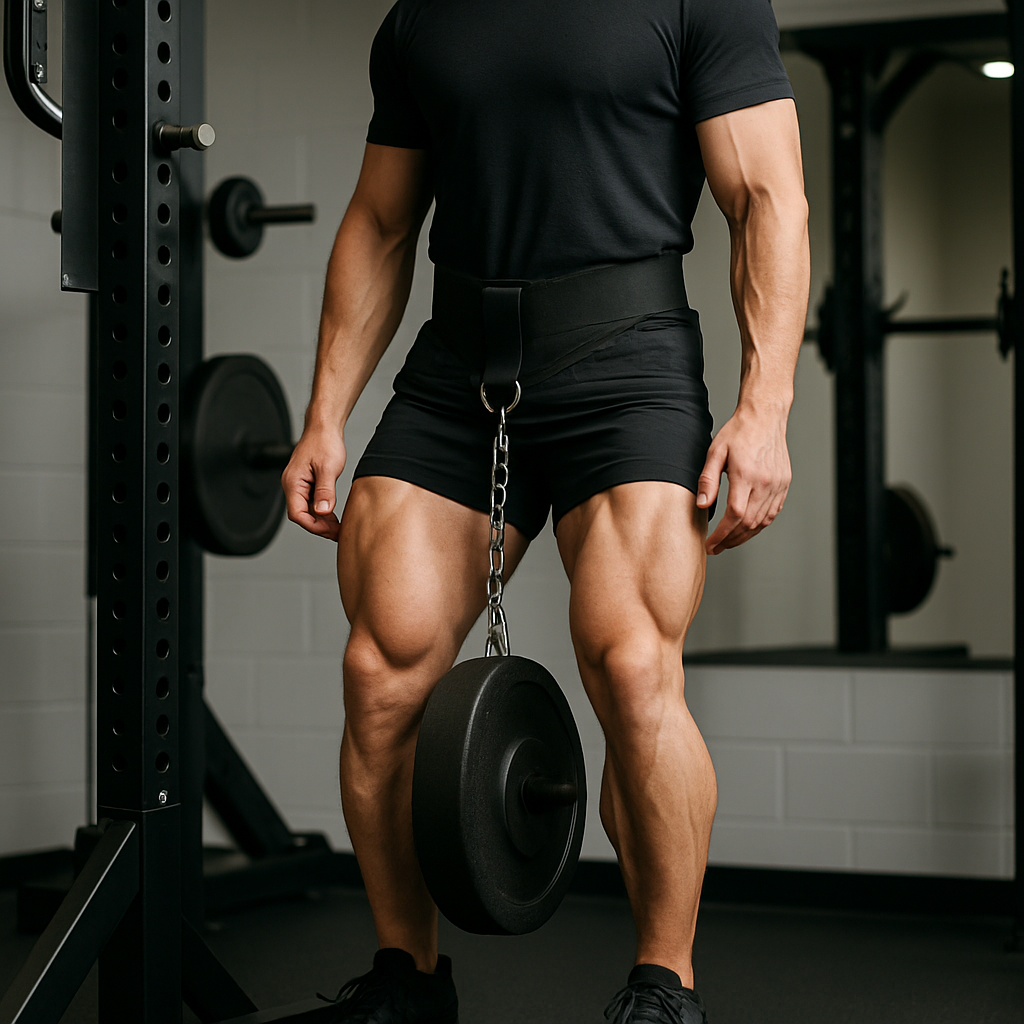
Loaded Leg Movements Without Shoulder Involvement
Beyond the safety squat bar, there are specific movements that hammer the legs hard while keeping shoulder demand at zero. These aren’t “lighter” options—they’re full-strength movements that just happen to work around injury.
Belt Squats and Dip Belt Leg Loading
A dip belt with a chain lets you load your bodyweight squat or split squat without holding or balancing anything. You clip the belt around your waist, attach weight plates to the chain, and squat. Zero shoulder involvement. Zero grip demand. Pure leg work.
I’ve used the DMoose Dip Belt with stainless steel chain and the MAXRANK Dip Belt rated for 550 lbs for exactly this purpose. Both are built solid and distribute the load evenly. Protocol: 4 sets of 5–8 reps of belt squats, loading 50–100 lbs of additional weight depending on your strength. Then 3 sets of 8–12 reps of belt split squats, single leg. This is heavy, functional leg training with zero shoulder demand.
Single-Leg Work and Goblet Variations
Single-leg work inherently demands less shoulder involvement than bilateral movements because the load is lighter and the balance requirement doesn’t force shoulder stabilization. A Bulgarian split squat with your back foot elevated on a bench, holding a light dumbbell at chest height, is brutal leg work. Your quads and glutes do almost all the stabilization; the shoulder is just a grip point.
I ran 4 sets of 8 reps per leg, holding 35 lbs in one hand at chest height. The load is light enough that shoulder pain never surfaced, but the unilateral demand on the legs is high enough that progress still happened. Same logic applies to pistol squat progressions—reduce the load, keep the leg stimulus high, eliminate shoulder demand.
Leg Extensions, Leg Curls, and the Accessory Stack
If you have machines available, this is where the real volume happens. Leg extensions, leg curls, hip abductors, and hip adductors do not load the shoulder at all. They’re pure isolation work, and there’s no reason to avoid them during shoulder recovery. I did 4 sets of 12–15 reps on leg extensions, then 4 sets of 12–15 reps on leg curls, then 3 sets of 15–20 reps on each adductor and abductor machine. This is high-volume leg work that simultaneously reduces systemic fatigue compared to heavy compound movements.
A Sample Weekly Protocol: Training Legs Hard During Shoulder Recovery
Here’s the actual week I ran when my shoulder was irritated:
Day 1 (Strength Focus): 5 sets of 5 reps safety squat bar, 70% of normal back squat max. 4 sets of 6 reps belt squats with 75 lbs added. 3 sets of 15 reps leg extensions.
Day 2 (Hypertrophy Focus): 4 sets of 8 reps Bulgarian split squats per leg, 35 lbs dumbbell. 4 sets of 12 reps leg press. 3 sets of 12 reps leg curl. 3 sets of 15 reps adductor machine.
Day 3 (Optional Conditioning): 8 rounds of 45 seconds on the belt squat or leg press at roughly 50% of your Day 1 working load, 45 seconds rest — the dip belt keeps every pound on your hips and your arms hanging free. Or, if you want the lunge pattern back, 4 sets of 20 walking lunges per leg carrying nothing at all: bodyweight lunges are the one version of that movement with zero shoulder tax, and at 20 reps per leg they are far from easy. Finish with 12–15 minutes on an incline treadmill at a 10–12% grade, hands off the rails.
This isn’t theoretical. I ran this for eight weeks while my shoulder healed, and I actually got stronger in the legs—hit new highs on leg press and belt squat loading. My shoulder improved cleanly because I wasn’t re-aggravating it every week. The moment I could shoulder press pain-free again, I transitioned back to back squats and normal training. But I lost zero leg progress in the meantime.
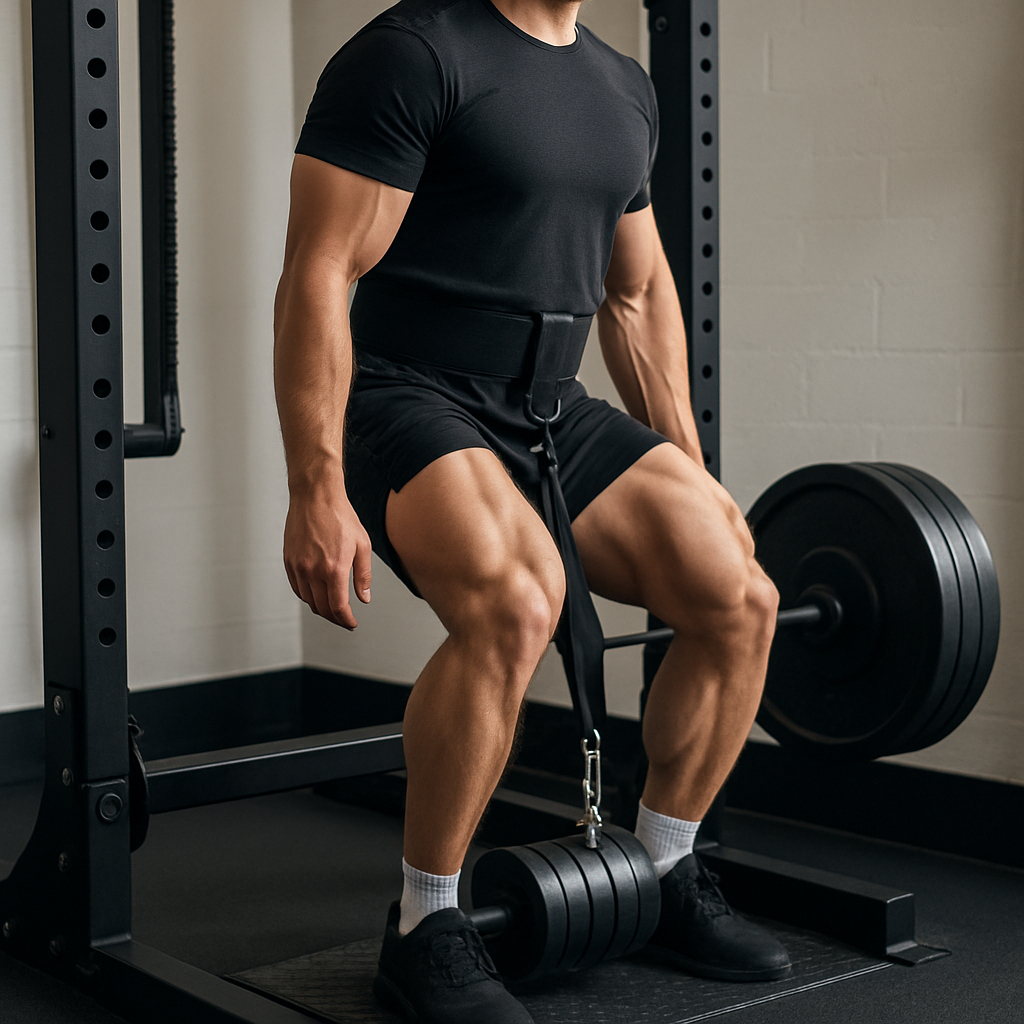
What to Avoid When Training Lower Body With Shoulder Injury
The movements that look safe but aren’t: trap bar deadlifts (loaded arm hang), kettlebell swings (loaded arm hang at the bottom), any dumbbell movement where you’re hanging heavy weight, cable machine work where you’re gripping and stabilizing under load. Farmer’s carries are out. Landmine rotations are out. Anything that asks your shoulder to stabilize, grip, or balance a heavy object—even if the primary movement is legs—is asking for trouble.
The only exceptions: extremely light weight (under 25 lbs) where the grip and stabilization demand is negligible, or machine-based work where the machine handles the stabilization and you just provide force.
The Bottom Line
A shoulder injury is not a sentence to stop training legs. It’s a redirect. You use machines, safety bars, and belt loading instead of your normal compound movements. You avoid anything that asks your shoulder to stabilize or grip heavy load. And you keep pushing the legs hard—because there’s zero reason your quads and glutes should lose progress while your shoulder heals. The movements are out there; most people just haven’t been forced to think about them.
If your shoulder still hurts during any of these movements, stop and consult a licensed physical therapist or sports medicine doctor. What I’m describing is for people past the acute pain phase, who’ve been cleared to move but need to avoid specific positions. That’s a real distinction. But if you’re in that middle ground—cleared to train, just not overhead—then this is your path. Start with machines if you have them. Invest in a safety squat bar if you’re serious about heavy lower body work. Pick up a dip belt for single-leg and unloaded movement options. Train the legs hard. Protect the shoulder. Let it heal. Everyone wins.
About This Article
Written by Jordan Ellis. Jordan Ellis isn't a certified personal trainer — just someone who's been genuinely obsessed with training for over eight years and turned it into building smarter home gyms. He focuses on home fitness: effective training spaces, equipment that earns its price, and programs that work in a spare room or basement, not just a commercial gym. More about this site.
Scope and limits. Jordan is not a certified personal trainer, and nothing here is medical advice. Check with a physician before starting a new program, and prioritize form over load on every lift described.
Verify this against a primary source
Specifics change, and your situation may differ from the one described here. These are the authorities worth checking directly:
- Physical Activity Guidelines for Americans (HHS) — the federal physical activity guidelines
- American College of Sports Medicine — exercise prescription and position stands
- NSCA — strength and conditioning research