Tag: bench press

  • How to Bench Press With Proper Form: From Setup to Lockout

    How to Bench Press With Proper Form: From Setup to Lockout

    This post contains affiliate links. As an Amazon Associate, I earn from qualifying purchases at no extra cost to you.

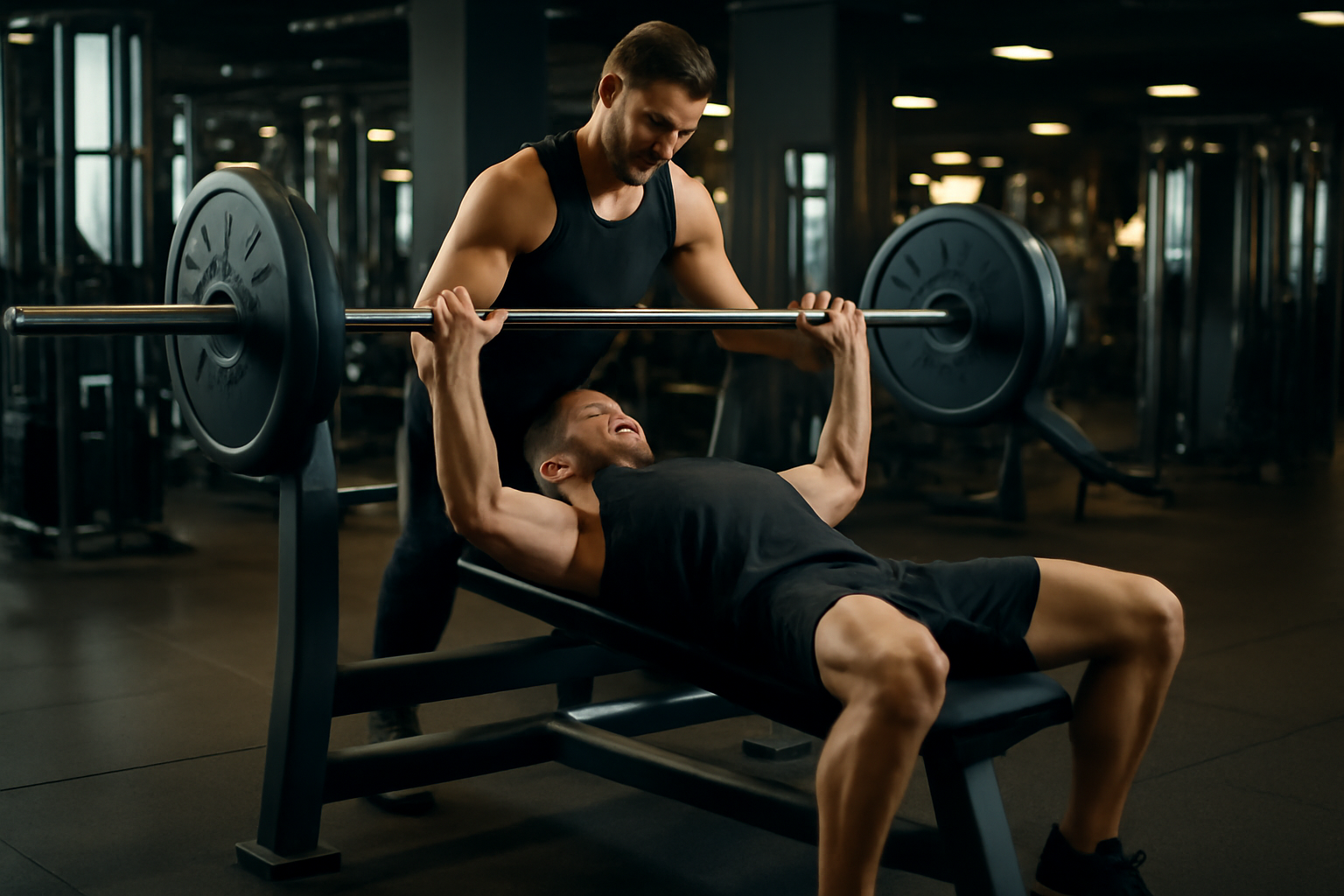
    The bench press is the single most popular exercise in the gym — and also one of the most commonly butchered. Walk into any commercial gym on a Monday and you’ll see dozens of people loading up the bar, flaring their elbows, bouncing the bar off their chest, and wondering why their shoulders ache every Tuesday morning. Learning how to bench press correctly isn’t just about ego or aesthetics. It’s about building real, transferable upper body strength while keeping your shoulders, wrists, and elbows healthy for years to come. Whether you’re a complete beginner or someone who’s been training for years with sloppy habits, this guide will break down every element of bench press form from the ground up.

    Bench Press Setup: The Foundation of a Good Rep

    Most people treat the setup like an afterthought — they lie down, grab the bar, and go. That’s a mistake. The setup determines everything. A solid, repeatable setup is what separates lifters who progress consistently from those who stall and get hurt.

    Foot Position

    Plant your feet flat on the floor, roughly hip-width apart, and drive them into the ground throughout the entire lift. Your legs aren’t just sitting there — they’re actively contributing to stability and leg drive. Some lifters tuck their feet back toward their hips to increase arch and lat engagement, which is valid, but beginners should start with a flat-footed stance until the rest of the movement is dialed in.

    Back Arch

    Let’s clear something up: a natural arch in the lower back is not only acceptable during the bench press — it’s correct. A flat back with your spine pressed into the bench is actually a less stable, less powerful position that puts more stress on the anterior shoulder. You’re not trying to do a full powerlifting arch off the bench; you’re simply maintaining the natural curve of your lumbar spine. Your glutes and upper back should stay in contact with the bench at all times.

    Shoulder Blades: Retracted and Depressed

    Before you touch the bar, squeeze your shoulder blades together and pull them down toward your back pockets. This is what coaches call the “packed” or “pockets” position. Doing this shortens the range of motion slightly, creates a stable shelf for the bar path, and — most importantly — protects your rotator cuff by keeping the shoulder joint in a mechanically sound position. If your shoulder blades are winging off the bench during the press, you’ve lost your base.

    Grip Width

    A grip roughly 1.5 times your shoulder width works well for the majority of lifters. On a standard Olympic bar, most people end up with their index fingers just outside the smooth center knurling, or with their pinkies on the power rings. A grip that’s too wide increases shoulder stress; a grip that’s too narrow shifts load entirely to the triceps and changes the movement pattern entirely. Find your width, mark it mentally, and use it consistently every session.

    Unracking the Bar

    Lock your arms out completely before you lift the bar off the hooks. Then shift it horizontally so it’s positioned directly over your chest — not your face, not your belly. This is your starting position. Every rep begins and ends here.

    One thing I always tell my clients before they even touch the bar: protect your wrists. If you’re pressing any meaningful weight, your wrists will take a beating if they’re allowed to hyperextend backward under load. This is where a quality pair of wrist wraps makes a genuine difference. I personally recommend the Fitgriff® Wrist Wraps for Weightlifting (18″) for anyone who is serious about their bench press setup. The 18-inch length gives you enough coverage to keep the wrist locked in a neutral position without restricting hand movement, and the heavy-duty material holds up under repeated use. I keep a pair in my gym bag and hand them to clients the moment they start working with heavier loads.

    How to Bench Press: Step-by-Step

    Now that you’re set up correctly, here’s exactly how to bench press through the full range of motion.

    Step 1: Lower the Bar with Control

    Take a deep breath into your belly (not your chest), brace your core like you’re about to take a punch, and begin lowering the bar. The bar should travel in a very slight diagonal arc — not perfectly straight down. Your elbows should track at roughly 45 to 75 degrees from your torso. The exact angle will depend on your anatomy, but the key rule is this: elbows should never flare out to 90 degrees. That position is a direct path to shoulder impingement. Think “tuck slightly” rather than “flare out.”

    Step 2: Touch the Chest

    Lower the bar to your nipple line — the lower portion of the chest, not the collarbone. The bar should make light contact with your chest on every rep. No bouncing. No half-reps. A brief, controlled pause at the bottom is one of the best ways to build honest strength and eliminate momentum from the equation.

    Step 3: Press Up and Back

    Drive the bar up and very slightly back toward the rack, returning it to the lockout position over your chest. Keep your shoulder blades packed throughout the press. At the top, arms are extended — not hyperextended — and the bar is back over your starting position, ready for the next rep.

    Step 4: Use Your Legs

    Leg drive isn’t just a powerlifting technique. Even as a recreational lifter, actively pressing your feet into the floor during the concentric phase creates full-body tension that translates into a stronger, more stable press. Think about pushing the floor away from you as you press the bar up. It takes practice, but once you feel it, you won’t press without it.

    If you’re someone who wants to work on specific portions of the lift — say, the lockout or the bottom range — press blocks are an incredibly underrated tool. Most of my clients who plateau mid-lift get a lot of value from adjustable board work. The Bench Press Block Press Boards (Adjustable 2-5 Board) let you limit the range of motion in a controlled way, helping you overload specific sticking points without compromising form. The adjustable 2-to-5 board design means you get multiple training variations out of a single piece of equipment — that’s smart value for a home gym setup.

    Common Bench Press Mistakes That Cause Injury

    Understanding proper bench press form also means understanding what breaks it. These are the five mistakes I see most often — and the ones most likely to put you on the injured list.

    • Flared elbows at 90 degrees: This is the number one cause of bench-related shoulder injuries. When your elbows are perpendicular to your torso, the shoulder joint is in an impingement-prone position under heavy load. Tuck your elbows to a 45–75 degree angle and your shoulders will thank you.
    • Pressing with a completely flat back: As I mentioned in the setup section, removing the natural arch from your lower back actually increases anterior shoulder stress and reduces your ability to generate force. Maintain your natural lumbar curve.
    • Bouncing the bar off your chest: This turns a strength exercise into a momentum exercise. It also risks serious rib and sternum injury under heavy load. Lower under control, pause, and press.
    • Uneven grip or lopsided pressing: If one hand drifts wider than the other, your bar path will rotate and one shoulder will take disproportionate load. Use the knurling marks on the bar as a reference point every single set.
    • No spotter or safety pins: Training to failure alone on a flat bench is genuinely dangerous. Always use a spotter, or set your safeties at chest height if you’re in a power rack. No lift is worth a dropped bar.

    For lifters who are also incorporating barbell work on bench day — hip thrusts, squats, or lunges as accessory movements — I want to mention one piece of kit that doesn’t get nearly enough credit. The POWER GUIDANCE Square Hip Thrust Pad Barbell Squat Pad is something I recommend to almost everyone doing barbell hip thrusts or heavy squats on the same training day. The square design keeps it from rolling off the bar mid-set, and the dense foam padding distributes barbell pressure evenly so you’re not fighting discomfort during an already demanding movement. It fits both standard and Olympic bars, which makes it a practical addition to any gym setup.

    How to Increase Your Bench Press

    Once your bench press form is solid, the next question is always: how do I add weight? Here’s what actually works.

    Progressive Overload

    If you’re a beginner or early intermediate, you should be adding 2.5 to 5 pounds to the bar every week or every other week. This is the most evidence-backed principle in strength training. Don’t add weight until you can complete all prescribed reps with clean form — but once you can, add the weight. Small plates (1.25 lb) are your best friend here.

    Strengthen Your Triceps

    The triceps are the primary mover in the top half of the bench press. If your lockout is weak, your triceps are the bottleneck. Close-grip bench press, weighted dips, and skull crushers are your best accessories for building the tricep strength that carries over directly to your competition-style bench.

    Attack Your Weak Points

    Pause reps build bottom-end strength and reinforce proper bench press form by eliminating the stretch reflex. Pin press from the bottom of the rack builds raw starting strength. Board press — pressing to a board or block on your chest — isolates the mid-to-top range. Figure out where you fail and train that range directly.

    On the topic of wrist support during heavy accessory work and max-effort pressing, I also keep a pair of Gymreapers Weightlifting Wrist Wraps (Competition Grade, 18″) on hand for my heavier sessions. These are competition-grade wraps that meet the quality standards of serious powerlifters, and the heavy-duty thumb loop makes them easy to position quickly between sets without losing tension. If you’re pushing into heavier weight territory and want a step up in wrist support, these are the ones I reach for personally.

    Final Thoughts on How to Bench Press Correctly

    Learning how to bench press with proper technique is a skill, and like any skill, it takes deliberate repetition before it becomes automatic. Start lighter than you think you need to, nail the setup every single rep, and build the habit of good form before you start chasing numbers. The lifters who bench press for decades without injury aren’t the ones who skipped the fundamentals — they’re the ones who committed to them early. Do the same, and the numbers will follow.

  • The Best Chest Workout for Mass: Exercises, Sets, and Programming That Actually Work

    The Best Chest Workout for Mass: Exercises, Sets, and Programming That Actually Work

    This post contains affiliate links. As an Amazon Associate, I earn from qualifying purchases at no extra cost to you.

    Ask any guy in the gym what muscle he trains most, and the answer is almost always chest. Ask him why his chest still looks flat after two years of training, and you’ll get a blank stare. In my experience training clients across all fitness levels, the chest is simultaneously the most trained and most poorly developed muscle group in recreational lifters. People default to the same flat bench routine, quarter-rep their way through heavy sets, skip incline work entirely, and then wonder why their upper pec looks like a dinner plate instead of a shelf. A well-designed chest workout isn’t complicated — but it does require you to stop letting your ego write your program. This guide cuts through the noise and gives you exactly what the evidence supports: the right exercises, the right volume, and the right way to execute each rep.

    The Best Chest Exercises (Ranked by Muscle Activation)

    Not all chest exercises are created equal. EMG research and decades of practical coaching both point to a handful of movements that consistently outperform the rest. Here’s how I rank them — and why.

    Barbell Bench Press (Flat) — The King for Overall Mass

    If you want a thick, full chest, the flat barbell bench press is still the most efficient path to get there. It allows you to load the pectorals heavier than almost any other movement, recruits the anterior deltoid and triceps as strong synergists, and has a mountain of research supporting its effectiveness for hypertrophy. The key is executing it correctly: full range of motion, controlled eccentric, bar touching your lower chest — not bouncing off your sternum. Done properly, this is the cornerstone of the best chest workout you can build.

    Incline Dumbbell Press (30–45 Degrees) — Upper Chest Emphasis

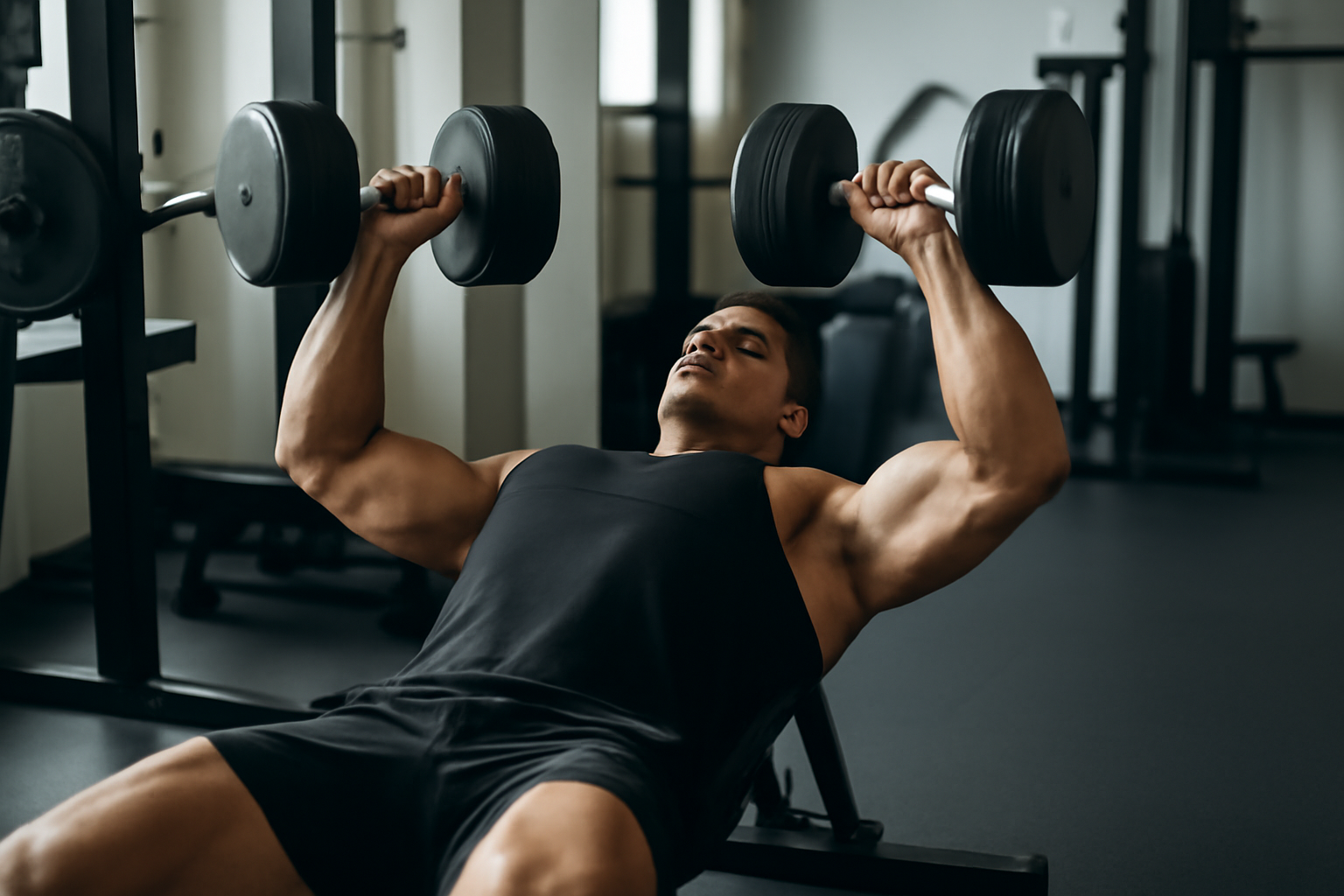
    The clavicular head of the pec major — what most people call the “upper chest” — is chronically underdeveloped in lifters who only flat bench. Incline pressing at 30 to 45 degrees shifts the emphasis upward and creates that full, three-dimensional look that separates a trained chest from a flat one. Dumbbells are preferable to a barbell here because they allow greater range of motion and let each arm move independently, correcting strength imbalances over time. If you have an adjustable bench at home, this exercise alone justifies the investment.

    Speaking of which — if you’re building a home setup, the Cometofit Adjustable Bench is one I genuinely recommend. It handles incline, flat, and decline positions, which means you’re not buying three separate pieces of equipment. The build quality is solid, it doesn’t wobble under load, and the incline adjustability hits that sweet spot of 30 to 45 degrees perfectly for upper chest work. Most of my clients who train at home use something in this category, and this bench punches above its price point.

    Dumbbell Flyes / Cable Flyes — Stretch and Squeeze

    Pressing movements are essential, but they don’t fully stress the pec through its stretched position the way fly variations do. Research on muscle hypertrophy increasingly points to the importance of training at long muscle lengths — and cable flyes or dumbbell flyes deliver exactly that. The key is keeping a slight bend in the elbow, feeling a genuine stretch at the bottom, and not turning the movement into a press. These aren’t ego-lifting exercises. Use a weight that lets you feel the chest, not just move the load.

    Dips (Weighted If Possible) — Lower Chest and Overall Mass

    Weighted dips are one of the most underutilized chest exercises in most programs. Leaning slightly forward during the dip shifts the load from the triceps onto the lower pec, creating thickness in the sternal portion of the chest that pressing alone won’t build. If you can add a dip belt and some plates, even better — progressive overload on this movement produces serious results. Bodyweight dips are a solid starting point, but once you can hit 15 or more clean reps, it’s time to add resistance.

    Push-Ups — As a Finisher or for Beginners

    Push-ups get dismissed by intermediate lifters, but they deserve a spot in almost every chest workout. They allow serratus anterior activation, natural scapular movement that a bench press restricts, and when used as a finisher at the end of a session, they create a serious pump that reinforces the mind-muscle connection. For beginners, push-ups are the safest and most accessible entry point into chest training — and there are enough variations to keep them challenging for months.

    The Complete Chest Workout: Sets, Reps, and Rest

    Here is a sample chest workout built around the exercises above. This is the structure I use with intermediate clients training two to three times per week.

    • Flat Barbell Bench Press: 4 sets × 6–8 reps | Rest 2–3 minutes
    • Incline Dumbbell Press (30–45°): 3 sets × 8–10 reps | Rest 90–120 seconds
    • Cable or Dumbbell Flyes: 3 sets × 12–15 reps | Rest 60–90 seconds
    • Weighted Dips: 3 sets × 8–12 reps | Rest 90 seconds
    • Push-Up Finisher: 2 sets to failure | Rest 60 seconds

    That gives you 15 working sets per session — right in the middle of the 10 to 16 weekly set range that current hypertrophy research identifies as the sweet spot for most natural lifters. Going much higher doesn’t produce proportionally better results and dramatically increases recovery demand. Going much lower leaves gains on the table. The goal is accumulating enough volume with enough intensity to force adaptation — not destroying yourself for the sake of it.

    Progressive overload is non-negotiable. Every week, your goal is to add either a rep or a small amount of weight to each working set. It doesn’t have to be dramatic — 2.5 lbs or one extra rep counts. Over months, that compounds into real size and strength gains. If you’re training at home, having adjustable dumbbells with enough weight range to progress is critical, and this is where quality equipment pays for itself.

    The TYZDMY Adjustable Dumbbells Set is one of the better options I’ve come across for serious home training. At 52.5 lbs per dumbbell — 105 lbs total — with 15 weight increments, this set covers the full range you need from warm-up flyes all the way to heavy incline pressing. The quick-adjust mechanism is genuinely fast, which matters between sets when you don’t want to break your rest timing. If you’re committed to building a real chest at home, a set like this removes the excuse of not having enough weight to progress.

    Common Chest Workout Mistakes

    I’ve watched enough chest workouts in commercial gyms to write a horror novel. Here are the mistakes I see most consistently — and the ones costing people the most progress.

    Ego Lifting on Bench (Partial Reps, Bouncing)

    Loading the bar with more than you can control and grinding out four-inch range of motion reps is one of the most common ways to train chest without actually training chest. Partial reps at heavy loads shift tension to the shoulders and triceps, reduce time under tension in the pec, and dramatically increase injury risk. The bar should touch your chest — lightly, under control — on every rep. If it doesn’t, strip the weight until it does.

    Skipping Incline Work

    The flat bench is not a complete chest workout on its own. Skipping incline presses consistently produces a low, flat chest with no development in the upper portion — the area most visible when you’re standing upright. Incline work should be in your program every single session. No exceptions.

    Ignoring the Stretch Position

    Cutting the range of motion short to protect the ego means missing the most hypertrophically valuable part of many chest exercises. Emerging research suggests the stretched position under load is where a significant portion of muscle growth stimulus occurs. Let the dumbbells come down far enough on flyes and presses to actually feel a stretch in the pec. Controlled, not reckless — but the full range matters.

    Too Much Volume, Not Enough Intensity

    Twenty sets of chest work spread across five exercises with weights that never challenge you is not a productive chest workout. It’s cardio with dumbbells. Volume matters, but intensity — training close to muscular failure — is what actually drives adaptation. Keep your sets hard. The last two reps of each set should require genuine effort.

    Chest Workout at Home (No Bench Required)

    No gym, no bench, no problem — within reason. You can build a genuinely effective chest workout at home if you’re strategic about exercise selection.

    Push-Up Variations

    • Wide-grip push-ups: Emphasizes the sternal (middle and lower) pec
    • Decline push-ups (feet elevated): Shifts load to upper chest, mimicking incline pressing
    • Close-grip push-ups: Greater tricep involvement, inner chest emphasis
    • Archer push-ups: Single-arm loading, increases difficulty significantly

    The FDS1 Adjustable Dumbbell Set is worth highlighting here because it does something clever — it functions as a push-up stand in addition to a full adjustable dumbbell set, kettlebell, and barbell. That 5-in-1 design is genuinely useful in a home gym context where you want to maximize versatility without cluttering your space. The upgraded nut mechanism keeps the weight secure during dynamic movements, which matters when you’re using them as push-up handles. It’s one of those pieces of equipment that earns its floor space.

    Resistance Band Alternatives

    Resistance bands anchored to a door or a post can replicate cable fly mechanics surprisingly well. The key advantage is that bands provide accommodating resistance — increasing tension as you move through the range of motion — which actually mimics the cable fly stimulus more closely than you might expect. Band chest presses and band crossovers are both legitimate options when weights aren’t available.

    Why the Floor Press Works Better Than You Think

    The floor press — lying on the ground and pressing dumbbells — eliminates the leg drive and arch of a traditional bench press, forcing more honest chest and tricep recruitment. The limited range of motion is a drawback, but for home training without a bench, it’s a legitimate pressing option that loads the chest meaningfully. Pair it with decline push-ups and resistance band flyes, and you have a complete at-home chest workout that actually produces results.

    If you’re ready to upgrade from floor pressing, an adjustable bench is the single best investment for home chest training. The YOLEO Adjustable Weight Bench stands out for a few reasons — it’s ASTM-certified to hold 827 lbs, comes 98% pre-assembled (which means you’re actually using it within minutes of unboxing), and offers 84 positions across incline, flat, and decline. The wider seat adds genuine stability during heavy pressing. In my experience, the bench is the piece of home gym equipment clients get the most use out of, and this one is built to last.

    Final Thoughts

    The best chest workout is not the one with the most exercises or the heaviest weight — it’s the one executed with full range of motion, appropriate intensity, and enough consistency to force progressive overload over time. Stick to compound pressing movements as your foundation, add targeted isolation work to fill in the gaps, train close to failure without destroying your joints, and give the chest adequate recovery before hitting it again. Do that for twelve months, and the results will speak for themselves. Skip the shortcuts, ditch the ego, and train the muscle — not the mirror.