Leg Day Workout: The Complete Lower Body Training Guide

Leg Day Workout: The Complete Lower Body Training Guide

Written by

in

This post contains affiliate links. As an Amazon Associate, I earn from qualifying purchases at no extra cost to you.

Let’s be honest — leg day gets skipped more than any other training session. People dread it, they find excuses, and they quietly convince themselves that upper body work is “enough.” I’ve heard every justification in the book. But here’s what the research actually shows: skipping your leg workout is one of the most counterproductive things you can do for your overall fitness. Heavy compound leg exercises trigger a significant hormonal response, elevating testosterone and growth hormone levels that benefit your entire body — not just your lower half. Studies have consistently shown that lower body training contributes to greater systemic anabolic output than upper body training alone. Beyond hormones, training your legs improves athletic performance across virtually every sport and physical activity, and it’s one of the most powerful things you can do for long-term knee, hip, and lower back health. If you’re not prioritizing a structured leg workout at least once or twice a week, you’re leaving gains on the table and increasing your injury risk. Let’s fix that.

The Best Leg Exercises

Not all leg exercises are created equal. The ones I program for myself and my clients are chosen based on their ability to load the target muscle group effectively, their transferability to real-world movement, and the evidence behind them. Here’s a breakdown by muscle group.

Quads

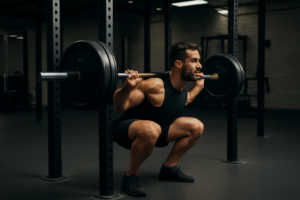
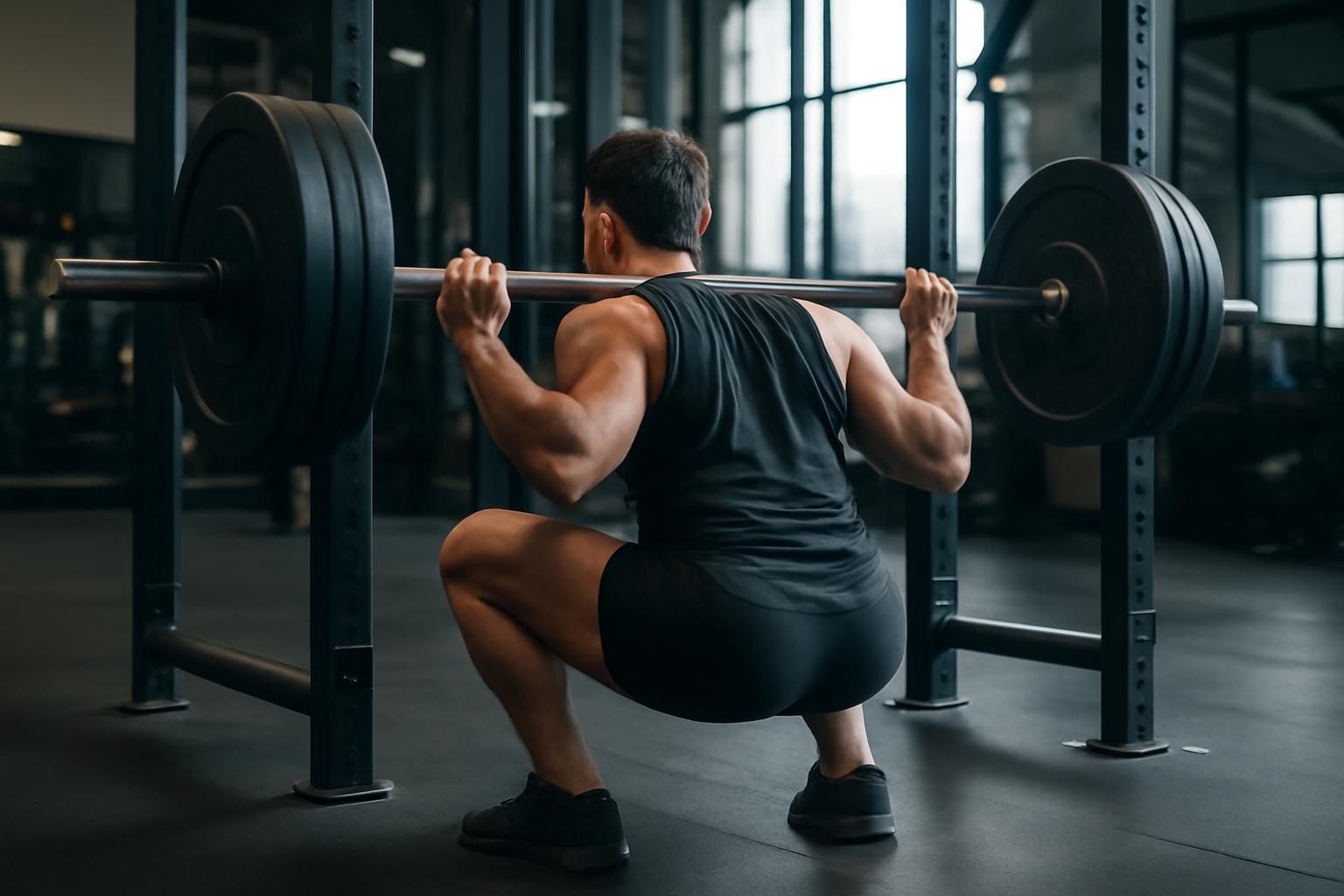
  • Back Squat: The king of quad development. Loads the entire lower body under heavy tension through a full range of motion.
  • Front Squat: Shifts more demand onto the quads and upper back. Excellent for developing quad thickness and improving squat mechanics.
  • Leg Press: A machine-based option that allows high volume loading with less spinal compression — great as a secondary quad movement.
  • Leg Extensions: An isolation exercise that trains the quads through terminal knee extension. Research supports its use for VMO development and knee health when programmed correctly.
  • Lunges: A unilateral movement that corrects side-to-side imbalances and challenges stability alongside raw strength.

If you’re squatting heavy — and you should be — knee support matters. I personally recommend the Gymreapers Knee Sleeves (1 Pair) with Gym Bag – IPF Approved for anyone pushing serious weight on squats. These 7MM neoprene sleeves provide genuine compressive support that keeps the knee joint warm and tracking properly under load. The fact that they’re IPF approved tells you they’re built to a standard that competitive powerlifters actually trust. I keep a pair in my bag on every leg day, and most of my clients who squat over 225 lbs have switched to these and haven’t looked back.

Hamstrings

  • Romanian Deadlifts (RDLs): The most effective hamstring exercise for developing length and strength simultaneously. Trains the hamstrings in a lengthened position, which research links to greater hypertrophy.
  • Lying Leg Curls: A direct hamstring isolation movement. Pairs well with RDLs to cover both hip-dominant and knee-flexion-based hamstring function.
  • Nordic Curls: One of the most challenging and effective hamstring exercises available. Strong evidence supports their use for hamstring injury prevention in athletes.

Glutes

  • Hip Thrusts: Unmatched for glute activation. EMG research consistently shows higher glute activation during hip thrusts than during squats.
  • Bulgarian Split Squats: A brutal unilateral movement that hammers the glutes and quads simultaneously while improving hip mobility and single-leg stability.

Calves

  • Standing Calf Raises: Targets the gastrocnemius, the larger, more visible calf muscle. Best performed through a full range of motion with a controlled tempo.
  • Seated Calf Raises: Specifically targets the soleus, which sits beneath the gastrocnemius. Often neglected, but essential for complete calf development.

Footwear is often overlooked in leg training, but it makes a real difference — especially for squats and deadlifts. I’ve been recommending the Osterland Weightlifting Shoes to clients who struggle with heel lift or forward lean during squats. The elevated heel position built into these shoes improves squat depth and keeps your torso more upright, which means better quad activation and safer mechanics under heavy load. These are purpose-built for exactly the kind of leg exercises we’re talking about here, and the quality you get for the price is genuinely impressive.

The Complete Leg Day Workout

This is the leg day workout I come back to again and again when I want a session that hits everything — quads, hamstrings, glutes, and calves — with the right balance of intensity and volume. It’s built around compound movements first, with accessory work to fill in the gaps. Rest 2-3 minutes between sets on the heavier compound lifts, and 60-90 seconds on the accessory exercises.

  • Back Squats: 4 sets × 6-8 reps
  • Romanian Deadlifts: 3 sets × 8-10 reps
  • Leg Press: 3 sets × 10-12 reps
  • Walking Lunges: 3 sets × 12 reps each leg
  • Lying Leg Curls: 3 sets × 12 reps
  • Standing Calf Raises: 4 sets × 12-15 reps

The structure here is intentional. You’re squatting first when your central nervous system is freshest and your energy reserves are highest. RDLs follow because they’re technically demanding but don’t compete with the squat pattern. The leg press gives your quads additional volume without adding more spinal loading. Walking lunges address any imbalances while also building functional unilateral strength. Leg curls close out the hamstring work, and calf raises finish everything off. This is a complete, evidence-based leg workout that delivers results when you execute it with genuine effort.

For deadlift-heavy sessions like this one, having the right shoe matters just as much as it does for squatting. The MANUEKLEAR Strong Anti-Slip Deadlift Lifting Squat Shoes are a solid choice if you want one pair of shoes that handles both movements well. The rubber non-slip sole keeps you rooted to the floor during heavy pulls, which is exactly what you need when you’re grinding through Romanian deadlifts at the end of a tough session. I’ve had clients who were slipping in regular running shoes switch to these and immediately report better stability and more confidence under load. That’s not a small thing when the bar is heavy.

Quad-Dominant vs Hamstring-Dominant Leg Days

If you’re training lower body twice per week — which I strongly recommend for most intermediate and advanced lifters — the smartest approach is to split your sessions by emphasis rather than trying to max out everything twice. This allows for better recovery, higher quality volume, and more targeted development.

Quad-dominant leg day should anchor around back squats or front squats, followed by leg press, leg extensions, and walking lunges. This session will be harder on your knees and anterior chain, so it’s worth having your knee sleeves on hand. Keep rep ranges moderate to heavy (6-12 reps) and prioritize depth and control.

Hamstring-dominant leg day should lead with Romanian deadlifts or a deadlift variation, followed by lying leg curls, Nordic curls, hip thrusts, and Bulgarian split squats. This session hammers the posterior chain and glutes. Rep ranges here can go slightly higher (8-15 reps) since the posterior chain often responds well to additional volume.

Both sessions should include some calf work at the end — calves are easy to under-train when you’re focused on the bigger muscle groups. Alternating between standing and seated calf raises across your two weekly leg workouts ensures you’re hitting both the gastrocnemius and soleus consistently.

On your heavier quad-focused days especially, knee compression support becomes important for session longevity. The Jupiter Knee Sleeves (1 Pair), 7mm Compression Knee Braces are another option I recommend to lifters who want reliable joint support without spending a fortune. The 7mm compression is the same thickness used by competitive powerlifters, and these sleeves hold up well across repeated heavy sessions. If you’re squatting twice a week with serious intent, having a quality pair of knee sleeves isn’t optional — it’s part of training smart.

Leg Workout at Home Without Equipment

No gym? No problem. A bodyweight leg workout done with intensity and progressive overload principles can still drive significant adaptation — especially for beginners and intermediate trainees. The key is choosing movements that are genuinely challenging and progressing them over time.

  • Pistol Squat Progressions: Start with assisted pistol squats using a doorframe or TRX strap, then progress to box pistols (sitting back to a low surface), and eventually full pistol squats. This movement demands single-leg strength, balance, and mobility simultaneously.
  • Jump Squats: A power-based variation that trains the fast-twitch muscle fibers in your quads and glutes. Perform 3-4 sets of 10-15 explosive reps with a soft landing and immediate re-engagement at the bottom.
  • Single-Leg Deadlifts: Trains the hamstrings and glutes unilaterally while building balance and hip stability. Hold a water jug or backpack for added resistance as you get stronger.
  • Wall Sits: An isometric quad exercise that’s deceptively difficult when held for 45-90 seconds. Add a tempo component or pulse at the bottom to increase difficulty without equipment.

Structure your home leg workout the same way you would a gym session — hardest movements first, then accessory work. A sample home leg workout might look like: pistol squat progressions (4 sets), jump squats (3 sets), single-leg deadlifts (3 sets each side), and wall sits (3 rounds). That’s a complete, challenging leg workout that requires zero equipment and zero excuses.

Final Thoughts

A well-designed leg workout isn’t just about aesthetics — it’s about building a body that performs, stays healthy, and continues to make progress year over year. Whether you’re following the complete leg day workout outlined above, splitting into quad and hamstring sessions, or training at home with bodyweight progressions, the most important thing is consistency and progressive overload. Show up, track your numbers, add weight or reps over time, and respect the recovery process. Your legs are the foundation of your athleticism. Train them like it.

Lucy Bamboo

Written by Lucy Bamboo

Lucy Bamboo is a NASM-certified personal trainer (CPT) and corrective exercise specialist (CES) with over 12 years of experience coaching clients through injury recovery, strength building, and sustainable fitness. She holds a B.S. in Kinesiology and has worked in both clinical rehabilitation and private training settings. Lucy writes at Push Pull Ya'll to make evidence-based exercise guidance accessible to everyone — whether you're rehabbing a shoulder injury at home or building your first real training program.