
If you’re short on training days but serious about building a strong, muscular upper body, a well-programmed upper body workout is one of the most efficient tools in your arsenal. Instead of splitting chest on Monday, back on Wednesday, and shoulders on Friday, you can hit every major upper body muscle group in a single session — saving time without sacrificing results. Research consistently shows that training frequency and total weekly volume are the primary drivers of hypertrophy and strength gains, and a smart upper body session lets you maximize both in fewer gym visits. Whether you’re training three days a week or adding this as a dedicated upper day in a push/pull/legs or upper/lower split, this guide gives you everything you need to build a complete, balanced physique from the shoulders down to the core.
| Exercise | Primary Muscles | Movement Type | Range of Motion |
|---|---|---|---|
| Bench Press | Pecs, anterior deltoid, triceps | Push | Flat and incline variations |
| Overhead Press | Shoulders (all three heads) | Push | Standing (demands full-body stability) |
| Dips | Lower chest, triceps | Push | Deep range of motion |
| Pull Ups | Back (lats, traps, rhomboids), biceps | Pull | Full range |
| Barbell Row | Back (lats, traps, rhomboids), core | Pull | Heavy loaded pulls |
Upper Body Muscles: What You’re Training
Before you load a barbell or grab a dumbbell, it’s worth knowing exactly what you’re targeting. A complete upper body workout isn’t just about a big chest — it’s about developing every muscle group above the waist in a balanced, functional way.
- Chest (Pectoralis Major and Minor): The pecs are responsible for horizontal pushing and are the primary movers in pressing exercises like the bench press and dips.
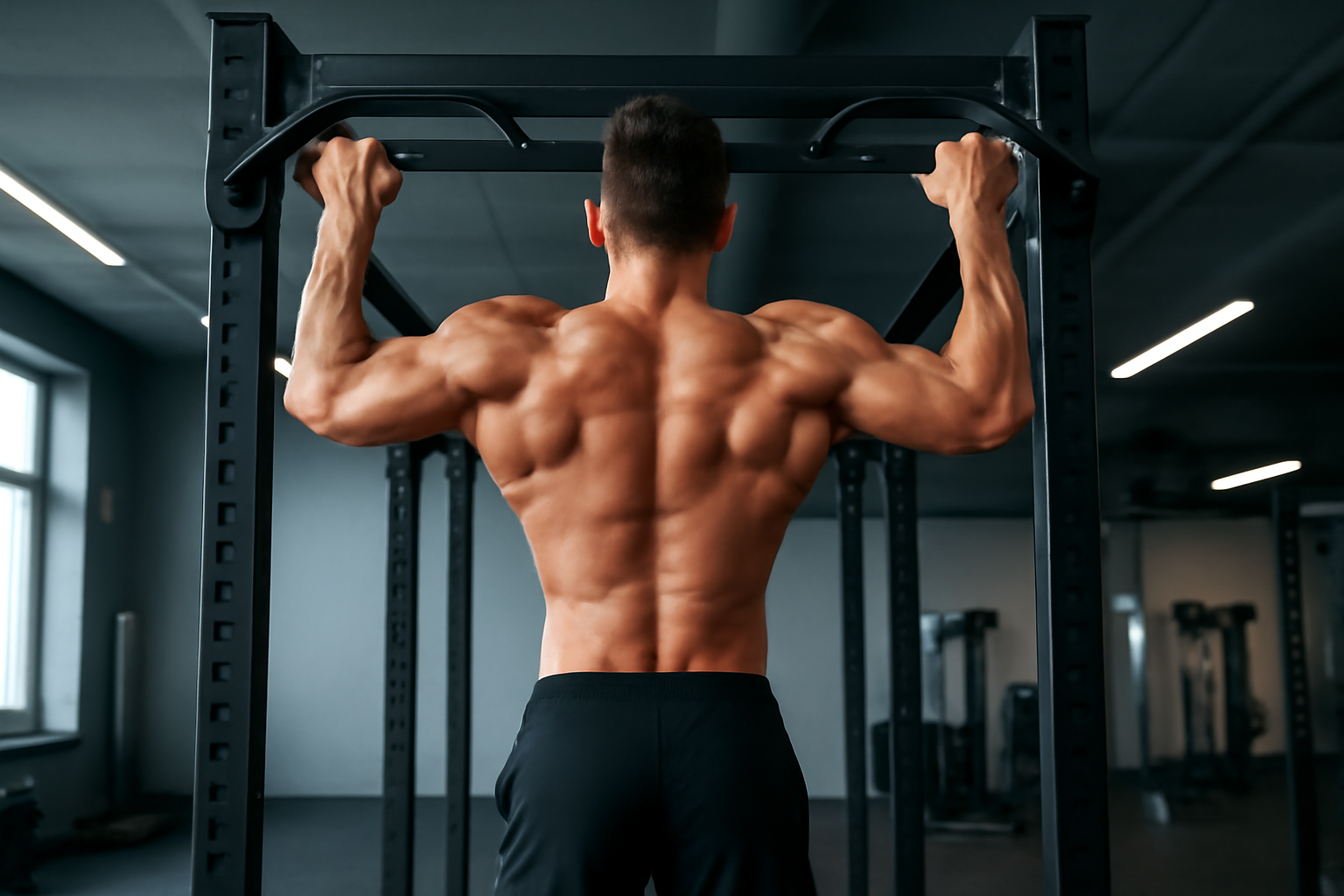
- Back (Lats, Traps, Rhomboids): Your back muscles handle all pulling movements. The lats create that wide, V-taper look, while the traps and rhomboids support posture and shoulder health.
- Shoulders (Anterior, Lateral, and Posterior Deltoids): All three heads of the deltoid need direct work. The front delt gets hit during pressing, but the lateral and rear delts require dedicated upper body exercises to develop fully.
- Arms (Biceps and Triceps): Your biceps are the primary elbow flexor activated during pulling movements. Your triceps — which make up roughly two-thirds of upper arm mass — are the primary elbow extensor trained during pushing.
- Core: Your core stabilizes every compound lift in this program. Exercises like the overhead press and barbell row demand significant core bracing to execute safely and effectively.
Push/pull balance is non-negotiable here. Overloading pushing movements without matching pulling volume is one of the most common causes of shoulder impingement and poor posture. I always program at least an equal ratio of pulling to pushing — ideally slightly more pulling — in every upper body session I write.
The Best Upper Body Exercises
Not all upper body exercises are created equal. The best upper body workout prioritizes compound, multi-joint movements that recruit the most muscle mass and allow for progressive overload over time. Isolation work has its place, but it should supplement — not replace — the foundational lifts.
Push Exercises
- Bench Press: The gold standard for chest development. Activates the pecs, anterior deltoid, and triceps simultaneously. Both flat and incline variations are supported by strong evidence for upper body hypertrophy.
- Overhead Press: The most complete shoulder builder in existence. When performed standing, it also demands full-body stability and core activation.
- Dips: An underrated compound movement that hammers the lower chest and triceps through a deep range of motion. Use bodyweight or add load via a dip belt for progressive overload.
The Pull Up Bar That Finally Made Bodyweight Rows Feel Stable
Upper body pulling work is non-negotiable for balanced strength and muscle growth, but a flimsy pull up bar will sabotage your form and kill your confidence mid-set. I needed something that wouldn’t shift or flex under heavy loaded pulls or strict rows.
What works
- The steel pipe diameter and frame rigidity eliminate that wobble you feel when you’re locked into a row or heavy pull—no second-guessing your form mid-rep.
- Installation is straightforward enough that I didn’t need a contractor, and the mounting felt genuinely permanent after the first week of hard pulling.
- The bar sits at a comfortable height and width for both strict pull ups and horizontal rows, so you’re not fighting the equipment’s geometry.
What doesn’t
- The silver finish shows fingerprints and sweat marks immediately—you’ll be wiping it down regularly if aesthetics matter to you.
- It’s designed for doorway mounting, so if your door frame isn’t standard depth or you need a freestanding rack setup, this won’t work.
I had one moment mid-pull where I questioned whether the frame was actually bolted down tight enough, but a quick check revealed I’d simply forgotten to fully tighten one side—user error, not equipment failure. Grab the ALLY PEAKS Pull Up Bar Thickened Steel Pipe Super Heavy Duty Steel Frame Upper Workout Bar (silver2) if you’re tired of unstable bars limiting your pulling volume.
Frequently Asked Questions
Should I do more pulling or pushing in upper body workouts?
Program at least an equal ratio of pulling to pushing — ideally slightly more pulling. Overloading pushing movements without matching pulling volume is one of the most common causes of shoulder impingement and poor posture.
What are the three deltoid heads and how do I train them?
The anterior, lateral, and posterior deltoids all need direct work. The front delt gets hit during pressing, but the lateral and rear delts require dedicated upper body exercises to develop fully.
How much of upper arm mass do triceps make up?
Triceps make up roughly two-thirds of upper arm mass. They are the primary elbow extensor trained during pushing movements like bench press and dips.
Is the bench press good for chest hypertrophy?
Yes. The bench press is the gold standard for chest development and activates the pecs, anterior deltoid, and triceps simultaneously. Both flat and incline variations are supported by strong evidence for upper body hypertrophy.
About This Article

Written by Jordan Ellis. Jordan Ellis isn't a certified personal trainer — just someone who's been genuinely obsessed with training for over eight years and turned it into building smarter home gyms. He focuses on home fitness: effective training spaces, equipment that earns its price, and programs that work in a spare room or basement, not just a commercial gym. More about this site.
Scope and limits. Jordan is not a certified personal trainer, and nothing here is medical advice. Check with a physician before starting a new program, and prioritize form over load on every lift described.
Verify this against a primary source
Specifics change, and your situation may differ from the one described here. These are the authorities worth checking directly:
- Physical Activity Guidelines for Americans (HHS) — the federal physical activity guidelines
- American College of Sports Medicine — exercise prescription and position stands
- NSCA — strength and conditioning research