Tag: squats

  • Leg Day Workout: The Complete Lower Body Training Guide

    Leg Day Workout: The Complete Lower Body Training Guide

    This post contains affiliate links. As an Amazon Associate, I earn from qualifying purchases at no extra cost to you.

    Let’s be honest — leg day gets skipped more than any other training session. People dread it, they find excuses, and they quietly convince themselves that upper body work is “enough.” I’ve heard every justification in the book. But here’s what the research actually shows: skipping your leg workout is one of the most counterproductive things you can do for your overall fitness. Heavy compound leg exercises trigger a significant hormonal response, elevating testosterone and growth hormone levels that benefit your entire body — not just your lower half. Studies have consistently shown that lower body training contributes to greater systemic anabolic output than upper body training alone. Beyond hormones, training your legs improves athletic performance across virtually every sport and physical activity, and it’s one of the most powerful things you can do for long-term knee, hip, and lower back health. If you’re not prioritizing a structured leg workout at least once or twice a week, you’re leaving gains on the table and increasing your injury risk. Let’s fix that.

    The Best Leg Exercises

    Not all leg exercises are created equal. The ones I program for myself and my clients are chosen based on their ability to load the target muscle group effectively, their transferability to real-world movement, and the evidence behind them. Here’s a breakdown by muscle group.

    Quads

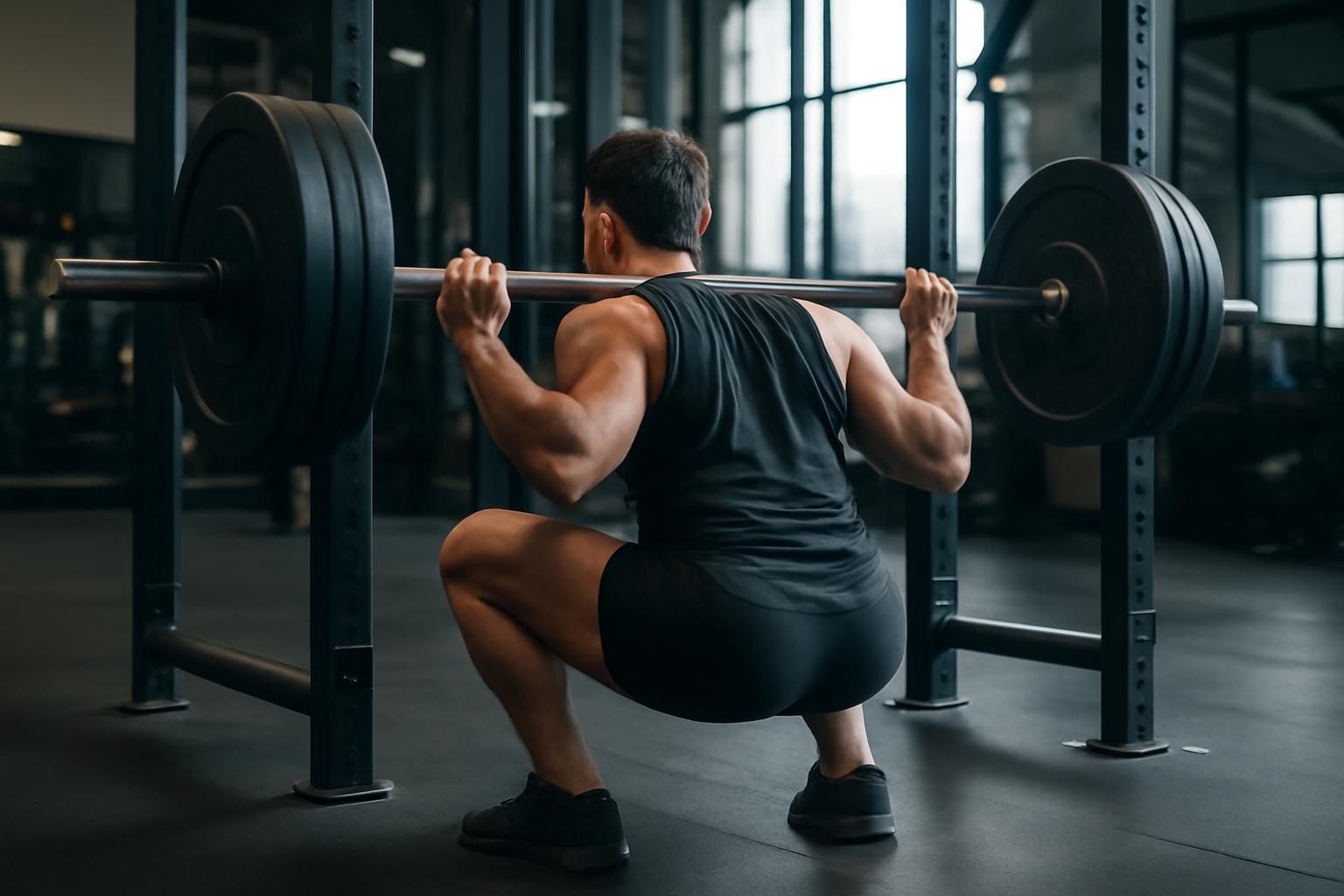
    • Back Squat: The king of quad development. Loads the entire lower body under heavy tension through a full range of motion.
    • Front Squat: Shifts more demand onto the quads and upper back. Excellent for developing quad thickness and improving squat mechanics.
    • Leg Press: A machine-based option that allows high volume loading with less spinal compression — great as a secondary quad movement.
    • Leg Extensions: An isolation exercise that trains the quads through terminal knee extension. Research supports its use for VMO development and knee health when programmed correctly.
    • Lunges: A unilateral movement that corrects side-to-side imbalances and challenges stability alongside raw strength.

    If you’re squatting heavy — and you should be — knee support matters. I personally recommend the Gymreapers Knee Sleeves (1 Pair) with Gym Bag – IPF Approved for anyone pushing serious weight on squats. These 7MM neoprene sleeves provide genuine compressive support that keeps the knee joint warm and tracking properly under load. The fact that they’re IPF approved tells you they’re built to a standard that competitive powerlifters actually trust. I keep a pair in my bag on every leg day, and most of my clients who squat over 225 lbs have switched to these and haven’t looked back.

    Hamstrings

    • Romanian Deadlifts (RDLs): The most effective hamstring exercise for developing length and strength simultaneously. Trains the hamstrings in a lengthened position, which research links to greater hypertrophy.
    • Lying Leg Curls: A direct hamstring isolation movement. Pairs well with RDLs to cover both hip-dominant and knee-flexion-based hamstring function.
    • Nordic Curls: One of the most challenging and effective hamstring exercises available. Strong evidence supports their use for hamstring injury prevention in athletes.

    Glutes

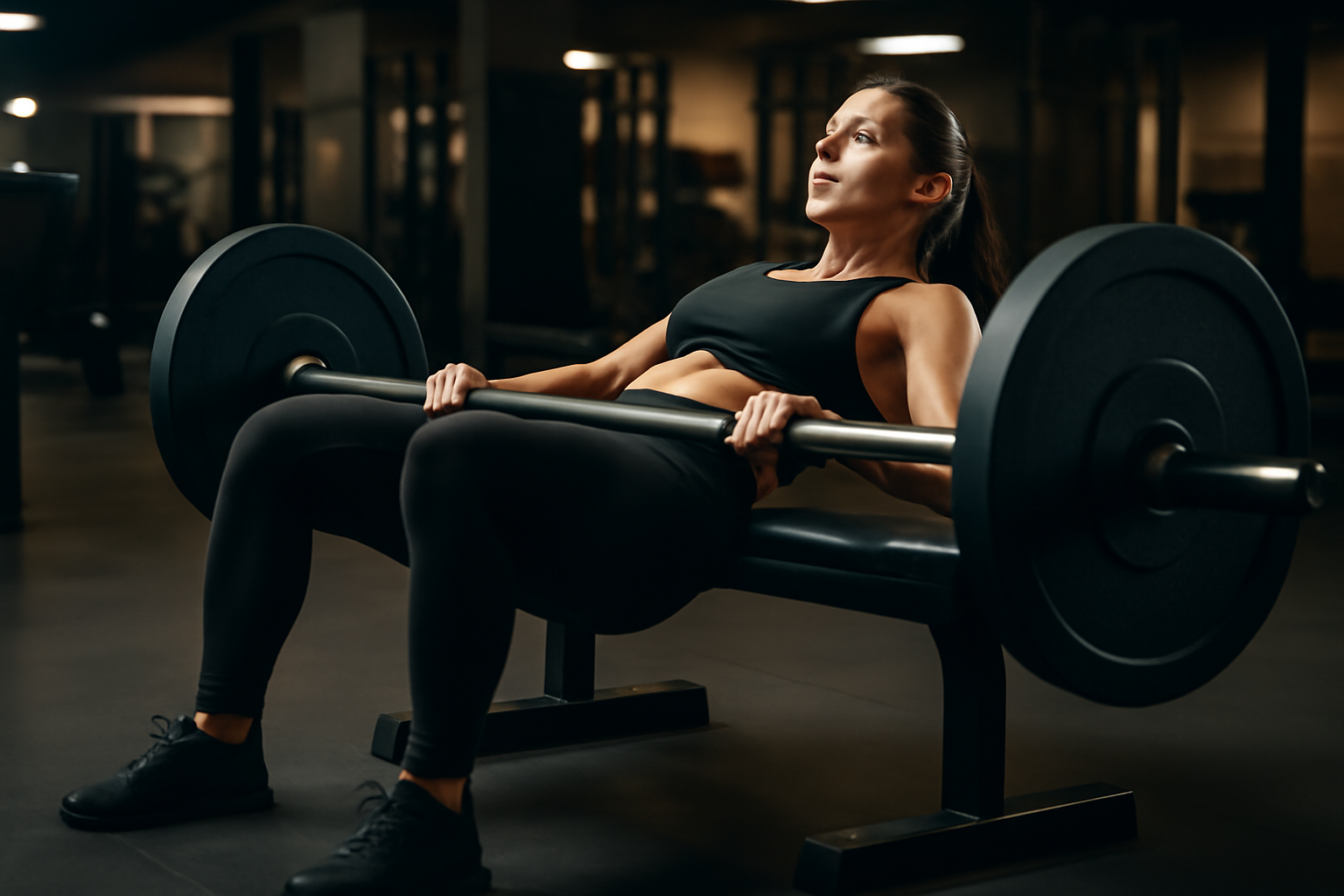
    • Hip Thrusts: Unmatched for glute activation. EMG research consistently shows higher glute activation during hip thrusts than during squats.
    • Bulgarian Split Squats: A brutal unilateral movement that hammers the glutes and quads simultaneously while improving hip mobility and single-leg stability.

    Calves

    • Standing Calf Raises: Targets the gastrocnemius, the larger, more visible calf muscle. Best performed through a full range of motion with a controlled tempo.
    • Seated Calf Raises: Specifically targets the soleus, which sits beneath the gastrocnemius. Often neglected, but essential for complete calf development.

    Footwear is often overlooked in leg training, but it makes a real difference — especially for squats and deadlifts. I’ve been recommending the Osterland Weightlifting Shoes to clients who struggle with heel lift or forward lean during squats. The elevated heel position built into these shoes improves squat depth and keeps your torso more upright, which means better quad activation and safer mechanics under heavy load. These are purpose-built for exactly the kind of leg exercises we’re talking about here, and the quality you get for the price is genuinely impressive.

    The Complete Leg Day Workout

    This is the leg day workout I come back to again and again when I want a session that hits everything — quads, hamstrings, glutes, and calves — with the right balance of intensity and volume. It’s built around compound movements first, with accessory work to fill in the gaps. Rest 2-3 minutes between sets on the heavier compound lifts, and 60-90 seconds on the accessory exercises.

    • Back Squats: 4 sets × 6-8 reps
    • Romanian Deadlifts: 3 sets × 8-10 reps
    • Leg Press: 3 sets × 10-12 reps
    • Walking Lunges: 3 sets × 12 reps each leg
    • Lying Leg Curls: 3 sets × 12 reps
    • Standing Calf Raises: 4 sets × 12-15 reps

    The structure here is intentional. You’re squatting first when your central nervous system is freshest and your energy reserves are highest. RDLs follow because they’re technically demanding but don’t compete with the squat pattern. The leg press gives your quads additional volume without adding more spinal loading. Walking lunges address any imbalances while also building functional unilateral strength. Leg curls close out the hamstring work, and calf raises finish everything off. This is a complete, evidence-based leg workout that delivers results when you execute it with genuine effort.

    For deadlift-heavy sessions like this one, having the right shoe matters just as much as it does for squatting. The MANUEKLEAR Strong Anti-Slip Deadlift Lifting Squat Shoes are a solid choice if you want one pair of shoes that handles both movements well. The rubber non-slip sole keeps you rooted to the floor during heavy pulls, which is exactly what you need when you’re grinding through Romanian deadlifts at the end of a tough session. I’ve had clients who were slipping in regular running shoes switch to these and immediately report better stability and more confidence under load. That’s not a small thing when the bar is heavy.

    Quad-Dominant vs Hamstring-Dominant Leg Days

    If you’re training lower body twice per week — which I strongly recommend for most intermediate and advanced lifters — the smartest approach is to split your sessions by emphasis rather than trying to max out everything twice. This allows for better recovery, higher quality volume, and more targeted development.

    Quad-dominant leg day should anchor around back squats or front squats, followed by leg press, leg extensions, and walking lunges. This session will be harder on your knees and anterior chain, so it’s worth having your knee sleeves on hand. Keep rep ranges moderate to heavy (6-12 reps) and prioritize depth and control.

    Hamstring-dominant leg day should lead with Romanian deadlifts or a deadlift variation, followed by lying leg curls, Nordic curls, hip thrusts, and Bulgarian split squats. This session hammers the posterior chain and glutes. Rep ranges here can go slightly higher (8-15 reps) since the posterior chain often responds well to additional volume.

    Both sessions should include some calf work at the end — calves are easy to under-train when you’re focused on the bigger muscle groups. Alternating between standing and seated calf raises across your two weekly leg workouts ensures you’re hitting both the gastrocnemius and soleus consistently.

    On your heavier quad-focused days especially, knee compression support becomes important for session longevity. The Jupiter Knee Sleeves (1 Pair), 7mm Compression Knee Braces are another option I recommend to lifters who want reliable joint support without spending a fortune. The 7mm compression is the same thickness used by competitive powerlifters, and these sleeves hold up well across repeated heavy sessions. If you’re squatting twice a week with serious intent, having a quality pair of knee sleeves isn’t optional — it’s part of training smart.

    Leg Workout at Home Without Equipment

    No gym? No problem. A bodyweight leg workout done with intensity and progressive overload principles can still drive significant adaptation — especially for beginners and intermediate trainees. The key is choosing movements that are genuinely challenging and progressing them over time.

    • Pistol Squat Progressions: Start with assisted pistol squats using a doorframe or TRX strap, then progress to box pistols (sitting back to a low surface), and eventually full pistol squats. This movement demands single-leg strength, balance, and mobility simultaneously.
    • Jump Squats: A power-based variation that trains the fast-twitch muscle fibers in your quads and glutes. Perform 3-4 sets of 10-15 explosive reps with a soft landing and immediate re-engagement at the bottom.
    • Single-Leg Deadlifts: Trains the hamstrings and glutes unilaterally while building balance and hip stability. Hold a water jug or backpack for added resistance as you get stronger.
    • Wall Sits: An isometric quad exercise that’s deceptively difficult when held for 45-90 seconds. Add a tempo component or pulse at the bottom to increase difficulty without equipment.

    Structure your home leg workout the same way you would a gym session — hardest movements first, then accessory work. A sample home leg workout might look like: pistol squat progressions (4 sets), jump squats (3 sets), single-leg deadlifts (3 sets each side), and wall sits (3 rounds). That’s a complete, challenging leg workout that requires zero equipment and zero excuses.

    Final Thoughts

    A well-designed leg workout isn’t just about aesthetics — it’s about building a body that performs, stays healthy, and continues to make progress year over year. Whether you’re following the complete leg day workout outlined above, splitting into quad and hamstring sessions, or training at home with bodyweight progressions, the most important thing is consistency and progressive overload. Show up, track your numbers, add weight or reps over time, and respect the recovery process. Your legs are the foundation of your athleticism. Train them like it.

  • The Best Glute Exercises: Build a Stronger, More Powerful Lower Body

    The Best Glute Exercises: Build a Stronger, More Powerful Lower Body

    This post contains affiliate links. As an Amazon Associate, I earn from qualifying purchases at no extra cost to you.

    The glutes are the largest muscle group in the human body — and somehow still the most undertrained. I see it constantly: people grinding through squats and lunges with barely any glute engagement, then wondering why their lower back aches, their knees cave, and their athletic performance has plateaued. Your glutes drive hip extension, stabilize your pelvis, protect your knees and lower back, and generate more raw power than any other muscle group you have. Neglecting them isn’t just leaving gains on the table — it’s an injury waiting to happen. Whether your goal is performance, aesthetics, or pain-free movement, building a serious glute exercise practice is one of the highest-return investments you can make in your training. This guide gives you the science, the programming, and the practical tools to actually get it done.

    The Best Glute Exercises Ranked by EMG Activation

    EMG (electromyography) research measures how hard a muscle is actually working during a given movement. When you look at the data, the best glute exercises aren’t always the ones you’d expect. Here’s what the research consistently shows, ranked from highest to lower glute activation.

    Hip Thrusts

    No exercise produces higher glute activation than the barbell hip thrust. Research published in the Journal of Applied Biomechanics and work by Dr. Bret Contreras — widely known as “The Glute Guy” — consistently shows that hip thrusts outperform squats and deadlifts for peak and mean glute EMG. The key is full hip extension at the top of the movement, where the glutes are maximally contracted. Load it heavy, drive through your heels, and squeeze hard at the top.

    If you’re loading hip thrusts with a barbell, you need proper padding — there’s no way around it. The barbell sitting directly on your hip bones will cut your sets short every single time. The POWER GUIDANCE Barbell Squat Pad is what I recommend to anyone starting to take hip thrusts seriously. It’s thick enough to protect your hips under heavy load, fits both standard and Olympic bars, and the dense foam doesn’t compress down to nothing after a few reps like cheaper pads do. It works just as well for squats and lunges, so it earns its place in your gym bag across multiple movements.

    Bulgarian Split Squats

    The Bulgarian split squat is a brutal unilateral movement that forces each glute to work independently, eliminating compensation patterns. Lean your torso slightly forward and keep your front foot far enough out to drive through the heel — that cue alone will shift the load from your quad to your glute dramatically. EMG data shows significant glute maximus and glute medius activation, making this one of the best glute exercises for building both size and single-leg stability.

    Romanian Deadlifts

    RDLs target the glutes through a lengthened, loaded stretch — which is one of the most powerful stimuli for muscle hypertrophy. As you hinge forward, you’re loading the glute in its stretched position, which research increasingly shows produces superior muscle damage and growth stimulus. Keep a soft knee, push your hips back (not down), and feel the pull in your glutes and hamstrings before you drive back up.

    Squats

    Squats absolutely belong on a glute exercise list — with an important caveat. Depth matters enormously. A parallel squat activates significantly more glute than a quarter squat. Research shows that glute activation increases as squat depth increases, because the hip flexion angle at the bottom stretches the glute under load. Go deep, keep the chest up, and think about pushing the floor apart with your feet.

    Glute Bridges

    The bodyweight glute bridge is the entry point for anyone who needs to learn how to fire their glutes before loading them. It’s also a legitimate burnout tool at the end of a session. The range of motion is shorter than a hip thrust, but the activation pattern is identical — making it the perfect teaching movement and a useful high-rep finisher.

    Cable Kickbacks

    Cable kickbacks provide constant tension throughout the range of motion, which free weights don’t. This makes them excellent for isolation work and for developing the mind-muscle connection with the glute. Keep the movement controlled, avoid rotating your hip, and focus on squeezing the glute at full extension rather than just swinging the leg back.

    The Complete Glute Workout

    Here’s the glute workout I program for intermediate trainees who want to prioritize posterior chain development. It’s built around the exercises with the highest evidence base, structured to hit the glutes through multiple movement patterns — hip extension under load, unilateral work, hinge patterns, isolation, and high-rep burnout.

    • Barbell Hip Thrusts: 4 sets x 8–12 reps
    • Bulgarian Split Squats: 3 sets x 10 reps each leg
    • Romanian Deadlifts: 3 sets x 8–10 reps
    • Cable Kickbacks: 3 sets x 12–15 reps each leg
    • Banded Glute Bridges: 2 sets x 20 reps (burnout)

    Rest 90–120 seconds between sets on the compound movements and 60 seconds on the isolation work. For the hip thrusts, aim to add load every week or two — progressive overload is what drives glute growth, just like any other muscle. If the barbell is rolling or digging in during hip thrusts, you’re going to bail on sets early. The Gymreapers Barbell Squat Pad is a product I’ve had several clients pick up specifically for this workout. What sets it apart is the secure velcro strap that keeps the pad locked in place on the bar — it doesn’t slide around between reps the way basic foam tubes do. If you’re serious about loading your hip thrusts progressively, comfortable padding isn’t a luxury, it’s a training tool.

    Why Your Glutes Aren’t Growing

    I’ve trained a lot of people who swear they’re doing glute exercises but still can’t feel their glutes working. There are a few consistent culprits.

    Quad Dominance in Squats

    Most people squat with a more upright torso and shorter range of motion than they realize, which shifts the load heavily onto the quads. Without adequate depth and a slight forward lean, your glutes are barely involved. This isn’t just a technique problem — it’s a perception problem. Many quad-dominant squatters genuinely believe they’re squatting deep when they’re not.

    Not Training Hip Extension

    The glutes are the primary hip extensor. If your glute workout doesn’t include dedicated hip extension work — meaning hip thrusts, glute bridges, or cable kickbacks — you are almost certainly undertraining your glutes regardless of how many squats you do. Hip extension is non-negotiable for glute development.

    Glute Amnesia From Sitting

    Sitting for extended periods puts your hip flexors in a shortened position and your glutes in a lengthened, inactive state. Over time, the nervous system essentially forgets how to recruit the glutes efficiently — a phenomenon sometimes called “gluteal amnesia.” This is a real and well-documented issue. If you sit most of the day, your glutes are neurologically suppressed before you even walk into the gym.

    How to Activate Your Glutes Before Training

    Spend 5–10 minutes before every lower body session doing targeted glute activation work. Banded clamshells, banded lateral walks, and bodyweight glute bridges done slowly and deliberately will “wake up” the glutes and dramatically improve how much you feel them working during your main lifts. This isn’t optional — for anyone with a sedentary job, it’s essential.

    Glute Exercises at Home With Bands

    You don’t need a barbell to build your glutes. A quality set of fabric resistance bands gives you enough progressive resistance to run an effective home glute workout. Here’s a complete band-only routine you can do anywhere.

    • Banded Glute Bridges: 3 sets x 20 reps
    • Banded Clamshells: 3 sets x 15 reps each side
    • Banded Lateral Walks: 3 sets x 15 steps each direction
    • Banded Donkey Kickbacks: 3 sets x 15 reps each leg
    • Banded Squats: 3 sets x 15 reps

    The band set I recommend most often for home glute training is the Resistance Bands for Working Out — 4 Booty Bands Set. This set comes with four resistance levels and a workout guide, which makes it genuinely useful whether you’re a beginner building your baseline or an advanced trainee using the bands for activation work before heavy lifts. The fabric construction is the key feature here — fabric bands don’t roll up your thighs mid-set the way cheap latex bands constantly do. Most of my clients who train at home have this exact set, and I haven’t heard a single complaint.

    If you prefer a slightly different option, the Fabric Resistance Bands for Working Out are another excellent choice I keep recommending. They’re made from a high-quality woven fabric that’s durable enough to handle consistent daily use without losing elasticity. I particularly like these for clamshells and lateral walks because the wider band distributes pressure evenly across the thigh, which keeps you focused on the movement rather than the discomfort of a narrow band digging in. Either set will serve you well for the home routine above.

    Final Thoughts

    Building strong, developed glutes takes the right glute exercises, consistent progressive overload, and an honest look at why your current training might not be delivering results. Start with the movements that have the strongest evidence behind them — hip thrusts, Bulgarian split squats, and RDLs — and build your glute workout around hip extension patterns. Add activation work before you train, stop cutting your squats short, and use resistance bands when you’re training at home. The glutes respond extremely well to training when you actually give them the stimulus they need. Put this guide into practice for eight weeks and you’ll feel the difference in everything from your deadlift lockout to how you climb stairs.