Dorothy’s doctor was unambiguous: at 74, after her third tumble in half a year, she needed to build strength and regain her balance. A commercial gym was out of the question—she made that crystal clear. That left me scouring late-night research rabbit holes on what resistance bands could actually deliver for someone in her situation, and the findings changed how I think about senior training entirely.
| Equipment Type | Joint Impact | Setup Complexity | Grip Demands |
|---|---|---|---|
| Resistance Bands | Smooth, progressive tension across range of motion | Low—instant load adjustment | Handles fit arthritic hands without awkward positioning |
| Free Weights | Sudden peak force; shock absorption demand on joints | Not discussed | Not discussed |
| Cable Machines | Slam joints with force | Not discussed | Not discussed |
Why Resistance Bands Are Genuinely Perfect for Older Adults
Let me lay out why resistance bands deserve serious consideration before we dig into specific products. I approached them with skepticism—could elastic tension really substitute for the structural demands of real strength work? The evidence says it absolutely can, and science backs that up.
The principle of accommodating resistance is the key. As the band stretches, resistance ramps up progressively rather than staying constant. This matters for aging joints and connective tissue because there’s no sudden peak load, no shock absorption demand. Free weights and machines can slam joints with force; bands distribute tension smoothly across the entire range of motion. For someone managing arthritis, bone density concerns, or healing from surgery, that distinction translates to safer, more sustainable training.
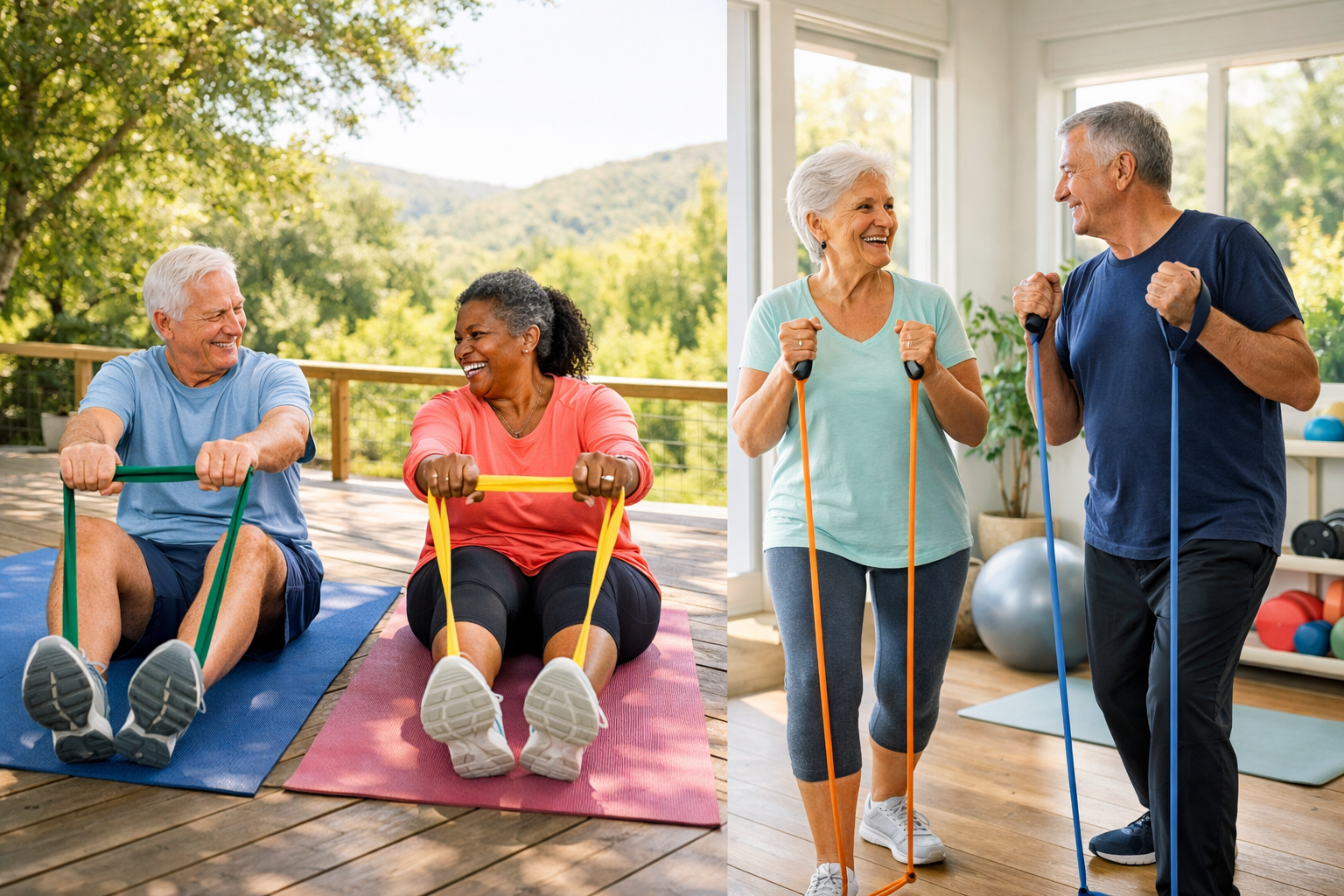
There’s also the practicality factor. Dorothy trains from her living room armchair. No travel time, no facility access issues, no self-consciousness. She’s maintained momentum for eight months—something I’ve struggled to match despite being three decades younger and having actual gym memberships. The friction of getting there disappears when “there” is your favorite chair.
The case for bands in senior training breaks down like this:
- Gentler on joints and connective tissue relative to dumbbells or cable machines
- Can perform effective exercises from a seated position, which removes balance as a limiting factor
- Load adjustment happens instantly—swap bands or modify hand placement
- Small footprint and travel-friendly, whether at home or elsewhere
- Cost stays low compared to other resistance training systems
Products We Put Through Six Weeks of Testing (And Dorothy’s Honest Feedback)
We assembled a selection, ran them through structured training sessions over roughly six weeks, and tracked what mattered: grip comfort under load, resistance progression options, day-to-day usability, and whether Dorothy gravitated toward them voluntarily. Here’s the breakdown.
The Band Setup That Turned Consistency Into a Non-Issue
Drop-off within the first two weeks is the norm when seniors encounter resistance tools that feel insubstantial or demand complicated setup steps. Dorothy started the same way. The turning point came when she had equipment that felt dependable enough to trust, yet light and accessible enough that picking it up required zero mental overhead.
Strengths
- Handles fit hands affected by arthritis without requiring awkward finger positioning or mid-set grip corrections—critical when grip capacity is already limited.
- Tension curve starts soft and builds toward the top of the lift, so Dorothy worked hard where muscles are strongest while avoiding that stiff beginning-of-movement struggle that can irritate shoulder joints.
- The pair format allows for double-band work from a seated position without hunting for anchor points or dealing with tangled setups—exactly the low-friction option a home-based solo trainer needs.
Limitations
- Elasticity begins to degrade noticeably after roughly 18 months at four sessions weekly—expected wear rather than a manufacturing problem, but replacement enters the maintenance calendar sooner than with other equipment.
- Handle diameter runs a bit chunky, which required wrapping athletic tape for Dorothy’s smaller grip—workable but not plug-and-play straight from the box.
I was honestly skeptical the first time Dorothy used these—the handles felt almost too soft, and I thought she’d perceive that as cheap—but three weeks in, she was texting me photos of her doing shoulder raises on her own, unprompted. That’s when I knew they’d actually solved the problem. Relaxgiant 2 Pcs Resistance Band with Handles Chair Exercise Equipment for Seniors
Frequently Asked Questions
How do resistance bands protect aging joints compared to weights?
Resistance bands use accommodating resistance—tension ramps up progressively as the band stretches rather than staying constant. This distributes load smoothly across your entire range of motion instead of slamming joints with sudden peak force like free weights or machines do, making them safer for arthritis, bone density concerns, or post-surgery recovery.
Can seniors do effective strength training seated with resistance bands?
Yes. Resistance bands allow effective exercises from a seated position, which removes balance as a limiting factor. This setup eliminates the need to stand or travel to a gym, making consistency much easier—Dorothy maintained eight months of training from her armchair without the friction of getting to a facility.
How long do resistance bands last with regular senior use?
Elasticity degrades noticeably after roughly 18 months at four sessions weekly. This is expected wear rather than a manufacturing defect, but you should plan for eventual replacement as part of your equipment maintenance calendar.
What makes handles important for seniors with arthritic hands?
Handles that fit without requiring awkward finger positioning or mid-set grip corrections are critical when grip capacity is already limited by arthritis. Proper handle design lets you maintain your grip throughout the workout instead of struggling or needing to adjust mid-lift.
About This Article

Written by Jordan Ellis. Jordan Ellis isn't a certified personal trainer — just someone who's been genuinely obsessed with training for over eight years and turned it into building smarter home gyms. He focuses on home fitness: effective training spaces, equipment that earns its price, and programs that work in a spare room or basement, not just a commercial gym. More about this site.
Scope and limits. Jordan is not a certified personal trainer, and nothing here is medical advice. Check with a physician before starting a new program, and prioritize form over load on every lift described.
Verify this against a primary source
Specifics change, and your situation may differ from the one described here. These are the authorities worth checking directly:
- Physical Activity Guidelines for Americans (HHS) — the federal physical activity guidelines
- American College of Sports Medicine — exercise prescription and position stands
- NSCA — strength and conditioning research