Fall prevention didn’t land on my radar until I watched my 74-year-old father miss a step coming off the porch and end up sitting in the mulch, wrist bent awkwardly beneath him. His injury turned out minor, but the incident made clear that I’d been chasing the wrong fitness goals — muscle size and strength numbers — when what actually mattered was keeping the people closest to me steady and self-sufficient in their later years. That wake-up call led me to dig into the research on balance exercises for seniors over 70, and what emerged was both unsettling and genuinely encouraging: roughly one in four people aged 65 and older experience a fall annually, falls rank as the leading cause of both fatal and non-fatal injury among older populations, and crucially, most of these events are entirely avoidable through targeted training.
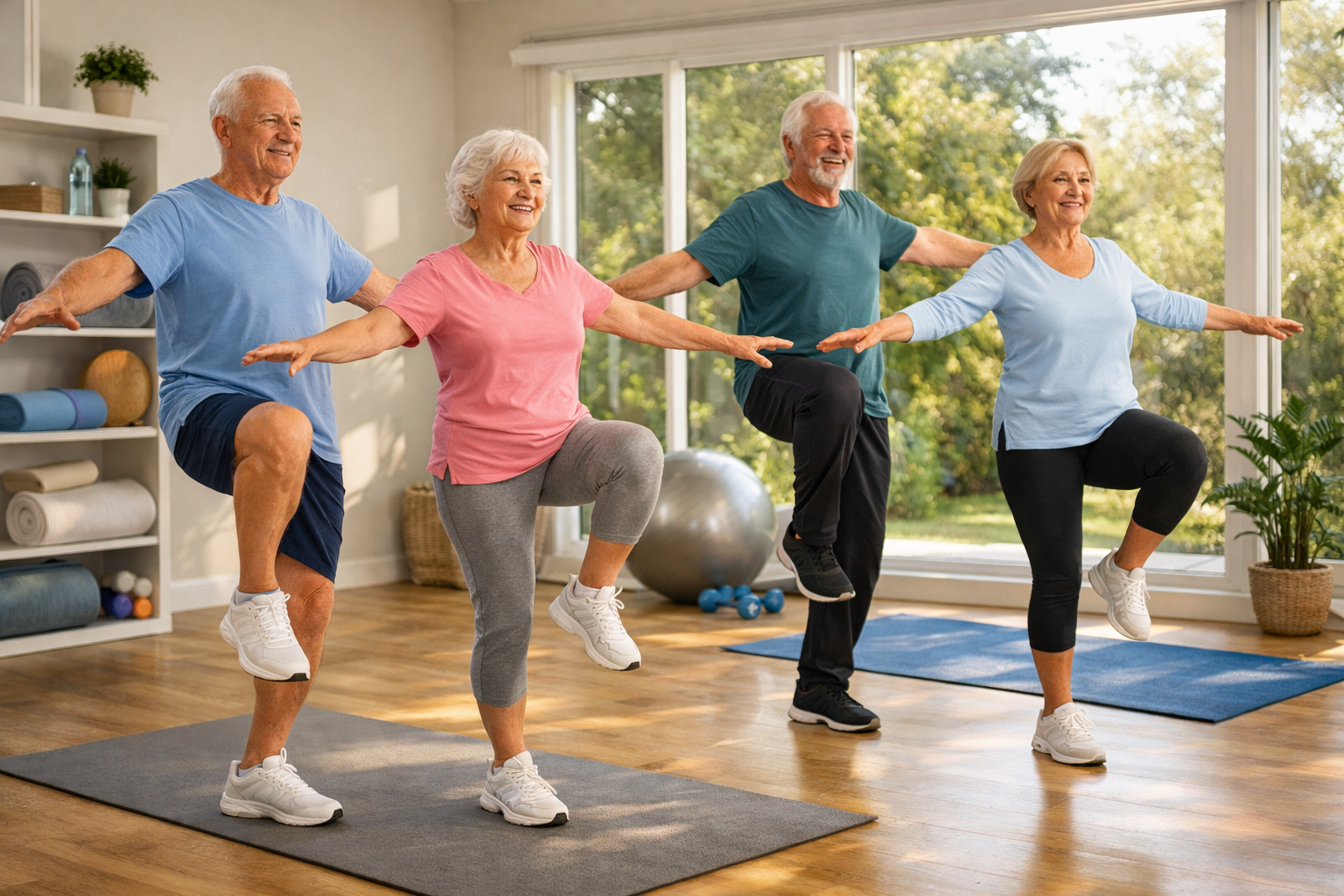
Why Balance Gets Harder After 70 (And What You Can Actually Do About It)
What often goes unsaid is this: instability in your seventies and beyond isn’t random or unlucky. It’s physiology unfolding. Once you cross 70, the systems keeping you vertical begin to drift. Your inner ear’s sensitivity diminishes. Your eyes take longer to adjust when light is dim. The neural pathways running from your feet back to your brain—proprioception, in medical terms—slow down incrementally. Compounding this, muscle naturally atrophies over time, and the small muscles that stabilize your ankles, hips, and knees tend to shrink first.
The encouraging part, and this matters: balance isn’t fixed. You cannot change your height or your genetics, but you can absolutely train balance. With deliberate, steady repetition, people in their seventies can strengthen their foundation, shorten their reaction windows, and rebuild their trust in their own body—all of which directly lower the odds of a fall. My father runs through a simple balance routine three times each week now, and the shift in his presence is unmistakable. His posture has opened up. His footsteps land with intention. He no longer grips the railing as if it might disappear.
Starting Balance Work: Core Movements for Seniors Over 70
Equipment is optional. What you actually need is a solid chair, an open floor space, and roughly fifteen minutes to begin. I always recommend anchoring yourself near a sturdy piece of furniture when attempting these for the first time—holding on is not weakness, it’s common sense.
Single-Leg Stand
Position yourself at the back of your chair with both palms settled on top. Raise one foot a few inches from the floor and maintain the position for ten seconds. Switch to the opposite side. When this becomes manageable, try bearing weight through a single fingertip on the chair, then graduate to hovering your hand entirely without contact. Research consistently validates this basic drill for reducing fall incidents.
Heel-to-Toe Walk
This variation—sometimes labeled tandem walking—mimics a balance test. Travel in a straight line with each step’s heel landing immediately ahead of the previous foot’s toes. Perform this along a hallway or wall you can steady yourself against if required. Complete ten forward steps, then ten in reverse.
Sit-to-Stand
This movement is worth practicing because it replicates something you do dozens of times daily. Settle yourself on the front half of a stable chair, fold your arms across your chest or stretch them out in front, then rise to standing without pushing off with your hands. Reverse the motion back down with deliberate slowness—the controlled descent is where strength actually builds. Target ten repetitions per session.
Side Leg Raises
Grip the chair back and remain tall, then gradually lift one leg sideways away from your body, pausing briefly at the top. Lower back to starting position. This exercise strengthens your hip abductors, which are essential for sideways stability—the kind of control that catches you when you misstep off an unseen curb.
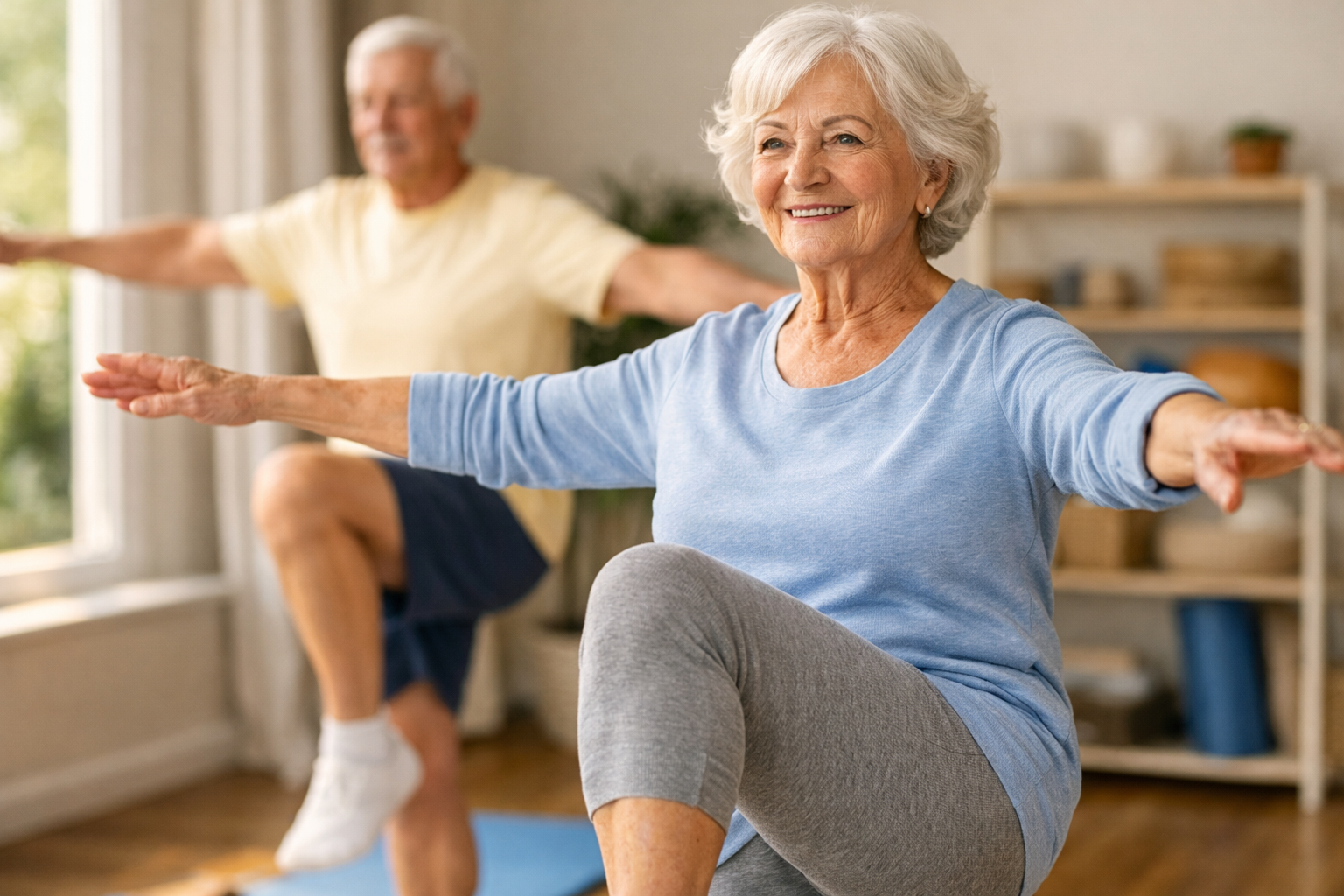
Seated Resistance Bands as a Bridge to Standing Balance Training
Many people in their seventies aren’t prepared for single-leg holds or dynamic balance movements on their first week—and that’s where conventional fall-prevention work often breaks down. The missing piece is building lower-body and core strength from a safe seated position while your proprioceptive system reestablishes its coordination, which seated resistance bands accomplish efficiently.
What works
- The handles remain stationary while the user maintains their grip—no shifting loops or sliding bands that create instability during sets, which prevents anxiety in someone already cautious about balance.
- You can loop the bands under chair legs for lower-body drills or keep them in hand for upper-body movements, allowing multiple exercise variations using one tool without extensive repositioning.
- Resistance escalates gradually as you push or pull, avoiding the sudden tension spike that would cause excessive gripping and full-body stiffening—resistance bands provide cushion in a way free weights cannot.
What doesn’t
- The grip material feels thin if you’ve used commercial fitness equipment before—durable, yes, but prone to visible creasing after several months of regular application.
- Resistance cannot be tweaked between reps the way incremental dumbbell jumps allow; once a repetition starts, you’re locked into that band’s resistance curve.
I worried at first that the bands would feel too “easy” compared to what I’d been programming for younger people, but I realized after one session with my dad that easy was the point — he actually completed the workout instead of burning out or getting frustrated. Relaxgiant 2 Pcs Resistance Band with Handles Chair Exercise Equipment for Seniors
Frequently Asked Questions
How often should seniors over 70 do balance exercises?
My father runs through a simple balance routine three times each week, which has noticeably improved his posture and confidence. Starting with this frequency—three sessions weekly—gives your nervous system time to adapt while building consistency without overtraining.
Can balance training actually prevent falls in older adults?
Yes. Research consistently validates balance drills for reducing fall incidents. Roughly one in four people aged 65 and older experience a fall annually, but most are avoidable through targeted training. With deliberate, steady repetition, people in their seventies can strengthen their foundation and rebuild trust in their own body.
What equipment do I need to start balance exercises?
Equipment is optional. All you actually need is a solid chair, an open floor space, and roughly fifteen minutes to begin. I always recommend anchoring yourself near sturdy furniture when attempting these for the first time—holding on is common sense, not weakness.
How long should I hold a single-leg stand for?
Raise one foot a few inches from the floor and maintain the position for ten seconds, then switch to the opposite side. When this becomes manageable, try bearing weight through a single fingertip on the chair, then graduate to hovering your hand without contact.
About This Article

Written by Jordan Ellis. Jordan Ellis isn't a certified personal trainer — just someone who's been genuinely obsessed with training for over eight years and turned it into building smarter home gyms. He focuses on home fitness: effective training spaces, equipment that earns its price, and programs that work in a spare room or basement, not just a commercial gym. More about this site.
Scope and limits. Jordan is not a certified personal trainer, and nothing here is medical advice. Check with a physician before starting a new program, and prioritize form over load on every lift described.
Verify this against a primary source
Specifics change, and your situation may differ from the one described here. These are the authorities worth checking directly:
- Physical Activity Guidelines for Americans (HHS) — the federal physical activity guidelines
- American College of Sports Medicine — exercise prescription and position stands
- NSCA — strength and conditioning research