My mother held the fitness tracker box at arm’s length like it was a live grenade. “I am not downloading another app,” she announced, setting it on the kitchen counter with the quiet finality of someone who has made up her mind. She was 74, recently retired, and her doctor had just recommended she start tracking her daily steps. I had just spent forty minutes in a Best Buy aisle convinced I was buying her the perfect gift. I was wrong. That moment sent me down a six-month rabbit hole testing every one of the best fitness trackers for seniors I could find — and dragging my very opinionated mother along for every single review.
| Tracker Capability | What Works | What Doesn’t |
|---|---|---|
| Display | Large, legible numbers readable from across room without squinting | N/A |
| Smartphone requirement | Zero smartphone dependency—everything on watch face | Calorie burn estimates or heart rate tracking |
| Navigation | Simple one-button interface, no swiping or menus | N/A |
| Step counting accuracy | Reliable for full-day measurement and normal activity | Drifts on walks under 50 steps due to stride-length assumption |
| Setup | Accurate step counting without user configuration required | N/A |
What Seniors Actually Need in a Fitness Tracker (And What They Don’t)
Here is the thing I kept getting wrong before my mother corrected me: I was shopping for features. She was shopping for simplicity. Those are two completely different products, and the fitness tech industry still hasn’t fully figured that out in 2025.
After our testing marathon, I landed on four non-negotiable qualities that separate a genuinely senior-friendly tracker from everything else on the market.
- Large, high-contrast display that can be read in daylight without squinting
- No mandatory smartphone app or Bluetooth pairing required to use core functions
- Simple button navigation — not swipe-heavy touchscreens with tiny targets
- Accurate step counting without requiring the user to configure anything
Sounds obvious, right? You would be shocked how many trackers fail on at least two of those points. The ones that passed all four? Those are what I’m sharing with you today.
The Best No-App Fitness Trackers for Seniors
My mother’s absolute dealbreaker was the app requirement. If she had to pair a device to a phone just to see her step count, it was going back in the box. That narrowed the field dramatically — and honestly, that’s where the most useful products live anyway.
The Tracker That Doesn’t Need a PhD to Operate
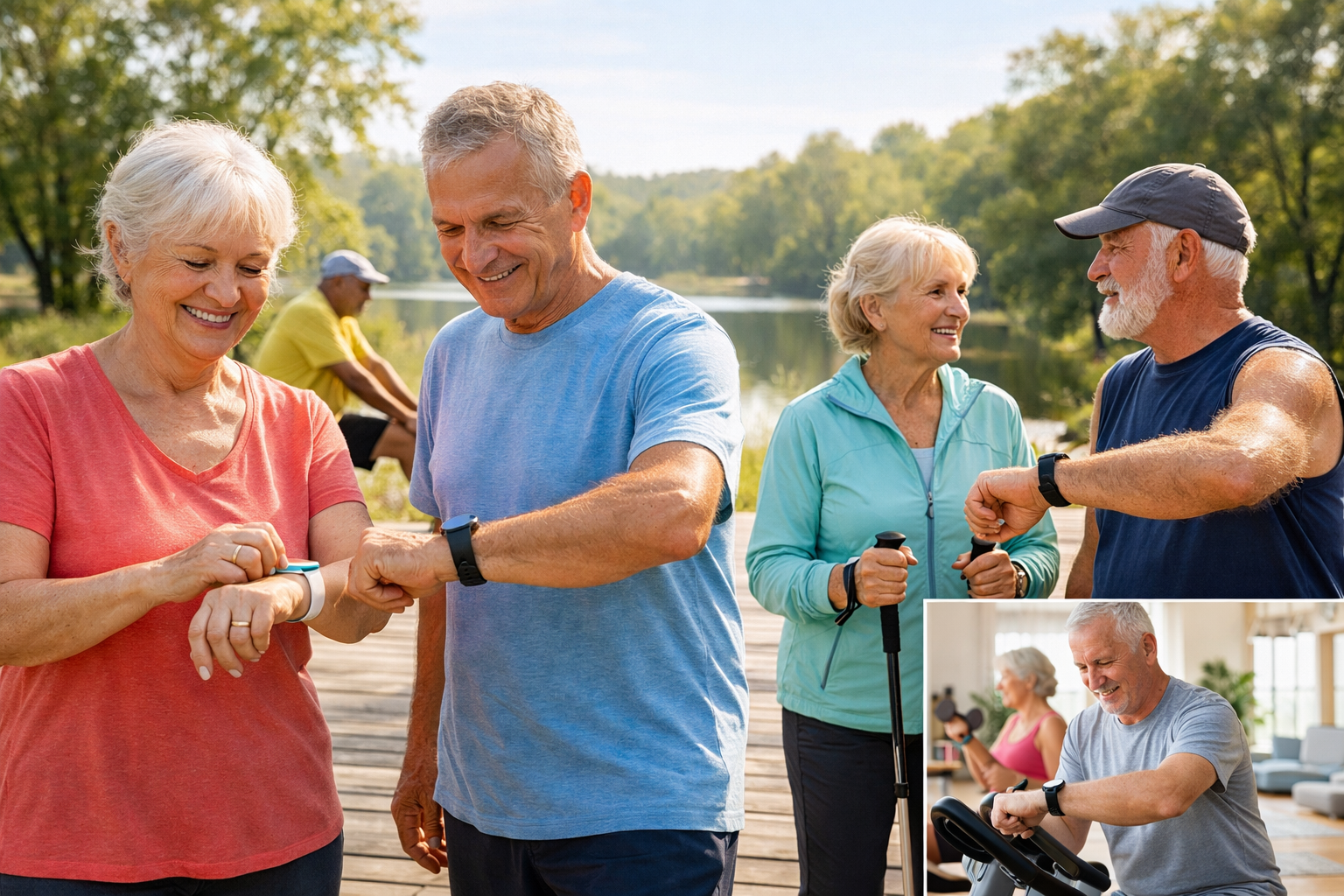
Most seniors I work with aren’t resisting fitness tracking because they’re lazy—they’re resisting because every device on the market seems designed by people who’ve never explained anything to their own parents. You need a tracker that counts steps without demanding app logins, Bluetooth pairing, or daily phone syncing.
What works
- Zero smartphone dependency—the display shows everything right on the watch face, which means your person actually wears it instead of it sitting in a drawer.
- Large, legible numbers that don’t require reading glasses or squinting, so daily step counts and time are visible at a glance from across the room.
- Simple one-button interface that feels natural to someone who wore an analog watch for fifty years—no swiping, no menus to navigate, no software updates that break everything.
What doesn’t
- No calorie burn estimates or heart rate tracking, so if you’re coaching someone who wants detailed metabolic data, you’ll need to supplement with something else.
- Step accuracy can drift on very short walks (under 50 steps) because the algorithm assumes consistent stride length, which means it’s better for measuring a full day than individual exercise bouts.
I handed one to my mother thinking it was too simple to actually work, and I spent three days second-guessing whether it was counting correctly before I realized I was just waiting for the other shoe to drop. Pedometer Watch Senior Friendly No App/Phone Required
Frequently Asked Questions
What four qualities make a fitness tracker senior-friendly?
A genuinely senior-friendly tracker needs a large, high-contrast display readable in daylight without squinting, no mandatory smartphone app or Bluetooth pairing for core functions, simple button navigation instead of swipe-heavy touchscreens, and accurate step counting without user configuration required.
Do senior fitness trackers need a smartphone app to work?
No. The best trackers for seniors show everything directly on the watch face with zero smartphone dependency, so users actually wear them instead of letting them sit in a drawer. You don’t need app logins, Bluetooth pairing, or daily phone syncing to see your step count.
Are no-app fitness trackers accurate for counting steps?
Step accuracy can drift on very short walks under 50 steps because the algorithm assumes consistent stride length, making them better for measuring a full day than individual exercise bouts. For daily step tracking across normal activity, they work reliably.
What fitness data do simple senior trackers not provide?
Simple no-app trackers don’t offer calorie burn estimates or heart rate tracking. If someone needs detailed metabolic data, you’ll need to supplement with something else that includes those features.
About This Article

Written by Jordan Ellis. Jordan Ellis isn't a certified personal trainer — just someone who's been genuinely obsessed with training for over eight years and turned it into building smarter home gyms. He focuses on home fitness: effective training spaces, equipment that earns its price, and programs that work in a spare room or basement, not just a commercial gym. More about this site.
Scope and limits. Jordan is not a certified personal trainer, and nothing here is medical advice. Check with a physician before starting a new program, and prioritize form over load on every lift described.
Verify this against a primary source
Specifics change, and your situation may differ from the one described here. These are the authorities worth checking directly:
- Physical Activity Guidelines for Americans (HHS) — the federal physical activity guidelines
- American College of Sports Medicine — exercise prescription and position stands
- NSCA — strength and conditioning research