You’ll hear two things about movement after surgery or in later life: push yourself harder, and stay completely still to be safe. One approach gets people injured; the other leaves them deconditioned and afraid. The truth sits between them — the right movement, performed gently and with full control, restores both strength and confidence. Chair yoga for seniors is that middle ground: it gives you real physical benefits without the risk or the intimidation factor that keeps so many older adults on the sidelines.
That shift from avoidance to engagement is profound. I watched it happen when someone close to me spent months after surgery feeling trapped in her own body — stiff, anxious about falling, disconnected from any sense of capability. The thing that broke through wasn’t more aggressive rehabilitation or bed rest. It was the quiet, daily practice of moving from a chair in her kitchen. Within weeks, she had her sense of agency back.
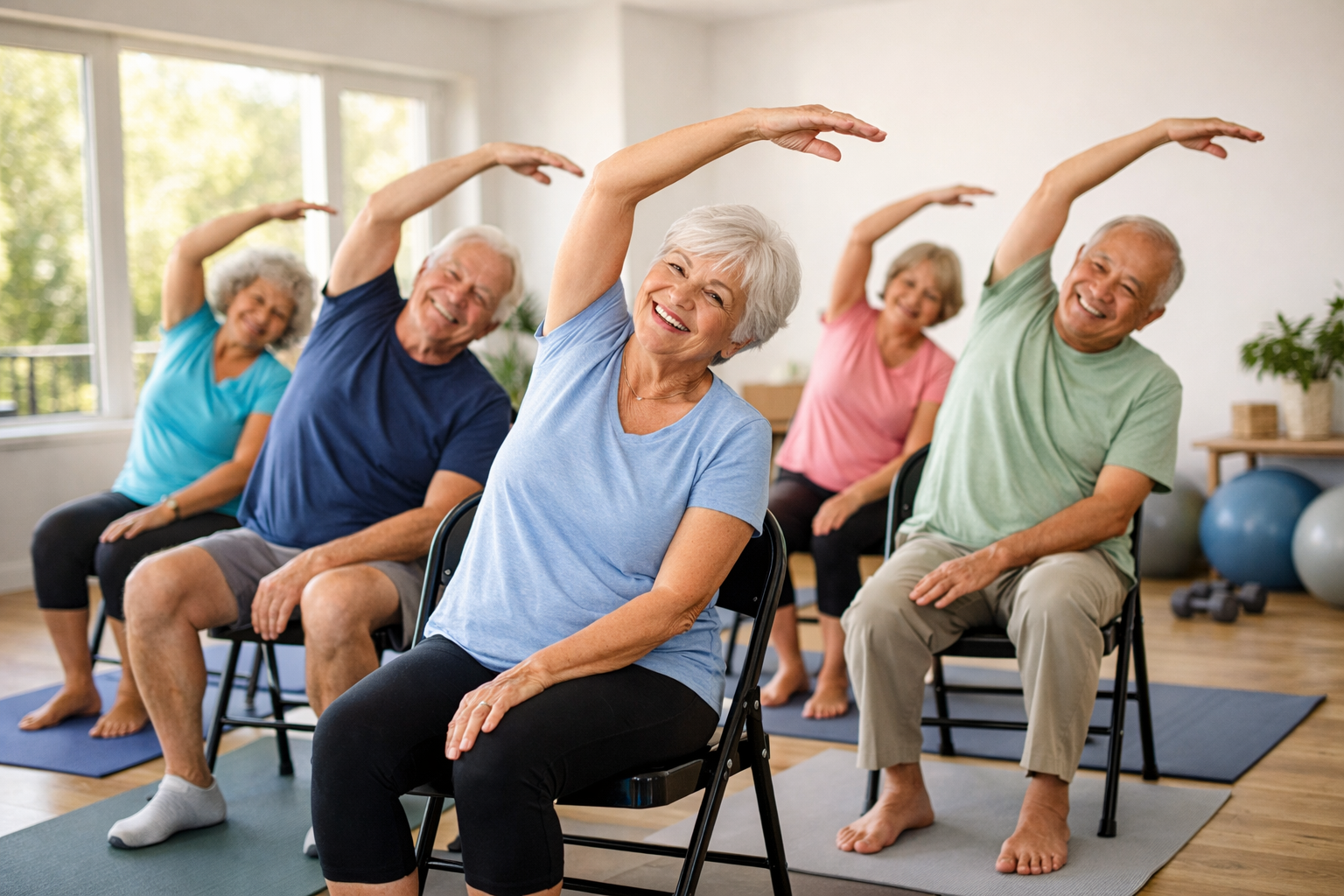
| Exercise | Primary Target | Duration/Repetitions | Position |
|---|---|---|---|
| Seated Cat-Cow Stretch | Spinal stiffness, upper and mid-back discomfort | 8 to 10 full cycles | Seated, hands on kneecaps |
| Seated Forward Fold | Backs of thighs, lower spine | Three to five breath cycles | Seated, hinging from hips |
| Seated Spinal Twist | Spinal range and rotational mobility | Three full breaths per side | Seated, upright posture |
| Ankle Circles and Foot Flexes | Lower leg blood flow, joint mobility | Ten revolutions each direction | Seated, one foot raised |
| Seated Mountain Pose with Breath | Nervous system regulation | Five breath cycles (4-count inhale, 6-count exhale) | Seated, upright spine |
What Is Chair Yoga for Seniors and Why Does It Work So Well?
At its core, chair yoga is yoga adapted for seated and supported positions throughout the entire session. Rather than transitioning between standing poses or floor work, every movement — stretches, breathwork, transitions — happens either from a chair or with a chair positioned nearby for stability. You skip the mat, forget about balance challenges, and remove the physical barriers that keep many older adults away from traditional classes.
That accessibility matters tremendously for this population. The biggest obstacle preventing older adults from participating in fitness is often fear — of instability, of looking out of place, of aggravating something that’s already hurting. Chair yoga eliminates most of these concerns in one simple change. You’re grounded, supported, and the pace is slow enough that you can participate even on days when pain or stiffness is highest.
The evidence supporting the practice is solid. Studies connect regular chair yoga to gains in joint range of motion, decreased pain from chronic conditions, enhanced blood flow, reduced stress responses, and meaningful improvements in balance — arguably the most important health metric for anyone past 65. Injury from falling ranks as the top cause of accidental death in that age bracket, making any practice that strengthens proprioception and lower-body control genuinely valuable.
I’m not a physical therapist or a yoga specialist. What I do is dig into fitness research for this site and pay attention when people I care about experience real changes in how they move and feel. Both the science and personal observation point toward the same conclusion: this works.
Getting Started With a Basic Chair Yoga Session
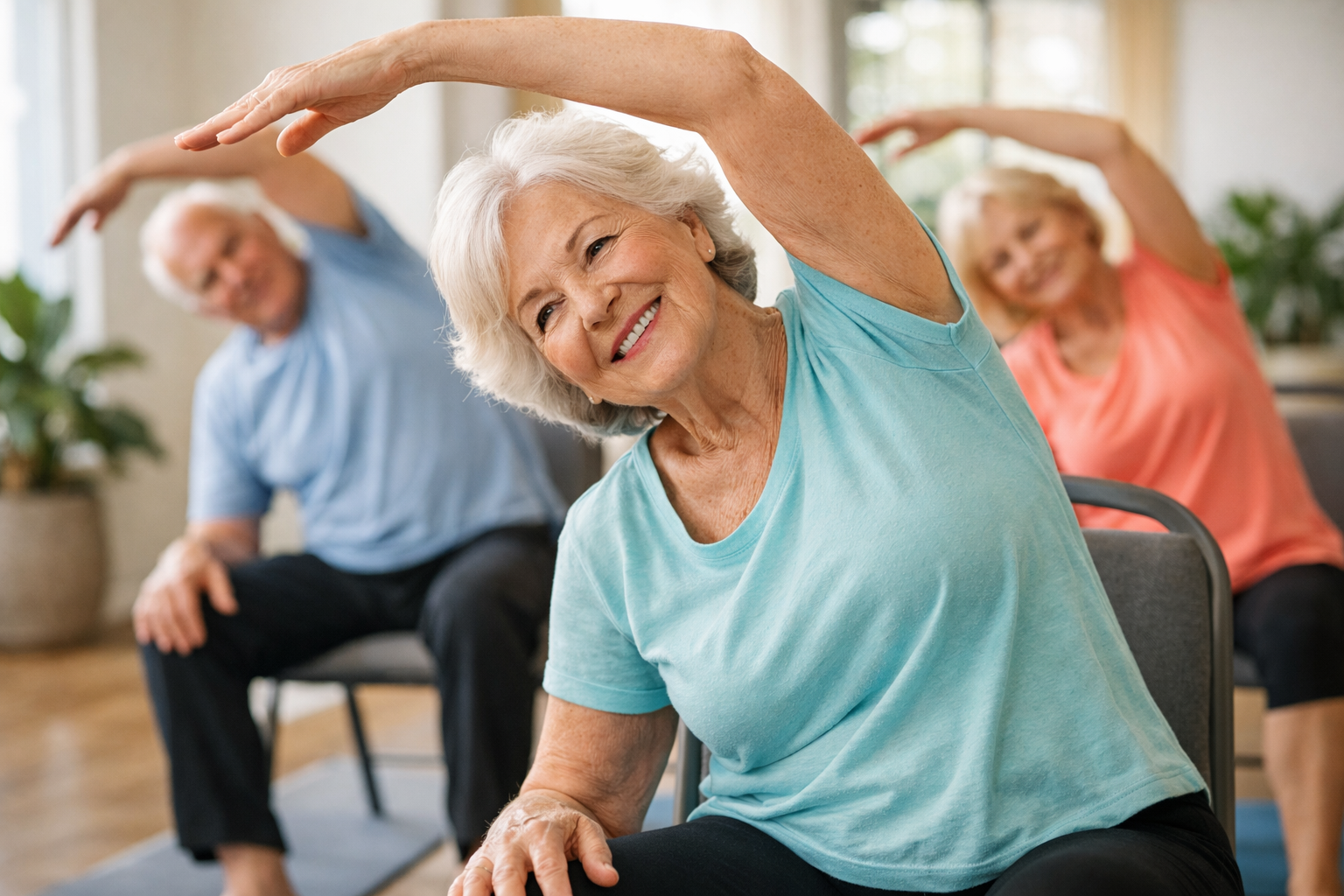
You don’t need an instructor, a paid program, or special gear to begin. A single sturdy chair with no arms (a basic dining chair works great) and roughly fifteen to twenty minutes is your entire setup. What follows is a beginner sequence I’ve shared with friends and family — something you can do right now.
Seated Cat-Cow Stretch
Position yourself near the front edge of your chair, feet planted flat and spaced at hip width. Rest your hands on your kneecaps. Breathe in as you gently press your chest forward and arch through your mid-back — this is your “cow” position. As you exhale, round your spine and drop your chin toward your sternum — your “cat” position. Let your breathing dictate the pace, moving in a slow, controlled rhythm. Complete 8 to 10 full cycles. Few movements do as much to address the spinal stiffness and morning discomfort that accumulates in the upper and mid-back.
Seated Forward Fold
From your seated position, fill your lungs with air. As you release it, hinge your torso from the hips — keep your motion originating at the hip joint, not the waist — and let your hands travel down the front of your legs toward your feet. Stay in this folded position through three to five breath cycles, then slowly roll back upright. This targets the backs of your thighs and the lower spine, both frequent sources of restriction in older populations.
Seated Spinal Twist
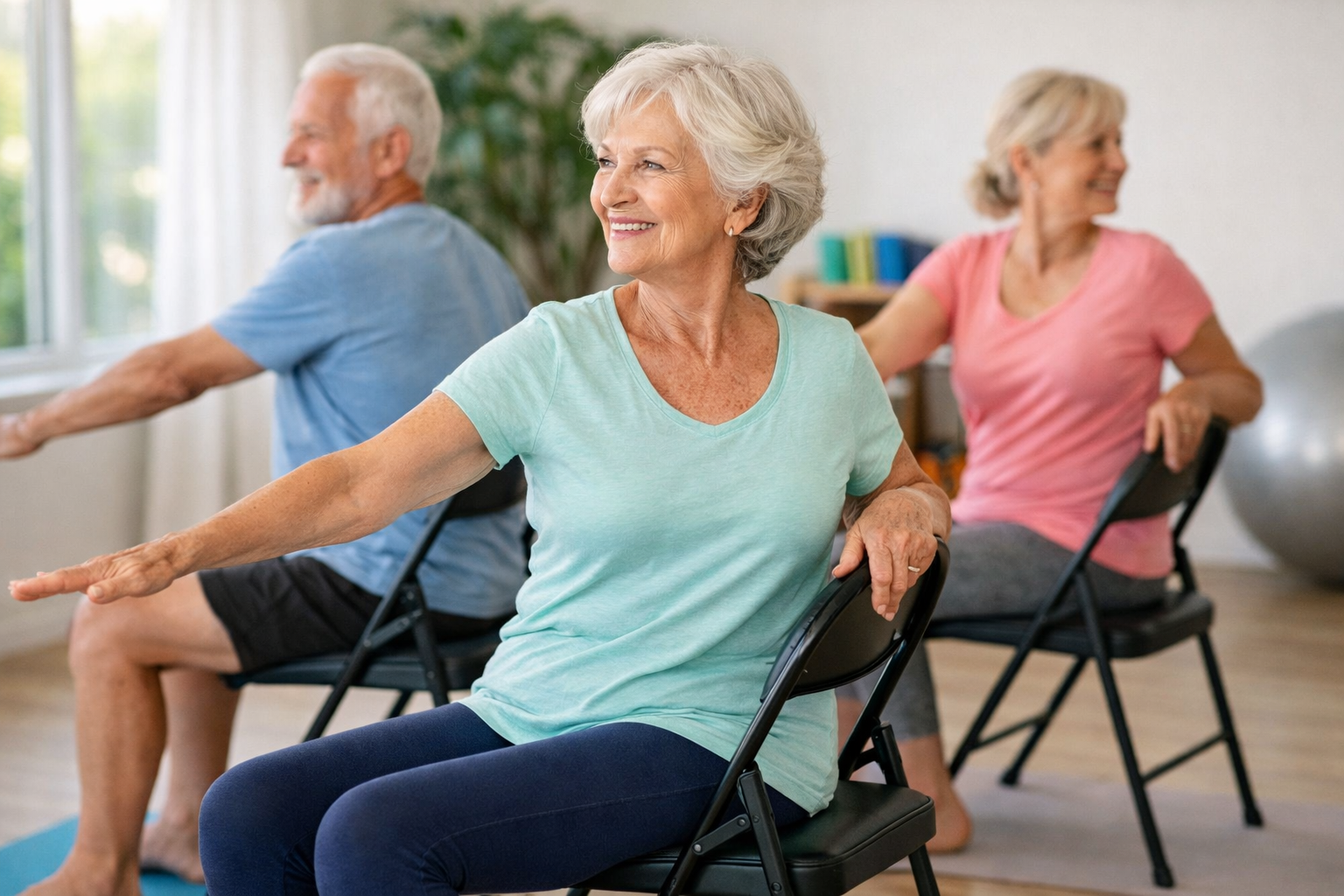
Settle into an upright seated posture and position your right hand over your left knee. Rotate your upper body gently to the left, turning your head to look back over your left shoulder as far as feels stable. Hold this for three full breaths, then reverse to the opposite side. Rotational movements preserve the range in your spine that tends to diminish through years of forward-facing activity and sedentary time.
Ankle Circles and Foot Flexes
Raise one foot several inches above the ground and trace slow, wide circles with your toes — perform ten revolutions in each direction before switching to the other leg. After the circles, flex your ankles by pointing your toes downward, then drawing them back toward your shins in controlled motions. These movements boost blood flow in the lower legs and maintain the joint mobility necessary for steady balance and confident walking.
Seated Mountain Pose with Breath
Finish by sitting with length through your spine, shoulders loose and settling away from your ears, and both feet pressing evenly into the floor. If it appeals to you, gently close your eyes. Draw in air for a four-count, then release it for a six-count. Repeat five times. This settles your nervous system and allows the benefits of your session to fully register in your body.
This entire routine takes approximately fifteen minutes from start to finish. The person I mentioned earlier practices it every morning as part of her pre-coffee ritual. I work through it a handful of times each week at my desk, complete with the enthusiastic sound effects.
Adding Resistance Bands With Handles to Your Chair Practice
There are times when bodyweight-only movements from a chair aren’t sufficient to develop the strength and stability someone needs—especially after injury or when managing ongoing joint restrictions. Yet introducing dumbbells or machines feels too risky or psychologically overwhelming. Banded training from a chair solves this because you’re completely in charge of the resistance level, the depth of each movement, and when to back off.
What makes them effective
- Handles prevent the band from rolling or slipping out of your grip during repetitions — this becomes critical when someone’s hand strength or confidence is already compromised by age or recovery.
- Anchor points under or around the chair frame allow you to perform many different exercises (row variations, chest presses, leg movements, upper body pulls) without buying multiple pieces of equipment.
- The resistance curve of bands — where tension rises as you move through the range — pairs well with joint mechanics; joints typically hurt less early in the range and more at the end, so bands naturally reduce load exactly where it’s needed most.
What limits their usefulness
- Repeated use wears the handles down and can cause fraying or splitting, particularly if someone is training consistently five or six times per week — durability isn’t infinite.
- Proper anchoring technique and band positioning require instruction, or you end up with too much slack early in the rep or you inadvertently overload the end range where joints are most vulnerable.
I had Dorothy start with these bands and watched her white-knuckle the handles on day two because she was terrified the band would snap—it didn’t, but it took three sessions before she trusted them enough to actually feel the work. Relaxgiant 2 Pcs Resistance Band with Handles Chair Exercise Equipment for Seniors
Frequently Asked Questions
How long should a beginner chair yoga session last?
A beginner session takes approximately fifteen to twenty minutes. The basic sequence provided—cat-cow, forward fold, spinal twist, ankle circles, and mountain pose—completes in roughly fifteen minutes and can be done daily or several times per week depending on your comfort level.
What equipment do I need to start chair yoga?
You need only a single sturdy chair with no arms, like a basic dining chair. No instructor, paid program, or special gear is required to begin. Resistance bands with handles are optional and useful later for adding strength work without risk, but they aren’t necessary to start.
Can resistance bands with handles slip during exercises?
Handles on resistance bands prevent the band from rolling or slipping out of your grip during repetitions, which becomes especially important if hand strength or confidence is already compromised. However, proper anchoring technique and band positioning require instruction to avoid slack early in the rep or overloading the end range.
What does chair yoga target for seniors?
Chair yoga addresses spinal stiffness, upper and mid-back discomfort, lower spine restriction, and lower leg blood flow. The practice also meaningfully improves balance—arguably the most important health metric for anyone past 65—and gains in joint range of motion and decreased pain from chronic conditions.
About This Article

Written by Jordan Ellis. Jordan Ellis isn't a certified personal trainer — just someone who's been genuinely obsessed with training for over eight years and turned it into building smarter home gyms. He focuses on home fitness: effective training spaces, equipment that earns its price, and programs that work in a spare room or basement, not just a commercial gym. More about this site.
Scope and limits. Jordan is not a certified personal trainer, and nothing here is medical advice. Check with a physician before starting a new program, and prioritize form over load on every lift described.
Verify this against a primary source
Specifics change, and your situation may differ from the one described here. These are the authorities worth checking directly:
- Physical Activity Guidelines for Americans (HHS) — the federal physical activity guidelines
- American College of Sports Medicine — exercise prescription and position stands
- NSCA — strength and conditioning research