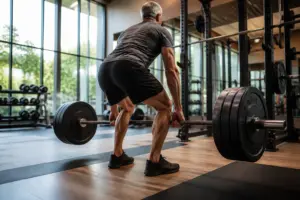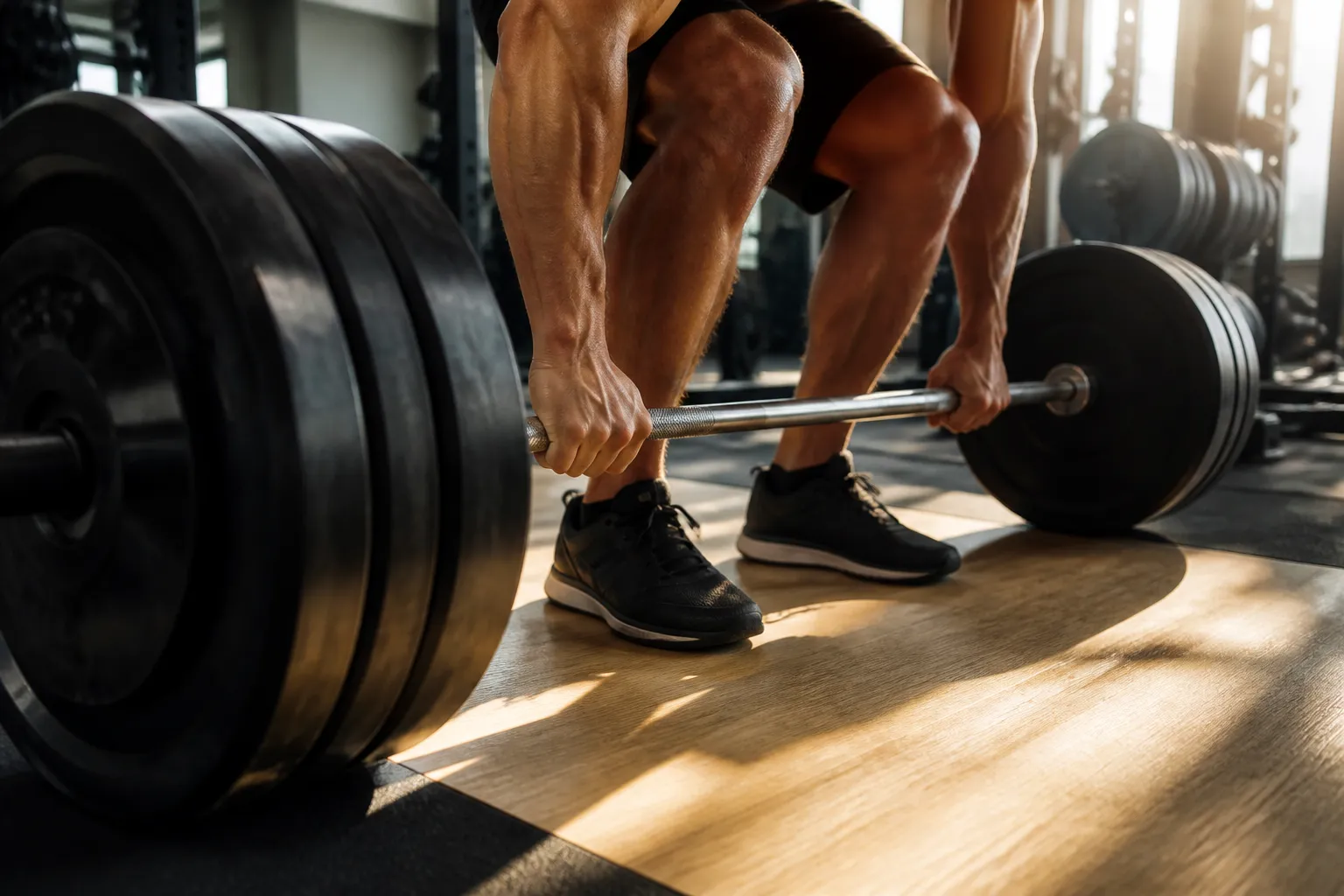
I Started Lifting at 42: What Nobody Tells You About Building Muscle After 40
By Jordan Ellis | Home Gym Builder & Fitness Writer
At 42 years old, I walked into a gym for the first time as someone genuinely interested in building muscle. Not to “get back in shape” or lose some winter weight. I meant business. And what I discovered over the next 18 months surprised me—not just about my body’s capacity to change, but about everything I’d gotten wrong about training after 40.
The internet told me I’d need patience. That’s true. But it didn’t tell me about the three-week period where my shoulders felt like they might separate from my body, or how a single night of drinking would obliterate my training for 72 hours, or that I’d feel stronger at 44 than I did at 24—despite having less testosterone.
If you’re considering lifting after 40, or you’re already a few months in and wondering if you’re doing this right, this is what nobody tells you.
The Moment I Realized Everything I Thought I Knew Was Wrong
I remember my first week. I’d done research—the safe kind, reading actual studies instead of Instagram posts. I knew about progressive overload. I understood the basic premise of hypertrophy. I had a plan.
What I didn’t have was a realistic sense of what my body would actually tolerate.
By day four, my lower back wasn’t injured, but it was *angry*. My knees—knees I hadn’t thought about in years—were reminding me they existed. My shoulders felt like they’d been through boot camp. And here’s the thing that surprised me: none of this was atypical. This was just the reality of starting resistance training as a previously untrained 42-year-old.
What shocked me more was this: after I managed the recovery (spoiler: it took longer than I expected), the gains came. Quickly. Almost suspiciously quickly.
Within six weeks, my clothes fit differently. By week 12, people were asking if I’d lost weight. I hadn’t. I’d gained ten pounds. I’d simply traded fat for muscle in a way that felt like a cheat code.
Turns out, that cheat code is real. And it applies to you, too.
The Science Everyone Gets Right (And Why It’s Incomplete)
If you Google “building muscle after 40,” you’ll get generic advice: train twice per week, eat 0.7-1g of protein per pound of bodyweight, get eight hours of sleep. That’s all accurate. It’s also completely useless without context.
Here’s what the studies actually show:
A landmark 2019 study in the Journal of Applied Physiology followed untrained adults aged 50-70 through a 16-week resistance training program. The results were stunning: participants with zero training experience gained an average of 2.5kg of muscle mass and lost 2kg of fat—simultaneously. Their strength increased by 25-40% depending on the lift.
Another 2016 study published in Sports Medicine found that older adults (average age 64) responded to resistance training nearly as well as younger adults—provided they did the training correctly and recovered adequately.
“Nearly as well” is the key phrase here. And it’s the thing that changes everything about how you should actually train.
The Honest Truth About Recovery (It’s Not Negotiable, and It’s Longer)
This is where the narrative breaks down between what works for a 25-year-old and what works for you.
A 25-year-old with a solid training stimulus might recover in 48 hours. They might even recover in 36 hours and be ready to hit the same muscle groups again.
At 42, you’re not recovering in 48 hours. You’re recovering in 72-96 hours. Maybe longer if you’re new to training.
This isn’t pessimism. This is biology. Your nervous system takes longer to adapt. Your connective tissues adapt more slowly than muscle tissue itself. Your hormonal recovery—the mechanisms that actually drive muscle protein synthesis—operates on a different timeline.
When I started, I made the mistake of following a popular upper/lower split designed by someone half my age. Three days into the program, my shoulders felt chronically inflamed. My elbows ached in a way that made even carrying groceries uncomfortable.
The problem wasn’t the program design. The problem was frequency. I was hitting shoulders three times per week when my nervous system could only handle twice per week, maybe 1.5 times.
Once I adjusted to a full-body routine performed three days per week—hitting each muscle group roughly 1.5 times per week—everything changed. The chronic inflammation vanished. The aches resolved. And the strength gains actually accelerated.
This isn’t a weakness. It’s information. And if you use it correctly, it becomes an advantage.
The Newbie Gains Plot Twist
Here’s what bothered me most when I started: the idea that I’d “missed my window.” That 42-year-old muscles couldn’t respond to training the way 22-year-old muscles could.
This is false.
Newbie gains—the rapid initial strength and muscle gains that come from neural adaptations and initial hypertrophy—are not age-dependent. They’re experience-dependent. If your muscles haven’t been trained, they respond to training. The age you started is irrelevant.
For the first 6-8 weeks, I gained strength on nearly every lift every single session. Not huge jumps—5-10 pounds on compound movements—but consistent. My squat went from an embarrassing empty-bar movement to a respectable 185 for a clean triple. My deadlift hit 225. I couldn’t do a single pull-up when I started; within eight weeks I had three.
This is the newbie gain effect. It’s real at 42. It’s real at 52. The research is unanimous on this point. Untrained older adults show rapid initial strength gains that are nearly identical in percentage terms to untrained younger adults.
The difference comes later—around week 12-16—when gains slow down. And yes, they slow more for you than for a 25-year-old. But that gap is smaller than you think, and more importantly, it’s manageable with proper programming.
Testosterone: The Overblown Story
I was terrified of this one. The narrative around male hormones after 40 is grim: you’re becoming less of a man, your muscles won’t grow, you should probably just accept being sedentary.
This is marketing, not science.
Testosterone does decline. Starting at around age 30, testosterone decreases roughly 1% per year on average. So by 42, if you’ve had perfectly average testosterone decline, you’re running maybe 12% lower than your peak at 25.
Twelve percent is real. It’s not nothing. But it’s not catastrophic.
A 2013 study in the Journal of Clinical Endocrinology & Metabolism showed that men over 40 who engaged in consistent resistance training could partially offset age-related testosterone decline and, more importantly, could still achieve significant muscle hypertrophy. Their testosterone was lower than younger men, yes—but their training response was robustly positive.
What matters more than absolute testosterone levels is responsiveness to training stimulus. And that remains intact.
I had my hormones tested at the six-month mark. My testosterone was on the lower side of normal—nothing dramatic, nothing that required intervention. And I’d gained 15 pounds of muscle with no gear, no supplements beyond protein powder, no magic.
The testosterone narrative sells testosterone replacement therapy and supplements. The actual data suggests that proper training, sleep, and nutrition offset most of what you lose naturally.
The Joint Conversation: Why Your Warm-Up Just Became Non-Negotiable
At 25, a five-minute treadmill jog and some arm circles were sufficient warm-up.
At 42, this is how you get injured.
Your connective tissues—tendons, ligaments, fascia—don’t warm up as quickly as they did. Your joints need actual preparation. This isn’t a suggestion. This is mandatory.
For my lower body sessions, I now spend 12-15 minutes on this protocol:
- 3 minutes easy bike or rowing (light, conversational pace)
- 90 seconds of dynamic mobility: leg swings, inchworms, world’s greatest stretch
- 2 rounds of the following with the empty bar or 65 pounds:
- 5 goblet squats
- 5 trap bar deadlifts
- 5 push-ups
- Gradual weight progression to working weight
For upper body:
- 3 minutes easy bike or rowing
- 90 seconds shoulder/thoracic mobility: band pull-aparts, cat-cow, thread-the-needle
- 2 rounds with light weight:
- 5 scapular push-ups
- 5 rows (any variation)
- 5 light presses
- Gradual progression to working weight
This adds 12-15 minutes to your session. It’s not wasted time. It’s injury prevention, and injury at 42 is catastrophically expensive in terms of time and progress.
Second principle: exercise selection changes. I don’t do conventional deadlifts anymore. Not because I can’t, but because trap bar deadlifts allow me to maintain a more neutral spine and place less stress on my lower back. I rarely do flat barbell bench press—incline press feels better on my shoulders and my elbows. I’ve almost entirely eliminated behind-the-neck lat pulldowns in favor of underhand grip pulldowns.
This isn’t compromise. This is smart training. You’re achieving the same stimulus with less joint stress.
The Ego Problem (And Why It’s Bigger at 40 Than At 20)
I made a mistake in week three. I saw a younger guy deadlifting 315 for reps, and something in my brain decided I should test my max. I was at 185 at that point. I loaded 225 with sloppy form, heaved it up, and spent the next two weeks with a strained lower back.
This wasn’t about strength. It was about ego.
And I think the ego problem is actually worse when you’re older because you remember what you used to be able to do. You remember being capable. Your brain hasn’t caught up to the fact that your body needs to earn back that capability.
Here’s the brutal truth: you will get injured if you ego-lift. Not might. Will. And an injury at 42 isn’t a two-week setback like it was at 22. A serious injury can derail your progress for two months, and worse, it can make you tentative and break the fragile confidence you’re building.
My rule now: every single lift, every single session is filmed. Not for Instagram. For form check. I review the footage. I see what happened. I adjust. It’s the opposite of cool. It’s also the difference between consistent progress and six-week injuries.
Why One Night of Drinking Costs You Three Days of Training
At 25, I could drink Friday night and train Saturday morning feeling fine.
At 42, a night of drinking destroys your next 72 hours.
This is the recovery piece that genuinely shocked me. It’s not about willpower or toughness. It’s physiology. Alcohol disrupts sleep architecture, impairs protein synthesis, elevates cortisol, and dehydrates your tissues. Your recovery capacity at 42 is lower than at 25 to begin with. Add alcohol, and you’re not recovering.
I learned this the hard way three months in when I had a work event, drank more than I’d intended, and then tried to do a heavy lower body session 24 hours later. I could barely work up to my normal warm-up weights. Everything felt heavy and sluggish. My performance metrics were down across the board.
Now I track this: if I have more than three drinks in an evening, I write off the next two days of structured training and do recovery work instead—light walking, stretching, mobility. On day three, I might do light training. By day four, I’m back to normal.
This is built into my planning now. Not as failure, but as reality management.
The Program: Full-Body Training for the Over-40 Beginner
This is the framework I wish someone had given me on day one. It’s conservative by design. It’s not maximalist. But it works.
Frequency: 3 days per week, non-consecutive (Monday/Wednesday/Friday works perfectly)
Duration: 35-45 minutes including warm-up
Progression: Add 2.5-5 pounds to major lifts weekly. Add 1-2 reps to assistance work when at the top of the rep range.
Warm-Up (12-15 minutes)
- 3 minutes easy bike or rower
- Dynamic mobility appropriate to the day (see previous section)
- 2 rounds with empty bar: 5 squats or deadlifts, 5 rows, 5 presses
- Gradual progression to working weight
Day 1: Lower Focus (Monday)
| Exercise | Sets x Reps | Tempo | Rest | Notes |
|---|---|---|---|---|
| Trap Bar Deadlift | 3 x 5 | 2-0-1-0 | 2-3 min | Primary strength builder. Build to a heavy 5 by end of session. |
| Incline Dumbbell Press | 3 x 8 | 2-0-1-0 | 90 sec | Complements lower body work. Easier on shoulders than flat bench. |
| Bulgarian Split Squat | 3 x 8 each leg | 2-0-1-0 | 90 sec | Lower back friendly. Controls stability demands. |
| Seal Rows | 3 x 10 | 1-0-2-0 | 60 sec | Posterior chain balance. Eliminates momentum. |
| Single Leg Romanian Deadlift | 2 x 10 each side | 2-0-2-0 | 60 sec | Hamstring isolation. Stability challenge. |
| Pallof Press | 2 x 12 each side | 1-0-1-0 | 45 sec | Core anti-rotation work. Protects lower back. |
Frequently Asked Questions
How long does recovery take after starting lifting at 42?
At 42, you’re recovering in 72-96 hours, maybe longer if new to training. This is longer than a 25-year-old because your nervous system and connective tissues adapt more slowly. Adjusting your program frequency to hit each muscle group roughly 1.5 times per week—like a full-body routine three days per week—prevents chronic inflammation and lets you recover properly.
Can you still get newbie gains starting weightlifting at 42?
Yes, newbie gains are experience-dependent, not age-dependent. If your muscles haven’t been trained, they respond to training regardless of age. For the first 6-8 weeks, you’ll gain strength on nearly every lift each session. Gains slow around week 12-16, but untrained older adults show rapid initial strength gains nearly identical in percentage terms to untrained younger adults.
How much does testosterone decline affect muscle building after 40?
Testosterone decreases roughly 1% per year starting around age 30, so by 42 you’re running maybe 12% lower than your peak at 25. A 2013 study showed men over 40 who engaged in consistent resistance training could still achieve significant muscle hypertrophy. What matters more than absolute testosterone levels is responsiveness to training stimulus, which remains intact.
Why does alcohol affect training recovery so much at 42?
Alcohol disrupts sleep architecture, impairs protein synthesis, elevates cortisol, and dehydrates your tissues. Your recovery capacity at 42 is already lower than at 25. More than three drinks in an evening should mean writing off the next two days of structured training and doing recovery work instead, with light training on day three.
About This Article
Written by Jordan Ellis. Jordan Ellis isn't a certified personal trainer — just someone who's been genuinely obsessed with training for over eight years and turned it into building smarter home gyms. He focuses on home fitness: effective training spaces, equipment that earns its price, and programs that work in a spare room or basement, not just a commercial gym. More about this site.
Scope and limits. Jordan is not a certified personal trainer, and nothing here is medical advice. Check with a physician before starting a new program, and prioritize form over load on every lift described.
Verify this against a primary source
Specifics change, and your situation may differ from the one described here. These are the authorities worth checking directly:
- Physical Activity Guidelines for Americans (HHS) — the federal physical activity guidelines
- American College of Sports Medicine — exercise prescription and position stands
- NSCA — strength and conditioning research