About three years into my time doing this, I had a friend — mid-40s, desk job, chronic low back pain — who told me her previous trainer had her doing 200 crunches a day. Two hundred. Her back hurt worse than when she started, her hip flexors were chronically tight, and her actual core strength, when I tested it, was almost nonexistent. That moment crystallised something I had been slowly learning from the exercise science: the crunch is not the best core exercise. Not even close. And for a huge portion of the population, it is actively making things worse.
After eight years of writing programs for friends ranging from teenagers to people in their seventies, there is one core exercise I come back to more than any other. It shows up in beginner programs, in advanced athlete blocks, in corrective exercise plans, and in maintenance routines for people who just want to feel good moving through life. That exercise is the dead bug.
Why the Dead Bug Is the Best Core Exercise for All Fitness Levels
The dead bug is not flashy. It does not look impressive on Instagram. But from an exercise science standpoint, it checks every box that matters for real-world core function.
The core’s primary job is not to flex the spine — it is to resist unwanted movement of the spine while the limbs do work. This concept, known as anti-extension and anti-rotation stability, is backed extensively in the research of Dr. Stuart McGill, whose work on spine biomechanics out of the University of Waterloo has influenced how serious trainers and physical therapists approach core training for over two decades. The dead bug trains exactly this quality. You are lying on your back, maintaining a neutral spine and a stable pelvis, while opposing limbs extend away from the body. Your core has to fight to keep everything still. That is the real job of the core.
Contrast that with a crunch, which repeatedly loads the spine into flexion under tension — a movement pattern McGill’s research directly links to disc stress over time, particularly in people who already spend eight hours a day flexed forward at a desk.
How to Actually Do the Dead Bug Correctly
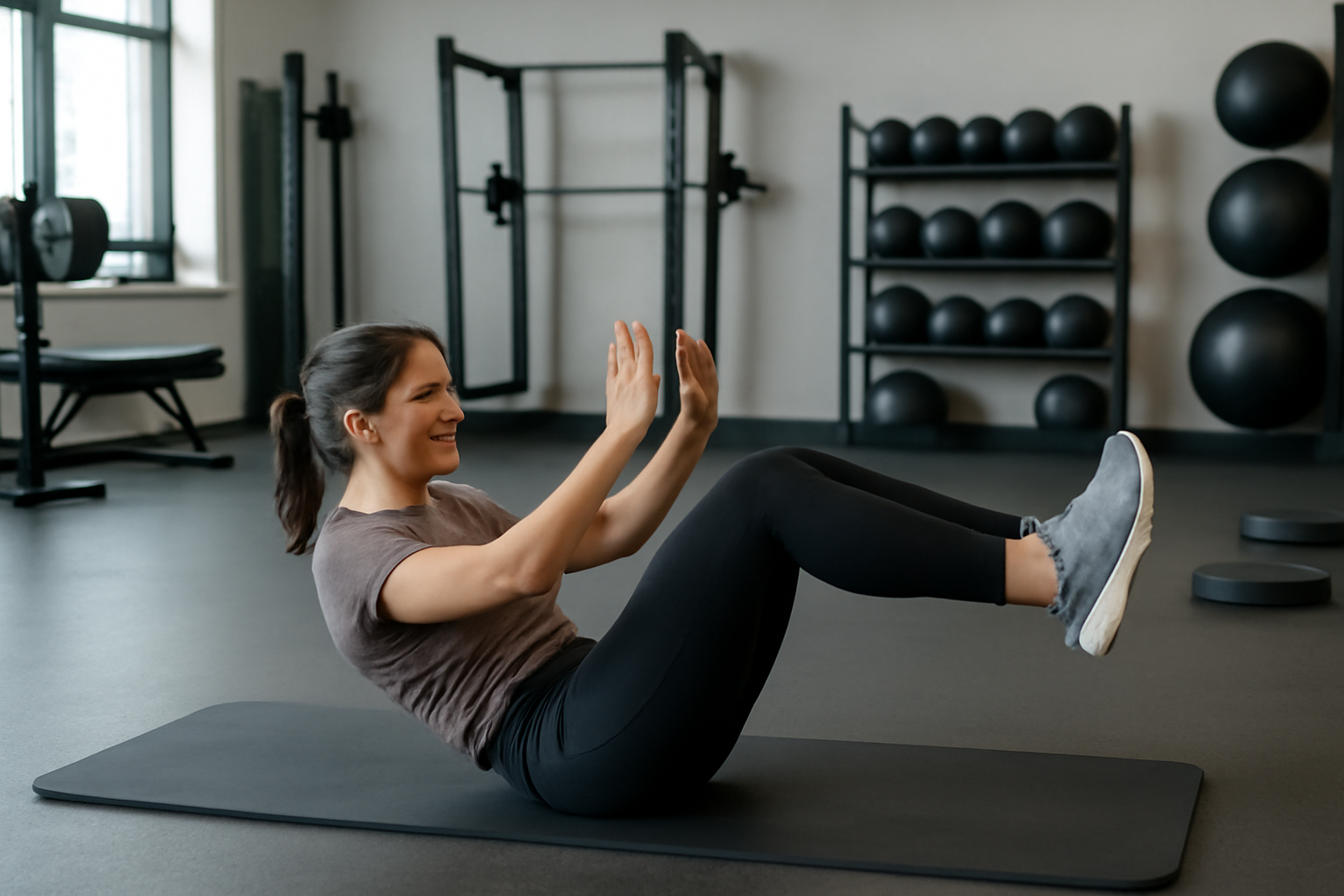
I cannot tell you how many times I have watched someone “do dead bugs” with their lower back arched off the floor, their breath held, and their limbs moving so fast the exercise becomes pure momentum. Here is what correct execution actually looks like:
- Lie on your back with arms extended straight toward the ceiling. Knees bent at 90 degrees, shins parallel to the floor — this is your tabletop position.
- Press your lower back firmly into the floor. There should be no daylight between your lumbar spine and the surface. This is your “neutral brace” position and it is non-negotiable.
- Inhale to prepare, then exhale fully and brace your core as if you are about to take a punch. Not sucking in — bracing outward in all directions.
- Slowly extend the opposite arm and leg toward the floor, hovering just above it, while keeping the lower back glued down. Move only as far as you can without losing that lumbar contact.
- Return to start and repeat on the other side. I typically program 3 sets of 5 to 8 controlled reps per side, with a 3-second descent on each rep.
Slow is the word. I tell people: if you can do it quickly, you are doing it wrong. The tempo is where the training stimulus lives.
How I Progress the Dead Bug Across Fitness Levels
This is where the dead bug separates itself from most core exercises in terms of versatility. Here is how I actually scale it across a wide range of people:
Beginner Progression
Start with just the arm extension — no leg movement. Or just the leg extension with both arms staying up. Let the person own the lumbar contact and the breathing pattern before adding complexity. I typically spend two to three weeks here with deconditioned people or anyone with a history of back pain.
Intermediate Progression
Full contralateral (opposite arm and leg) extension as described above. Once a friend can do 8 reps per side with a 3-second lowering tempo and zero lumbar lift, we move on.
Advanced Progression
Add resistance. A light cable or resistance band pulling the arm toward the floor dramatically increases the anti-extension demand. I also use ab rollers at this stage, which are essentially a standing dead bug pattern that demands the same anti-extension bracing under much higher load. The rollout is one of the most demanding core exercises in existence when done correctly — but it should not come before the person has demonstrated perfect dead bug mechanics, in my opinion.
The Honest Caveat
Here is where I will be straight with you: the dead bug is not a magic bullet, and I have had people for whom even the beginner version was not appropriate at first. Individuals with certain types of herniated discs or acute sciatica sometimes find any loaded lumbar flexion — even passive — uncomfortable in this position. In those cases I pivot to standing anti-rotation work like Pallof presses or modified bird dogs, and I always recommend working with a physical therapist when pain is involved. I’m not a trainer or a clinician. Know the difference.
Additionally, the dead bug alone will not give anyone a six-pack. If visible abs are the goal, nutrition is doing 90% of that work. What the dead bug will do is build a resilient, functional core that supports every other movement you do in and out of the gym.
The Bottom Line
If I could only program one core exercise for a friend — anyone, any age, any fitness level — it would be the dead bug. Not because it is trendy, not because it photographs well, but because it teaches the core to do its actual job: stabilise the spine under load while the rest of the body moves. I have watched this exercise reduce back pain, improve athletic performance, and finally give people the core connection they have been missing after years of crunches and sit-ups that were not serving them.
Start slow. Breathe deliberately. Keep your lower back on the floor. Progress only when you have genuinely earned it. That is not exciting advice, but in eight years of training and helping friends train, it is the advice that has actually worked.
The Ab Roller That Finally Taught My Training Partners What “Core Bracing” Actually Feels Like
Most people come to me with zero connection to their actual core muscles — they’ve done endless crunches but never felt their deep stabilizers fire. The ab roller forces that connection immediately; there’s nowhere to hide when you’re fighting not to collapse into extension.
What works
- Forces anti-extension stability from day one — people feel their rectus abdominis and transverse abdominis lock down at once, not through rep count but through survival instinct.
- Scales instantly from beginner to advanced by adjusting how far you roll; I’ve used it from kneeling progressions all the way to full extension with desk-job friends who initially couldn’t go more than a few inches without losing their neutral spine.
- Eliminates the hip flexor dominance problem that kills traditional crunches — the movement pattern demands posterior chain engagement and spinal stability, not just lumbar flexion.
What doesn’t
- The learning curve is real; most people feel awkward and unstable their first two sessions, which can frustrate people who expect immediate control.
- Requires a smooth, clean floor — carpet or uneven surfaces make the roll jerky and unpredictable, defeating the point of the exercise.
I almost ditched it after a friend’s first attempt ended with her collapsing forward and laughing at how hard it was — but two weeks later, she texted me saying her back pain had dropped significantly for the first time in years. If you’re serious about rebuilding actual core strength instead of chasing burn, grab the Vinsguir Ab Roller Wheel — Ab Workout Equipment for Abdominal & Core Strength Training.
Frequently Asked Questions
How many reps and sets should I do for dead bugs?
I typically program 3 sets of 5 to 8 controlled reps per side, with a 3-second descent on each rep. The tempo is where the training stimulus lives, so move slowly. If you can do it quickly, you’re doing it wrong.
How long should beginners stay on basic dead bug progression?
I typically spend two to three weeks at the beginner level with deconditioned people or anyone with a history of back pain. Start with just arm extension or just leg extension before adding the full contralateral movement.
Can dead bugs help with desk job back pain?
Yes. Crunches repeatedly load the spine into flexion, which research links to disc stress in people who spend eight hours a day flexed forward at a desk. The dead bug trains anti-extension stability instead, which addresses the actual problem.
When should I progress to ab roller core training?
Once you can do 8 reps per side with a 3-second lowering tempo and zero lumbar lift on the standard dead bug, you’re ready to progress. The ab roller should not come before you’ve demonstrated perfect dead bug mechanics.
About This Article

Written by Jordan Ellis. Jordan Ellis isn't a certified personal trainer — just someone who's been genuinely obsessed with training for over eight years and turned it into building smarter home gyms. He focuses on home fitness: effective training spaces, equipment that earns its price, and programs that work in a spare room or basement, not just a commercial gym. More about this site.
Scope and limits. Jordan is not a certified personal trainer, and nothing here is medical advice. Check with a physician before starting a new program, and prioritize form over load on every lift described.
Verify this against a primary source
Specifics change, and your situation may differ from the one described here. These are the authorities worth checking directly:
- Physical Activity Guidelines for Americans (HHS) — the federal physical activity guidelines
- American College of Sports Medicine — exercise prescription and position stands
- NSCA — strength and conditioning research