
Building a Home Gym That Matches Your Budget and Living Space
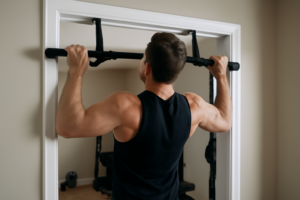
If someone asked me today what makes a home gym actually work, I’d say this: stop worrying about having the fanciest setup and start thinking about what fits both your wallet and your walls. Years back, I cobbled together a couple of cast-iron dumbbells from a weekend sale and rigged a bar into my doorway—and that bare-bones collection carried me through an entire year of solid training. What stuck with me was the realization that matching equipment to your specific constraints—not chasing some ideal list—is what actually moves the needle. Whether you’re carving out space in a studio or claiming a whole garage, a home gym built around what you actually have access to can reshape how you train, completely bypassing the cost and hassle of a commercial facility. This breakdown organizes equipment by what it does, helping you make choices that work for your particular situation and budget.
| Dumbbell Type | Adjustment Speed | Space Footprint | Upfront Cost |
|---|---|---|---|
| Adjustable dumbbells | Requires a moment to lock in place | Store upright in small footprint | Steeper upfront price |
| Fixed dumbbells | Immediate—just grab | Devours floor space; stacked plates clutter apartment | Cheaper for a couple of basic pairs |
| Traditional dumbbell collection | Requires hunting down different plates | Takes up significant living space | Lower per-unit cost |
How Adjustable Dumbbells Solve the Space Squeeze
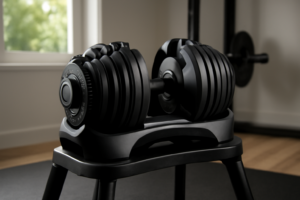
The dirty secret most home gym articles won’t admit: a traditional dumbbell collection devours floor space, and living in tight quarters means either cluttering your apartment with stacked plates or training with gaps where the weight you need doesn’t exist. I quickly discovered I was looking for equipment that could jump from light warm-up work all the way to challenging loads without eating up the footprint I had available.
The advantages
- Adjusting the load between exercises happens in seconds, which means your recovery windows stay on track rather than expanding because you’re fumbling around changing weight.
- One pair handles everything from single-limb movements to loaded bilateral pressing—no awkward weight gaps where nothing feels right and you’re forced to compromise exercise selection.
- They store upright in a small footprint or nestle into a compact base, allowing you to pack a full range of resistance into something that genuinely fits in a tight corner without sacrificing workout variety.
The drawbacks
- The pin-and-dial system requires a moment to lock in place—it doesn’t have the immediacy of just grabbing a fixed weight, and there’s an adjustment period before it feels natural.
- The upfront price tag is steeper than buying a couple of basic fixed dumbbells, meaning the value proposition only pencils out if you’re genuinely planning to stay committed to home training.
I almost returned mine after my first overhead press session because the grip felt foreign and the weight shift seemed slower than my old fixed dumbbells—but by week three, the adjustment speed actually became an advantage because I could chase progressive overload without stopping to hunt down different plates. Check out Proform Rapid Adjust Dumbbells if space is your bottleneck.
Frequently Asked Questions
Can adjustable dumbbells replace a full dumbbell set?
Yes. One pair handles everything from single-limb movements to loaded bilateral pressing without awkward weight gaps. They store upright in a small footprint, packing a full range of resistance into a tight corner while maintaining workout variety without sacrificing exercise selection.
How long does it take to adjust the weight?
The pin-and-dial system requires a moment to lock in place, so it doesn’t have the immediacy of grabbing a fixed weight. By week three, the adjustment speed becomes an advantage because you can chase progressive overload without stopping to hunt down different plates.
Are adjustable dumbbells worth the higher upfront cost?
The value proposition only pencels out if you’re genuinely planning to stay committed to home training. The steeper upfront price is justified by eliminating the need to buy and store multiple fixed dumbbell sets across your living space.
What should I expect during the first workout?
The grip may feel foreign and the weight shift seem slower than fixed dumbbells. However, within a few workouts the adjustment process becomes natural and actually streamlines your training by speeding up load changes between exercises.
About This Article

Written by Jordan Ellis. Jordan Ellis isn't a certified personal trainer — just someone who's been genuinely obsessed with training for over eight years and turned it into building smarter home gyms. He focuses on home fitness: effective training spaces, equipment that earns its price, and programs that work in a spare room or basement, not just a commercial gym. More about this site.
Scope and limits. Jordan is not a certified personal trainer, and nothing here is medical advice. Check with a physician before starting a new program, and prioritize form over load on every lift described.
Verify this against a primary source
Specifics change, and your situation may differ from the one described here. These are the authorities worth checking directly:
- Physical Activity Guidelines for Americans (HHS) — the federal physical activity guidelines
- American College of Sports Medicine — exercise prescription and position stands
- NSCA — strength and conditioning research