
Heat exposure became a regular part of my routine only after I realized how differently my body felt the day after using it — no more dragging through the afternoon or waking up stiff. The casual approach I used to take, just lying down after a hard session and hoping recovery would happen on its own, left plenty of room for improvement. It wasn’t until I started digging into how heat accelerates muscle repair and reduces soreness that I understood what I’d been missing. Thermal therapy has deep historical roots, yet only recently has rigorous science provided concrete evidence of its mechanisms — and understanding those mechanisms makes it clear why incorporating this tool into a post-workout protocol delivers measurable results.
What Heat Actually Does to Your Body After Training
The mechanism is straightforward: applying heat to muscles after training triggers a physiological shift. Blood vessels expand in a process called vasodilation, which substantially increases how much blood reaches your muscles. Greater blood delivery equates to faster oxygen and nutrient transport to exhausted tissue, while simultaneously flushing out metabolic byproducts such as lactic acid more efficiently.
The benefits extend beyond simple circulation. Research demonstrates that heat exposure causes your body to synthesize heat shock proteins — molecules that repair cellular damage and fortify muscle tissue against future injury. A study in the Journal of Science and Medicine in Sport showed that sauna sessions performed post-exercise substantially decreased perceived muscle soreness in athletic populations. This represents genuine, quantifiable recovery enhancement — not merely subjective comfort.
Heat also prompts increased production of human growth hormone (HGH). A landmark Finnish investigation examined what happened during intensive sauna exposure — one hour at 80 °C, repeated twice daily over seven days — and found growth hormone levels surged approximately 16-fold in male subjects (Leppäluoto et al., Acta Physiologica Scandinavica, 1986). Magnitude of this surge is influenced significantly by how hot the environment is, how long you stay, and whether you’re doing multiple sessions in one day, so individual results will vary. The relevance here is substantial: HGH plays a critical role in tissue renovation and overall recovery trajectory.
Maximizing Recovery: When and How Long to Spend in the Heat
The question I hear repeatedly: “Should I step into the sauna right after training or beforehand?” My consistent recommendation is post-workout, and the logic is clear. Jumping into heat before your session elevates core body temperature prematurely and redirects blood away from working muscles — the inverse of what your training demands. Reserve your heat sessions for the recovery phase.
The ideal window sits at roughly 15 to 30 minutes following your workout, once your body temperature begins normalizing. Here’s a straightforward approach I suggest to people:
- 0–15 minutes post-workout: Drink water, allow heart rate to stabilize, engage in light mobility work
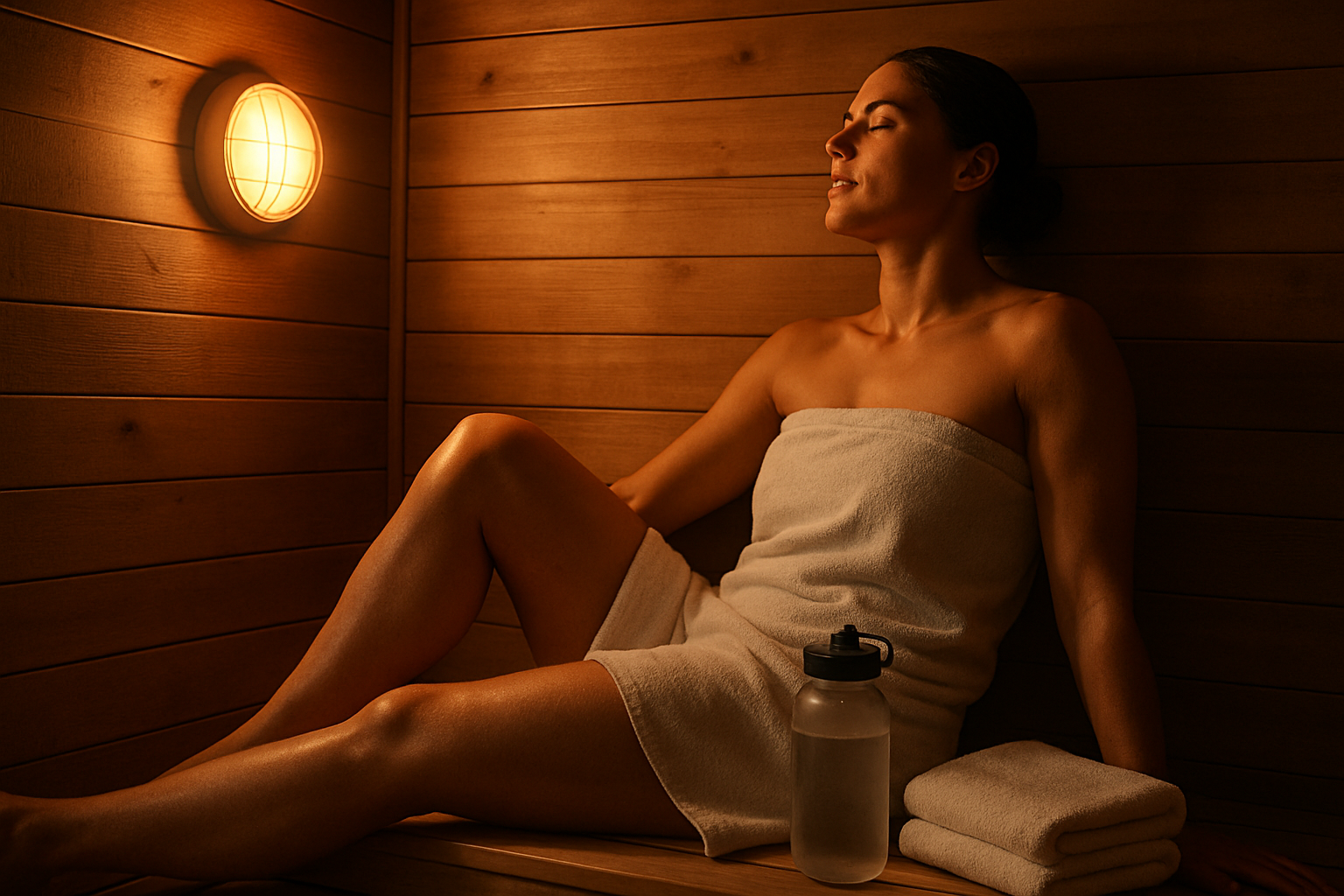
- 15–30 minutes post-workout: Begin your sauna session (lower the temperature initially if sauna is new to your routine)
- Duration inside: 15–20 minutes within the 150–175°F range represents a sustainable target for typical users
- Upon exit: Rehydrate thoroughly — perspiration losses are substantial, and mineral replacement becomes necessary
A critical caveat: if your workout already depleted your hydration status significantly, reduce your sauna duration or eliminate it entirely that particular day. Heat therapy functions as a recovery lever — never treat it as a mandatory component.
Other Recovery Advantages: A Broader View
Muscle recovery alone justifies regular heat exposure, but the benefits package extends considerably further, amplifying your entire training lifestyle.
Hormonal Balance and Deeper Sleep
Sauna sessions suppress cortisol secretion — your primary stress response hormone. Reduced cortisol in the post-exercise window helps facilitate a faster transition into parasympathetic activation, the “rest and digest” operating mode essential for recovery. Superior sleep architecture follows naturally, which enhances myofibrillar protein accretion and output during subsequent training days. The effect compounds over time.
Heart Function and Longevity
Large prospective studies — particularly the well-documented two-decade longitudinal work from Finland — demonstrate that habitual sauna bathing associates with substantially lower odds of heart attack and stroke. During a sauna exposure, cardiac workload approximates that of light-to-moderate aerobic work, delivering aerobic stimulus without the mechanical stress of running or cycling. View it as incidental cardiovascular conditioning while stationary.
Cognitive Function and Emotional State
Heat activates pathways that upregulate norepinephrine and beta-endorphin concentrations — neurochemicals that enhance attention and generate a sense of wellbeing. Many athletes report that sustained heat therapy practice correlates with improved mental clarity, diminished anxiety, and stronger training motivation. That post-sauna clarity you feel isn’t accidental — it reflects concrete neurochemical changes.
Equipment Options That Fit Home Training
Gym access or a standalone sauna build aren’t available to everyone, and cost barriers often prevent ownership. The encouraging part: solid, wallet-friendly alternatives now exist for bringing heat recovery into your home. Here’s what I find most practical:
A Portable Heat Wrap That Solves My Post-Workout Timing Problem
Training hard leaves limited time for recovery optimization — and traveling to a dedicated sauna facility consumes hours I’d rather spend on sleep or nutrition. A compact infrared sauna wrap removes this friction by delivering heat therapy in my own space within 30 minutes of finishing my session.
The advantages I’ve noticed
- Infrared wavelengths penetrate sufficiently to produce tangible post-workout results — I observed noticeable decreases in next-day soreness when comparing weeks where I used it consistently versus periods without, relevant when training volume runs 4–5 sessions per week.
- Adjustable range (86–176°F) accommodates newcomers to sauna exposure; you initiate at a modest setting and develop your tolerance gradually rather than committing immediately to industrial-strength heat.
- Minimal activation steps — unpack, seal the zipper, press the power button — eliminate barriers to consistent use, preventing the common scenario where equipment sits dormant in storage.
The drawbacks to consider
- Enclosed-space anxiety can blindside you — my initial session involved an unexpected sense of confinement that almost made me abandon the attempt at the three-minute mark, which obviously undermines effectiveness.
- You forfeit the whole-body immersion that conventional sauna chambers provide; keeping your head outside the wrapping reduces access to some systemic adaptations available in an actual steam room setting.
I was genuinely skeptical the first week — the heat felt shallow and distant compared to a real sauna, and I thought I’d wasted money. But after sticking with it for three post-lift sessions, the muscle recovery improvement became too obvious to ignore. Check out the Portable Infrared Sauna Blanket (86–176°F) if you’re serious about closing the recovery gap.
Frequently Asked Questions
When should I use a sauna after working out?
Use the sauna 15 to 30 minutes post-workout, once your body temperature begins normalizing. Avoid sauna before training because heat elevates core temperature prematurely and redirects blood away from working muscles. Spend 15–20 minutes within the 150–175°F range for typical users, then rehydrate thoroughly afterward.
Does sauna really reduce muscle soreness?
Yes. Research in the Journal of Science and Medicine in Sport showed that sauna sessions performed post-exercise substantially decreased perceived muscle soreness in athletic populations. Heat triggers vasodilation, increasing blood delivery to muscles, and causes your body to synthesize heat shock proteins that repair cellular damage.
How much does heat exposure increase growth hormone?
A Finnish study found that one hour at 80°C, repeated twice daily over seven days, caused growth hormone levels to surge approximately 16-fold in male subjects. The magnitude of this surge is influenced significantly by temperature, duration, and whether you do multiple sessions in one day.
Can I use a sauna if I’m already dehydrated from training?
No. If your workout already depleted your hydration status significantly, reduce your sauna duration or eliminate it entirely that particular day. Heat therapy functions as a recovery lever, never as a mandatory component. Always prioritize rehydration, as perspiration losses are substantial.
About This Article

Written by Jordan Ellis. Jordan Ellis isn't a certified personal trainer — just someone who's been genuinely obsessed with training for over eight years and turned it into building smarter home gyms. He focuses on home fitness: effective training spaces, equipment that earns its price, and programs that work in a spare room or basement, not just a commercial gym. More about this site.
Scope and limits. Jordan is not a certified personal trainer, and nothing here is medical advice. Check with a physician before starting a new program, and prioritize form over load on every lift described.
Verify this against a primary source
Specifics change, and your situation may differ from the one described here. These are the authorities worth checking directly:
- Physical Activity Guidelines for Americans (HHS) — the federal physical activity guidelines
- American College of Sports Medicine — exercise prescription and position stands
- NSCA — strength and conditioning research