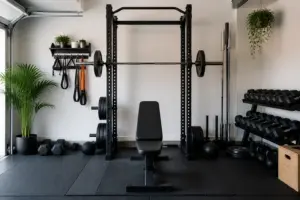
I had a 44-year-old person — former college wrestler, still training four days a week — come to me frustrated and confused. He wasn’t slacking. His nutrition was solid. His programming was intelligent. But he was constantly sore, his lifts had stalled, and he told me he felt “beat up all the time.” Sound familiar?
The problem wasn’t his training. It was that he was recovering like a 24-year-old, and his body was done pretending that worked.
After eight years of training and a lot of reading, I can tell you with confidence: the biggest mistake I see active adults over 40 make is treating recovery as an afterthought. The training is the easy part. Recovery is where the adaptation actually happens — and the physiology shifts meaningfully once you’re past 40 in ways that demand a structured response, not just “rest days.”
Here is the exact recovery protocol I build for every person over 40. It’s grounded in exercise science, refined by real-world results, and honest about where the evidence is still evolving.
Why Recovery Changes After 40 (The Physiology Behind It)
This isn’t about being “older” in some vague, discouraging way. There are specific, measurable physiological changes happening that directly affect how fast you bounce back from training.
- Testosterone and growth hormone decline. Both are critical for muscle protein synthesis and tissue repair. Research published in the Journal of Clinical Endocrinology & Metabolism confirms that testosterone levels in men drop roughly 1-2% per year after 30. Women experience significant hormonal shifts around perimenopause that also impact recovery capacity.
- Reduced satellite cell activity. Satellite cells are the muscle stem cells responsible for repairing micro-tears after training. Their activation and proliferation slows with age, meaning the same workout takes longer to recover from.
- Increased systemic inflammation. Chronic, low-grade inflammation — sometimes called “inflammaging” — becomes more pronounced with age and stacks on top of the acute inflammation from exercise. You’re not starting from zero between sessions anymore.
- Decreased sleep quality. Slow-wave sleep, the stage where the majority of growth hormone is released and tissue repair occurs, decreases significantly after 40. This is not optional downtime. It is when your body physically rebuilds.
Understanding this isn’t meant to depress you. It’s meant to explain exactly why a targeted protocol is necessary — not optional.
The 5-Part Recovery Protocol
1. Sleep Architecture, Not Just Sleep Hours
I tell every person over 40 the same thing: seven hours of fragmented, shallow sleep is not the same as six and a half hours of quality sleep. The goal is sleep quality, specifically protecting slow-wave and REM stages.
Practically, this means:
- Consistent sleep and wake times, even on weekends (circadian rhythm consistency matters more than most people realize)
- Room temperature between 65-68°F — core body temperature must drop to initiate deep sleep
- No screens within 60 minutes of bed — blue light suppresses melatonin, which is not just a sleep hormone but also has antioxidant properties relevant to recovery
- Magnesium supplementation before bed (more on this below)
2. Protein Timing and Distribution
The research on muscle protein synthesis in older adults is clear: you need more protein per meal, not just more total protein. A 2015 study by Moore and colleagues in The Journals of Gerontology: Series A found that older men required approximately 0.4g of protein per kilogram of body weight per meal to maximally stimulate myofibrillar protein synthesis, against about 0.24g/kg in younger men — roughly double per sitting.
For a 180-pound person, that’s about 33 grams of protein per meal, distributed across three to four meals. Front-loading a smoothie and calling it done doesn’t work for this population.
3. Structured Soft Tissue Work
I’m not talking about rolling a lacrosse ball around aimlessly. I mean consistent, targeted soft tissue work with intent. For people over 40, I’d aim for 10-15 minutes of percussion therapy or foam rolling within two hours post-training, focused on the primary movers from that session.
Percussion massage devices have become a legitimate recovery tool, not just a gadget. The mechanical stimulus increases local blood flow, reduces delayed onset muscle soreness (DOMS), and appears to reduce sympathetic nervous system tone — meaning it helps you shift out of the stress state the workout created. I use a percussion massager with the people I train with regularly, particularly for hip flexors, thoracic extensors, and the posterior chain.
4. Active Recovery Days Done Correctly
Rest days are not the same as active recovery days, and both have a place. Active recovery — 20 to 30 minutes of low-intensity movement at 50-60% of max heart rate — accelerates metabolic waste clearance from muscle tissue, reduces perceived soreness, and keeps movement patterns grooved without adding meaningful load to the system.
Walking is underrated. Zone 2 cycling is excellent. What it should not look like: an extra conditioning session because you “felt good.”
5. Parasympathetic Downregulation After Training
Most people over 40 who are struggling with recovery are chronically sympathetically dominant — their nervous system is stuck in a stress response. Training adds to that load. If you go directly from a hard workout to your work inbox or a stressful commute, you are interrupting the recovery cascade.
I have people spend 5-10 minutes post-training doing box breathing (4 counts in, 4 hold, 4 out, 4 hold) or simply lying in a quiet space. This is not soft. Research supports the role of heart rate variability (HRV) and vagal tone in recovery, and intentional parasympathetic activation after training has measurable effects on next-session readiness.
An Honest Caveat
I want to be direct about something: this protocol produces results, but it takes longer to show up than most people want. We live in a culture that wants 30-day transformations. For people over 40 implementing real recovery changes, the meaningful shift in how they feel and perform typically shows up at the 6-to-8-week mark. Not because the protocol is slow — because physiology is slow, and anyone telling you otherwise is selling something.
I also want to acknowledge that some fatigue and recovery issues in this age group have hormonal or medical roots that no recovery protocol can fully address. If you’re doing everything right and still feel consistently depleted, a panel with your physician — including thyroid, testosterone, and cortisol — is worth having. Training and lifestyle are powerful, but they’re not the whole picture.
The Bottom Line
Workout recovery over 40 requires a deliberate system, not wishful thinking. Sleep quality, protein distribution, soft tissue work, active recovery, and nervous system downregulation are not luxury additions to your program. They are the program, as much as the sets and reps are.
The people I’ve trained who age the best — who are still moving well, still making progress at 52 or 58 or 63 — are not the ones who trained the hardest. They’re the ones who recovered the smartest. That’s the variable you can actually control, and it’s the one most people completely neglect.
Start with sleep and magnesium this week. Add the soft tissue work the week after. Build the system piece by piece. Your training will catch up.
| Recovery Protocol Component | Timeframe/Duration | Key Specification |
|---|---|---|
| Sleep Architecture | 7 hours quality sleep | Room temperature 65-68°F; no screens 60 minutes before bed |
| Protein Distribution | 3-4 meals daily | 0.4g per kg body weight per meal (33g for 180-lb person) |
| Soft Tissue Work | 10-15 minutes post-training | Within 2 hours; percussion therapy or foam rolling on primary movers |
| Active Recovery | 20-30 minutes | 50-60% max heart rate; walking or zone 2 cycling |
| Parasympathetic Activation | 5-10 minutes post-training | Box breathing or quiet rest to shift out of stress response |
The Magnesium Gap That’s Killing Your Recovery After 40
Magnesium drops significantly after 40—especially if you’re training hard four days a week—and that deficit tanks both sleep quality and muscle repair. I started recommending a quality magnesium glycinate to people like my wrestler because it actually crosses the blood-brain barrier and won’t wreck your digestion the way cheaper forms do.
What works
- You actually fall asleep faster and sleep deeper—I noticed the people I train with stopped waking at 3 a.m. sore and wired within a week of consistent use.
- Glycinate form means no laxative effect, so you’re not managing bathroom issues on top of managing soreness.
- The addition of Vitamin B6 and lemon balm amplifies the calming signal—it’s not just magnesium, it’s a stacked recovery formula that feels intentional.
What doesn’t
- It’s not a magic bullet—you still need solid sleep hygiene, consistent training, and honest nutrition; the supplement fills a gap, it doesn’t replace discipline.
- Takes 7-10 days to show real effect, so people expecting overnight transformation get frustrated and quit too early.
I was skeptical the first time I took it myself—kept waiting for it to feel like a sedative—but it just made my nervous system feel quieter, which is exactly what an overtrained 45-year-old needs. Habit Magnesium Sleep & Recover Supplement Dual Pack, Magnesium Glycinate, Vitamin B6, Lemon Balm (120 Capsules, 1 Pack x 60 Capsules)
Frequently Asked Questions
How much protein per meal do I need over 40?
Research shows older adults need roughly 0.4g of protein per kilogram of body weight per meal to maximize muscle protein synthesis, roughly double what younger people need. For a 180-pound person, that’s about 33 grams of protein per meal, distributed across three to four meals throughout the day.
What room temperature is best for deep sleep recovery?
Room temperature between 65-68°F is ideal because your core body temperature must drop to initiate deep sleep. This single change improves sleep quality significantly for people over 40 without requiring supplements or medications.
How long should active recovery workouts last?
Active recovery should be 20 to 30 minutes of low-intensity movement at 50-60% of max heart rate. Walking and zone 2 cycling work well. The goal is to accelerate metabolic waste clearance and reduce soreness without adding meaningful training load.
When should I do soft tissue work after training?
Perform 10-15 minutes of percussion therapy or foam rolling within two hours post-training, focused on the primary movers from that session. This increases blood flow, reduces delayed onset muscle soreness, and helps shift your nervous system out of the stress state the workout created.
About This Article
Written by Jordan Ellis. Jordan Ellis isn't a certified personal trainer — just someone who's been genuinely obsessed with training for over eight years and turned it into building smarter home gyms. He focuses on home fitness: effective training spaces, equipment that earns its price, and programs that work in a spare room or basement, not just a commercial gym. More about this site.
Scope and limits. Jordan is not a certified personal trainer, and nothing here is medical advice. Check with a physician before starting a new program, and prioritize form over load on every lift described.
Verify this against a primary source
Specifics change, and your situation may differ from the one described here. These are the authorities worth checking directly:
- Physical Activity Guidelines for Americans (HHS) — the federal physical activity guidelines
- American College of Sports Medicine — exercise prescription and position stands
- NSCA — strength and conditioning research