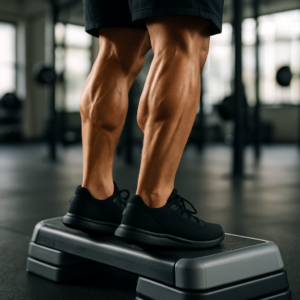

Can you actually stay strong when your knees won’t tolerate pounding movements? The answer is yes — and it might surprise you how much muscle and conditioning you can build without impact at all. Years ago, balancing demanding coursework with serious training time meant every gym session had to deliver results. A knee problem forced the issue: the high-impact activities I’d depended on—running, plyometrics, intense cardio circuits—were inflaming rather than improving the situation. That taught me something valuable that I wish had been obvious earlier: you can develop genuine strength and aerobic capacity through low-impact exercise without hammering sensitive joints. If you’re managing ongoing knee discomfort, bouncing back from an injury, or simply want to train without risking further problems, the correct low-impact approach makes it possible to keep training hard, manage body composition, and gradually decrease pain—all while staying active.
Resistance Bands: The Tool That Finally Let Me Train Around Knee Pain
My knees rejected the loading pattern of loaded squats or leg press stations, so I needed an alternative that could still build leg strength without the compressive forces barbells and machines deliver. Elastic bands turned out to be the solution I should have found sooner — they apply force through stretching rather than weight, which meant I could work at high intensity without inflaming the injury.
The advantages
- Resistance increases as the band lengthens — this ascending resistance curve mirrors how muscles produce force naturally, and it removed pressure at the bottom of my lifts where knee stress was worst.
- No compressive loading in the joint — bands produce pure muscular tension without the joint-grinding sensation that made me fear going deep into movements, unlike free weights or machines.
- Easy to store and combine — I could attach them to almost anything in my space (pull-up bar, door, rack posts) and double or triple them up whenever I needed more resistance, sidestepping the need to move heavy iron plates around.
The drawbacks
- Measuring progress becomes ambiguous ��� adding load isn’t as simple as grabbing the next dumbbell weight, so advancement requires tracking band gauge, how many you’ve stacked, or reps instead of a single number going up.
- Quality and lifespan vary — bands can snap without warning or develop small holes that creep up on you after steady heavy use, and replacing your collection repeatedly becomes costly over time.
I was skeptical at first that bands could actually build real strength compared to free weights—until I did a set of banded leg presses and my quads were shaking like I’d just finished heavy barbell work. THERABAND Resistance Bands Set
Frequently Asked Questions
Can you build leg strength without squats or leg press machines?
Yes. Resistance bands apply force through stretching rather than weight, delivering high-intensity muscular tension without the compressive loading that aggravates sensitive knees. Bands produce an ascending resistance curve that mirrors how muscles naturally produce force, removing pressure at the bottom of movements where knee stress is worst.
What’s the main drawback of training with resistance bands?
Measuring progress becomes ambiguous because adding load isn’t as straightforward as grabbing the next dumbbell. You’ll need to track band gauge, how many you’ve stacked, or reps instead of a single number going up. Quality and lifespan also vary—bands can snap without warning or develop holes after heavy use.
Will low-impact exercise let me maintain muscle and conditioning?
Yes. You can develop genuine strength and aerobic capacity through low-impact exercise without impact-loading your joints. This approach makes it possible to keep training hard, manage body composition, and gradually decrease pain while staying active.
Are resistance bands easier to store than free weights?
Yes. Bands are easy to store and combine—you can attach them to almost anything in your space like a pull-up bar, door, or rack posts, and double or triple them up whenever you need more resistance, avoiding the need to move heavy iron plates around.
About This Article

Written by Jordan Ellis. Jordan Ellis isn't a certified personal trainer — just someone who's been genuinely obsessed with training for over eight years and turned it into building smarter home gyms. He focuses on home fitness: effective training spaces, equipment that earns its price, and programs that work in a spare room or basement, not just a commercial gym. More about this site.
Scope and limits. Jordan is not a certified personal trainer, and nothing here is medical advice. Check with a physician before starting a new program, and prioritize form over load on every lift described.
Verify this against a primary source
Specifics change, and your situation may differ from the one described here. These are the authorities worth checking directly:
- Physical Activity Guidelines for Americans (HHS) — the federal physical activity guidelines
- American College of Sports Medicine — exercise prescription and position stands
- NSCA — strength and conditioning research