
The yoga mat shifts slightly as you settle into your opening stretch—a small distraction that pulls your focus away from the tight sensation across your lower back. Over the years, I’ve worked with plenty of people dealing with persistent lower back discomfort, and I’ve noticed a pattern: most assume that taking time off will solve the problem, when in reality a structured approach using targeted stretching and deliberate mobility work often makes a far bigger difference. What research and practical experience both reveal is that addressing tightness in the right muscle groups—rather than simply resting—can fundamentally shift how your spine feels and functions over time. The eight stretches laid out in this article are ones I keep returning to, whether I’m working through them myself or guiding someone else through the progression.
| Stretch | Hold Duration | Primary Target |
|---|---|---|
| Child’s Pose | 30–60 seconds | Entire posterior chain |
| Cat-Cow Stretch | 8–10 full cycles | Spinal mobility |
| Supine Knee-to-Chest | 30 seconds | Glutes and lower back |
| Reclined Figure Four | 45 seconds per side | Hip and piriformis |
| Lying Spinal Twist | 30–45 seconds per side | Upper and lower spine |
| Forward Fold | 45–60 seconds | Hamstrings and erector spinae |
| Quadriceps Stretch | 30 seconds per leg | Quadriceps |
| Glute Bridges | 12–15 repetitions | Glute activation and stability |
Understanding the Role of Lower Back Stretching
Discomfort in the lower back typically develops from a combination of muscular tightness, restricted mobility, and strength imbalances across the posterior chain. Many people think rest is the right answer, but extended periods without movement can actually deepen the problem—muscles that aren’t used grow stiffer and less resilient. The stretches presented here zero in on the crucial structures affecting spinal mechanics: your hamstrings, glutes, hip flexors, and erector spinae muscles. When you increase flexibility and range of motion in these areas, you eliminate the secondary tension patterns your body creates to compensate, and you restore the spine’s intended freedom of movement.
If you’re experiencing acute pain, numbness, or radiating tingling sensations, see a healthcare professional before trying any stretching work. The routine below is designed for general tightness and mild discomfort; it’s not appropriate for structural damage or nerve-related conditions.
The 8 Best Lower Back Stretches
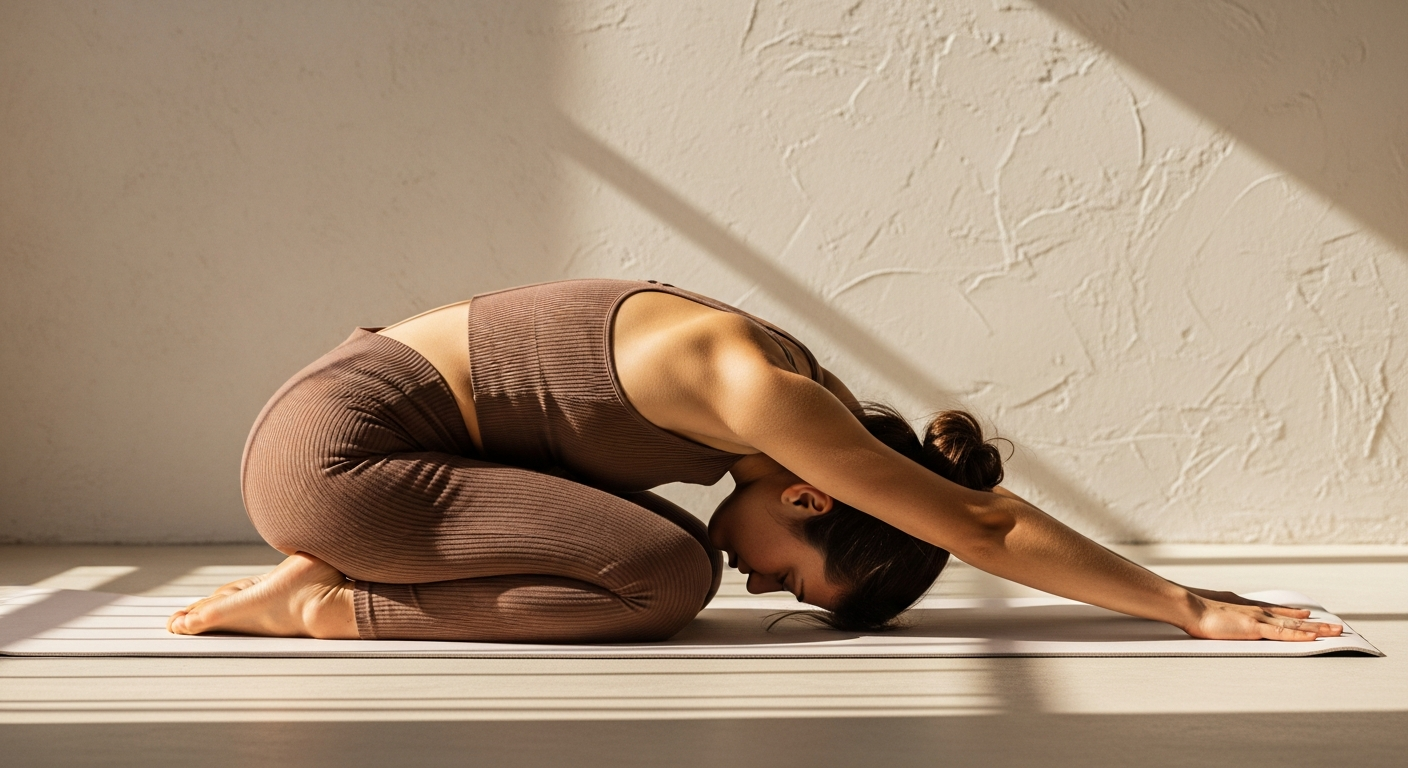
1. Child’s Pose
This fundamental position provides gentle lengthening across the entire posterior chain while decompressing the spinal column. Begin by kneeling on your mat, touching your big toes together and opening your knees wide apart. Fold your torso forward until your forehead contacts the mat surface. Let your arms extend forward or rest alongside your body. Breathe deliberately and hold the position for 30–60 seconds. You’ll find this particularly useful after prolonged sitting.
2. Cat-Cow Stretch
Active spinal movement mobilizes joints and engages the musculature surrounding the vertebral column more effectively than static positions alone. Position yourself on hands and knees on your mat. As you inhale, allow your abdomen to drop while lifting your gaze and chest upward—this is the cow position. As you exhale, press your spine toward the ceiling, round your upper back, and bring your chin down toward your chest—the cat position. Flow between these two positions slowly for 8–10 full cycles. This rhythmic movement creates better spinal mobility and often decreases stiffness more than holding a single stretch.
3. Supine Knee-to-Chest
Lie flat on your back with both legs bent and feet pressing into the floor. Gradually draw one knee upward toward the center of your chest while keeping the opposite foot grounded. Maintain this position for 30 seconds, then release and switch to the other side. This movement targets your glute muscles and lower back directly, making it one of the most accessible options if you’re managing significant discomfort.
4. Reclined Figure Four
From your back with knees bent, place one ankle across the opposite knee, forming a figure-four pattern with your legs. Slowly pull the lower leg (the one not crossed) toward your torso. This intense hip and piriformis stretch is vital because restricted hip mobility frequently underlies lower back issues. Each side should be held for 45 seconds.
5. Lying Spinal Twist
While lying on your back, bring one knee toward your chest and allow it to drift across your body toward the opposite side, keeping your shoulders pressed to the floor. This movement decompresses the spine while gently mobilizing both the upper and lower spine. Spend 30–45 seconds on each side.
6. Forward Fold
Stand with your feet separated at hip width. Hinge from your hips and let your torso hang down toward your legs. Your arms can dangle freely or you can hold opposite elbows. Avoid locking out your knees. This position stretches the hamstring group and the erector spinae muscles—both critical to lower back mechanics. Hold for 45–60 seconds, but avoid pushing into uncomfortable depth, as forcing the position creates tension elsewhere instead of releasing it.
7. Quadriceps Stretch
Though less obvious, restricted quadriceps muscles pull the pelvis into a forward tilt and increase excessive lumbar curvature, creating extra stress on the lower spine. Stand upright on one leg and draw the opposite foot toward your buttock. Each leg should be stretched for 30 seconds. This single muscle group has an outsized influence on pelvic and spinal positioning.
8. Glute Bridges (Active Mobility)
Lie on your back with knees bent and feet flat on the ground. Drive through your heels and raise your hips up toward the sky. Hold the top position momentarily while feeling your glutes engage and tighten, then lower back down slowly. Complete 12–15 repetitions. This combines muscle activation with mobility work, firing up the structures that keep your spine stable.
A Mat That Doesn’t Slip When You Need Stability
Holding a deep lower back stretch becomes frustrating the moment your mat begins sliding around underneath you—suddenly your hands and feet creep, your positioning shifts, and you’re forced to brace rather than relax into the stretch. A properly made yoga mat with dependable grip solves this, letting you settle into your stretches without repositioning yourself constantly.
What works
- Grip performance remains consistent on both hardwood and tile floors—tested on both surfaces without mat migration or needing to reposition mid-stretch.
- Sufficient thickness that your knees and spine are cushioned adequately during floor-based stretches and won’t telegraph every irregularity in the surface below.
- Resists cracking and deterioration when rolled for storage, remaining intact through extended daily use in a training setting.
What doesn’t
- Requires a breaking-in period—the surface grip improves noticeably over the first week of regular use, which can feel unexpected initially.
- Weighs more than thinner portable options, so transporting between different spaces requires more effort if portability is a priority.
I almost returned it after the first stretching session because the grip felt slightly sticky in a way that seemed like it would wear off—but it was just the mat settling in, and by day three I was sold.
Programming Your Stretching Practice
Maximum benefit from this collection of stretches comes from treating them as a repeatable, consistent practice. Aim to move through this routine five to six times weekly, respecting the hold duration for each stretch and maintaining a slow, deliberate pace throughout. Begin with the less demanding options such as child’s pose and supine knee-to-chest, then gradually introduce deeper stretches as your flexibility expands. Listen to your body’s feedback—sensation and mild discomfort during stretching is expected, but sharp or acute pain warrants stopping immediately.
A large number of people working with me notice measurable reduction in lower back discomfort within two to three weeks when they perform these stretches consistently, though outcomes differ depending on the individual. For optimal results, combine this stretching work with attention to daily posture, core-strengthening exercises, and improvements to how your workspace is set up.
Frequently Asked Questions
How long should I hold each lower back stretch?
Hold times vary by stretch. Child’s pose, supine knee-to-chest, and quadriceps stretch are held for 30 seconds. Reclined figure four and forward fold are held for 45–60 seconds. Lying spinal twist is held for 30–45 seconds per side. Cat-cow is performed for 8–10 full cycles rather than held statically.
How often should I do these lower back stretches?
Aim to move through this routine five to six times weekly for maximum benefit. Consistency matters more than intensity—most people notice measurable reduction in lower back discomfort within two to three weeks when performing these stretches consistently, though outcomes differ depending on the individual.
Can stretching alone fix lower back pain?
Stretching addresses muscular tightness and restricted mobility, which often underlie lower back discomfort. For optimal results, combine this stretching work with attention to daily posture, core-strengthening exercises, and improvements to how your workspace is set up.
When should I see a doctor instead of stretching?
If you’re experiencing acute pain, numbness, or radiating tingling sensations, see a healthcare professional before trying any stretching work. The routine is designed for general tightness and mild discomfort, not structural damage or nerve-related conditions.
About This Article

Written by Jordan Ellis. Jordan Ellis isn't a certified personal trainer — just someone who's been genuinely obsessed with training for over eight years and turned it into building smarter home gyms. He focuses on home fitness: effective training spaces, equipment that earns its price, and programs that work in a spare room or basement, not just a commercial gym. More about this site.
Scope and limits. Jordan is not a certified personal trainer, and nothing here is medical advice. Check with a physician before starting a new program, and prioritize form over load on every lift described.
Verify this against a primary source
Specifics change, and your situation may differ from the one described here. These are the authorities worth checking directly:
- Physical Activity Guidelines for Americans (HHS) — the federal physical activity guidelines
- American College of Sports Medicine — exercise prescription and position stands
- NSCA — strength and conditioning research