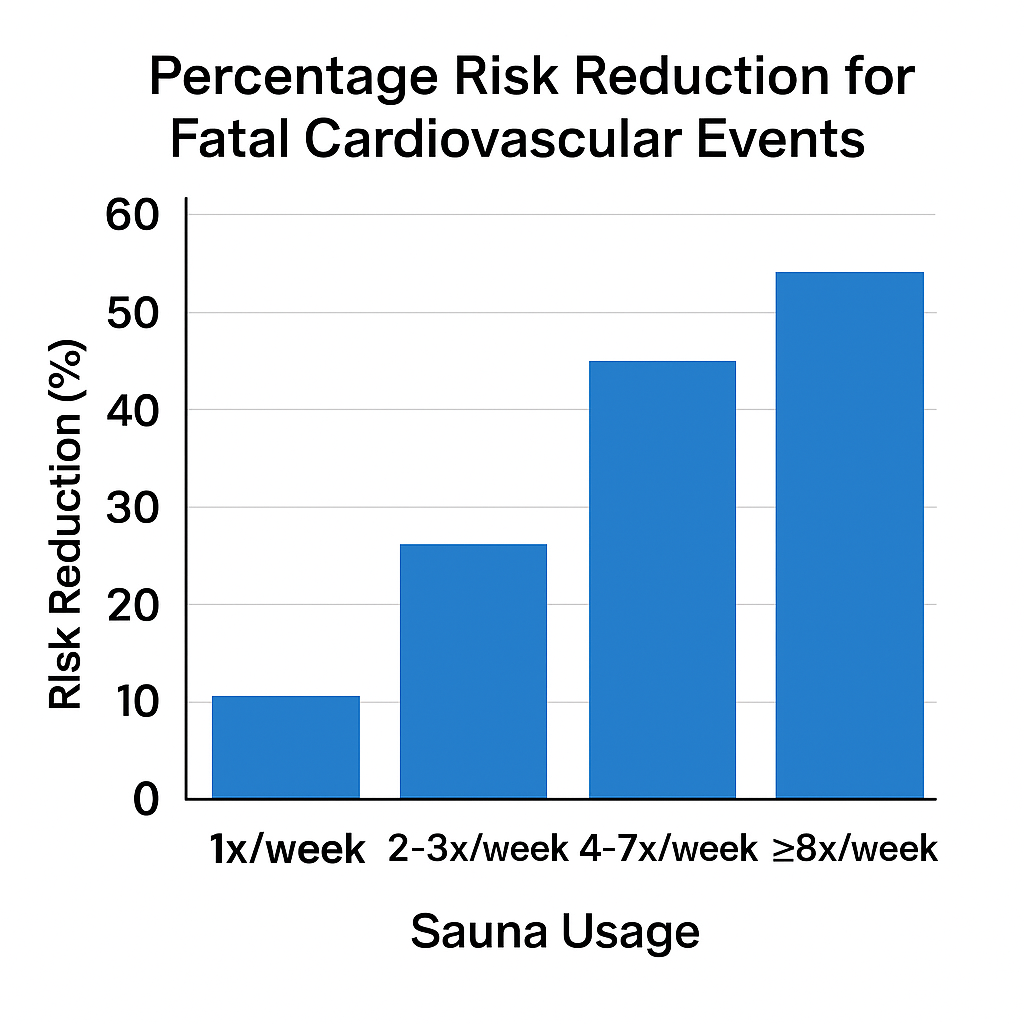

Most people assume saunas are purely a relaxation tool, something you do after you’ve already done the real work. But the scientific picture is more interesting than that. When I started digging into the research to answer questions about heat recovery, I discovered that saunas create a distinct physiological stimulus — one that activates adaptive responses across your cardiovascular, nervous, and metabolic systems. The mechanism is called hormesis: applying controlled heat stress in a manageable dose triggers your body to strengthen its defense and recovery systems. The result? Benefits that extend well beyond feeling relaxed for a few minutes. Here’s what the actual evidence shows.
Cardiovascular and Metabolic Effects
Research on sauna use consistently identifies cardiovascular improvements as a major finding. When heat rises around you, your core temperature climbs, forcing your heart to pump harder. Your vessels expand, and blood redirects to your skin to shed that heat. Repeated exposure trains these same vascular adaptations you’d expect from steady-state aerobic work. That’s not to say saunas are a substitute for running or cycling, but they do apply a comparable training stimulus to your heart and blood vessels.
The metabolic picture is similarly compelling. Sustained heat exposure prompts your cells to produce heat shock proteins and sharpens your insulin response over time. Consistent sauna sessions may optimize various metabolic markers and assist in body composition goals when built into a program that also includes solid training and nutrition — though the individual effect tends to be smaller and works synergistically with other practices.
Mental Resilience and Parasympathetic Activation
The psychological effects are just as measurable as the physical ones. Heat exposure switches on your parasympathetic nervous system — essentially flipping your body’s rest switch. Endorphins flood your system as your temperature climbs, producing a measurable mood lift that lingers well past the session itself. When managing the combined demands of training and coaching, this mental recovery response proved to be genuine and quantifiable. Research documents reductions in stress biomarkers and improvements in emotional regulation following regular sauna exposure, reinforcing its role as a tool for managing psychological strain from hard training and professional responsibilities.
The critical factor is regularity. A single session won’t rewrite your stress response, but embedding sauna work into your weekly schedule builds a cumulative shift in how your nervous system recovers and adapts.
Heat Acclimatization and Athletic Performance
Competitive athletes training in warm climates leverage sauna exposure to build heat tolerance ahead of competition — the physiological adjustment known as heat acclimatization. Frequent heat sessions enhance your body’s cooling capacity, lower your core temperature during work, and can sharpen endurance in warm environments. For field athletes like soccer players and anyone competing outdoors, this edge becomes significant when summer games arrive.
Managing Fluid and Electrolyte Loss During Heat Sessions
Sauna sessions drain fluid from your body quickly, and water by itself won’t fully restore what you’ve lost. I discovered this when one of my players seized up mid-session despite continuous water intake — and I realized I’d been sending people into heat exposure without a proper electrolyte strategy.
The issue is simple but critical: sweating removes sodium, potassium, and magnesium alongside water. Drinking only water creates a concentration problem that paradoxically worsens cramping and slows how fast your cells reabsorb fluid. Your system needs those electrolytes to properly hold onto and move water through your body.
What makes a difference
- Dissolves cleanly without leaving grit behind in your bottle after a sauna — a real benefit when you’re already sweaty and fatigued.
- Remains drinkable even when your core temperature is high and your taste receptors feel fried — I’ve watched people finish bottles of this that they’d normally refuse.
- Balances sodium and potassium in proportions that block the cramping that develops when you rely on water-only rehydration around heat exposure.
What doesn’t work as well
- Powder formulations clump if you don’t mix with warm or room-temp water first — using ice-cold water straight from your bottle means shaking for minutes.
- It’s not a shortcut for total volume intake; electrolytes only function if you’re actually drinking enough fluid throughout.
I almost abandoned this after the first few packets refused to dissolve during a weekend coaching session, but once I changed my mixing order it became non-negotiable before sauna work. Grab electrolyte powder and actually track your intake around heat exposure.
Contraindications and Risk Factors
The benefits don’t apply universally. Anyone with unmanaged hypertension, specific cardiac conditions, or active illness should approach saunas cautiously or avoid them entirely. Pregnancy, temperature-altering medications, or known heat sensitivity warrant a conversation with your doctor before starting. Even among healthy individuals, easing into shorter, cooler sessions before progressing makes smart sense and builds tolerance gradually.
The research suggests an optimal range of 15–20 minutes at 160–180°F (70–82°C), performed 2–3 times weekly for most people. Longer isn’t inherently superior; building it into your regular schedule matters far more than pushing session length.
Final Thoughts
Saunas aren’t a cure-all, but evidence supports their role in a serious recovery and wellness program. The combination of heart-training stimulus, improved heat tolerance, psychological resilience, and nervous system repair makes them a practical addition to hard training — particularly when stress and volume are high. Make it work by staying properly hydrated with electrolytes, beginning with shorter and cooler exposures, and treating it as an ongoing practice rather than an occasional luxury.
Aim for 2–3 times weekly for most people. The research suggests an optimal range of 15–20 minutes at 160–180°F (70–82°C), performed at this frequency. Building sauna use into your regular schedule matters far more than pushing individual session length. Water alone won’t restore what sweating removes. Your body loses sodium, potassium, and magnesium alongside water, and drinking only water creates a concentration problem that paradoxically worsens cramping. You need electrolytes to properly hold onto and move water through your body. Yes. Frequent heat sessions enhance your body’s cooling capacity, lower your core temperature during work, and can sharpen endurance in warm environments. Competitive athletes training in warm climates leverage sauna exposure to build heat tolerance ahead of competition—this physiological adjustment is called heat acclimatization. Anyone with unmanaged hypertension, specific cardiac conditions, or active illness should approach saunas cautiously or avoid them entirely. Pregnancy, temperature-altering medications, or known heat sensitivity warrant a conversation with your doctor before starting.Frequently Asked Questions
How often should I use a sauna for health benefits?
Why do I cramp during sauna sessions despite drinking water?
Can saunas improve athletic performance in warm weather?
Who should avoid saunas or talk to a doctor first?
About This Article

Written by Jordan Ellis. Jordan Ellis isn't a certified personal trainer — just someone who's been genuinely obsessed with training for over eight years and turned it into building smarter home gyms. He focuses on home fitness: effective training spaces, equipment that earns its price, and programs that work in a spare room or basement, not just a commercial gym. More about this site.
Scope and limits. Jordan is not a certified personal trainer, and nothing here is medical advice. Check with a physician before starting a new program, and prioritize form over load on every lift described.
Verify this against a primary source
Specifics change, and your situation may differ from the one described here. These are the authorities worth checking directly:
- Physical Activity Guidelines for Americans (HHS) — the federal physical activity guidelines
- American College of Sports Medicine — exercise prescription and position stands
- NSCA — strength and conditioning research

