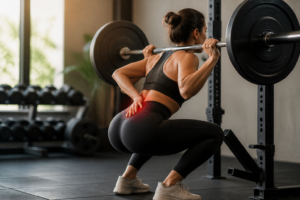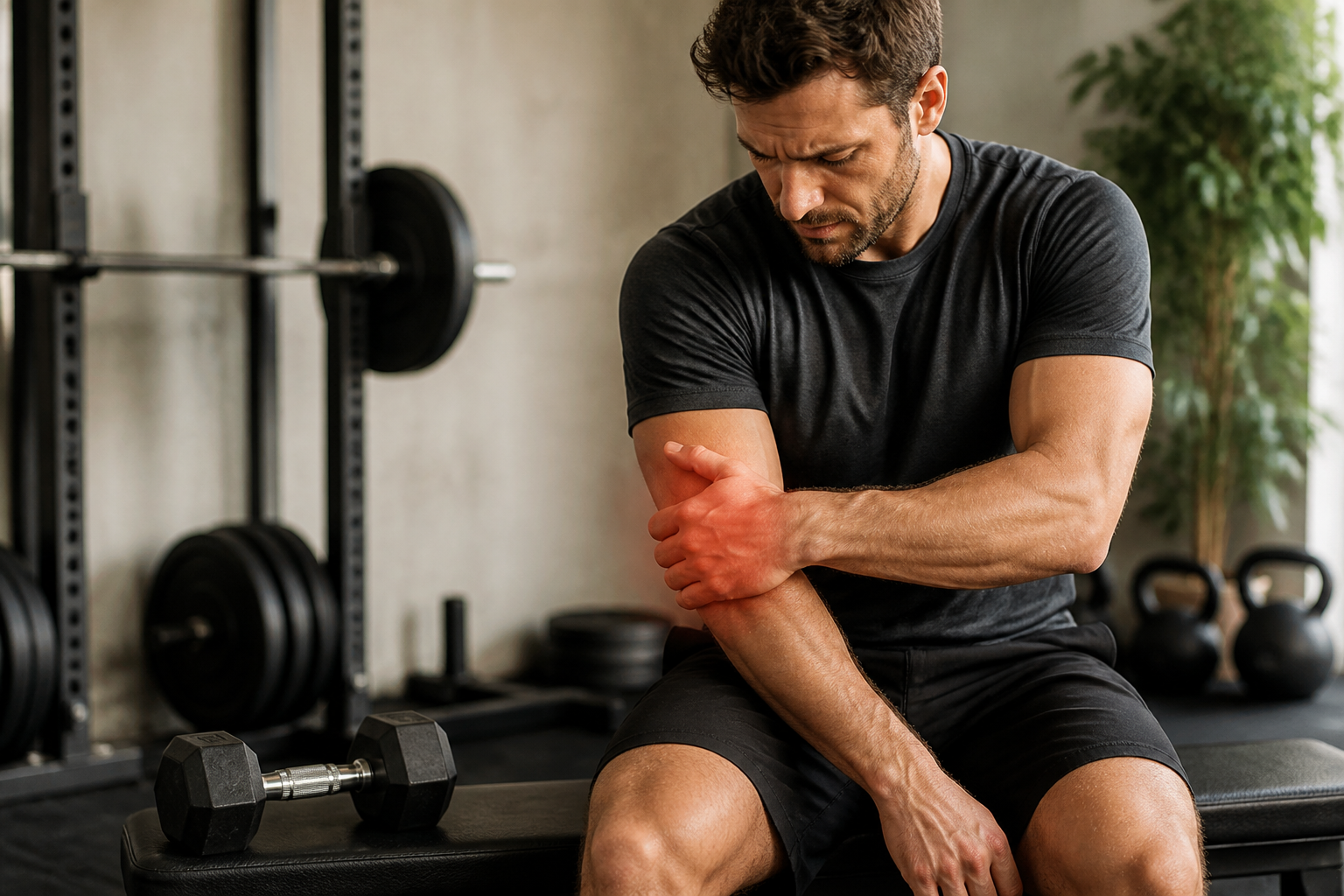
Tennis Elbow From Lifting? How to Train Through It and Actually Heal
By Jordan Ellis
You’ve been crushing your deadlifts. Your pull-up volume is up. Then one day, you feel that sharp pain on the outside of your elbow. It’s subtle at first—annoying, not debilitating. But within a week, gripping the bar hurts. Shaking hands hurts. Even picking up your coffee mug sends a twinge down your forearm.
Welcome to tennis elbow. And if you’re a lifter, you’re not alone.
Lateral epicondylitis—the clinical name for tennis elbow—is one of the most common overuse injuries in the weight room. But here’s what most people get wrong: they treat it like an inflammation problem. They ice it. They wear a brace. They rest. And then they’re confused when it doesn’t get better.
The truth? Tennis elbow isn’t inflammation. It’s a tendinopathy—a degenerative condition of the tendon. And the science is clear: loading fixes it. Rest doesn’t.
If you’re dealing with tennis elbow right now, this post will show you exactly how to keep training while actually healing. No more guessing. No more waiting for Google’s generic advice to work.
Why Lifters Get Tennis Elbow (And Why Your Forearms Weren’t Ready)
Tennis elbow comes from the extensor carpi radialis brevis—a small muscle that originates on the lateral epicondyle of your humerus. When this tendon is overloaded repeatedly, it starts to degenerate. The microscopic tears accumulate faster than your body can repair them. That’s when you feel pain.
For lifters specifically, there are a few culprits:
Heavy pulling without adequate forearm conditioning. Your back and lats adapt quickly to deadlifts and rows. Your grip and forearm extensors? Not so much. If you jump into high-volume pulling work without a conditioning phase for your forearms, the extensors get crushed.
Sudden increases in pull-up volume. Pull-ups demand more grip activation than lat pulldowns. If you go from zero pull-ups to 50 reps per week in two weeks, your forearm extensors have no chance to adapt. This is one of the fastest ways to develop tennis elbow.
Death-gripping the bar. This is huge. Many lifters unconsciously squeeze the bar as hard as possible during deadlifts and rows. This constant maximal grip tension fatigues the extensors and never gives them a break. Your forearms are working at 80-90% of their capacity even on warm-up sets.
Excessive wrist curls and reverse curls without balance. If you do a ton of wrist work but never prepare your extensors with eccentric loading and gradual volume progression, you’re setting yourself up for injury.
The pattern is always the same: repetitive gripping, heavy loading, insufficient adaptation time, and inadequate forearm preparation. Mix those together, and your tendon breaks down.
Why Ice and Ibuprofen Don’t Work (And Why Understanding This Changes Everything)
Let’s be direct: lateral epicondylitis is not an inflammatory condition. It’s a degenerative tendinopathy.
This distinction matters because it explains why standard injury advice—rest, ice, NSAIDs—fails most lifters.
When you have acute inflammation, ice and anti-inflammatory drugs make sense. But tennis elbow isn’t acute inflammation. It’s a chronic condition where the tendon has been overloaded, micro-damaged, and hasn’t been given the right stimulus to adapt and strengthen.
Resting actually makes it worse for long-term healing. Your tendon needs loading to remodel. It needs progressive stress to strengthen. It needs you to use it correctly, not avoid it.
This is why the research overwhelmingly supports eccentric loading protocols over conservative rest-based approaches. The tendon responds to mechanical stimulus, not to being wrapped in ice.
The Tyler Twist Protocol: The Gold Standard for Tennis Elbow Rehabilitation
In 2006, researchers Tyler, Thomas, and colleagues published a landmark study on eccentric loading for lateral epicondylitis. They found that 81% of subjects improved significantly with eccentric exercises, compared to only 22% in the control group.
The intervention? The Tyler Twist protocol using a FlexBar (also called a Therabar).
Here’s how it works:
The Setup: Hold a FlexBar (start with the yellow/lighter version) horizontally in front of you, at about chest height. Your affected arm should be on the outside. Grip the bar with your affected hand in wrist extension—meaning your palm faces slightly downward and your wrist is bent backward.
The Movement: Using your opposite hand, twist the bar so it bends and spirals. Think of it like you’re wringing out a wet towel, but gently. Once the bar is twisted, release your unaffected hand. Now here’s the key: slowly allow the bar to untwist using only your affected arm. This eccentric movement—lowering under control—is where the healing happens. Fight the bar’s desire to snap back. Take 3-5 seconds to let it unwind.
The Protocol: Perform 3 sets of 15 repetitions, once per day, for 6-8 weeks. This is not a sprint. Consistency matters more than intensity.
Why this works: The eccentric contraction creates a controlled, progressive load on the tendon without the impact or intensity of heavy lifting. Your body adapts by strengthening the tendon’s collagen structure. Over weeks, the tendon remodels and becomes more resilient.
Most people see meaningful improvement around week 4-5, but full recovery typically takes 8-12 weeks. Stick with it.
No FlexBar? Use Light Eccentric Wrist Extensions Instead
A FlexBar is ideal, but not everyone has access to one (or wants to spend $30-40 on a specialty tool).
The good news: a light dumbbell works almost as well.
How to do it: Sit on a bench with your affected forearm resting on your thigh, palm down. Hold a very light dumbbell (1-3 pounds—seriously, go light) in your affected hand. Let your wrist hang over the edge of your knee. Start with your wrist extended (hand bent upward). Using your opposite hand, help lift the weight back up to the starting position. Then, remove your opposite hand and slowly lower the dumbbell using only your affected wrist. This 3-5 second eccentric lowering is the therapeutic part.
Perform 3 sets of 15 repetitions daily. The weight should feel almost ridiculously light. The point is the eccentric loading, not ego lifting.
This approach is nearly as effective as the FlexBar protocol. The key is consistency and patience.
Training Modifications: How to Keep Lifting While You Heal
Here’s where this gets practical. You don’t have to stop training. You have to train smart.
Use lifting straps on all pulling exercises. Straps remove the grip as a limiting factor. Your back gets the stimulus it needs, but your forearm extensors aren’t crushed. This is not cheating—it’s intelligent load management during recovery.
Switch from pull-ups to lat pulldowns temporarily. Pull-ups demand more grip activation than lat pulldowns. The vertical pulling stimulus is similar, but the grip demand is much lower. Stay on lat pulldowns for 6-8 weeks while you rehab. You can return to pull-ups once pain-free.
Avoid reverse curls and direct wrist curl work temporarily. These exercises directly stress the extensors and flexors. Pause these for now. You’ll return to them once the tendon is stronger.
Use a fat grip on pressing exercises. This seems counterintuitive, but hear me out. A fat grip (thicker bar or gripping attachment) reduces strain on the wrist extensors during pressing because the increased grip diameter changes the mechanics slightly. It distributes load more favorably.
Fix your deadlift grip. This is critical. Death-gripping the bar is one of the biggest contributors to tennis elbow in deadlifters. Learn to use a hook grip or a relaxed grip. For hook grip: your thumb goes inside your fingers, but your hand is relaxed. You’re not white-knuckling the bar. For conventional deadlifts, consider mixed grip or straps. The bar should feel secure, not like you’re trying to crush it.
Your deadlift won’t suffer. Your forearms will thank you.
The Timeline: Why You Quit Too Early (And Why That’s a Mistake)
Here’s the frustrating truth about tendon rehab: progress is slow and nonlinear.
Week 1-2: You feel slight improvement. The pain is maybe 10% better. You’re hopeful.
Week 3-4: Progress stalls. You feel like the protocol isn’t working. This is where most people quit.
Week 5-8: Slow, steady improvement. By week 6-7, you notice meaningful changes. Gripping doesn’t hurt as much. Deadlifts feel easier.
Week 8-12: You’re nearly pain-free. You can return to normal pulling volume and grip intensity.
The typical person quits at week 3-4 because they expect faster results. They didn’t expect a condition that developed over months to take 8-12 weeks to fully heal. But tendons are slow to adapt. That’s just biology.
Commit to the protocol for at least 8 weeks before deciding if it’s working. Most people need the full 10-12 weeks.
Prevention: Never Get Tennis Elbow Again
Once you’ve had tennis elbow, you understand how much it sucks. The goal now is to never get it again.
Build forearm work into your regular routine. Wrist curls, reverse wrist curls, and farmer’s carries should be staples, not afterthoughts. 2-3 times per week of dedicated forearm work prevents most grip-related injuries.
Progress pulling volume gradually. If you add 20 pull-ups per week, expect trouble. Increase by 5-10 per week maximum. Your tendons need time to adapt.
Don’t add pull-ups and heavy deadlifts in the same training cycle if you’re unprepared. If your forearms aren’t conditioned, doing both simultaneously is a recipe for tennis elbow. Prioritize one. Build capacity. Then add the other.
Use straps and relaxed grip as a baseline. This isn’t weakness. It’s intelligent training. Your grip will naturally strengthen from farmer’s carries and pulls, but you don’t need to death-grip every single rep.
The Bottom Line
Tennis elbow is common in lifters, but it’s fixable. The protocol works: eccentric loading, smart training modifications, and patience. Ice and rest won’t solve it. Loading will.
Start the Tyler Twist or eccentric wrist extension protocol today. Switch to straps and lat pulldowns. Fix your grip on deadlifts. Commit to 8-12 weeks. Your tendon will adapt, and you’ll be back to pain-free, heavy lifting sooner than you think.
The Tool That Lets You Load Without Compensation
Once you’re into the loading phase of this protocol, I have most of the people I train with wear the Sleeve Stars brace during upper body sessions. It reduces the urge to compensate or baby the elbow, which keeps your movement patterns clean while the tendon adapts to the work you’re doing.
Tennis elbow is a tendinopathy—a degenerative condition—not acute inflammation. The science shows loading fixes it; rest doesn’t. Your tendon needs progressive stress to strengthen and remodel, not avoidance. This is why eccentric loading protocols work better than conservative rest-based approaches. Full recovery typically takes 8-12 weeks with consistent eccentric loading. Most people see meaningful improvement around week 4-5, but you’ll notice nonlinear progress. Week 3-4 is often when people quit prematurely expecting faster results. Commit to at least 8 weeks before deciding if the protocol is working. Hold a FlexBar horizontally at chest height with your affected arm on the outside. Twist it with your opposite hand, then slowly untwist using only your affected arm over 3-5 seconds. Do 3 sets of 15 repetitions once daily for 6-8 weeks. A 2006 study found 81% improved significantly with this eccentric loading approach. Yes. Sit with your forearm on your thigh and hold a very light dumbbell (1-3 pounds). Help lift it with your opposite hand, then slowly lower it under control over 3-5 seconds using only your affected wrist. Perform 3 sets of 15 repetitions daily. This approach is nearly as effective as the FlexBar protocol.Frequently Asked Questions
Why doesn’t rest and ice help tennis elbow from lifting?
How many weeks does tennis elbow recovery typically take?
What’s the Tyler Twist protocol for tennis elbow?
Can I use a dumbbell instead of a FlexBar?
About This Article

Written by Jordan Ellis. Jordan Ellis isn't a certified personal trainer — just someone who's been genuinely obsessed with training for over eight years and turned it into building smarter home gyms. He focuses on home fitness: effective training spaces, equipment that earns its price, and programs that work in a spare room or basement, not just a commercial gym. More about this site.
Scope and limits. Jordan is not a certified personal trainer, and nothing here is medical advice. Check with a physician before starting a new program, and prioritize form over load on every lift described.
Verify this against a primary source
Specifics change, and your situation may differ from the one described here. These are the authorities worth checking directly:
- Physical Activity Guidelines for Americans (HHS) — the federal physical activity guidelines
- American College of Sports Medicine — exercise prescription and position stands
- NSCA — strength and conditioning research