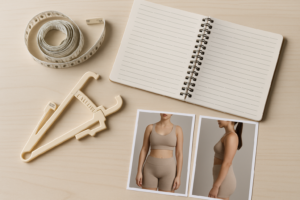
You Started Working Out and Gained Weight? Here’s Why That’s Actually Normal
By Jordan Ellis | Workout Answers
You did everything right. You committed to a workout program. You cleaned up your diet. You showed up at the gym consistently for two weeks straight. Then you stepped on the scale and felt your heart sink.
Up 3 pounds. Maybe 5. Possibly more.
It’s one of the most demoralizing moments a new exerciser can experience—and it happens far more often than you’d think. The internal dialogue kicks in: Am I doing this wrong? Should I be eating less? Is exercise actually making me fatter?
I’m here to tell you: no, no, and absolutely not. What you’re experiencing is completely normal, entirely explainable, and temporary. In fact, it’s often a sign that your body is responding exactly as it should.
Let me break down what’s actually happening inside your body when the scale climbs despite your best efforts.
The Scale Is Lying to You (Sort Of)
Before we dive into the science, let’s establish something crucial: the scale measures weight, not health or progress. It’s a single data point on a much larger dashboard.
When you start exercising, your body undergoes several simultaneous adaptations. Some of these involve genuine tissue changes—muscle gain, potential fat loss. But many involve water and fluid shifts that have nothing to do with body composition. The scale can’t tell the difference between a pound of muscle, a pound of fat, and a pound of water.
This is why that oversimplified explanation you’ve probably read—”muscle weighs more than fat”—is technically true but practically useless for understanding what’s happening in your first few weeks of training.
The Three Real Reasons You’re Gaining Weight
1. Glycogen and Water Storage (The Biggest Culprit)
Here’s what happens when you start exercising: your muscles are suddenly doing work they’re not accustomed to. To prepare for this demand, your body takes preemptive action by storing more glycogen—the muscle’s preferred fuel source.
But here’s the kicker: glycogen doesn’t travel alone. Every single gram of glycogen holds approximately 3-4 grams of water. This is a physiological requirement, not a flaw in the system.
If your muscles store even a modest 100-150 grams of additional glycogen in your first week or two of training, that translates to 300-600 grams of water—or roughly 1-2 pounds before we even talk about anything else.
For someone starting a serious training program, it’s not uncommon to see 3-5 pounds of scale weight gain in the first two weeks due almost entirely to increased muscle glycogen storage. This is your body being smarter, not fatter.
2. Inflammation and Muscle Damage Swelling
When you exercise, especially if you’re new to it, you create microscopic damage in your muscle fibers. This isn’t injury—it’s the stimulus that drives adaptation and growth.
Your body’s response? Inflammation. White blood cells flood the area, fluid accumulates to protect and repair the tissue, and you get that distinctive soreness (DOMS—Delayed Onset Muscle Soreness) that peaks 24-72 hours after a tough workout.
That swelling is water weight. It’s your immune system doing exactly what it’s supposed to do. It’s also temporary.
If you’re doing a new workout routine consistently—say, three days a week—you’re constantly re-triggering this inflammatory response. Some weeks, when your workouts overlap in timing with the peak inflammation from your previous session, the water retention can accumulate noticeably on the scale.
3. Increased Blood Volume From Cardiovascular Adaptation
This is the one people rarely think about: your blood volume actually increases when you start training.
Regular exercise stimulates your body to expand plasma volume—the liquid portion of your blood. This happens because your cardiovascular system is adapting to meet the increased oxygen demands of exercise. More blood volume means better oxygen delivery, which is a good thing. But it also means more fluid in your circulatory system.
The magnitude varies, but a noticeable increase in blood volume can account for 1-3 pounds of scale weight in the early weeks of training. Again, this is an adaptation. It’s your body getting more efficient at supporting your new activity level.
Why “Muscle Weighs More Than Fat” Misses the Mark
You’ve probably heard this: “Muscle weighs more than fat, so you might be gaining muscle even though the scale is going up!”
It’s not exactly wrong, but it’s deeply misleading for someone in their first month of training.
Here’s the reality: you are not building 5 pounds of muscle in two weeks. Even in the best-case scenario—a beginner with optimal nutrition, genetics, and programming—new muscle tissue develops slowly. A realistic rate for a dedicated beginner is about 0.5-1 pound of muscle per week in those early honeymoon months. Some of that early “progress” is neuromuscular efficiency, not tissue growth.
So if you’ve gained 5 pounds and you’ve been training for two weeks, almost all of that weight is water. The muscle weighs more than fat explanation makes sense in a long-term body recomposition scenario—say, over 12 weeks where you’ve genuinely built 5-8 pounds of muscle while losing fat—but it’s doing heavy lifting in conversations where water retention is 90% of the story.
The reason the scale went up isn’t because you’re becoming a muscular beast. It’s because your muscles are now storing more fuel and your body is swollen from the work you’ve done.
Understanding Body Recomposition (The Encouraging Part)
Here’s something that should actually excite you: you CAN be losing fat and gaining muscle simultaneously, even while the scale goes up.
This is called body recomposition, and it’s especially common in beginners.
Imagine this scenario: in your first month of training, you lose 3 pounds of fat, gain 2 pounds of muscle, and retain 3 pounds of water due to the adaptations we discussed. The scale shows a gain of 2 pounds. But your body composition has actually improved—you have less fat and more muscle, even though the scale suggests you’re moving backward.
This is why body recomposition happens:
- You’re in a slight caloric deficit or maintenance (helping fat loss)
- You’re providing a stimulus for muscle growth (the workouts)
- Your body is primed to build muscle (as a beginner, your hormones are optimally positioned for this)
- You have plenty of stored energy (fat) to fuel this muscle growth
The water weight obscures this progress, but the progress is real.
The NEAT Factor: Your Body’s Compensation Mechanism
There’s one more dynamic worth understanding: NEAT compensation (Non-Exercise Activity Thermogenesis).
A researcher named Herman Pontzer studied this phenomenon and found that when humans increase structured exercise, they often unconsciously decrease movement in other areas of their life—sitting more at work, taking fewer steps throughout the day, moving less in their leisure time.
It’s not a conscious decision. Your body seems to operate under a somewhat constrained energy model, where a certain amount of total energy expenditure is “optimal,” and when exercise increases that expenditure, your body compensates by reducing other movement.
This doesn’t mean exercise doesn’t burn calories—it does. But it can partially offset the caloric deficit you thought you were creating. If you burned 300 calories in the gym but subconsciously moved less throughout the day, your actual net caloric deficit might be smaller than you calculated.
This is another reason why the scale might not move as quickly as the math suggests it should.
Better Metrics Than the Scale
If you’re going to start a fitness journey, I’d recommend demoting the scale and promoting these metrics:
Measurements
Your waist, hips, chest, and arm circumference can change even when weight stays the same. These measurements directly reflect body composition changes.
How Your Clothes Fit
This is underrated. Do your jeans feel different? Is your shirt fitting better in the shoulders? This is real, tangible progress.
Progress Photos
Take a photo from the same angle, same lighting, same time of day every two weeks. You’ll often see changes in photos that the scale doesn’t register.
Strength Gains
Can you do more reps? Lift more weight? This is the most reliable indicator that your muscles are actually adapting to training.
Energy and Wellness
How do you feel? Are you sleeping better? More energetic? These matter more than a number.
The Timeline: When Should the Scale Start Moving?
Typically, water weight from training stabilizes around 3-4 weeks into a new program. The glycogen storage levels out. The inflammation from the unfamiliar stimulus decreases as your body adapts.
After this point, the scale becomes a more reliable indicator of actual changes in body composition. If you’re in a caloric deficit and training consistently, you should start seeing downward movement after this 3-4 week window.
This is why I tell new exercisers: don’t weigh yourself for the first month. Use the other metrics I mentioned. Let your body complete its adaptations. Then start tracking the scale if you want to.
When Weight Gain IS Actually a Problem
Let’s be honest: sometimes the scale keeps climbing past 4-6 weeks, and at that point, it’s worth examining your nutrition.
If you’re consistently gaining weight beyond the initial water retention phase, the likely culprits are:
- You’re eating too much. Yes, you’re exercising, but you might be overestimating calorie burn or underestimating calorie intake. This is incredibly common.
- You’re not prioritizing protein. This doesn’t directly cause weight gain, but inadequate protein with a surplus of calories makes it harder to build muscle and easier to gain fat.
- You’re undoing your workouts with your diet. A 300-calorie workout followed by a 500-calorie snack creates a surplus, not a deficit.
If this is happening, it’s time to track your food for a week and get honest about portions. You might also benefit from a conversation with a nutritionist or trainer who can review your specific situation.
The Bottom Line
You started working out. You got heavier. It feels like a failure. But here’s what’s actually happening:
Your muscles are storing fuel more efficiently. Your body is repairing itself from the stimulus of exercise. Your cardiovascular system is adapting. You might actually be losing fat while gaining muscle—the scale just can’t tell you this.
This is normal. This is temporary. This is often a sign your body is doing exactly what it should.
Stick with your program. Trust the process. Use better metrics than the scale. And in 4-6 weeks, when your body has adapted to training, you’ll see the number start moving in the direction you want.
That’s not because you finally started doing it right. You were doing it right all along. Now the scale is just catching up.
Frequently Asked Questions
How much water weight do I gain from glycogen storage?
Every gram of glycogen holds approximately 3-4 grams of water. If your muscles store 100-150 grams of additional glycogen in your first week or two, that translates to 300-600 grams of water, or roughly 1-2 pounds. For someone starting a serious program, 3-5 pounds of scale weight gain in the first two weeks is common from glycogen storage alone.
How much muscle can I build in two weeks?
A realistic rate for a dedicated beginner is about 0.5-1 pound of muscle per week in those early honeymoon months. You are not building 5 pounds of muscle in two weeks. If you’ve gained 5 pounds after two weeks of training, almost all of that weight is water, not muscle tissue.
When does water weight from training stabilize?
Water weight from training typically stabilizes around 3-4 weeks into a new program. Glycogen storage levels out and inflammation from the unfamiliar stimulus decreases as your body adapts. After this 3-4 week window, the scale becomes a more reliable indicator of actual changes in body composition.
Can I lose fat and gain muscle at the same time?
Yes, you can lose fat and gain muscle simultaneously—called body recomposition—even while the scale goes up. For example, if you lose 3 pounds of fat, gain 2 pounds of muscle, and retain 3 pounds of water, the scale shows a 2-pound gain, but your body composition has actually improved.
About This Article

Written by Jordan Ellis. Jordan Ellis isn't a certified personal trainer — just someone who's been genuinely obsessed with training for over eight years and turned it into building smarter home gyms. He focuses on home fitness: effective training spaces, equipment that earns its price, and programs that work in a spare room or basement, not just a commercial gym. More about this site.
Scope and limits. Jordan is not a certified personal trainer, and nothing here is medical advice. Check with a physician before starting a new program, and prioritize form over load on every lift described.
Verify this against a primary source
Specifics change, and your situation may differ from the one described here. These are the authorities worth checking directly:
- Physical Activity Guidelines for Americans (HHS) — the federal physical activity guidelines
- American College of Sports Medicine — exercise prescription and position stands
- NSCA — strength and conditioning research