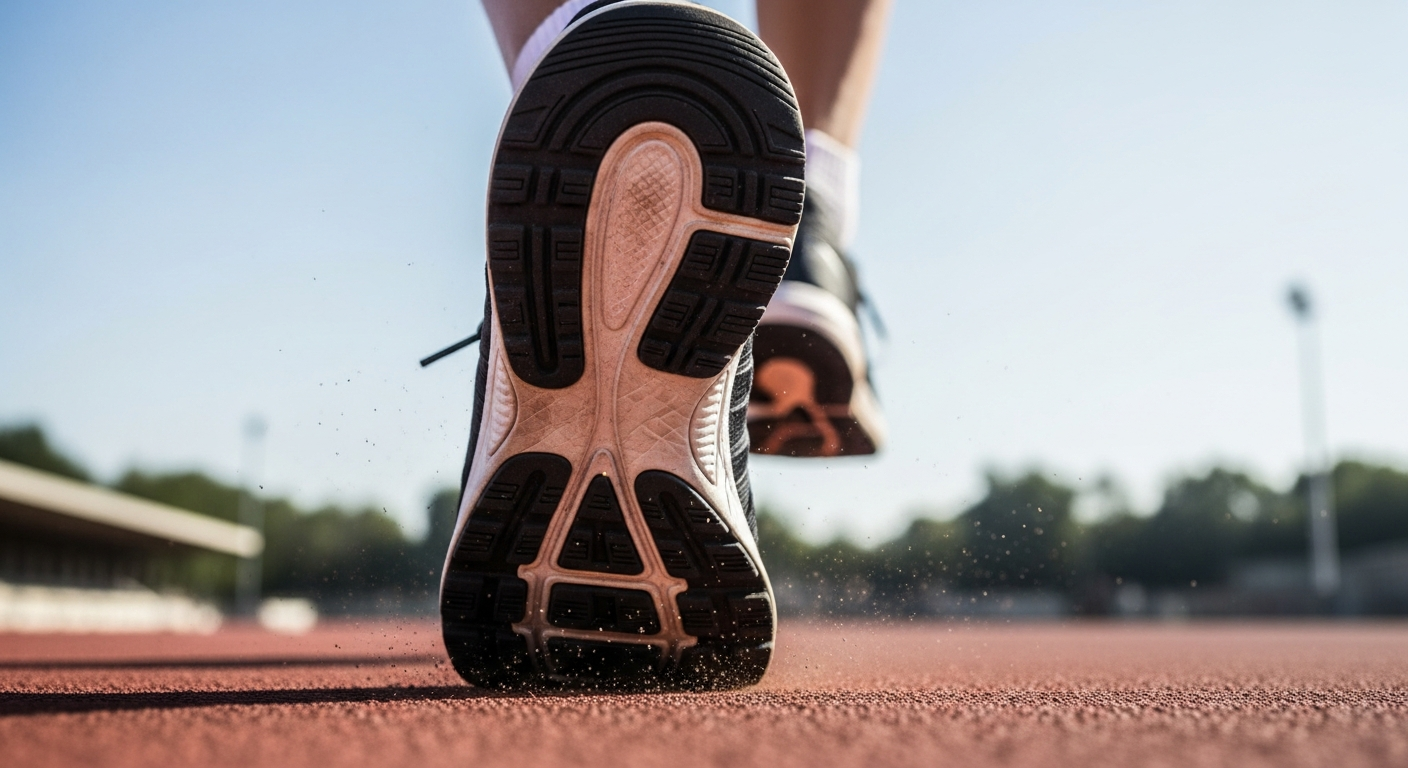
The first time I tried to train for a 5K, I went out too hard on day one, pulled something in my calf, and was off my feet for two weeks — classic beginner mistake, and I made every one of them. My second attempt taught me a different, slower lesson: that sharp, stabbing heel pain on your very first steps out of bed each morning, the kind that makes you wince before you’ve even reached the coffee maker. That’s plantar fasciitis, and it became my unwanted training partner for months. What frustrated me most wasn’t the pain itself — it was discovering that it hadn’t appeared randomly, but was the direct result of specific biomechanical forces I didn’t understand and, worse, could have prevented. Once I finally learned what was actually happening inside my foot during every run, everything about my recovery — and my training — started to make sense.
What I Recommend
The foundation of plantar fasciitis prevention starts with your shoes. A quality pair of running shoes with proper arch support and cushioning can make the difference between staying healthy and dealing with months of heel pain. I always recommend investing in shoes designed specifically for running rather than generic athletic footwear. Check out these highly-rated running shoes that provide the support your feet need.
Tracking your mileage is critical for preventing overuse injuries like plantar fasciitis. A GPS running watch lets you monitor distance, pace, and training load so you can gradually increase volume without shocking your plantar fascia. I’ve seen too many runners spike their weekly mileage too quickly because they weren’t paying attention to the numbers. A fitness tracker like this one gives you the data you need to train smart.
Proper hydration keeps your tissues healthy and resilient, which helps prevent injury. Whether you’re doing long runs or intense training sessions, staying hydrated is non-negotiable. A handheld water bottle is convenient and won’t weigh you down like a hydration vest, making it perfect for most runners.
Moisture-wicking socks might seem like a small detail, but they prevent blisters and reduce friction that can alter your gait and stress your plantar fascia. I always recommend quality running socks over cotton, which holds moisture and causes your feet to slip inside your shoe. These moisture-wicking running socks are affordable insurance against foot problems.
Compression socks aren’t just for recovery—they improve circulation and reduce inflammation in your feet and calves, both of which support plantar fascia health. I’ve used them for years on heavy training days and they genuinely help with recovery. Quality compression socks like these are worth the investment if you’re running high mileage.
Foam rolling is one of the most effective tools I recommend for plantar fasciitis prevention and recovery. Rolling out your calves, arch, and plantar fascia itself reduces tension and improves tissue quality. I do this work every single day, and it’s made a measurable difference in my foot health. A durable foam roller like this one is a staple in any serious runner’s toolkit.
A massage gun can target the deep tissues of your calf and foot that contribute to plantar fasciitis when they’re tight and restricted. I use mine 3-4 times per week on my calves and arches, and the results have been excellent. This massage gun delivers percussion therapy that’s hard to replicate with manual foam rolling alone.
Learning proper running form is fundamental to preventing plantar fasciitis. Many runners develop the injury because of biomechanical issues—overstriding, heel striking, or weak hip stability—that can be corrected with the right knowledge. This running form guide breaks down the science and gives you actionable drills to improve your mechanics.
Anti-chafing balm prevents friction and irritation that can alter your running gait and put extra stress on your plantar fascia. Even small amounts of discomfort can cause you to compensate during your stride, which often leads to foot problems. A good anti-chafing balm is a simple prevention tool that costs almost nothing.
As an Amazon Associate, I earn from qualifying purchases.
This guide explores the intricate relationship between your running form and plantar fasciitis. We will break down how your body moves. Furthermore, we will provide actionable strategies to keep your feet healthy and pain-free, letting you focus on the joy of running.

Understanding the Plantar Fascia
Before we dive into the mechanics, let’s clarify what the plantar fascia is. Think of it as a thick, bowstring-like ligament. It runs along the bottom of your foot, connecting your heel bone to your toes. This powerful band of tissue supports the arch of your foot. It also acts as a crucial shock absorber every time your foot hits the ground. When you run, the forces on your feet can be several times your body weight. The plantar fascia works tirelessly to manage this stress.
Plantar fasciitis occurs when this ligament is overstressed and overworked. Source This excessive strain creates tiny micro-tears in the tissue. Consequently, the body’s natural response is inflammation and pain. The condition is one of the most common causes of heel pain in runners.
The Biomechanics Behind the Pain
Why does this ligament get so overworked in runners? The answer lies in biomechanics, the science of how our bodies move. Several factors in your running gait can concentrate excessive force on the plantar fascia, leading to injury. Understanding these elements is key to effective prevention.
Foot Strike and Impact Forces
How your foot first contacts the ground, known as your foot strike, plays a massive role. Many runners are natural heel strikers. This means their heel is the first part of their foot to hit the pavement. Heel striking can create a sudden, high-impact braking force that travels up your leg. This jarring impact places a significant tensile load directly on the plantar fascia where it attaches to the heel.
In contrast, a midfoot or forefoot strike can help distribute these forces more evenly. It engages the calf muscles and Achilles tendon to act as natural springs. This reduces the initial shock. While changing your foot strike is complex, simply focusing on landing your foot underneath your body’s center of mass, rather than far out in front, can naturally reduce overstriding and decrease harmful impact forces.
Pronation: The Good, The Bad, and The Unstable
Pronation is the natural inward roll of your foot as it lands. It is a vital part of the gait cycle for shock absorption. However, problems arise when this motion is excessive or insufficient. Overpronation occurs when the foot rolls too far inward. This causes the arch to flatten excessively, which overstretches and strains the plantar fascia. Over time, this repeated stretching can lead to inflammation and pain.

On the other hand, some runners underpronate, or supinate. Their feet do not roll inward enough. This results in a very rigid foot that is poor at absorbing shock. Consequently, the impact forces are concentrated on a smaller area of the foot, again stressing the fascia. A gait analysis can help you determine your pronation pattern and choose footwear that provides appropriate support.
Arch Type and Muscle Imbalances
Your natural foot structure also contributes to your risk. Runners with flat feet or very low arches often overpronate. This places constant tension on the plantar fascia. Conversely, runners with very high, rigid arches often lack natural shock absorption. This means the fascia must handle more force with every stride.
Beyond the foot, weaknesses and imbalances further up the kinetic chain are major culprits. Tight calf muscles, for example, can pull on the heel bone. This increases tension on the plantar fascia. Similarly, weak gluteal muscles can lead to poor pelvic stability. This instability forces smaller muscles in the lower legs and feet to work harder, leading to fatigue and overload.
Prevention: Your Best Defense Against Heel Pain
Knowing the causes is only half the battle. Actively preventing plantar fasciitis involves a holistic approach. You must focus on your form, strength, and training habits. These strategies build a more resilient body that can handle the demands of running.

Strengthen Key Muscle Groups
Strength training is non-negotiable for injury prevention. Focus on the muscles that support your running gait. Strong glutes provide stability and power, reducing the burden on your lower legs. Exercises like glute bridges, squats, and lunges are excellent. Additionally, calf raises are essential for building resilient lower legs. Do not forget the small intrinsic muscles within your feet. Simple exercises like towel scrunches and marble pickups can significantly improve foot strength and arch support.
Improve Flexibility and Mobility
Stiffness, particularly in the calves and Achilles tendon, is a direct contributor to plantar fasciitis. Regular stretching can maintain flexibility and reduce tension. Perform gentle calf stretches against a wall after every run. You can also use a foam roller on your calves to release tightness. Furthermore, gently stretching the plantar fascia itself can provide relief. Try pulling your toes back towards your shin for 15-30 seconds.
Adopt Smart Training Habits
Many running injuries, including plantar fasciitis, are caused by doing too much, too soon. Your body needs time to adapt to increased training loads. Follow the 10% rule as a general guideline. This means you should not increase your weekly mileage by more than 10%. Also, pay attention to your running shoes. Worn-out shoes lose their cushioning and support. Experts recommend replacing them every 300-500 miles. Finally, listen to your body. If you feel a niggle of pain, it is better to take a rest day than to push through and develop a chronic injury.
A Proactive Approach to Pain-Free Running
Plantar fasciitis can be a stubborn and demoralizing injury for any runner. However, it is often preventable. By understanding the biomechanical forces at play, you can take control. Focusing on proper running form, strengthening key muscles from your hips to your feet, and adopting smart training principles are your most powerful tools.

This proactive approach doesn’t just prevent one injury. It builds a stronger, more efficient, and more resilient runner. Instead of waiting for pain to strike, invest in these preventative measures. You will keep your feet happy and enjoy many more miles on the road or trail.
Written by Lucy Bamboo
Lucy Bamboo is a NASM-certified personal trainer (CPT) and corrective exercise specialist (CES) with over 12 years of experience coaching clients through injury recovery, strength building, and sustainable fitness. She holds a B.S. in Kinesiology and has worked in both clinical rehabilitation and private training settings. Lucy writes at Push Pull Ya'll to make evidence-based exercise guidance accessible to everyone — whether you're rehabbing a shoulder injury at home or building your first real training program.