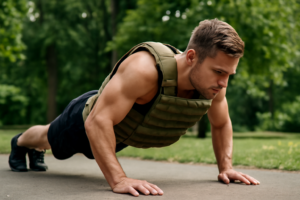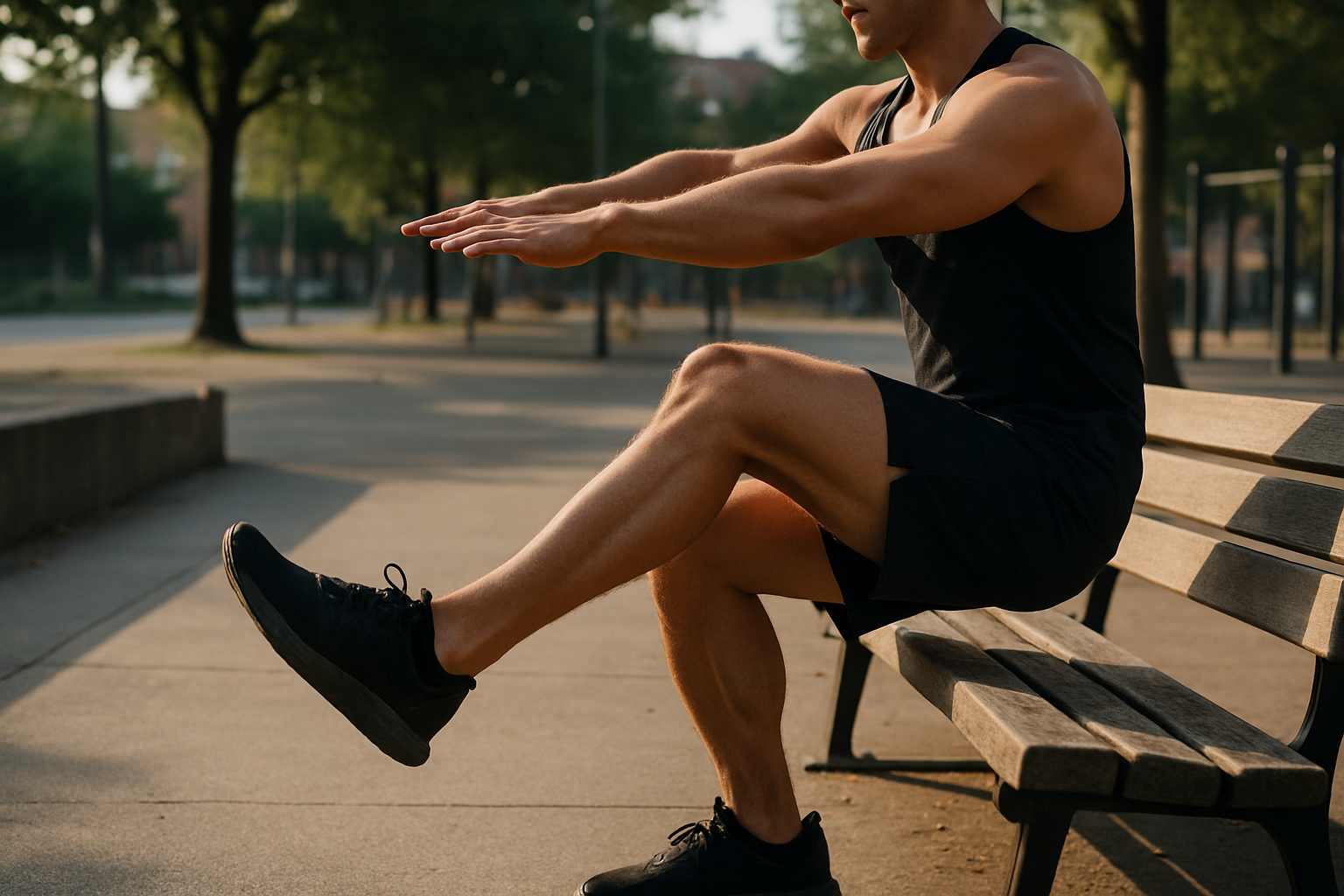

Walking into that first group fitness class, I was flat-footed on pull-ups and crossed the finish line in last place. The real wake-up call wasn’t the loaded barbell work or the climbing — it was how thoroughly bodyweight leg drills ravaged my strength. That session stuck with me: lower body power doesn’t require expensive machines or a loaded bar to develop. A properly structured bodyweight leg routine can create as much muscular demand as any piece of gym equipment — you just need to understand the mechanics. I’ll walk you through exactly how to do that.
Why Bodyweight Leg Workouts Actually Build Strength
A widespread belief treats bodyweight training as entry-level stuff, something for people just looking to get leaner without real gains. That’s fundamentally wrong. Muscle tissue responds to tension, sustained time under tension, and the ongoing demand to work harder — not to what’s creating that demand. Progressive overload is that final piece: making each workout incrementally tougher by adding reps, slowing your tempo, cutting rest periods short, or shifting to harder variations of the same movement.
The scientific literature on strength adaptation repeatedly demonstrates that intense bodyweight training yields meaningful improvements in both muscle growth and raw strength, particularly when sets approach true fatigue. The takeaway: when your legs are trembling and your muscles feel like they’re about to give out on the final two or three reps, you’re in the right place intensity-wise.
Bodyweight Leg Movements That Deliver Serious Strength Gains
What follows are practical, functional choices — not exercises picked randomly for a list. Each one directly engages the key muscle groups across your legs: the quadriceps (front thigh musculature), the posterior chain from hip to knee (hamstrings), the glutes (hip and backside power center), and your lower leg calf muscles. All of them scale to match wherever you’re starting from in your fitness journey.
1. Bulgarian Split Squat
This movement has a reputation for a reason — it levels the playing field between experienced trainees and newcomers alike in terms of pure discomfort. Position your back foot up on a couch, bench, or step, then drop down through a single-leg squat while your front leg carries the load. Your quadriceps and glute get attacked relentlessly. Target 3 sets of 8–12 repetitions per side, making sure your front shin stays vertical.
2. Jump Squats
Taking a squat and adding velocity converts it from a pure strength stimulus into explosive power development. The ability to generate force quickly matters for sports performance and translates directly to how your body moves in the real world. Squat down, then propel yourself upward with force, absorb the landing, and immediately descend into the next rep. Perform 3 sets of 10–15 repetitions.
3. Reverse Lunge with Knee Drive
Move one leg back into a lunge position, then explosively bring that rear knee upward toward your midsection as you stand tall. This chains together single-leg control, hip extension power, and hip flexor strength in a single movement pattern. It covers the whole lower body in one sequence. Complete 3 sets of 10 repetitions per leg.
4. Glute Bridge and Hip Thrust
These deserve serious attention in your routine. Whether you’re lying flat (glute bridge) or propped up with your shoulders on an elevated surface (hip thrust), both rank among the top glute-activation and glute-building tools you can access — loaded or unloaded. Contract your glutes maximally at the top and pause briefly. Aim for 3 sets of 15–20 repetitions.
5. Single-Leg Romanian Deadlift
This movement tests both hamstring strength and balance simultaneously, revealing imbalances and weak spots immediately. Balance on one foot, fold forward at the hips, and bring your upper body down toward the ground while the opposite leg extends backward. Stand back up with control and authority. The movement looks straightforward until you try it. Perform 3 sets of 8 repetitions per side.
6. Wall Sit
Appearances are deceptive — this exercise is far harder than it looks. A wall sit is an isometric hold, meaning maximum tension occurs without any joint movement. Lower your back down a wall until your knees bend to 90 degrees and stay there. Begin at 30-second holds and advance toward 60–90-second durations. Your quadriceps will feel the burn intensely.
Equipment Additions to Amplify Your Bodyweight Leg Workout
Building lower body strength requires almost nothing in terms of gear, but a couple of inexpensive tools can massively expand the resistance options and movement variety available in your home training space.
Layering Load When Bodyweight Alone Stops Challenging You
After you’ve developed competency with pistol squats and split squat variations, your body’s mass no longer creates enough resistance to force continued adaptation. That’s where loop-style bands bridge the gap between “this is manageable” and “this demands everything I’ve got” — introducing additional load without needing a barbell platform or squat cage.
Why they work
- A continuous loop stays securely anchored across your upper back during split squats or pistol patterns without slipping or creating pinch points the way band handles sometimes do — placement remains stable and predictable.
- Elastic resistance behaves favorably for lower body training: minimal stress on your knees and hips at the bottom of a squat where joint structures are most fragile, maximum tension applied at the lockout where muscle strength peaks.
- Stacking different band sizes allows incremental load increases rather than jumping straight from bodyweight to 50 additional pounds of resistance.
Where they fall short
- The lightest bands in typical multi-packs rupture fairly quickly if you’re careless with edge contact during stepping or lunge transitions — I went through one before learning to be more intentional about where the band sits.
- Elastic tension isn’t uniform across the full movement like a fixed weight is; bands actually reduce tension at the easiest point of the rep, meaning the actual difficulty doesn’t match the stated resistance rating at the bottom.
I remember the first time I stacked two bands for heavy Bulgarian split squats and genuinely doubted whether I had enough room to move under that much tension — but once I hit the first rep, it clicked. Fit Simplify Resistance Loop Exercise Bands give you that progression path without the cost or space requirements of a full rack.
Frequently Asked Questions
Can bodyweight leg exercises actually build real strength?
Yes. Muscle tissue responds to tension and time under tension, not what creates that demand. Progressive overload through added reps, slower tempo, shorter rest, or harder variations drives meaningful strength and muscle growth when sets approach true fatigue.
How many reps should I do for Bulgarian split squats?
Target 3 sets of 8–12 repetitions per side. Position your back foot on a couch, bench, or step, then squat down on your front leg while keeping your shin vertical. Your quadriceps and glute get heavily engaged.
What’s the best way to progress past bodyweight leg exercises?
Loop-style resistance bands bridge the gap when bodyweight alone stops challenging you. They introduce additional load without needing a barbell, apply minimal stress at the bottom of squats where joints are fragile, and offer incremental increases by stacking different band sizes.
How long should I hold a wall sit for?
Begin at 30-second holds and advance toward 60–90-second durations. This isometric exercise creates maximum tension without joint movement, and your quadriceps will feel intense burn as you build strength.
About This Article

Written by Jordan Ellis. Jordan Ellis isn't a certified personal trainer — just someone who's been genuinely obsessed with training for over eight years and turned it into building smarter home gyms. He focuses on home fitness: effective training spaces, equipment that earns its price, and programs that work in a spare room or basement, not just a commercial gym. More about this site.
Scope and limits. Jordan is not a certified personal trainer, and nothing here is medical advice. Check with a physician before starting a new program, and prioritize form over load on every lift described.
Verify this against a primary source
Specifics change, and your situation may differ from the one described here. These are the authorities worth checking directly:
- Physical Activity Guidelines for Americans (HHS) — the federal physical activity guidelines
- American College of Sports Medicine — exercise prescription and position stands
- NSCA — strength and conditioning research