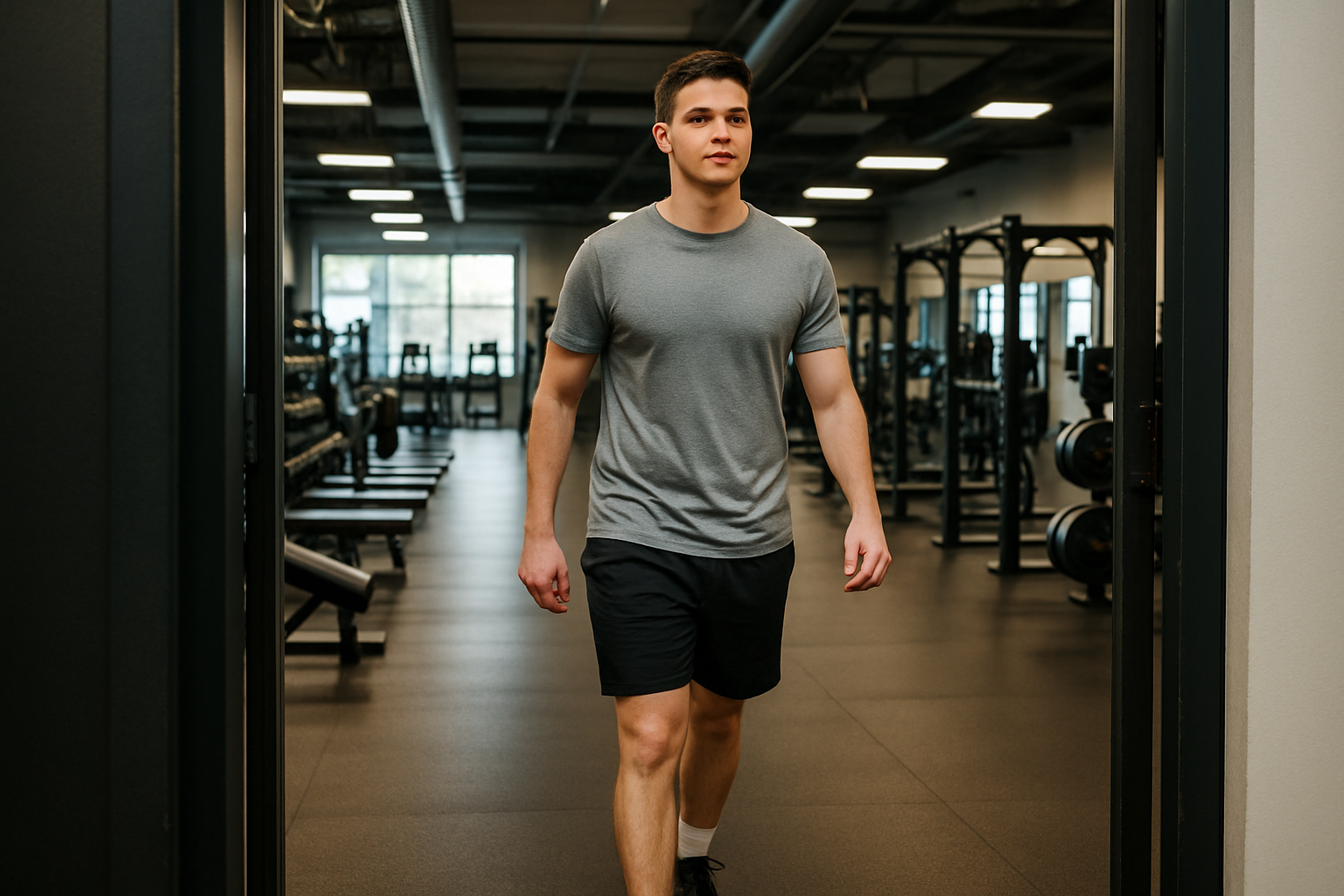

Blunt truth: if you’re walking into the gym feeling like everyone’s watching and judging, you’re going to quit before you make real progress—and that’s exactly what happens to people who think the solution is to just push harder and ignore the anxiety. The oversimplified approach doesn’t work in the gym any more than it worked when I was grinding out miles on the track without understanding why. Gym anxiety stands between most people and the results they actually want, but stepping through those doors with your head held high isn’t about pretending you belong — it’s about building a concrete plan so you walk in knowing exactly what happens next, from the moment your hand touches the door to the last rep you’ll do that session. That clarity flips the switch from panic mode to execution mode.
Why Gym Anxiety Is More Common Than You Think
The Journal of Health Psychology published research showing that “social physique anxiety” — essentially the fear of having your body or fitness level judged in front of others — ranks among the biggest obstacles preventing people from engaging in structured exercise. So when your pulse quickens the second you step into the gym, that’s not weakness or neurosis. That’s your nervous system responding to a genuine (though often exaggerated) social signal.
But here’s what the research on the “spotlight effect” actually reveals: most people drastically overestimate the amount of attention they receive from strangers around them. In reality, the majority of gym-goers are absorbed in their own workout, their own music, their own reflection. The person at the barbell rack isn’t scanning the room for newcomers. The person on the rowing machine is locked into their own pace and breathing. You have significantly more anonymity in a busy gym than your anxiety is telling you.
Turning Gym Anxiety Into Actionable Confidence
Genuine confidence in the gym isn’t something you arrive with — it’s forged through consistent action. Here are the core moves I recommend to every person walking in the door for the first time.
1. Enter With a Written Workout
The fastest way to stop second-guessing yourself on the gym floor is to have your entire session spelled out before you arrive. Pulling up a detailed workout plan shifts your mental state from aimless and exposed to task-driven and purposeful. I tell people this all the time: armed with a plan, you become invisible to your own self-consciousness. A structured log turns vague anxiety into a concrete series of doable steps.
2. Train During Quieter Periods
A packed facility can amplify anxiety, so build your initial confidence when fewer people are around. Mid-morning weekdays or early-afternoon slots typically have lower volume. More open space, lower ambient noise, and fewer bodies moving around mean a less intense social environment while you’re still in the phase of acclimating to the space. This is a temporary stepping stone, not a permanent workaround.
3. Scout the Space First
Not knowing where to find the equipment, the restroom, or the water station creates unnecessary friction and stress. On your first visit, spend a few minutes simply navigating the floor — walk past the free weight section, locate the machines, note the facilities. Ignorance breeds unease, but familiarity breeds comfort. The more you know the physical layout, the less your mind spins when you walk in.
4. Document Your Sessions Meticulously
Concrete data about your own performance is kryptonite for self-doubt. When you flip back through your records and see that your squat weight climbed by 10 pounds in three weeks, the narrative inside your head changes from “I don’t fit in here” to “I’m making tangible gains.” Written records of your progress are far more powerful than hope or positive self-talk when it comes to rewiring your self-perception.
Tools That Help You Enter the Gym Mentally Prepared
The right equipment doesn’t just improve your training — it sends a psychological signal that you’re serious and prepared the moment you arrive. Here’s what I typically recommend to new gym-goers who are establishing their confidence base.
Workout Logs That Keep Your Attention Locked In
A solid workout journal is genuinely transformative. When anxiety is active, having a tangible object to direct your focus toward — a written session layout — occupies your nervous system productively. Here are three that deliver real value:
- Nextnoid Hardcover Fitness Journal Workout Planner — This A5 hardcover log is one of my top picks for beginners and veterans alike. It’s sturdy, well-organized, and works for both gym and home workouts. Having something this solid in your gym bag just feels serious — and that feeling matters when you’re building confidence.
- Fitness Logbook (Black) – A5 Undated Workout Journal — This sleek undated log is perfect if you hate the pressure of a dated planner. The thick paper handles pen and pencil beautifully, and it tracks weight loss, muscle gain, and bodybuilding progress all in one place. Clean, no-nonsense, and built to last.
- The Ultimate Fitness Journal for Tracking and Crushing Your Gym Goals — This one goes above and beyond with a built-in calendar, nutrition tracker, and progress tracker all in one. If you want a comprehensive command center for your fitness life, this is it. Great gift option too.
Training Gloves: Grip Security and Psychological Readiness
Good gloves serve dual purposes: they cushion your hands and prevent calluses, but they also create a ritual that signals readiness to your mind. Putting on gloves before lifting is a tactile transition that tells your brain: this is happening now. Here are two solid picks:
- COFIT Breathable Workout Gloves — These are a fantastic all-around pick for men and women. Breathable material keeps your hands from overheating, and the anti-slip grip means you’re not fighting the bar on every set. Great for weightlifting, fitness training, and general gym use.
- HOZMOZ Ventilated Weight Lifting Gloves — If palm protection and shock absorption are your priorities, these are hard to beat. Thick
Moisture and Grip: The Often-Overlooked Confidence Killers
Nothing undermines confidence mid-lift like your hands slipping on the bar during a heavy set. Nervousness triggers perspiration, wet hands lose purchase, and suddenly you’re peeling weight off the bar when you should be executing—a loop that tanks your morale and makes you question your readiness.
Where they shine
- The mesh weave actively disperses sweat rather than trapping it, keeping your palm contact consistent from your opening warm-up all the way through your heaviest sets.
- The textured grip surface grabs the bar securely without requiring a death grip, freeing up your mental energy and reducing unnecessary forearm tension.
- Universal compatibility means you’re not hunting for a fresh pair between squats and deadlifts to rows—one tool handles your entire session seamlessly.
Where they come up short
- The wrist support is limited, so if your wrists are already unstable or underdeveloped, these won’t replace dedicated wrist conditioning or external bracing strategies.
- There’s an adjustment period—the first couple of sessions feel foreign on your hands, and if you’re already in your head about the gym, that unfamiliar sensation can add another distraction.
I almost ditched them after that awkward first session, convinced the texture wouldn’t hold up once it got wet, but by week two they were second nature and I actually noticed when I forgot them. Grab a pair of COFIT Breathable Workout Gloves and remove one variable from your anxiety checklist.
Frequently Asked Questions
What is social physique anxiety and why does it happen?
Social physique anxiety is the fear of having your body or fitness level judged in front of others, and it ranks among the biggest obstacles preventing people from engaging in structured exercise, according to research published in the Journal of Health Psychology. However, most people drastically overestimate the attention they receive from strangers—gym-goers are typically absorbed in their own workouts and reflections, not watching newcomers.
Should I train during peak hours or quieter times?
Train during quieter periods like mid-morning weekdays or early-afternoon slots while you’re building initial confidence. A less crowded facility reduces ambient noise and the intensity of the social environment. This is a temporary stepping stone to help you acclimate, not a permanent solution.
How does writing down my workouts reduce gym anxiety?
A detailed written workout plan shifts your mental state from aimless and exposed to task-driven and purposeful. Armed with a plan, you become focused on executing concrete steps rather than worrying about judgment. This turns vague anxiety into a manageable series of doable actions.
What should I do on my first gym visit before training?
Spend a few minutes simply navigating the floor. Walk past the free weight section, locate the machines, and note the restroom and water station. Familiarity with the physical layout breeds comfort and reduces stress when you return to train.
About This Article
Written by Jordan Ellis. Jordan Ellis isn't a certified personal trainer — just someone who's been genuinely obsessed with training for over eight years and turned it into building smarter home gyms. He focuses on home fitness: effective training spaces, equipment that earns its price, and programs that work in a spare room or basement, not just a commercial gym. More about this site.
Scope and limits. Jordan is not a certified personal trainer, and nothing here is medical advice. Check with a physician before starting a new program, and prioritize form over load on every lift described.
Verify this against a primary source
Specifics change, and your situation may differ from the one described here. These are the authorities worth checking directly:
- Physical Activity Guidelines for Americans (HHS) — the federal physical activity guidelines
- American College of Sports Medicine — exercise prescription and position stands
- NSCA — strength and conditioning research