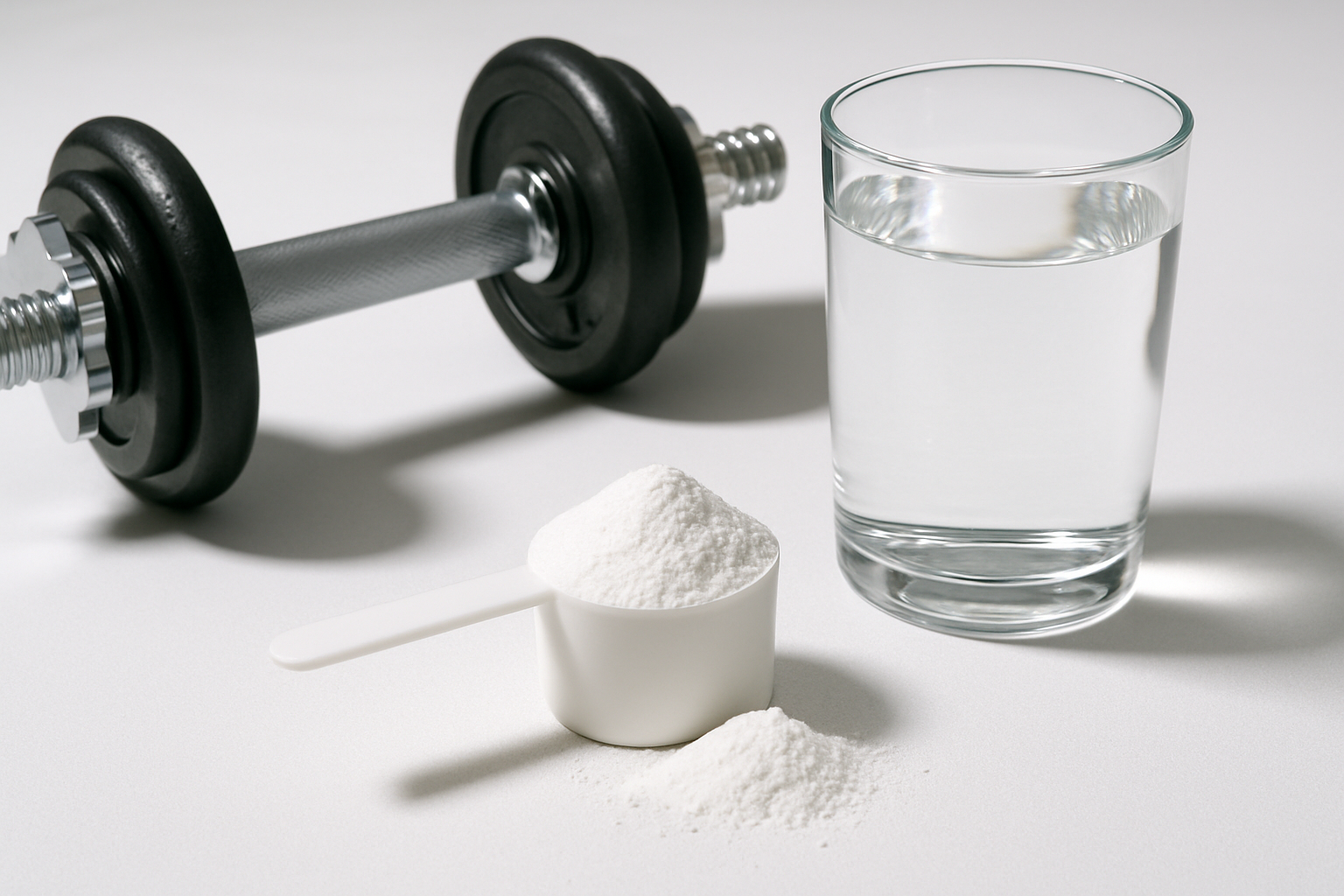
The first time I tried to train for a 5K, I went out too hard on day one, pulled something in my calf, and was off my feet for two weeks. Classic beginner mistake — and I made every one of them, including throwing money at supplements I knew nothing about while ignoring the one that actually had decades of research behind it. It wasn’t until I started coaching others that I got serious about understanding what works, and creatine kept rising to the top — not because of gym lore or influencer hype, but because the science backs it up harder than almost anything else on the shelf. If you’ve been wondering whether it’s worth adding to your routine, or you’ve already tried it and weren’t sure if you were doing it right, this guide will walk you through everything you need to know to use it effectively.
This post contains affiliate links. As an Amazon Associate, I earn from qualifying purchases. This means if you click a link and make a purchase, I may earn a small commission at no extra cost to you. I only recommend products I genuinely stand behind.
What Is Creatine and Why Does It Actually Work?
Let’s start with the basics. Creatine is a naturally occurring compound your body makes from amino acids — the building blocks of protein. You also get small amounts from eating red meat and fish. Your muscles store creatine as phosphocreatine, which your body uses to rapidly produce ATP (adenosine triphosphate). Think of ATP as your muscles’ instant energy currency. The more phosphocreatine you have stored, the faster you can recharge that energy — especially during short, explosive bursts like lifting, sprinting, or jumping.
When you supplement with creatine, you’re essentially topping off those fuel tanks beyond what diet alone can provide. That translates to more power output, better endurance during high-intensity sets, faster recovery between rounds, and over time, more muscle growth. Over 500 peer-reviewed studies have examined creatine monohydrate — it’s genuinely the most researched sports supplement in existence, and the results are consistently positive.
The Complete Creatine Supplement Guide: How to Use It for Best Results
Which Form of Creatine Should You Choose?
Walk into any supplement store and you’ll see creatine in a dozen different forms — monohydrate, HCl, ethyl ester, buffered, and more. Here’s my honest take: creatine monohydrate is the gold standard. It’s the form used in the majority of research, it’s the most affordable, and it works. Creatine HCl (hydrochloride) is a newer variation that’s more water-soluble, which means you can take a smaller dose and it may be gentler on the stomach. It’s a solid option if you experience bloating with monohydrate. Both forms work — it really comes down to preference and how your body responds.
Dosing: Loading Phase vs. Maintenance
There are two approaches to starting creatine. The loading phase involves taking around 20 grams per day (split into 4 doses) for 5–7 days to saturate your muscles quickly, then dropping to a 3–5 gram maintenance dose daily. The slow load approach skips loading entirely and just starts with 3–5 grams per day — your muscles will reach full saturation in about 3–4 weeks. Both methods get you to the same place. Loading just gets you there faster. I typically recommend the slow approach for most people since it’s simpler and reduces the chance of any digestive discomfort.
When Should You Take It?
Timing matters less than consistency. Some studies suggest taking creatine post-workout may have a slight edge for muscle gains, but the difference is minimal. What matters most is that you take it every day — whether that’s with breakfast, in your post-workout shake, or before bed. Pick a time you’ll remember and stick with it. Consistency wins every time.
Hydration Is Non-Negotiable
Creatine draws water into your muscle cells — that’s actually part of how it works. But it also means you need to stay well hydrated. Aim for at least half your body weight in ounces of water per day, and bump that up on training days. Skimping on water is one of the most common creatine mistakes I see, and it can leave you feeling sluggish instead of strong.
Products Worth Trying
I’ve used a lot of creatine products over the years. Here are the ones I actually recommend to clients and training partners — no fluff, just solid options at different price points and preferences.
Best Overall: Optimum Nutrition Micronized Creatine Monohydrate
Optimum Nutrition has been a trusted brand in fitness for decades, and their micronized creatine monohydrate is as clean and reliable as it gets. “Micronized” means the particles are smaller, so it mixes more easily in water without the gritty texture. If you’re committed to a long-term creatine routine, the 600-gram, 120-serving container gives you the best value per dose. If you want to try it first or you’re just getting started, the 300-gram, 60-serving size is a perfect starting point. Unflavored, easy to mix into anything, and backed by real research — this is my go-to recommendation.
Best Budget Pick: Nutricost Creatine Monohydrate Powder
If you want quality without breaking the bank, Nutricost Creatine Monohydrate delivers 100 servings of 5 grams each at a price that’s hard to beat. It’s micronized, unflavored, and straightforward — exactly what creatine should be. Nutricost is a brand I trust for no-nonsense supplements that do what they say.
Best for Sensitive Stomachs: Creatine HCl Options
If monohydrate gives you any bloating or stomach discomfort, creatine HCl is worth switching to. The CON-CRET Creatine HCl Capsules are NSF Certified (meaning independently tested for quality and purity) and made in the USA — a huge plus if you care about what goes into your body. For another solid capsule option, Nutricost Creatine HCl Capsules use the same CON-CRET ingredient at 750mg per capsule, giving you a clean and convenient daily dose. Capsules are also great for travel or anyone who just doesn’t want to deal with mixing powder.