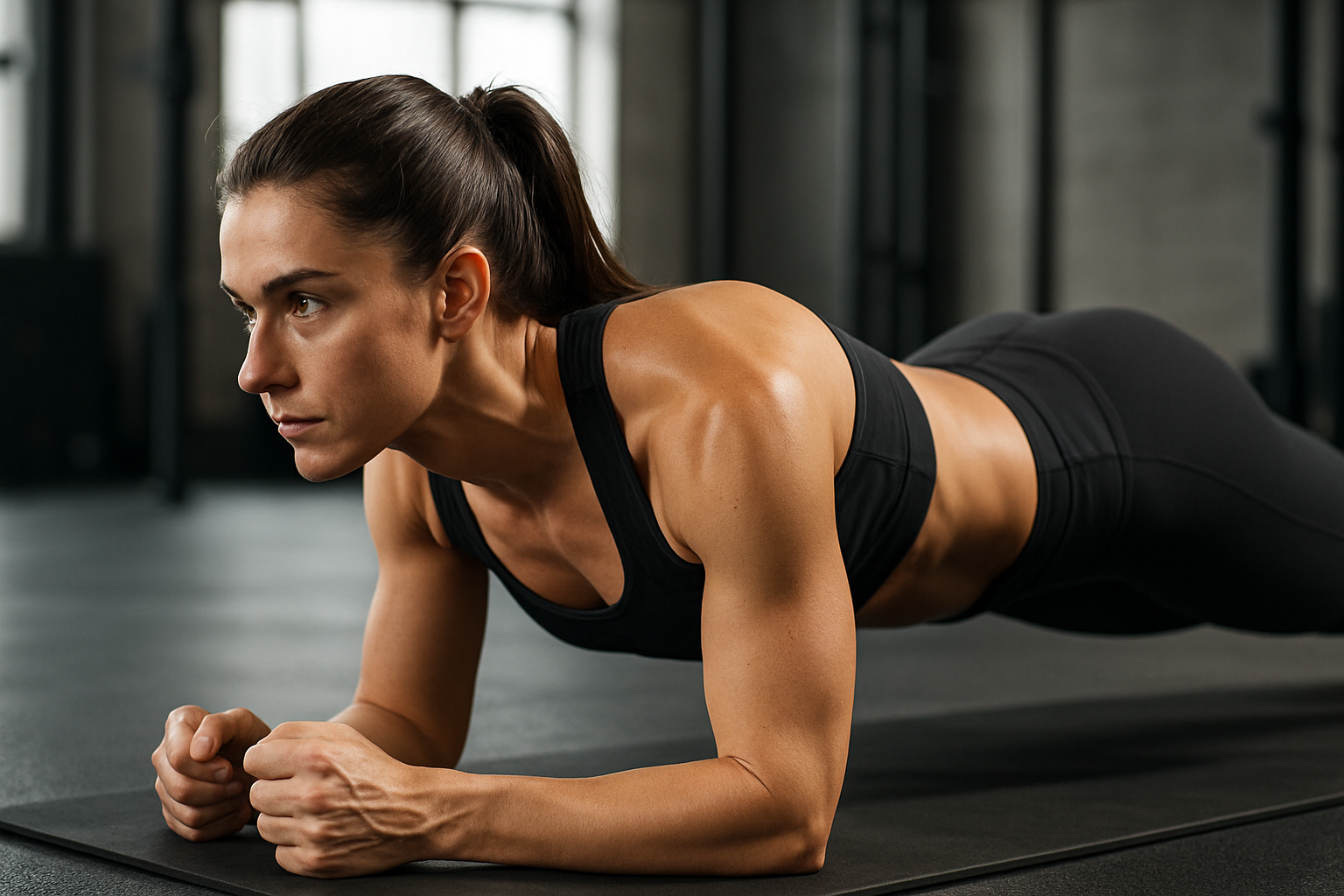

During my junior year of high school, I trained with the intensity of someone fighting for a roster spot — six days weekly, zero off-season windows, zero deload weeks — and I completely wore myself down before senior year started. That’s when I discovered that raw effort without structure only produces burnout, not results. Years later, working with everyday people tackling planks, I noticed the same pattern: people grinding through 15-second holds, repeating the same effort week after week, seeing zero gains. The issue wasn’t their commitment — it was the absence of a deliberate plank progression built on progressive overload that develops real core stability incrementally. Moving from barely holding 10 seconds to commanding a solid 3-minute plank is absolutely within reach, and a structured progression is your roadmap to get there without wasting months or developing compensation patterns that wreck your form.
One critical point before moving forward: holding a plank for time isn’t the full story. What matters is how you’re holding it. A wobbly, sagging, breath-locked 60-second plank delivers far less benefit than a stable, engaged, breathing 20-second one. Prioritize form over duration. That principle anchors everything in this plan.
Why Planks Are One of the Best Core Exercises You Can Do
The plank works through isometric loading — your muscles generate force without changing length, without movement. This differs sharply from crunches, which isolate your rectus abdominis (the front-facing abdominal muscle), because a properly executed plank demands total core activation: your transverse abdominis (the deepest stabilizing layer), your obliques (lateral trunk muscles), your glute muscles, your shoulder girdle, and your lower body. It’s total-body tension disguised as a floor hold.
Scientific evidence supports planking as a premier core stability modality. The Journal of Strength and Conditioning Research published findings showing that isometric core work like planking delivers measurable improvements in lumbar stabilization — which means better postural alignment, fewer lower back complaints, and a stronger base for lifting heavier loads. Translation: stronger planks translate directly to better squats, deadlifts, and even running mechanics.
Week-by-Week Plank Progression Core Strength Blueprint
The framework below is what I deploy with athletes ranging from complete beginners to intermediate lifters. Over 6 weeks, this plan moves you from a shaky 10-second attempt to owning a full 3-minute hold. Each stage stacks onto the previous one, with zero compromise on alignment.
Nailing Plank Form: Your Pre-Progression Alignment Guide
Before you begin progressing, get form dialed. Every repetition counts. This is what textbook alignment demands:
- Forearms down, shoulders stacked directly above elbows
- Straight line running from crown of head down to your heels — no collapsed hips, no elevated rear end
- Maximize glute and quadriceps tension
- Push elbows toward toes (stationary cue, generates internal tension)
- Rhythmic breathing — steady inhale and exhale cycles. Never hold your breath.
- Maintain neutral cervical spine — gaze downward, not ahead
Weeks 1–2: Establish Your Base
Perform 3 rounds of 10–20 second holds with 45-second recovery between rounds. Train 4 times weekly. Dial in your alignment above everything. Stop early if form degrades — a shorter, flawless plank beats a longer, messy one without question. Most lifters reach 25–30 seconds of solid form by day 14.
Weeks 3–4: Extend Hold Duration, Add Complexity
Bump your holds to 3 rounds of 30–45 seconds with 45–60 seconds between rounds. Introduce one variation each session — shoulder taps (one arm at a time, keeping lower body stable) or single-leg lifts work great. These movements target anti-rotation capacity, the real cornerstone of functional core resilience.
Weeks 5–6: Chase the 3-Minute Mark
Shift to volume accumulation. Attempt one all-out hold, recover, then tackle it again. Accumulate 3 total minutes across 2–3 separate attempts. By week’s end, plenty of people hit a single unbroken 2–3 minute hold. Haven’t hit 3 minutes yet? Stay in week 5 longer. Any forward movement counts.
Equipment That Elevates Your Plank Practice
Planking requires minimal gear, but smart choices in your setup pay off — especially protecting your joints from concrete or tile, and maintaining engagement during extended durations.
The Right Padding Keeps Your Forearms Stable When Hold Times Climb
Past the 90-second mark, your forearms fatigue and your wrist joints begin to destabilize—and a cheap, flimsy base underneath amplifies that weakness exponentially. A quality mat underneath you supplies the cushioning and traction needed to lock your position in place when discomfort peaks.
Why this works
- Compact, foldable construction means zero friction between intention and execution—you deploy it instantly without overthinking storage or setup delays when you’re juggling multiple training sessions back-to-back.
- The surface delivers genuine grip; forearms and palms don’t shift mid-hold, preventing the positional creep that destroys your max attempt when you’re chasing a new personal record.
- Density balances cushioning with stability—your joints get protected while your body stays rooted and solid, never floating on a surface that compresses and crumbles underneath load.
Where it falls short
- Insufficient padding density for explosive or ballistic movement or plyometric progressions alongside your plank work—you need thicker, denser material when impact is part of the equation.
- The bright blue finish captures lint, sweat stains, and dust particles visibly, which becomes irritating if your training space standards lean toward spotless and meticulous.
I almost ditched it after the first week because I thought the thickness would make my wrists feel too elevated and throw off my neutral spine position, but I was wrong—it actually helped me dial in better form faster than I expected. Grab the CAP Barbell Folding Exercise Mat in Blue and get one less variable between you and a solid plank hold.
Frequently Asked Questions
How long should I hold a plank in weeks 1 and 2?
Perform 3 rounds of 10–20 second holds with 45-second recovery between rounds, training 4 times weekly. Prioritize flawless form over duration—a shorter, perfect plank beats a longer one with poor alignment. Most lifters reach 25–30 seconds of solid form by day 14.
What plank variations should I add in weeks 3 and 4?
Introduce shoulder taps (one arm at a time, keeping lower body stable) or single-leg lifts. These movements target anti-rotation capacity, which is the cornerstone of functional core resilience. Perform 3 rounds of 30–45 seconds with 45–60 seconds between rounds.
What does rhythmic breathing mean during a plank hold?
Rhythmic breathing means steady inhale and exhale cycles throughout your plank. Never hold your breath. Maintaining consistent breathing supports core engagement and prevents compensation patterns that degrade your form during extended holds.
How do I accumulate 3 minutes of plank time in weeks 5 and 6?
Shift to volume accumulation by attempting one all-out hold, recovering, then tackling it again. Accumulate 3 total minutes across 2–3 separate attempts. By week’s end, many people hit a single unbroken 2–3 minute hold.
About This Article

Written by Jordan Ellis. Jordan Ellis isn't a certified personal trainer — just someone who's been genuinely obsessed with training for over eight years and turned it into building smarter home gyms. He focuses on home fitness: effective training spaces, equipment that earns its price, and programs that work in a spare room or basement, not just a commercial gym. More about this site.
Scope and limits. Jordan is not a certified personal trainer, and nothing here is medical advice. Check with a physician before starting a new program, and prioritize form over load on every lift described.
Verify this against a primary source
Specifics change, and your situation may differ from the one described here. These are the authorities worth checking directly:
- Physical Activity Guidelines for Americans (HHS) — the federal physical activity guidelines
- American College of Sports Medicine — exercise prescription and position stands
- NSCA — strength and conditioning research