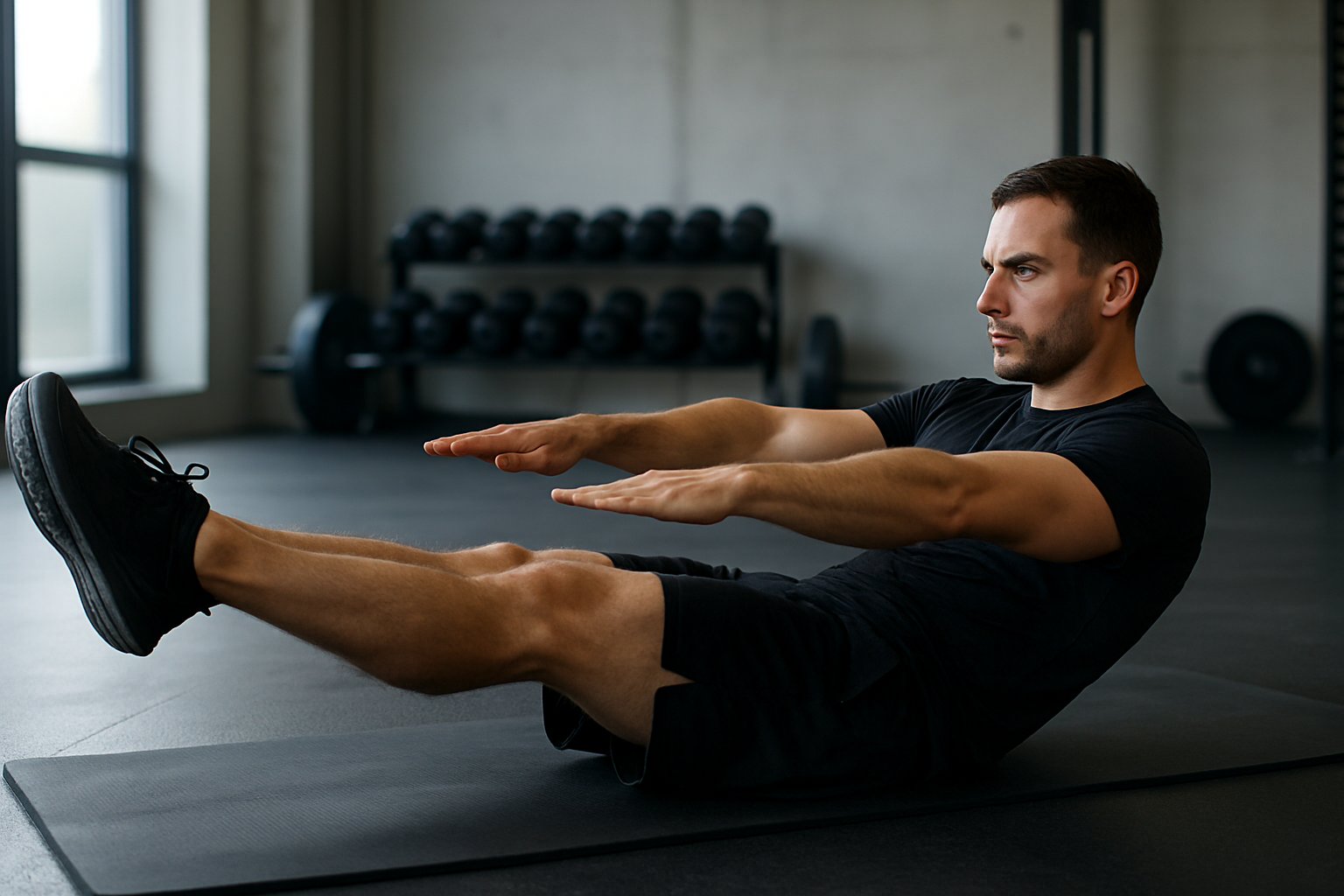

You’ll hear conflicting advice about ab training from different corners of fitness: one camp insists crunches are the gold standard for core development, while another dismisses them entirely as a waste of time and a recipe for back pain. The second group has the science on their side. Over the years, I’ve watched people pour months into endless crunching only to end up with neck soreness and a core that remains stubbornly weak. The reason is straightforward: crunches rank among the least efficient exercises available for developing genuine core strength, no matter how many repetitions you accumulate. If your goal is to build a resilient, capable midsection and actually observe meaningful progress, the conversation needs to shift toward better ab exercises — and understanding why abandoning this outdated movement might transform your core training.
What’s Actually Wrong With Crunches?
To be fair, crunches do produce some activation in the rectus abdominis (the visible “six-pack” muscles along your abdomen). The limitation is that they engage only a narrow segment of motion, they impose repetitive compression stress on your lumbar spine (the lower vertebral column), and they leave nearly all of the supporting deep-core musculature completely unaddressed — muscles that drive genuine stability, postural integrity, and functional strength.
Spine biomechanics specialist Dr. Stuart McGill’s research demonstrates that continuous spinal flexion — the exact movement pattern a crunch demands — accumulates stress load on intervertebral discs across repeated sessions. For individuals managing any degree of spinal sensitivity, this becomes problematic quickly. Even without pre-existing back complications, the reward-to-risk calculation falls short. You’re investing effort in an exercise that touches only a fraction of what your core is capable of addressing.
Your core comprises far more than your abdominal muscles. It extends through your obliques (lateral torso musculature), your transverse abdominis (functioning as your body’s internal stability corset — a deep layer encircling your midsection), your posterior chain muscles, and structures through your hips and glute complex. Crunches target perhaps one-fifth of this integrated system. There are substantially more effective options available.
Superior Ab Exercises That Deliver Real Outcomes
Below are the movements I direct every person toward who seeks genuine core strength and useful durability. These drills build your midsection through anti-movement patterns, rotational capacity, and distributed whole-body rigidity — mirroring how your core functions in actual situations.
1. The Plank (and Its Variations)
The plank serves as a cornerstone movement for solid reason. Maintaining correct plank tension recruits your entire core compartment simultaneously — anterior muscles, lateral components, and deep stabilizing layers. Build from 20–30 second sustained positions and advance from there. Once the fundamental variation becomes undemanding, progress into side plank variations, dynamic shoulder-taps from plank position, or plank with single-leg elevation to escalate the stimulus.
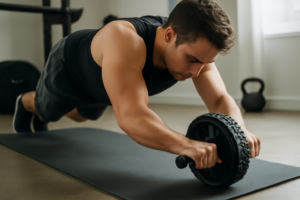
2. Ab Wheel Rollouts
This movement stands out immediately. The ab wheel rollout lengthens your midsection under load (a stimulus crunches never provide), enabling you to gain strength across a complete movement arc. It overloads the rectus abdominis, side muscles, and underlying stabilizer chains concurrently. Begin from a kneeling position and advance only the distance your trunk can sustain — zero hip sagging permitted. With consistent training, progression leads to rolling from a standing position, unlocking a particularly demanding variation.
3. Hanging Knee Raises and Leg Raises
Suspending from a bar or using an assisted dip station, then raising your knees upward or legs outward, represents among the highest-yield lower-abdominal movements accessible. The drill demands midsection control, hand grip endurance, and lower-body flexor participation concurrently. Progress from bent-knee versions toward extended-leg forms as power accumulates. Maintain deliberate pacing — avoid pendulum swinging.
4. Dead Bug
Don’t underestimate this seemingly unconventional name — the dead bug delivers exceptional core stability outcomes. From a supine position, you extend a single arm and opposite leg while anchoring your lumbar region against the ground surface, alternating sides rhythmically. This pattern instructs your midsection to oppose unwanted shifts and shield your vertebral column, precisely the protective function required in everyday contexts.
5. Pallof Press
This demands either a cable apparatus or elastic resistance. You grip a handle adjacent to your ribcage and thrust forward while withstanding the torque force pulling your body sideways. Termed an “anti-rotation” movement, it generates tremendous core durability. Your lateral abdominal muscles and deep-core tissues will experience substantial effort by the third repetition.
Essential Home Equipment for Core Development
Building a functional core doesn’t demand access to a commercial facility. Investing in a few quality tools opens significant potential for sophisticated midsection training in your own space. Here’s what I recommend based on real results:
The Ab Wheel: Core Overload Without Cervical Complaints
When crunching left my neck exhausted and my abdominal muscles undertrained, I needed a vehicle that kept tension on the midsection itself rather than pulling through my neck vertebrae. The ab wheel addressed this gap immediately—provided you navigate the early difficulty appropriately.
The upside
- Demands true anti-extension strength—your abdominals must genuinely resist spinal lengthening rather than merely flexing the neck anteriorly the way crunches produce.
- Accessible from session one; even a limited rollout from your knees generates substantial midsection tension, eliminating lengthy adaptation intervals before feeling engagement.
- The rolling apparatus maintains pressure throughout the entire movement range, eradicating momentum shortcuts and preventing the recovery period at movement completion that characterizes crunches.
The downside
- The proficiency ramp proves substantial—early attempts feel awkward and your lower spine may attempt to overextend if your midsection lacks adequate readiness.
- A cushioned floor or knee protective pad is essential, otherwise the rolling movement becomes an ordeal of wrist and knee discomfort rather than productive midsection strengthening.
I almost ditched it after my second workout when my lower back started screaming—turns out I was rolling out too far before I had the strength to control it—but once I dialed back the range and stayed on my knees for another two weeks, the carryover to my deadlifts and planks made it obvious this was the right tool. Abiarst Ab Roller Wheel
Frequently Asked Questions
Why are crunches bad for your lower back?
Crunches impose repetitive compression stress on your lumbar spine through continuous spinal flexion, the exact movement pattern they demand. Dr. Stuart McGill’s research shows this accumulates stress load on intervertebral discs across repeated sessions, making them problematic especially for individuals with spinal sensitivity.
What percentage of core muscles do crunches actually work?
Crunches target perhaps one-fifth of your integrated core system. Your core comprises obliques, transverse abdominis, posterior chain muscles, and hip and glute structures—most of which crunches leave completely unaddressed, leaving nearly all supporting deep-core musculature untouched.
How long should I hold a plank for beginners?
Build from 20–30 second sustained positions and advance from there. Once the fundamental variation becomes undemanding, progress into side plank variations, dynamic shoulder-taps from plank position, or plank with single-leg elevation to escalate the stimulus.
How do I start ab wheel rollouts if I’m new?
Begin from a kneeling position and advance only the distance your trunk can sustain—zero hip sagging permitted. With consistent training, progression leads to rolling from a standing position. Use a cushioned floor or knee protective pad since the rolling movement can cause wrist and knee discomfort otherwise.
About This Article

Written by Jordan Ellis. Jordan Ellis isn't a certified personal trainer — just someone who's been genuinely obsessed with training for over eight years and turned it into building smarter home gyms. He focuses on home fitness: effective training spaces, equipment that earns its price, and programs that work in a spare room or basement, not just a commercial gym. More about this site.
Scope and limits. Jordan is not a certified personal trainer, and nothing here is medical advice. Check with a physician before starting a new program, and prioritize form over load on every lift described.
Verify this against a primary source
Specifics change, and your situation may differ from the one described here. These are the authorities worth checking directly:
- Physical Activity Guidelines for Americans (HHS) — the federal physical activity guidelines
- American College of Sports Medicine — exercise prescription and position stands
- NSCA — strength and conditioning research