When I was running track in high school, our coach had one answer for everything: “run more miles.” It took me years to realize how wrong that approach was — that more intensity rarely solves the underlying problem, and that sometimes the most powerful movement is the quietest kind. I thought about that lesson the day my neighbor Dorothy called me, about six weeks after her knee replacement surgery, sounding more defeated than I’d ever heard her — and this is a woman who once shoveled her own driveway at 74 because the teenager next door “looked lazy.” She felt stiff, anxious about falling, and completely disconnected from her own body, and what she needed wasn’t more effort — it was the right kind of movement entirely. That’s when I told her about chair yoga for seniors, half expecting her to laugh at me, and she didn’t.
This post contains affiliate links. As an Amazon Associate I earn from qualifying purchases at no extra cost to you.
Three months later, Dorothy told me it was the only thing that made her feel like herself again. Not the physical therapy appointments, not the ice packs, not even the heating pad she’d become best friends with. The gentle, seated movements she practiced every morning in her kitchen chair had given her back something she thought was gone for good — confidence in her own body.
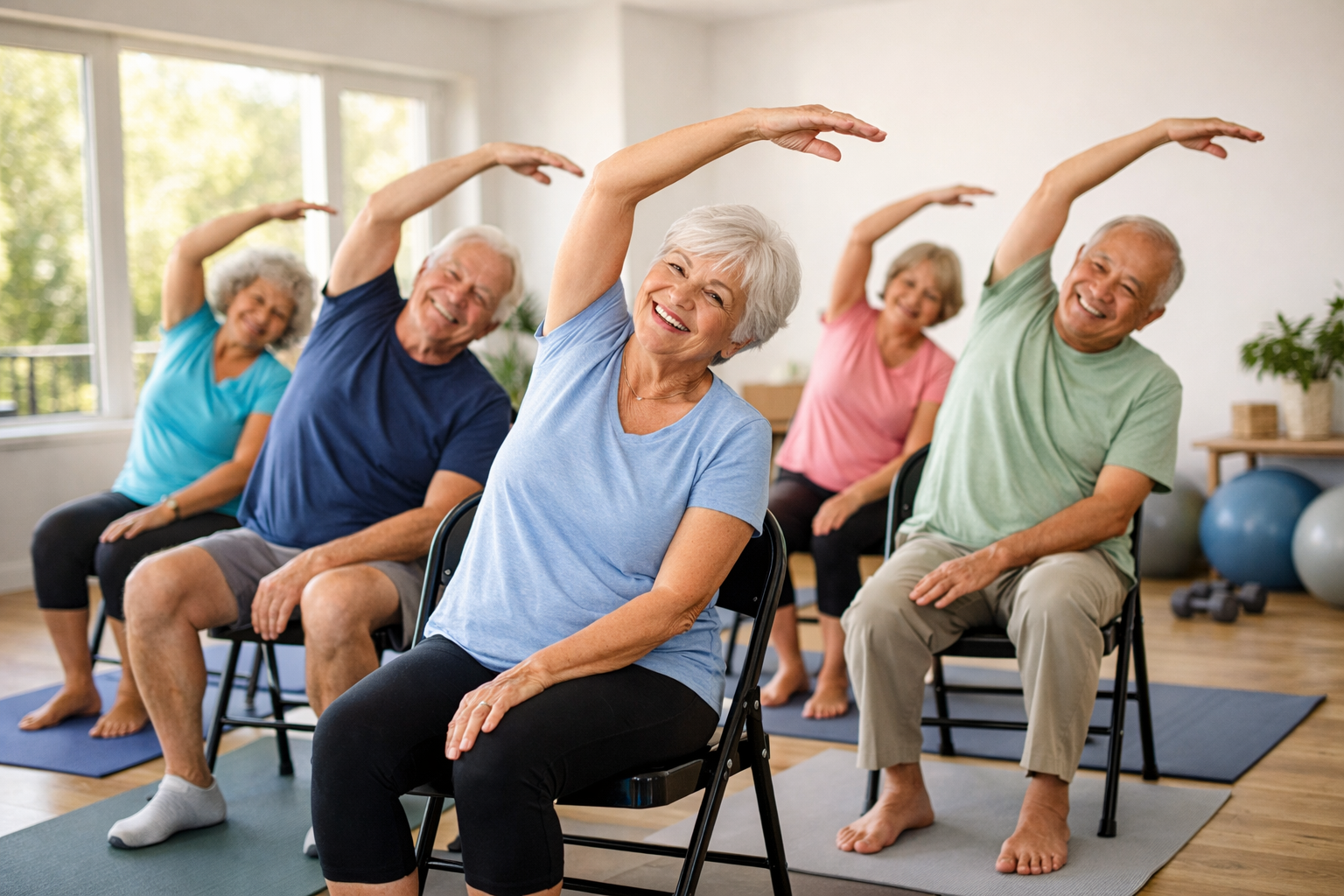
What Is Chair Yoga for Seniors and Why Does It Work So Well?
Chair yoga is exactly what it sounds like — a modified form of traditional yoga that uses a sturdy chair for support throughout the entire practice. Every stretch, every breathing exercise, every gentle twist is performed either seated or while standing with the chair nearby as a stabilizing anchor. No getting down on the floor. No worrying about balance. No need for a yoga mat or any prior flexibility whatsoever.
For older adults, that distinction is everything. One of the biggest reasons seniors avoid traditional exercise classes is fear — fear of falling, fear of looking foolish, fear of making an injury worse. Chair yoga removes nearly all of those barriers in one elegant stroke. You’re seated, you’re stable, and the movements are gentle enough that you can start even on your most painful days.
From a physiological standpoint, the benefits are surprisingly robust. Regular chair yoga practice has been linked to improved joint flexibility, reduced chronic pain, better circulation, lower anxiety levels, and even modest improvements in balance — which is arguably the most critical health factor for adults over 65. Falls are the leading cause of injury-related death in that age group, and anything that improves proprioception and lower-body strength is worth taking seriously.
I am not a physical therapist or a yoga instructor. I’m someone who spends a lot of time researching fitness for a blog and has watched the people I love struggle with aging bodies. What I can tell you is that the research backs this up, and more importantly, Dorothy backs this up.
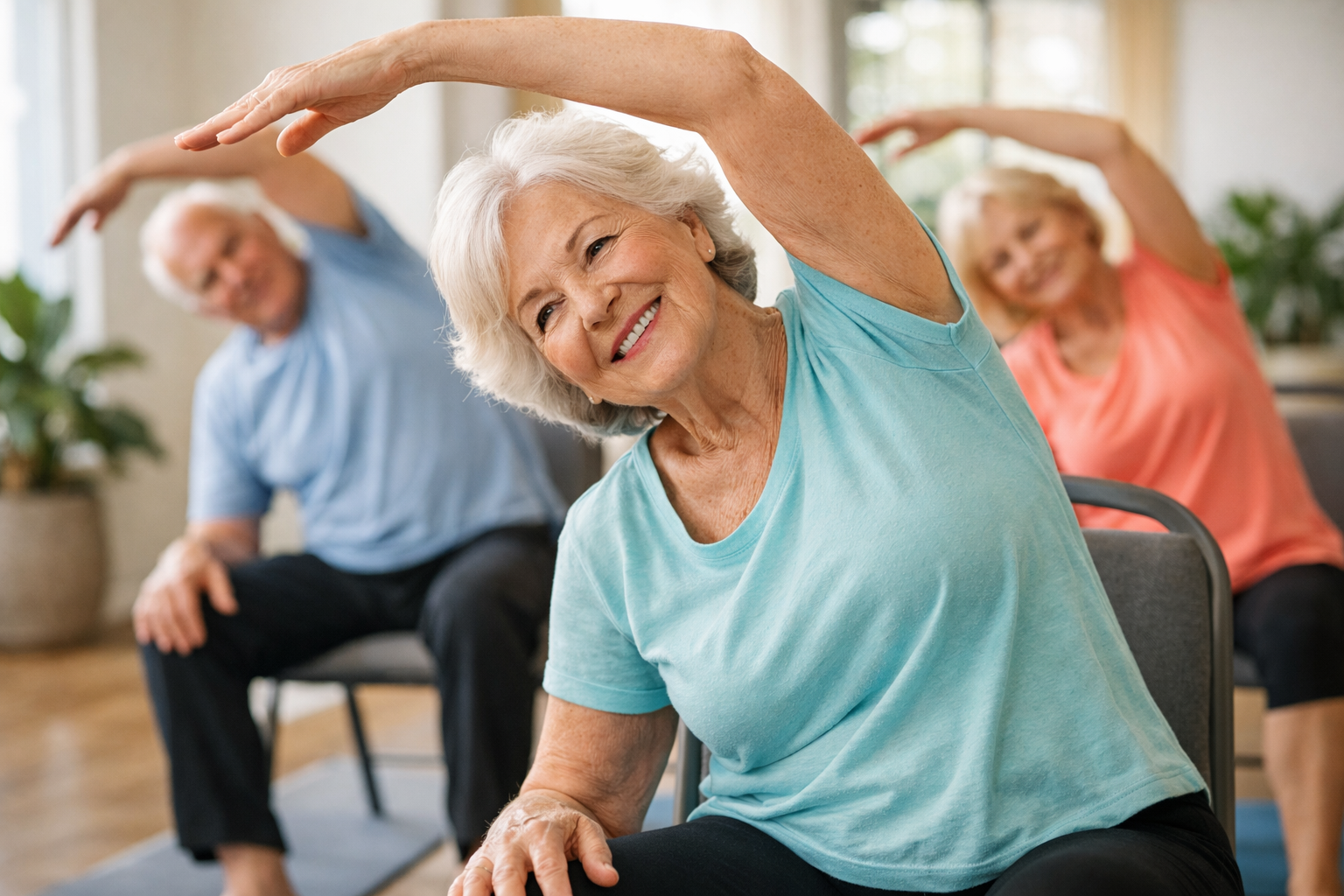
A Simple Beginner Chair Yoga Routine You Can Start Today
You don’t need a class, a video subscription, or any equipment to get started. All you need is a firm, armless chair (dining chairs work perfectly) and about fifteen to twenty minutes. Here’s a beginner-friendly sequence I’ve shared with several older friends and family members over the years.
Seated Cat-Cow Stretch
Sit near the front edge of your chair with feet flat on the floor, hip-width apart. Place your hands on your knees. On an inhale, gently arch your back and lift your chest — this is “cow.” On an exhale, round your spine and let your chin drop toward your chest — this is “cat.” Move slowly and let your breath lead. Repeat 8 to 10 times. This one move alone does wonders for spinal stiffness and morning back pain.
Seated Forward Fold
From your seated position, take a deep breath in. As you exhale, hinge forward slowly from your hips — not your waist — and let your hands slide down your shins toward your ankles. Hold for three to five slow breaths, then gently roll back up. This stretches the hamstrings and lower back, two of the most common problem areas for older adults.
Seated Spinal Twist
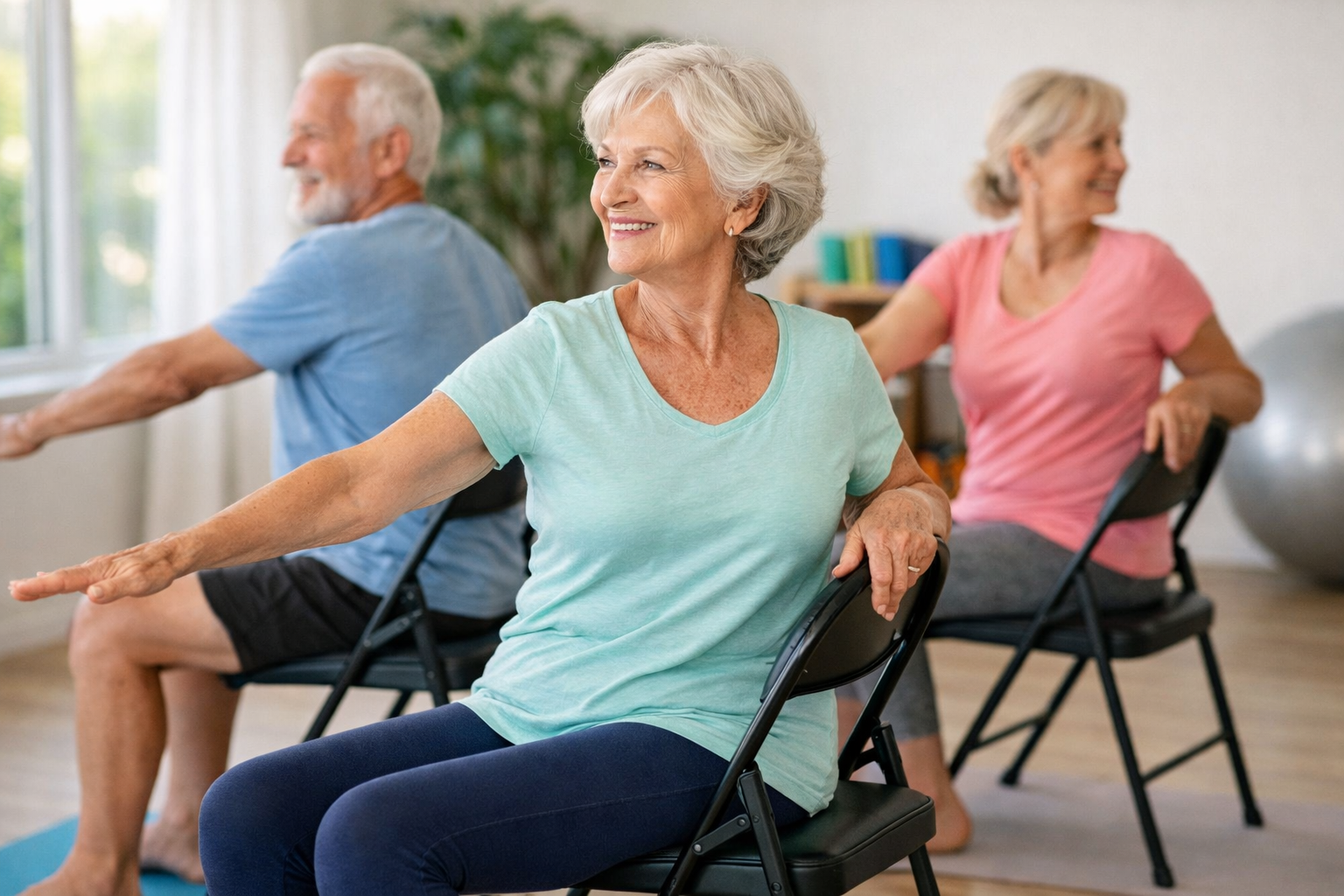
Sit tall and place your right hand on your left knee. Gently rotate your torso to the left, looking over your left shoulder as far as is comfortable. Hold for three breaths, then switch sides. Spinal rotation helps preserve the range of motion that often gets lost with age and prolonged sitting.
Ankle Circles and Foot Flexes
Lift one foot a few inches off the floor and slowly rotate your ankle in large, deliberate circles — ten times in each direction, then switch feet. Follow with foot flexes: point your toes away from you, then pull them back toward your shin. This improves circulation in the lower legs and keeps ankle joints supple, which directly supports better balance.
Seated Mountain Pose with Breath
End your session by simply sitting tall — spine long, shoulders relaxed, feet grounded. Close your eyes if that feels comfortable. Take five deep, slow breaths, inhaling for four counts and exhaling for six. This calms the nervous system and gives your body a moment to absorb all the good work you just did.
The whole sequence takes about fifteen minutes. Dorothy does it every morning before her coffee. I do it (badly and with considerably more groaning than she does) a few times a week at my desk.
Adding Simple Equipment to Deepen the Practice
Once you’ve been doing the basic routine for a few weeks and your joints start feeling more cooperative, it’s worth adding a little gentle resistance to build the muscle strength that supports those joints. This is where a few inexpensive tools can make a real difference.
Resistance bands are the single best accessory for seated exercise. They’re safe, lightweight, and adaptable to any fitness level. The Relaxgiant 2 Pcs Resistance Band with Handles Chair Exercise Equipment for Seniors comes in two resistance levels (yellow and green) and is specifically designed with older adults in mind — the handles are easy to grip even with arthritic hands, and the bands themselves are sized perfectly for seated use. This is what I gave Dorothy, and she still uses them daily.
If you’d like something that comes with a little more guidance built in, the Healthy Seniors Chair Exercise Program with Two Resistance Bands and Printed Exercise Guide is a fantastic option. It includes two resistance bands with handles plus a printed guide that walks you through specific chair-based exercises ��� ideal for anyone who prefers having a physical reference rather than a screen. It makes a genuinely thoughtful gift for a parent or grandparent, too.
For those who want a bit more variety in resistance levels, the 3 Pcs Resistance Band with Handles Chair Exercise Equipment for Seniors gives you three bands at different tension levels, so you can progress gradually as you get stronger without buying new equipment.
Once balance starts improving — and with consistent chair yoga, it will — some seniors like to add a wobble board as a supervised challenge while standing near the chair for support. The Amazon Basics Wood Wobble Balance Trainer Board is a solid, affordable entry point with a 265-pound weight capacity and a slip-resistant surface. If you want something with a bit more ankle support built in, the Balance Board Wooden Wobble Board for Adults with Ankle Support is worth looking at. And for those who want a tried-and-true option with thousands of positive reviews, the Yes4All Wooden Wobble Balance Board in 15.75 inch diameter is a perennial favorite.
I want to be very clear here: wobble boards are a progression tool, not a starting point. Please don’t hand one to someone fresh out of surgery and wish them luck. These are for seniors who have built a solid foundation of strength and balance through several weeks of chair yoga first.
One more thing worth mentioning — tracking daily movement can be a surprisingly powerful motivator for older adults. A simple, no-fuss pedometer takes away the frustration of complicated tech. The Pedometer Watch Senior Friendly with No App or Phone Required is waterproof, easy to read, and tracks steps, calories, and sleep without requiring a smartphone. For those who prefer a clip-on style, the 3D Pedometer for Walking with Large LCD Display is accurate, easy to use, and clips right onto a waistband or pocket. Seeing those daily numbers climb week over week gives people real, tangible proof that they’re making progress — and that matters more than most of us realize.
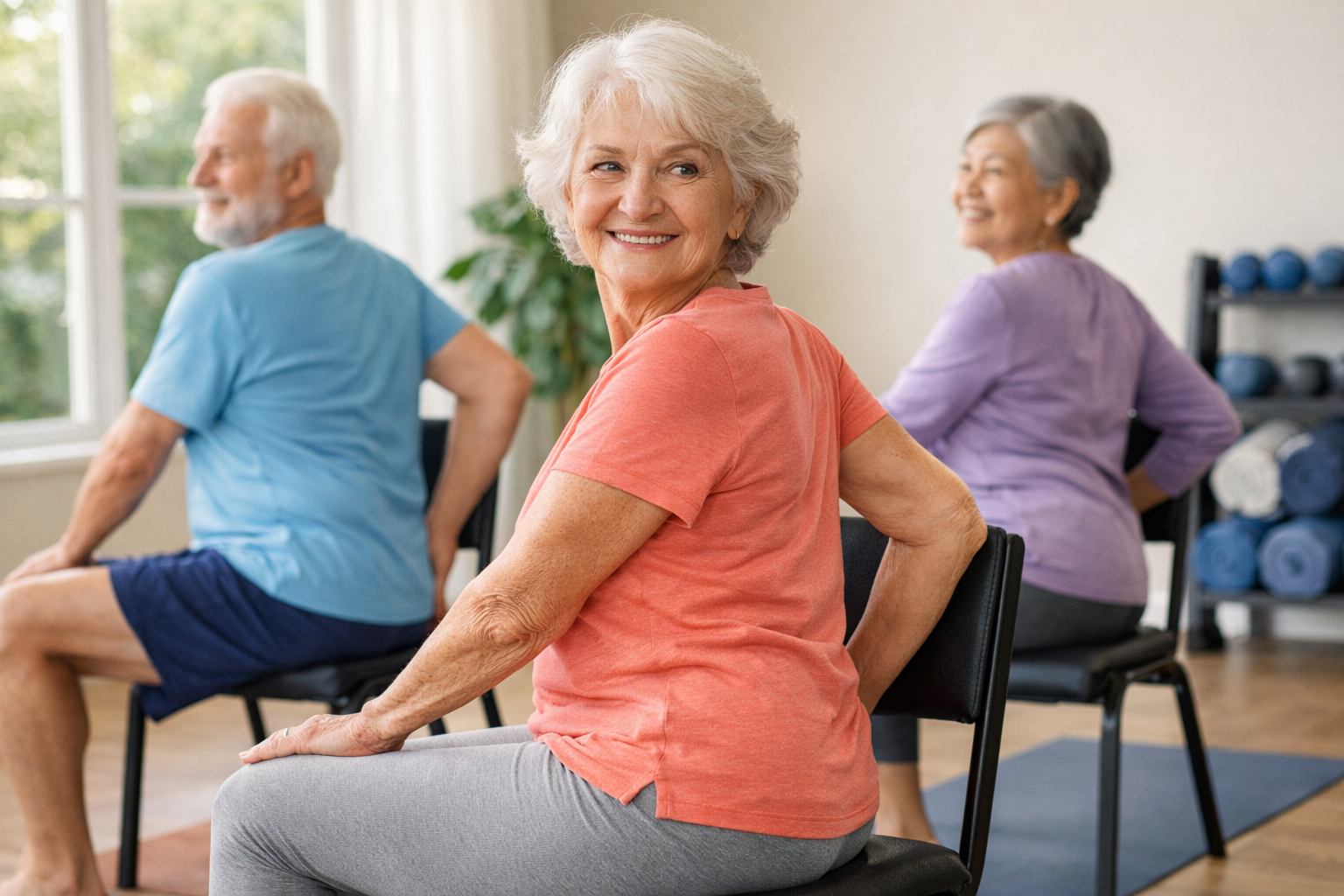
Chair Yoga for Seniors: Your Next Step Starts With One Morning Session
Here’s what I want you to take away from all of this: chair yoga for seniors is not a consolation prize for people who “can’t do real exercise.” It is real exercise — gentle, evidence-supported, and profoundly effective for the specific challenges that come with aging joints, post-surgical recovery, and fear of movement. Dorothy didn’t just get more flexible over those three months. She got her confidence back. She started walking to the mailbox again, then around the block, then to the corner store. The chair yoga was the first domino.
If you’re reading this for yourself, start with the five-move routine above. Do it for two weeks before you add anything else. Just the chair, just your breath, just fifteen minutes in the morning. You will feel a difference.
If you’re reading this because you want to help someone you love, the best thing you can do is sit down and do it with them the first time. I cannot stress this enough. Nothing makes a new habit stick like having a partner — even if that partner is grunting through cat-cow and definitely not as graceful as they imagined they’d be.
My top recommendation for getting started with equipment is the Healthy Seniors Chair Exercise Program with Two Resistance Bands and Printed Exercise Guide — the printed guide makes it completely standalone, and the two included bands give you everything you need for weeks of progressive work without ever leaving your chair. Grab it, print this routine, and start tomorrow morning.
Your joints will thank you. Dorothy would agree.

Written by Lucy Bamboo
Lucy Bamboo is a NASM-certified personal trainer (CPT) and corrective exercise specialist (CES) with over 12 years of experience coaching clients through injury recovery, strength building, and sustainable fitness. She holds a B.S. in Kinesiology and has worked in both clinical rehabilitation and private training settings. Lucy writes at Push Pull Ya'll to make evidence-based exercise guidance accessible to everyone — whether you're rehabbing a shoulder injury at home or building your first real training program.