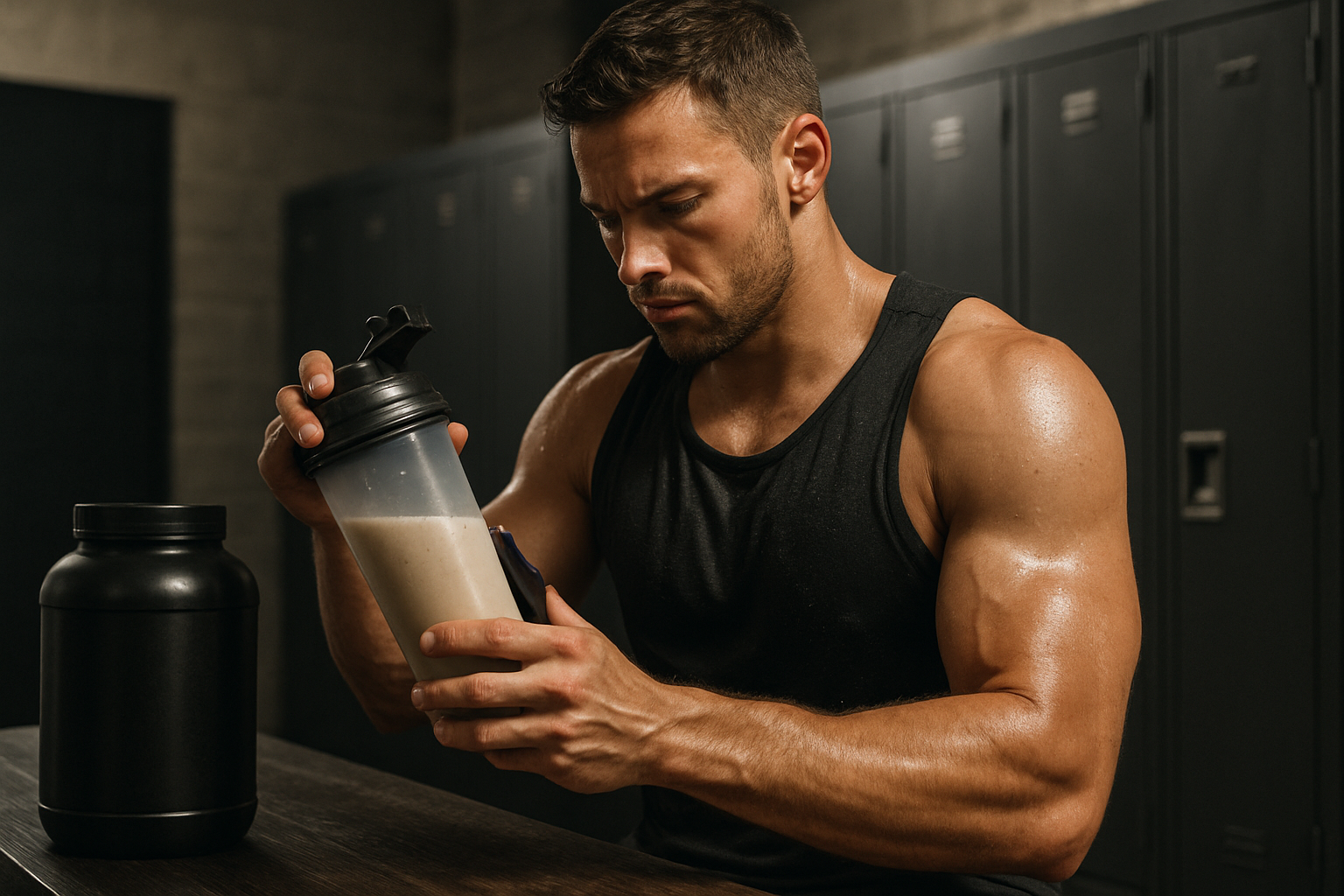
When I was cutting weight for wrestling in high school, I thought I understood nutrition. Spoiler: I knew absolutely nothing. I was surviving on iceberg lettuce and blind confidence, and the moment I started lifting seriously a few years later, I swung hard in the other direction — convinced I had to slam a protein shake within exactly 30 minutes of my last rep or my entire workout was basically wasted. That idea — the so-called anabolic window — is one of the most hyped and most misunderstood concepts in the fitness world, and if you’ve ever sprinted to your gym bag mid-cooldown just to chug a shake in time, you already know what I’m talking about. Today we’re cutting through the noise and getting to the actual science behind protein timing and muscle building, so you can stop stressing over the clock and start training smarter.
This post contains affiliate links. As an Amazon Associate, I earn from qualifying purchases. If you click a product link and make a purchase, I may earn a small commission at no extra cost to you. I only recommend products I genuinely believe in.
What Is the Anabolic Window — And Where Did It Come From?
The “anabolic window” refers to a supposed narrow period — traditionally thought to be 30 to 60 minutes post-workout — during which your body is primed to absorb protein and carbohydrates to kickstart muscle repair and growth. Miss that window, so the old thinking went, and you’ve basically wasted your workout. Fitness magazines ran with this idea hard in the 90s and early 2000s, and it became gospel in gyms everywhere.
The truth? The research behind this concept was largely based on studies involving fasted training — meaning people who hadn’t eaten for hours before working out. In that scenario, yes, getting protein in quickly after training matters more. But for the majority of us who eat a normal meal two to three hours before hitting the gym? The urgency drops dramatically.
A landmark review published in the Journal of the International Society of Sports Nutrition by Alan Aragon and Brad Schoenfeld found that the “anabolic window” is far wider than previously believed — likely spanning several hours on either side of your workout. That’s a massive shift from the panic-inducing 30-minute deadline we’ve all been sold.
Protein Timing and Muscle Building: What the Science Actually Says
Here’s what we know for certain: total daily protein intake is the single most important factor for muscle building — far more important than when exactly you consume it. Most research supports a target of around 0.7 to 1 gram of protein per pound of bodyweight per day for active individuals looking to build muscle. If you’re consistently hitting that number, you’re already doing the heavy lifting when it comes to nutrition.
That said, timing isn’t completely irrelevant. Here’s a smarter way to think about it:
- Pre-workout protein matters. If you eat a solid protein-containing meal two to three hours before training, your muscles are already being fed. You don’t need to sprint to your shaker the second you finish your last set.
- Post-workout protein is still a good idea. Not because the window is slamming shut, but because it’s a smart, convenient time to get protein in — and most people are hungry after training anyway.
- Protein distribution throughout the day matters. Spreading your protein intake across three to five meals or snacks (each containing roughly 20 to 40 grams) is more effective for muscle protein synthesis than cramming it all into one or two sittings.
- Nighttime protein is underrated. Muscle repair doesn’t stop when you fall asleep. Slow-digesting protein before bed has been shown in multiple studies to support overnight muscle recovery and growth.
The Best Protein Strategy for Real Results
Let me give you the no-fluff framework I use with my clients and myself. It’s simple, sustainable, and actually works:
1. Eat Protein Before You Train
Aim for a meal with 25 to 40 grams of protein roughly two to three hours before your workout. This could be chicken and rice, eggs and oats, Greek yogurt with fruit — whatever works for you. This pre-loading approach means your body is already in a positive protein balance when you start training.
2. Get Protein In Within Two Hours Post-Workout
You don’t need to chug a shake mid-cool-down, but don’t skip your post-workout protein either. A fast-digesting whey protein shake is one of the most convenient ways to hit this window comfortably. I personally keep a shaker in my gym bag every single session — it takes 30 seconds to mix and checks the box immediately.
3. Don’t Neglect Nighttime Recovery
This is the step most people completely ignore. Your body does a significant amount of muscle repair while you sleep. Having a slow-digesting casein protein shake before bed keeps amino acids trickling into your muscles through the night instead of your body going without fuel for seven to eight hours.
Products Worth Trying
Here are the products I recommend to back up this protein timing strategy. These are the ones I’ve used personally or recommend regularly to clients:
For Post-Workout and Daily Protein — Fast-Digesting Whey
Optimum Nutrition Gold Standard 100% Whey — Double Rich Chocolate is my go-to recommendation for most people. It mixes easily, tastes great, and delivers 24 grams of high-quality protein per serving. It’s been the best-selling protein powder in the world for a reason. Grab the 5lb bag on Amazon here.
Prefer vanilla? The Optimum Nutrition Gold Standard Vanilla Ice Cream version is equally solid and incredibly versatile — perfect for mixing into oatmeal, smoothies, or just straight with water or milk. Check it out here.
If you want a leaner, ultra-clean option, the Sports Research Whey Protein Isolate in Dutch Chocolate is worth a serious look. It delivers 25 grams of protein per serving and comes in a generous 5lb bag with 60 servings. Whey isolate is processed to remove most of the fat and lactose, making it a great choice if you’re sensitive to dairy or watching your macros tightly. See it on Amazon here.
For Overnight Recovery — Slow-Digesting Casein
Optimum Nutrition Gold Standard 100% Micellar Casein — Chocolate Supreme is the classic nighttime protein pick.

Written by Lucy Bamboo
Lucy Bamboo is a NASM-certified personal trainer (CPT) and corrective exercise specialist (CES) with over 12 years of experience coaching clients through injury recovery, strength building, and sustainable fitness. She holds a B.S. in Kinesiology and has worked in both clinical rehabilitation and private training settings. Lucy writes at Push Pull Ya'll to make evidence-based exercise guidance accessible to everyone — whether you're rehabbing a shoulder injury at home or building your first real training program.