Junior year of college, I was studying pre-med and training at the same time, which meant I had to get ruthlessly efficient — every minute in the gym had to count. So when I realized I’d been grinding out set after set of crunches and planks for months with almost nothing to show for it, I started digging into why — and the answer changed how I’ve trained ever since. What I was missing, almost completely, was oblique core training: the side trunk muscles that most people never deliberately work because they’re too focused on the front six-pack muscles, the rectus abdominis. Once I started targeting my obliques directly, everything clicked — my posture got better, my compound lifts felt more stable, and my waistline actually started looking the way I’d always wanted.
This post contains affiliate links. As an Amazon Associate, I earn from qualifying purchases. This means I may earn a small commission if you click through and make a purchase — at no extra cost to you. I only recommend products I’d actually use or suggest to my own clients.
Let’s dig into what the obliques actually do, why skipping them is costing you, and how to build them effectively — with the right movements and the right tools.
What Are the Obliques and Why Do They Matter So Much?
Your obliques are a group of muscles that run diagonally along the sides of your torso. You’ve got two layers: the external obliques (the outer layer, running downward and inward like your hands in your pockets) and the internal obliques (the deeper layer, running in the opposite direction). Together, they’re responsible for rotation, lateral flexion (side bending), and a huge part of spinal stability.
Here’s why that matters in real life: every time you twist to grab something, swing a bat or racket, throw a punch, or even just walk and rotate your hips naturally, your obliques are doing serious work. They also act as a natural weight belt, compressing the abdominal wall to protect your spine during heavy lifts like deadlifts and squats. Weak obliques mean a leaky core — and a leaky core means wasted power and increased injury risk.
The Best Oblique Core Training Exercises You Should Be Doing
Let me walk you through the movements that actually move the needle. I’ve broken these into categories so you can build a balanced routine.
1. Cable Woodchops (High and Low)
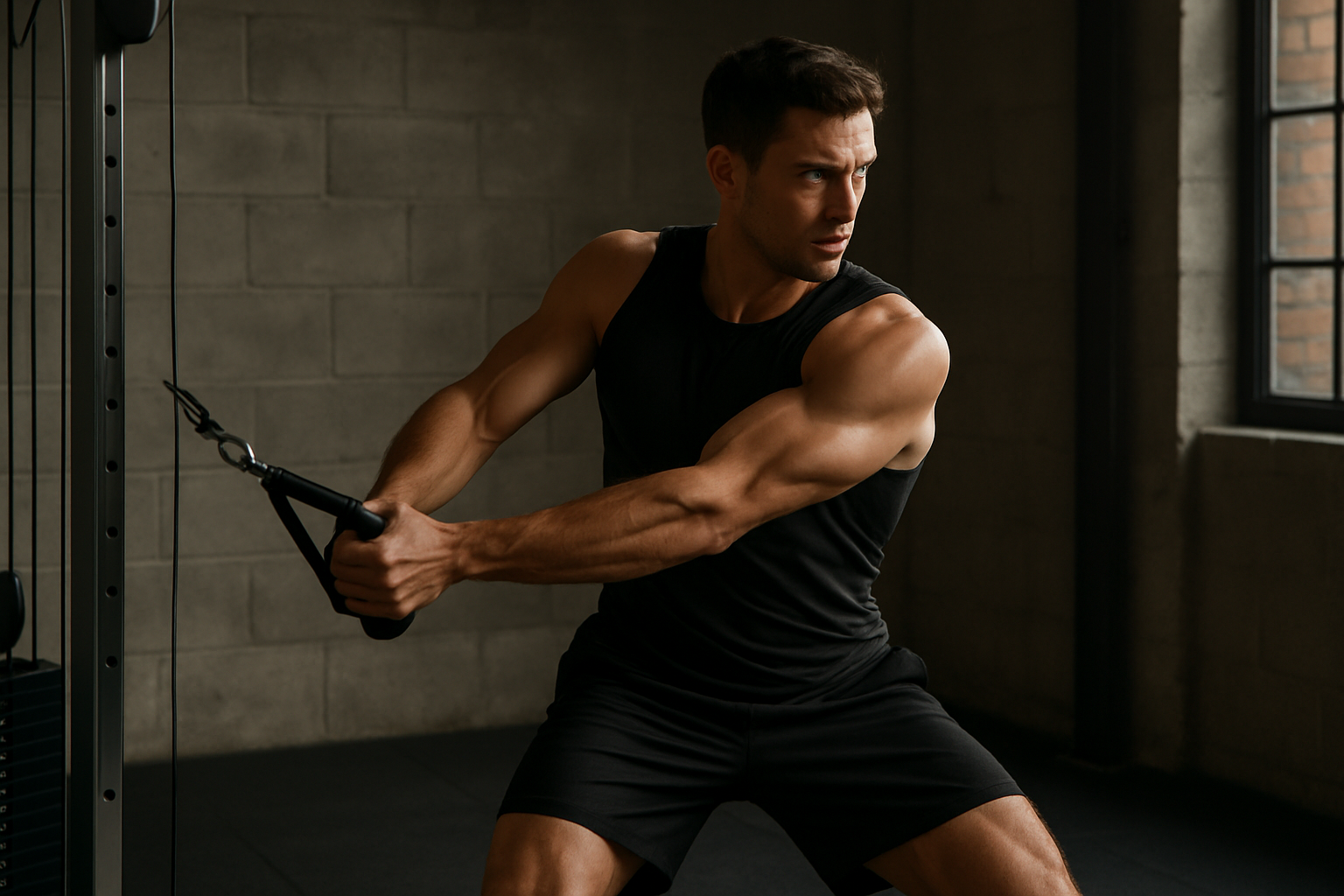
If I had to pick one exercise for oblique development, this would be a strong contender. Cable woodchops train rotational strength through a full range of motion with constant tension — something you simply can’t replicate with bodyweight alone. Set the cable high and pull diagonally across your body to your hip (high-to-low chop), or set it low and drive it up across your body (low-to-high). Both variations hammer the obliques from different angles.
To do these at home, you need the right cable attachments. I’ve been using the Cable Machine Attachments Home Gym Set that includes a triceps rope, V handle, 39-inch LAT pulldown bar, and straight rotating bar. The rotating bar is perfect for woodchops because it allows a natural wrist rotation through the movement. For a full attachment kit with non-slip grips, the Fitarc Cable Machine Attachment Set is another solid option I’d put in any home gym.
2. Pallof Press
The Pallof press is an anti-rotation exercise — meaning the goal is to resist movement, not create it. Stand sideways to a cable machine, hold the handle at chest height, and press it straight out in front of you while your core fights against the pull trying to rotate your torso. This is one of the most underused oblique exercises out there, and it’s incredibly effective for building functional core stability. The QPARVERS Cable Machine Attachment Set works great for this since it comes with a variety of handles suited for these unilateral, rotational moves.
3. Rotational Slam Ball Throws
Want to train explosive rotational power while also getting your heart rate up? Slam ball rotational throws are it. Stand a couple feet from a wall, hold the ball at hip level, rotate away, then explosively rotate back and throw the ball into the wall (or the floor for straight slams). The deceleration phase alone — catching and controlling the ball — is an oblique workout in itself.
I like the Yes4All Slam Balls, which come in weights from 10 to 40 lbs and are filled with sand so they don’t bounce unpredictably. If you want something with a solid grip texture for sweaty hands, the ProsourceFit Slam Medicine Ball has a treaded surface that locks in your grip even mid-movement. Both are built tough and a great addition to any core training setup.
4. Side Plank Variations
The classic side plank is one of the most effective lateral stability exercises you can do — no equipment needed. Lie on your side, prop yourself up on one forearm, stack your feet, and hold. To progress, add a hip dip (lower and raise the hip), a reach-through (thread your top arm under your body), or elevate your feet. These target the lateral stabilizers — specifically the quadratus lumborum and internal obliques — that rarely get direct attention.
5. Dead Bug with Rotation
The dead bug is already a phenomenal anti-extension core exercise, but adding a slight torso rotation as you extend your opposite arm and leg takes the obliques into the picture. It’s slow, controlled, and humbling — which usually means it’s working exactly the right muscles.
How to Program Oblique Training Into Your Routine
Here’s my practical recommendation: train your obliques 2–3 times per week, ideally as part of your core finisher after your main lifts. You don’t need a ton of volume — quality beats quantity every time here.
A simple oblique-focused circuit might look like this:
- Cable woodchops (high-to-low): 3 sets x 12 reps each side
- Pallof press: 3 sets x 10 reps each side (3-second hold at extension)
- Side plank with hip dip: 3 sets x 10 reps each side
- Rotational slam ball throw: 3 sets x 8 reps each direction
Rest 45–60 seconds between exercises and focus on feeling the muscles work — not just going through the motions. Progressive overload applies here just like any

Written by Lucy Bamboo
Lucy Bamboo is a NASM-certified personal trainer (CPT) and corrective exercise specialist (CES) with over 12 years of experience coaching clients through injury recovery, strength building, and sustainable fitness. She holds a B.S. in Kinesiology and has worked in both clinical rehabilitation and private training settings. Lucy writes at Push Pull Ya'll to make evidence-based exercise guidance accessible to everyone — whether you're rehabbing a shoulder injury at home or building your first real training program.