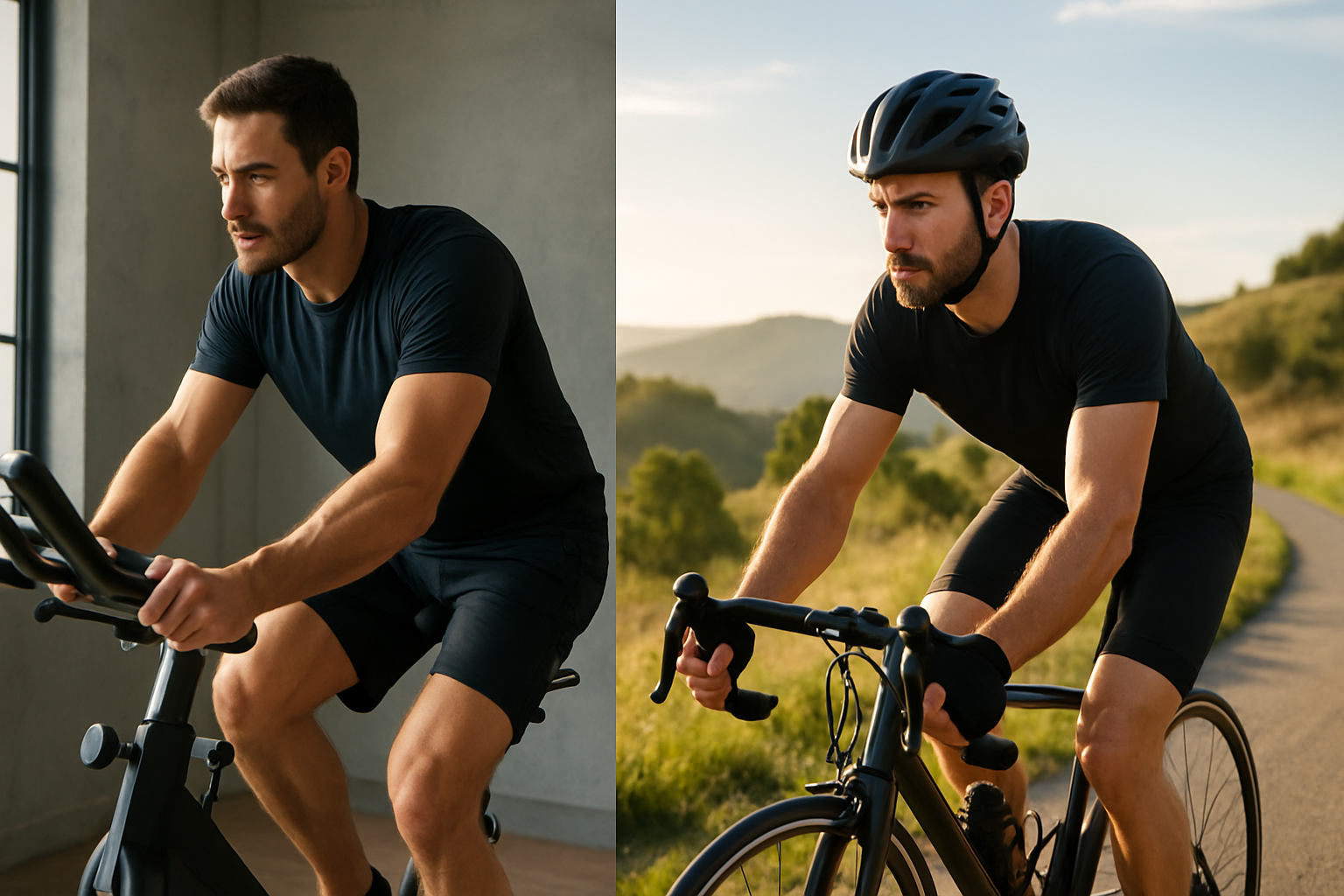
As a certified personal trainer who programs cardio for clients ranging from post-rehab beginners to competitive athletes, I get asked some version of this question almost every week: does indoor cycling provide the same benefits as outdoor cycling for cardio? The short answer is yes — but the long answer matters more, because how you structure your rides determines whether you’re actually improving your cardiovascular fitness or just logging time on a seat. I’ve reviewed the exercise physiology research, tested both modalities extensively with my own clients, and tracked their VO2 max improvements over training cycles. This guide breaks down exactly what the science says, where each modality has a genuine advantage, and how to structure your training for maximum results regardless of which bike you’re on.
This post contains affiliate links. As an Amazon Associate, I earn from qualifying purchases. This helps keep the site running at no extra cost to you — and I only recommend gear I’d actually use myself.
Why Cycling Is One of the Best Cardio Workouts You Can Do
Cycling checks almost every box when it comes to cardiovascular training. It’s low-impact (meaning it’s easier on your joints than running), it’s scalable for all fitness levels, it torches serious calories, and it strengthens your heart and lungs over time. Studies published in the Journal of the American Heart Association have linked regular cycling to reduced risk of cardiovascular disease, improved VO2 max (that’s your body’s ability to use oxygen during intense exercise — a key marker of cardio fitness), and better metabolic health.
Whether you’re trying to lose weight, build endurance, or just get healthier, cycling delivers. A 155-pound person can burn roughly 500–600 calories per hour at a moderate pace outdoors, and a vigorous indoor cycling session can push even higher depending on resistance and intensity. The key is consistency and structure — and that’s exactly what we’re going to talk about.
Indoor vs Outdoor Cycling: Cycling Cardio Fitness Benefits Compared
The Case for Outdoor Cycling
Outdoor cycling is dynamic by nature. Your body constantly adapts to terrain changes, wind resistance, elevation, and real-world obstacles — and that variability is a genuine fitness advantage. Riding uphill builds leg strength alongside cardiovascular endurance. Navigating different surfaces engages stabilizer muscles you simply don’t activate on a stationary bike. There’s also a mental health bonus: fresh air, scenery, and sunlight have been shown to reduce cortisol (your stress hormone) and boost mood more effectively than indoor exercise.
The downside? Weather, traffic, and logistics. You can’t always control when or where you ride, which can make consistency difficult — and consistency is the #1 factor in long-term fitness progress.
The Case for Indoor Cycling
Indoor cycling wins on consistency, safety, and control. Rain or shine, 6 AM or midnight, you can get your workout in. You can dial in exact resistance levels, follow structured programs, and track your metrics precisely. For people targeting weight loss or building a base level of fitness, this kind of structured, repeatable training is incredibly effective.
Modern stationary bikes with app connectivity take this even further — you can follow live classes, ride virtual routes, and get real-time coaching without leaving your house. That’s a game-changer for busy schedules.
Bottom line: If you can do both, do both. Outdoor riding builds functional strength and mental resilience. Indoor training builds consistency and precision. Together, they create a well-rounded cyclist and a seriously fit cardiovascular system.
How to Structure Your Cycling Training for Maximum Fitness Gains
Here’s where most people go wrong: they hop on the bike and pedal at the same moderate pace every single time. That’s better than nothing, but it’s not going to keep producing results. Your body adapts quickly, and you need to challenge it in different ways to keep improving. Here’s a simple weekly structure that works for both indoor and outdoor riders:
- 1–2 days: HIIT sessions — High-Intensity Interval Training alternates between short bursts of maximum effort (30–60 seconds) and recovery periods. This spikes your heart rate, burns more fat, and improves VO2 max faster than steady riding.
- 1–2 days: Endurance/Zone 2 riding — This is longer, steady-state riding at a conversational pace (you could hold a conversation but it’s slightly challenging). Zone 2 training builds your aerobic base and teaches your body to burn fat more efficiently.
- 1 day: Strength-focused ride — Crank up the resistance (or find a hilly route) and focus on power output. This builds muscle and improves overall cycling performance.
- 1–2 days: Active recovery or rest — Don’t skip this. Recovery is when your body actually gets fitter.
Tracking your cadence (how fast your legs are spinning, measured in RPM — rotations per minute) is one of the best ways to optimize each of these workouts. Most coaches recommend 80–100 RPM for endurance work and higher cadences for intervals. If you’re not tracking it, you’re leaving gains on the table.
Gear I Recommend for Getting the Most from Cycling Cardio
You don’t need a $3,000 setup to get serious results. Here are the tools I’d actually point a friend toward:
Best Indoor Bikes
The Merach Exercise Bike is one of my top picks for home riders who want a feature-packed experience without breaking the bank. It uses a combination of brake pad and magnetic resistance, connects to an exclusive app with guided fitness courses, supports up to 270 lbs, and even includes a dumbbell rack so you can add upper body work to your routine. It’s a genuinely smart setup for weight loss and full-body conditioning.
If you want a heavier-duty option, the YOSUDA PRO Magnetic Exercise Bike supports up to 350 lbs and features a silent belt drive system — meaning it’s whisper quiet, which matters if you’re riding early morning or late at night. The comfortable seat cushion is a real plus for longer endurance sessions.
For a budget-friendly but capable option, check out the CHAOKE Quiet Magnetic Resistance Stationary Bike. It’s app-compatible, holds up to 300 lbs, and comes with a clear digital display so you can monitor your stats during every ride. A solid no-fuss pick for beginners and intermediate riders.
Cadence Sensors for Outdoor and Indoor Tracking
If you ride outdoors — or want to connect a non-smart indoor bike to apps like Zwift or Wah
A common question among cyclists is whether indoor cycling provide same benefits as outdoor cycling for cardio, and the short answer is yes — when intensity and duration are matched, both deliver comparable cardiovascular improvements, including increased aerobic capacity, improved heart health, and better endurance. The key differences come down to training conditions rather than cardio outcomes: indoor cycling offers a controlled environment free from traffic, unpredictable weather, and road hazards, making it easier to follow structured workouts, while outdoor cycling adds natural terrain variation, balance and coordination demands, and the bonus of vitamin D exposure from sunlight. Neither format has a clear edge over the other for pure cardio fitness, so the best choice simply comes down to your personal preference, schedule, and what keeps you consistent — because ultimately, the workout you actually do is always the most effective one.

Written by Lucy Bamboo
Lucy Bamboo is a NASM-certified personal trainer (CPT) and corrective exercise specialist (CES) with over 12 years of experience coaching clients through injury recovery, strength building, and sustainable fitness. She holds a B.S. in Kinesiology and has worked in both clinical rehabilitation and private training settings. Lucy writes at Push Pull Ya'll to make evidence-based exercise guidance accessible to everyone — whether you're rehabbing a shoulder injury at home or building your first real training program.