Tag: gym equipment

  • Gym Bag Essentials: What Every Serious Lifter Should Carry to Every Session

    Gym Bag Essentials: What Every Serious Lifter Should Carry to Every Session

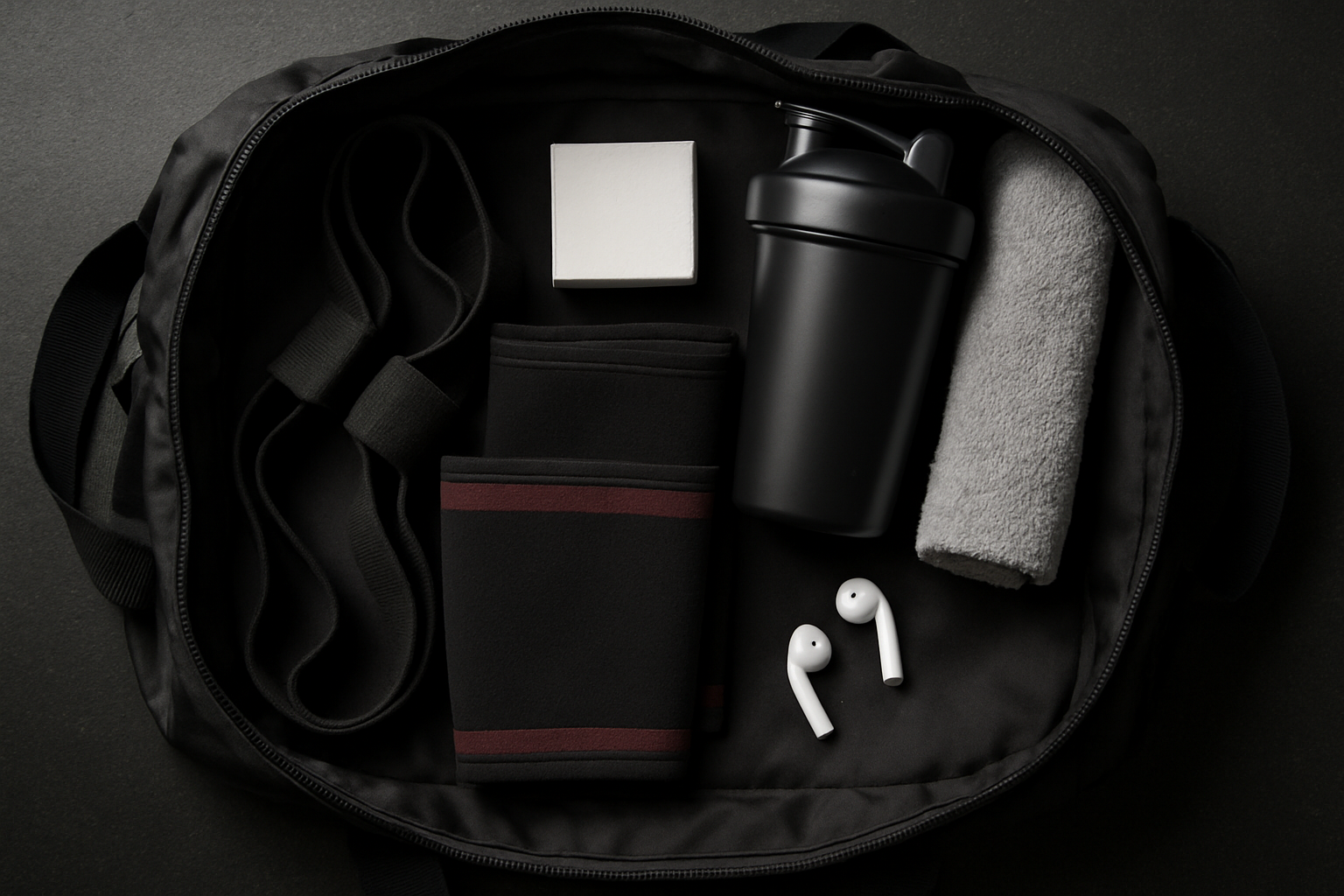
    You ever watch someone show up to the gym, dig through a crumpled plastic bag for their headphones, realize they forgot chalk, and then spend half their deadlift session with sweaty palms and zero grip? I’ve been that person. Most serious lifters have. The difference between a frustrating session and a locked-in, productive one often comes down to preparation — and that starts with what’s in your bag. If you want to train like you mean it, understanding the gym bag essentials for lifters is non-negotiable. This guide breaks down exactly what you need, why it matters, and the gear I personally recommend to make every session count.

    This post contains affiliate links. As an Amazon Associate, I earn from qualifying purchases. This means if you click a link and make a purchase, I may earn a small commission at no extra cost to you. I only recommend products I genuinely believe in.

    Why Your Gym Bag Setup Actually Matters

    Here’s the truth: showing up to the gym is only half the battle. If you’re hunting for your belt between sets, digging for a dry shirt, or wasting five minutes looking for your earbuds, you’re bleeding energy and focus — two things you need to perform your best. Research in sports psychology consistently shows that pre-performance routines reduce anxiety and improve focus. Having a well-packed gym bag is a physical extension of that mental preparation. It signals to your brain: I’m ready, I’m serious, let’s go.

    Beyond the mental game, having the right tools on hand directly affects your performance and recovery. Chalk improves grip and reduces injury risk on heavy pulls. A solid water bottle keeps you hydrated so your muscles can actually fire. Proper footwear makes a massive difference on squats and deadlifts. Every item in your bag should earn its spot — dead weight slows you down literally and figuratively.

    Gym Bag Essentials for Lifters: The Complete Packing List

    1. The Right Bag

    Before you pack anything, you need a bag that works as hard as you do. A good gym bag has dedicated compartments — one for shoes (so your clean clothes don’t smell like rubber and gym floor), a wet pocket for sweaty gear or a damp swimsuit, and enough main space for all your essentials without becoming a black hole you lose things in.

    2. Lifting Chalk

    If you’re pulling heavy deadlifts, doing heavy rows, or grinding through pull-ups, chalk is one of the highest-value items you can carry. Gym chalk — technically magnesium carbonate — works by absorbing moisture from your hands, dramatically increasing friction between your skin and the bar. That means better grip, less bar slippage, and reduced chance of tearing your hands open mid-set. It’s not just for powerlifters or gymnasts. If you’re lifting anything over about 70% of your max, chalk will help you hold on longer and focus on the movement instead of your grip giving out.

    3. Water Bottle

    Dehydration of even 2% of your body weight can measurably reduce strength output and cognitive performance, according to studies published in the Journal of Strength and Conditioning Research. Bring a large, insulated water bottle — at least 32 oz — and actually use it between sets. This one’s simple but it’s skipped more than you’d think.

    4. Lifting Shoes or Flat Shoes

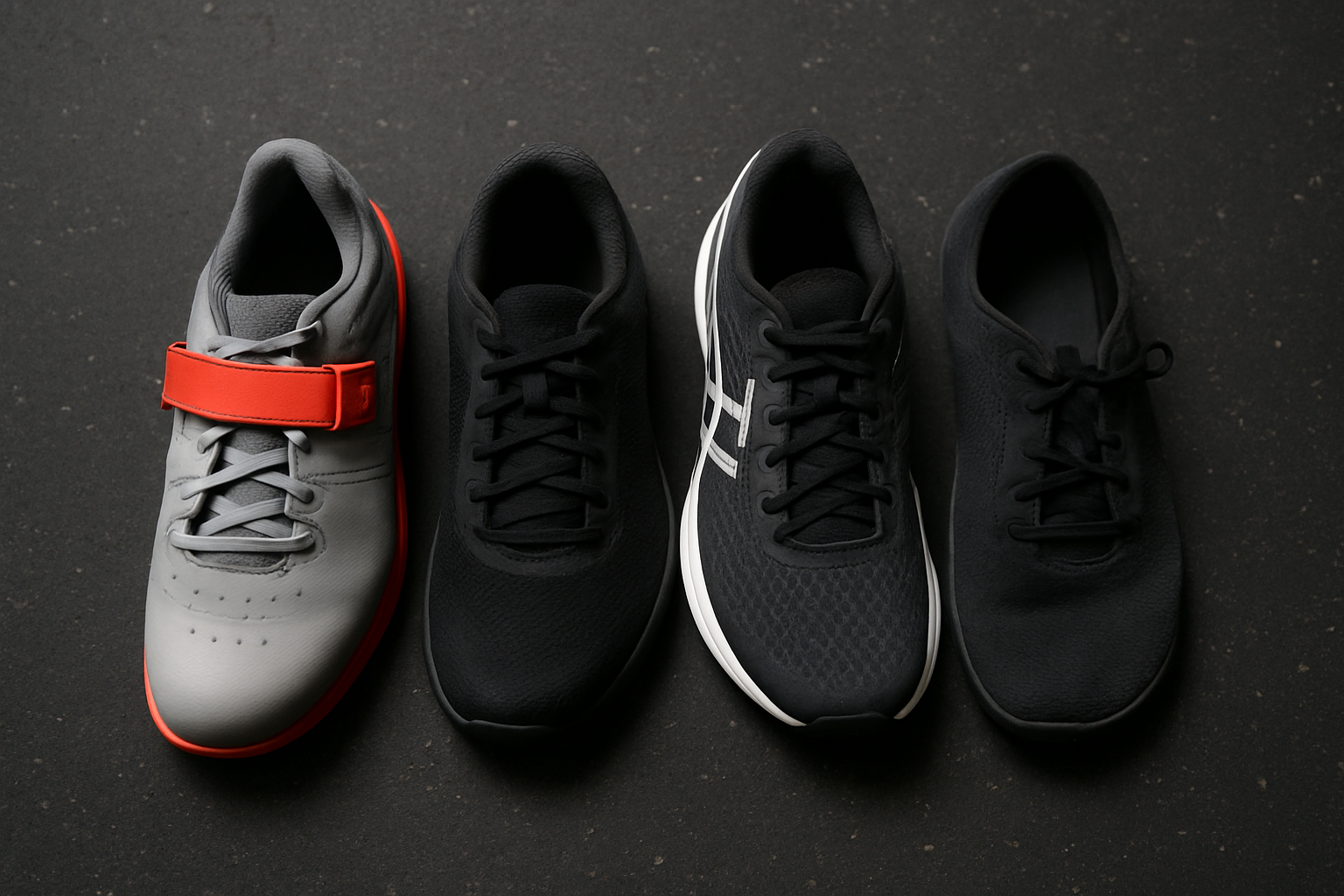
    Cushioned running shoes are great for running. For squatting and deadlifting, they’re a liability. The compressible foam sole creates instability when you’re under a loaded bar — imagine trying to push force into a mattress. Flat-soled shoes (like Chuck Taylors or dedicated lifting shoes) give you a solid, stable base for force transfer. Pack a dedicated pair and change into them at the gym. Your lifts will thank you immediately.

    5. Resistance Bands

    A couple of resistance bands take up almost no space and open up a world of warm-up, mobility, and accessory work. Use them for hip activation before squats, shoulder warm-ups before pressing, or banded pull-aparts to keep your rotator cuff healthy. They’re also great for assisted stretching post-workout.

    6. A Notebook or Training Log App

    Progressive overload — adding weight, reps, or volume over time — is the core principle behind getting stronger. You can’t track progress if you don’t record it. Whether it’s a small spiral notebook or an app on your phone, log your sets, reps, and weights every session. It takes two minutes and makes a massive difference in long-term results.

    7. A Change of Clothes and Toiletries

    This one sounds obvious, but I can’t tell you how many people skip packing a fresh shirt and end up doing grocery runs in soaked gym clothes. Pack a clean set, deodorant, and any post-workout supplements you use. Take care of your body after the session — recovery starts the moment you rack the bar.

    Gear I Recommend

    I’ve tested a lot of gear over the years. Here’s what I’d actually put in my bag — and what I recommend to the athletes I work with.

    Top Gym Bags

    For a versatile, well-organized bag that works for both men and women, the Gym Bag with Shoes Compartment and Wet Pocket is a standout. It features a dedicated waterproof shoe compartment, a separate wet pocket for post-swim or post-sweat gear, and is spacious enough to double as a weekend travel bag. The fact that it’s waterproof is a huge plus — gym floors and locker rooms are not clean environments.

    If you prefer a more structured, brand-name option, the Adidas Unisex Defender 4.0 Gym Duffel Bag is a reliable classic. Adidas builds their gym bags tough, with reinforced handles and a clean layout that’s easy to pack and unpack fast. It’s the kind of bag that looks good at the gym and doesn’t fall apart after six months of daily use.

    For lifters who want something compact and no-frills, the Fitgriff® Gym Bag for Men and Women is a smart pick. At 19 x 10 x 10 inches, it hits the sweet spot between compact and functional — shoe compartment included, wet pocket included, and it comes in a clean all-black finish that hides the inevitable gym grime.

    Chalk That Actually Works

    For chalk, I don’t mess around. The March 29, 2026

  • Resistance Bands: The Complete Guide to Types, Tensions, and Best Exercises

    Resistance Bands: The Complete Guide to Types, Tensions, and Best Exercises

    I can’t tell you how many times someone walks into the gym holding a tangled mess of colorful bands, looks at me, and says, “I bought these online — now what?” If that’s you, don’t sweat it. This resistance bands guide types tensions and everything in between is exactly what you need to go from confused to confident. Whether you’re training at home, rehabbing an injury, or just looking to add variety to your gym sessions, resistance bands are one of the most versatile and underrated tools you can own.

    This post contains affiliate links. As an Amazon Associate, I earn from qualifying purchases. This means I may earn a small commission if you purchase through my links — at no extra cost to you. I only recommend products I’d genuinely use or suggest to my own clients.

    The Resistance Bands Guide to Types and Tensions You Actually Need

    Not all resistance bands are created equal — and that’s not marketing fluff, it’s the truth. Using the wrong type for the wrong exercise is one of the most common mistakes I see, and it can limit your results or even lead to injury. Let me break down the main types so you know exactly what you’re working with.

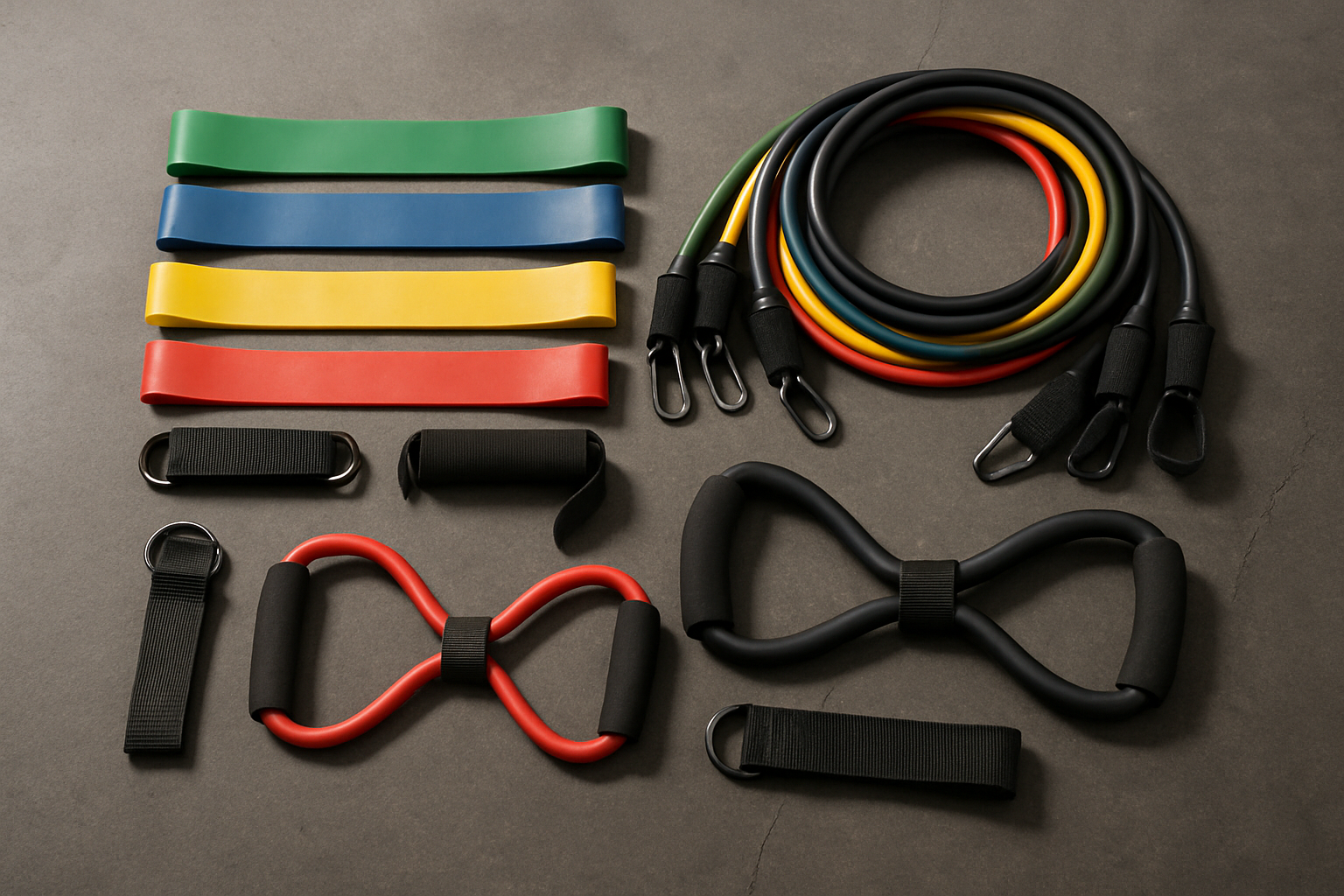
    Tube Bands with Handles

    These are the bands most people picture when they hear “resistance bands.” They’re cylindrical, usually made of rubber or latex, and come with plastic or foam handles at each end. They’re fantastic for upper body work — think bicep curls, chest presses, shoulder raises, and rows. Most sets come in multiple resistance levels, typically ranging from about 10 lbs all the way up to 50+ lbs per band, and many let you stack them together for even more challenge. Door anchors (usually included) let you mimic cable machine exercises without the cable machine.

    Loop Bands (Flat Loop Resistance Bands)

    These are thick, flat continuous loops made from layered latex. You’ve seen powerlifters use them to add accommodating resistance to barbell squats and deadlifts, but they’re equally useful for assisted pull-ups, glute work, and mobility training. They come in color-coded tensions — light bands are great for stretching and mobility, while heavier ones (like the green or black bands) provide serious resistance for big compound movements.

    Mini Bands (Hip Circles)

    These are smaller, thinner loops that sit around your thighs or ankles. They’re the go-to for glute activation, lateral walks, clamshells, and hip abduction work. Physical therapists love them. So do athletes doing warm-up protocols. If your glutes aren’t firing during squats, a mini band can fix that fast.

    Figure-8 and Therapy Bands

    Figure-8 bands have a crossover design that keeps your wrists or ankles locked in during exercises. Therapy or flat bands (like TheraBand-style) are used heavily in physical therapy and rehab settings. They’re super light and great for joint stabilization and recovery work.

    Understanding Resistance Band Tensions

    This is where most people get tripped up, so let me keep it simple. Resistance bands work on progressive tension — meaning the more you stretch the band, the harder it pulls back. That’s actually a major advantage over free weights, because you get maximum resistance at the point where your muscles are strongest (the end range of motion). This is called accommodating resistance, and it’s one reason serious strength coaches use bands alongside barbells.

    When buying bands, look for sets that clearly label resistance levels. Most tube band sets use color coding like this:

    • Yellow/Light: 10–15 lbs — great for beginners, rehab, and shoulder exercises
    • Red/Medium: 20–30 lbs — good for most upper body pushing and pulling movements
    • Green/Heavy: 30–40 lbs — ideal for rows, chest presses, and assisted pull-ups
    • Blue/Extra Heavy: 40–60 lbs — lower body work, stacking with other bands
    • Black/Max: 50–80+ lbs — advanced full-body training, powerlifting augmentation

    For loop bands used in powerlifting or pull-up assistance, tension ratings can go well above 100 lbs. Always start lighter than you think you need — bands have a way of humbling you when your form breaks down under tension.

    Best Resistance Band Exercises (By Muscle Group)

    Upper Body

    • Bicep Curl: Stand on the band, handles in hand, curl up to shoulder height. Keep elbows pinned to your sides.
    • Chest Press: Anchor the band behind you at chest height, press forward like a bench press standing up.
    • Lat Pulldown: Anchor overhead, pull down to your chest with a slight lean back. Best for back width.
    • Seated Row: Loop the band around a post or foot, pull toward your belly button, squeeze shoulder blades together.

    Lower Body

    • Banded Squat: Stand on the band, loop handles over shoulders, squat down. Keeps you honest about depth.
    • Glute Kickback: Anchor the band low, loop around ankle, kick back and squeeze your glute at the top.
    • Lateral Band Walk: Mini band around thighs, slightly bent knees, step side-to-side. Brutal on the hips in the best way.
    • Romanian Deadlift: Stand on the band, hinge at the hips, feel the hamstring stretch — control the way down.

    Core

    • Pallof Press: Anchor the band at chest height to your side, press straight out and hold. Outstanding for anti-rotation core strength.
    • Woodchop: Anchor high, pull diagonally across your body toward the opposite hip. Great for obliques.

    Gear I Recommend

    Here are the bands I’d actually hand to a client or put in my own gym bag. All are solid options depending on your training goals and budget.

    If you want a complete setup right out of the box, the March 29, 2026

  • The Best Workout Shoes for Every Type of Training (And Why It Matters)

    The Best Workout Shoes for Every Type of Training (And Why It Matters)

    • Heavy squats and Olympic lifts: Go with an elevated-heel lifting shoe like the Nordic Lifting MEGIN or Adidas Powerlift 5
    • General strength training on a budget: The High Stability Squat Shoes are a smart,

      Here’s a mistake I see all the time at the gym: someone walks in wearing their favorite running shoes, loads up a barbell, and wonders why their squats feel unstable or their heels keep rising off the floor. I’ve been there myself. The truth is, the shoes on your feet matter way more than most people realize — and finding the best workout shoes for training type can be the difference between hitting a personal record and grinding through a frustrating, ineffective session. Let’s break it all down so you know exactly what to look for and what to buy.

      This post contains affiliate links. As an Amazon Associate, I earn from qualifying purchases. This means I may earn a small commission if you purchase through my links, at no extra cost to you. I only recommend products I genuinely believe in.

      Why Your Shoe Choice Actually Changes Your Performance

      Think of your shoes as your foundation. Every rep, every sprint, every jump starts from the ground up. The wrong shoe doesn’t just feel uncomfortable — it actively works against you. Here’s the science behind it: different training styles place completely different demands on your feet and ankles. A running shoe is engineered with a thick, cushioned midsole designed to absorb impact during forward motion. That’s great for running. But when you’re squatting heavy weight, that same cushioning becomes unstable foam sitting between your foot and the floor — it compresses unevenly, shifts your weight forward, and kills your force transfer. You’re essentially trying to lift on a sponge.

      On the flip side, a rigid weightlifting shoe with an elevated heel does something brilliant for squat mechanics. It increases your ankle’s effective range of motion (the angle your ankle can flex through), which lets you sit deeper into a squat while keeping your torso more upright. Research published in the Journal of Strength and Conditioning Research confirms that heel elevation significantly improves squat depth and trunk position — both key factors in lifting safely and powerfully.

      The bottom line? One shoe does not fit all training. Let me walk you through the main categories and exactly what you need for each.

      Best Workout Shoes for Training Type — A Full Breakdown

      For Weightlifting, Squats, and Olympic Lifts

      If you’re squatting, deadlifting, cleaning, or snatching, you need a dedicated lifting shoe. Non-negotiables here are: a firm, non-compressible sole, a raised heel (typically 0.6 to 1 inch), and a snug strap or lacing system that locks your foot in place. Compression underfoot during a heavy lift is a stability thief — you want to feel like your feet are bolted to the floor.

      For General Strength Training and Cross-Training

      If your sessions mix it up — some lifting, some bodyweight work, some cardio-style circuits — you want a flat, low-profile training shoe with moderate lateral support. You don’t need an elevated heel, but you do need something that doesn’t collapse under load or slip during lateral movements.

      For Running

      Running shoes are built for exactly one thing: forward motion with repeated impact. They cushion beautifully for that purpose. Just keep them off the squat rack.

      Gear I Recommend

      These are products I actually stand behind. I’ve selected them based on build quality, performance reputation, and real-world results. Here’s what I’d point you toward depending on your training focus.

      Top Pick for Serious Lifters: Nordic Lifting MEGIN Powerlifting Shoes

      If you’re committed to squatting and Olympic lifting, the Nordic Lifting MEGIN Powerlifting Shoes are a rock-solid choice. These feature a firm elevated heel that dramatically improves squat depth and keeps you stable under heavy loads. They’re built for both men and women, and the construction is durable enough to handle serious training volume. If you’ve been squatting in running shoes and feeling that wobble, these will feel like night and day.

      Best Brand-Name Lifting Shoe: Adidas Powerlift 5

      Adidas has been making trusted lifting footwear for decades, and the Adidas Unisex Powerlift 5 lives up to that reputation. The raised heel, wide base, and secure strap system make it excellent for squats and Olympic-style lifts. It’s a unisex design, comfortable enough for long training sessions, and stylish enough that you won’t feel self-conscious wearing them. A great all-around lifting shoe for beginners and intermediate lifters alike.

      Great Budget-Friendly Option: High Stability Squat Shoes

      Don’t want to spend a premium price to get started? These High Stability Squat Shoes punch well above their price point. They feature a non-slip rubber sole, wide toe box for natural foot spread, and solid heel support — everything you need for safe, stable lifting. Available for both men and women, these are a smart entry point if you’re just getting into strength training and want proper footwear without the sticker shock.

      Best Cross-Training Shoe for Women: Nike Women’s Flex Train

      For women who mix lifting with cardio, HIIT (High-Intensity Interval Training), or functional fitness circuits, the Nike Women’s Flex Train is a versatile workhorse. It’s lightweight, flexible through the forefoot for dynamic movement, and stable enough for moderate lifting. If you’re not doing exclusively heavy barbell work, this gives you the adaptability to move through a varied workout without switching shoes.

      Best Cross-Training Shoe for Men: Nike Men’s MC Trainer 3

      The Nike Men’s MC Trainer 3 is built specifically for gym training — not running, not casual wear. It features a flat, stable platform that works well for strength exercises, lateral support for agility drills, and a grippy outsole that won’t slide during box jumps or sprint intervals. It’s the kind of shoe that keeps up with you whether you’re pressing, pulling, or conditioning.

      Quick Reference: Match Your Shoe to Your Training

      • Heavy squats and Olympic lifts: Go with an elevated-heel lifting shoe like the Nordic Lifting MEGIN or Adidas Powerlift 5
      • General strength training on a budget: The High Stability Squat Shoes are a smart,
  • Kettlebell Training: Why One Tool Can Replace Half Your Gym

    Kettlebell Training: Why One Tool Can Replace Half Your Gym

    Picture this: you walk into a gym, look around at rows of machines, cable towers, dumbbells, barbells, and resistance bands — and feel completely overwhelmed. I’ve been there. Most people have. But here’s something I tell every new client who asks me where to start: if you could only pick one piece of equipment to train with for the rest of your life, make it a kettlebell. The kettlebell training benefits exercises you can do with a single bell are genuinely staggering — we’re talking strength, cardio, mobility, and power all rolled into one compact, no-nonsense tool. This post breaks down exactly why kettlebells deserve a permanent spot in your routine and which ones are actually worth buying.

    This post contains affiliate links. As an Amazon Associate, I earn from qualifying purchases. This means I may earn a small commission if you purchase through my links, at no extra cost to you. I only recommend products I’d put in my own gym bag.

    Why Kettlebells Are Built Differently (And Why That Matters)

    Here’s the thing most people don’t realize: a kettlebell isn’t just a dumbbell with a handle on top. The offset center of gravity — meaning the weight sits below the handle instead of in your palm — fundamentally changes how your body has to work. Your stabilizer muscles (the smaller muscles around your joints that keep everything lined up and safe) are constantly firing. Your core is bracing. Your hips are generating power. Every rep demands more from your body than the same movement with a standard dumbbell.

    Research published in the Journal of Strength and Conditioning Research found that kettlebell training significantly improves both dynamic balance and core strength compared to traditional resistance training. A separate study showed that a 20-minute kettlebell snatch workout burned roughly 20 calories per minute — comparable to running a 6-minute mile. Let that sink in. One tool. Twenty minutes. Elite-level calorie burn. That’s the kind of efficiency we’re chasing.

    The Kettlebell Training Benefits and Exercises You Need to Know

    Let me walk you through the core movements and exactly what they’re doing for your body. You don’t need a full gym program to start. You need five exercises and consistency.

    The Kettlebell Swing

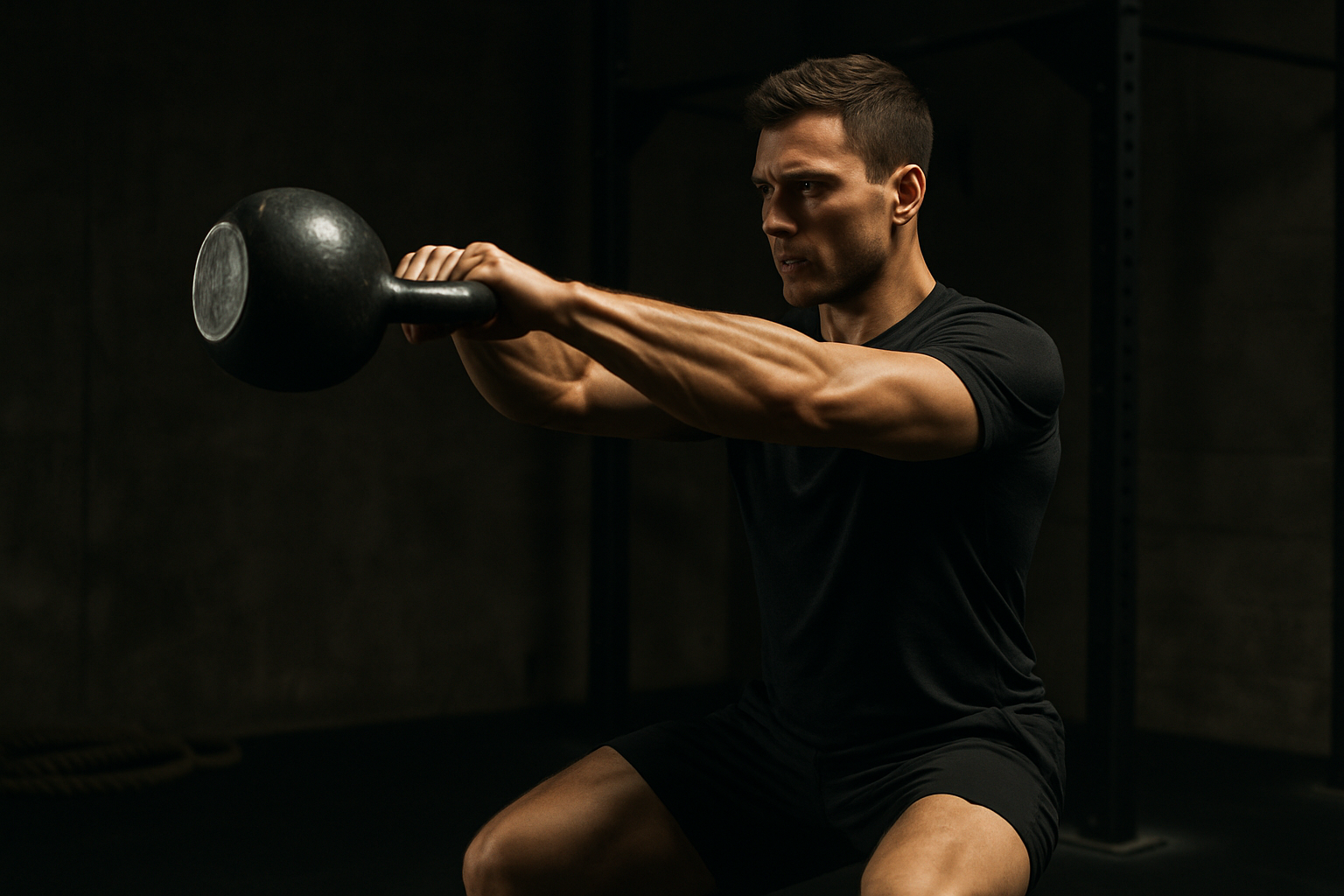
    This is the king of kettlebell exercises. The swing trains your posterior chain — glutes, hamstrings, lower back — through a powerful hip hinge movement. Think of it less like a squat and more like a horizontal jump, except you’re holding a weight. It builds explosive hip power, hammers your cardiovascular system, and teaches your body to absorb and generate force safely. Start with two-handed swings before progressing to single-arm.

    The Turkish Get-Up

    This one looks bizarre the first time you see it. You start lying on your back holding a kettlebell overhead, and you stand up — that’s it. Except it’s one of the most technically demanding, joint-protecting movements in existence. It trains shoulder stability, hip mobility, and total-body coordination simultaneously. Physical therapists love it. Coaches love it. Your body will love it once you learn it.

    Goblet Squat

    Hold the kettlebell by the horns (the sides of the handle) at chest height and squat. This is the best teaching tool for squat mechanics I’ve ever used with beginners. The counterbalance naturally pulls you into proper depth while keeping your chest upright. It also doubles as a serious quad and glute builder when you load it heavy enough.

    Single-Arm Press and Clean

    The clean brings the bell from a swing position up to your shoulder (the “rack” position), and the press drives it overhead. Together these movements build shoulder strength, upper back thickness, and the kind of grip strength that carries over into everything else you do in life.

    Kettlebell Row

    Hinge at the hips, brace your core, and pull the bell to your hip. Simple, brutal, effective. This builds the upper and mid-back muscles that most people neglect — the same ones that fix poor posture from sitting at a desk all day.

    Gear I Recommend: The Best Kettlebells for Every Budget and Goal

    Not all kettlebells are created equal. Here are my honest picks depending on where you are in your training journey.

    Best for Beginners: Fitvids 3-Piece Kettlebell Set (5, 10, 15 lb)

    If you’re just getting started, you don’t need to go heavy right out of the gate — you need to learn the movements. The Fitvids 3-Piece Kettlebell Set gives you three weights to grow into, which is exactly what beginners need. Having a lighter bell for technique work and a heavier one for goblet squats makes a real difference in how fast you progress.

    Best Budget Cast Iron Set: CAP Barbell Cast Iron Set (10, 15, 25 & 30 lb)

    For anyone ready to step up their game, the CAP Barbell Cast Iron Kettlebell Set is one of the best values on the market. Cast iron is durable, the handles are comfortable, and having four different weights means you can use the right bell for the right movement — lighter for overhead pressing, heavier for swings and rows. This is a solid home gym starter kit.

    Best Vinyl-Coated Option: Yes4All 10 & 25 lb Set

    If you’re training on hardwood floors or in a finished basement and don’t want to risk damage, the Yes4All Vinyl Coated Kettlebell Set is a smart pick. The vinyl coating protects both the bell and your floors, and the color-coded design makes it easy to grab the right weight mid-workout. These are smooth, well-balanced, and great for full-body circuit work.

    Best for Intermediate to Advanced Athletes: Steve Cotter Signature Steel Competition Kettlebell (16 kg)

    Competition kettlebells have a standardized size regardless of weight, which means your technique stays consistent as you go heavier. The Steve Cotter Signature Steel Competition Kettlebell features a crack-resistant powder coating and a super-textured 34mm handle — that’s the ideal diameter for grip endurance during high-rep sets. If you’re serious about kettlebell sport or just want a bell that will last decades, this is the one.

    Best Space-Saver: Rep Fitness Adjustable Kettlebell (16 kg)

  • Building a Home Gym on Any Budget: The Priority Order for Every Spending Level

    Building a Home Gym on Any Budget: The Priority Order for Every Spending Level