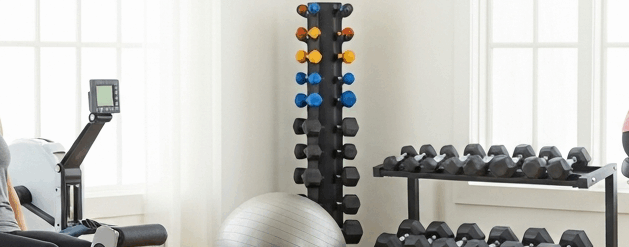
Building Your Perfect Home Workout Space
Creating a home gym doesn’t require emptying your bank account or converting an entire room. You can start small and expand gradually. The key is choosing versatile equipment that supports multiple exercises and fitness goals. This guide breaks down 25 essential items that transform any space into an effective training area.
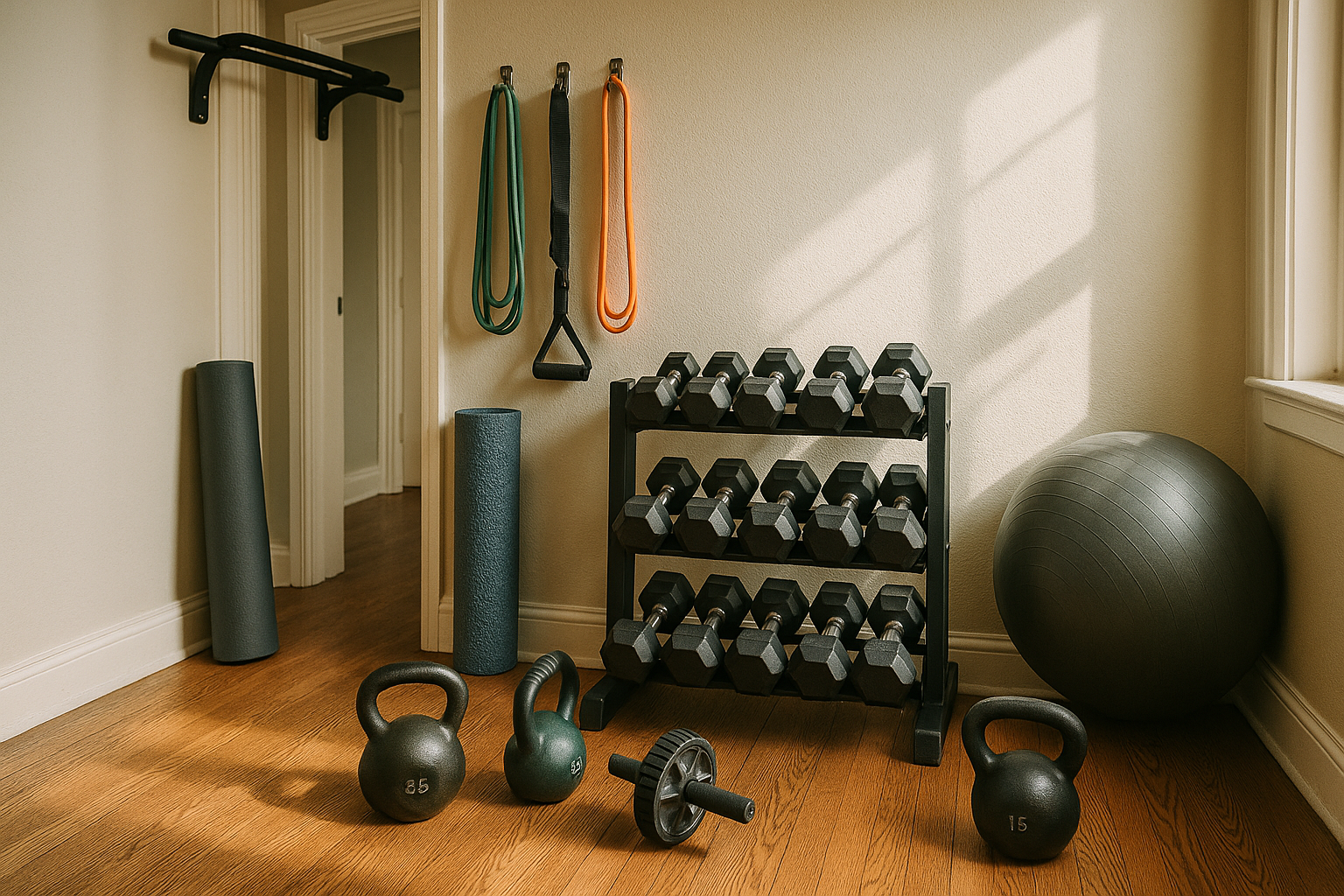
Moreover, building your collection strategically helps you avoid buyer’s remorse. We’ve organized these essentials from foundational items to specialized equipment. This approach lets you prioritize purchases based on your budget and fitness objectives.
When setting up your home workout space, starting with a quality yoga mat provides the perfect foundation for stretching, core work, and floor exercises that complement any fitness routine. Building strength without bulky machines becomes incredibly efficient when you add a resistance band set that offers progressive resistance levels and comes with accessories for targeting every major muscle group. For those serious about building muscle and increasing overall strength, investing in adjustable dumbbells eliminates the need for multiple weight sets while providing versatility for everything from bicep curls to shoulder presses. Protecting your flooring while adding stability during heavy lifts becomes simple with weight plates designed specifically to be gentle on surfaces while maintaining durability through intense training sessions. Recovery is just as important as the workout itself, which is why having a foam roller set helps release muscle tension and improve flexibility between training days without requiring a professional massage therapist. Upper body development reaches new heights when you install a doorway pull-up bar that transforms any standard doorframe into a station for building back strength and improving grip endurance. Adding variety to your core training and improving balance becomes engaging and effective with a stability ball that challenges your body in ways traditional floor exercises simply cannot match. Keeping your growing collection of weights organized and easily accessible requires a dumbbell rack that prevents clutter and makes transitioning between exercises quick and seamless during circuit training. Maximizing vertical space while keeping bands, jump ropes, and other accessories within reach becomes effortless with a wall storage rack featuring multiple hooks designed specifically for home gym organization. Finally, transporting your mat to different rooms or outdoor spaces for variety in your training environment is made convenient with a yoga mat strap that keeps everything rolled tightly and comfortable to carry wherever your fitness journey takes you.
Foundation Equipment for Every Home Gym
1. Exercise Mat
An exercise mat serves as the foundation for countless workouts. You’ll use it for yoga, stretching, core exercises, and bodyweight movements. Look for mats with adequate thickness (at least 6mm) to protect your joints during floor exercises.
Safety and Stability Features
Non-slip surfaces represent one of the most critical safety features in quality exercise mats. These textured surfaces use advanced rubber compounds or specialized patterns to grip your floor. Meanwhile, they provide secure footing for your hands and feet during intense workouts. For example, during challenging yoga poses like downward dog or warrior sequences, proper grip prevents dangerous slips. Additionally, this stability becomes even more important when you’re performing dynamic movements or holding balance poses.
Furthermore, premium mats often feature dual-sided textures for enhanced versatility. The top surface grips your body while the bottom anchors to your floor. Consequently, you can focus entirely on your form rather than worrying about sliding. Moreover, this dual-layer grip system works effectively on various floor types including hardwood, tile, and carpet.
Maintenance and Storage Benefits
Quality mats excel in their easy-care design, which busy fitness enthusiasts truly appreciate. Most premium options require only a quick wipe-down with mild soap and water. Therefore, you can maintain hygiene without spending excessive time on cleaning routines. Additionally, many mats feature antimicrobial treatments that resist odor-causing bacteria naturally.
Compact storage makes these mats ideal for apartment dwellers and small home gyms. Most mats roll up tightly and secure with attached straps or bands. As a result, they fit easily in closets, under beds, or behind doors. Furthermore, lightweight construction means you can carry them effortlessly between rooms or take them outdoors for fresh-air workouts.
2. Resistance Bands
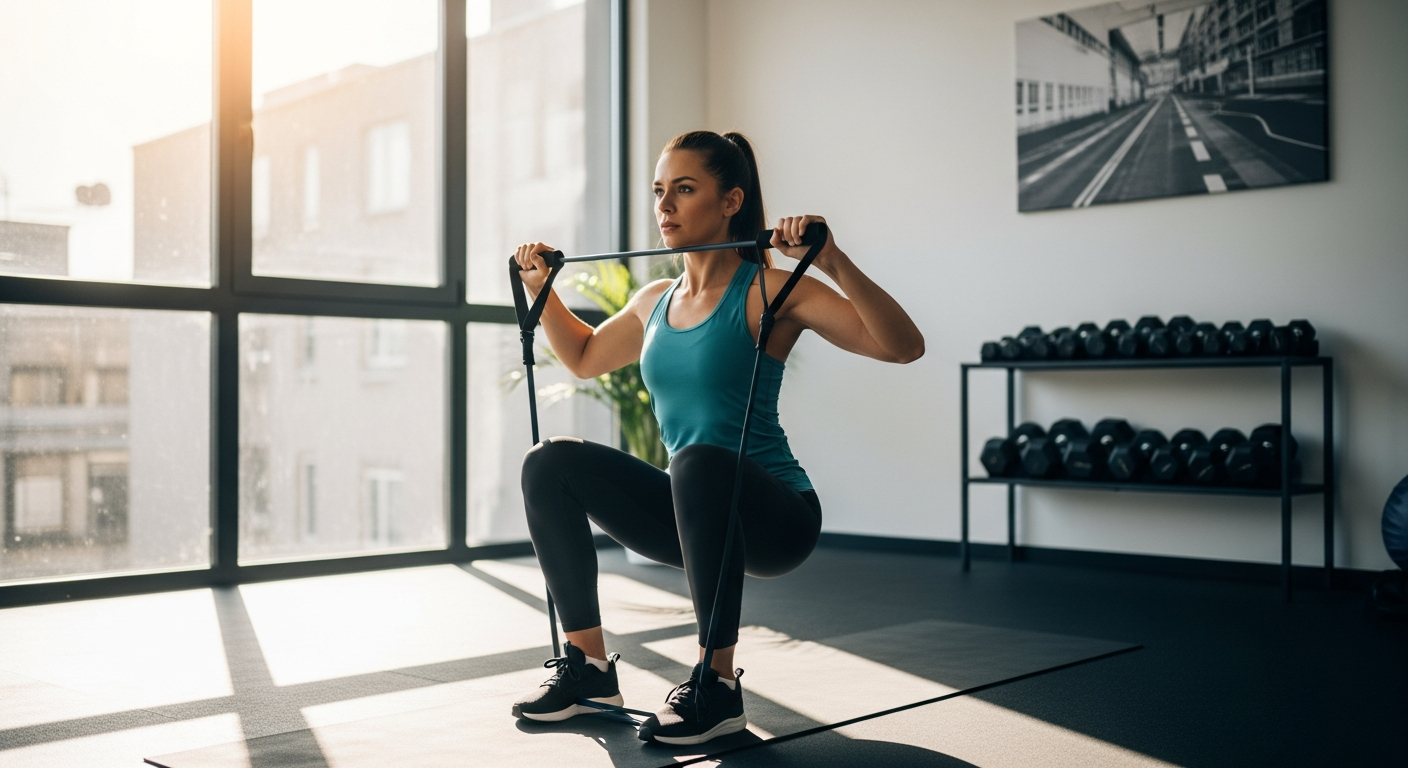
Resistance bands deliver incredible versatility in a compact package. These elastic bands provide variable resistance throughout each movement. You can target every major muscle group with different band tensions and positions.
Furthermore, bands work exceptionally well for rehabilitation exercises and mobility work. They’re lightweight, portable, and cost-effective. Many fitness professionals recommend starting with a set that includes multiple resistance levels.
3. Adjustable Dumbbells
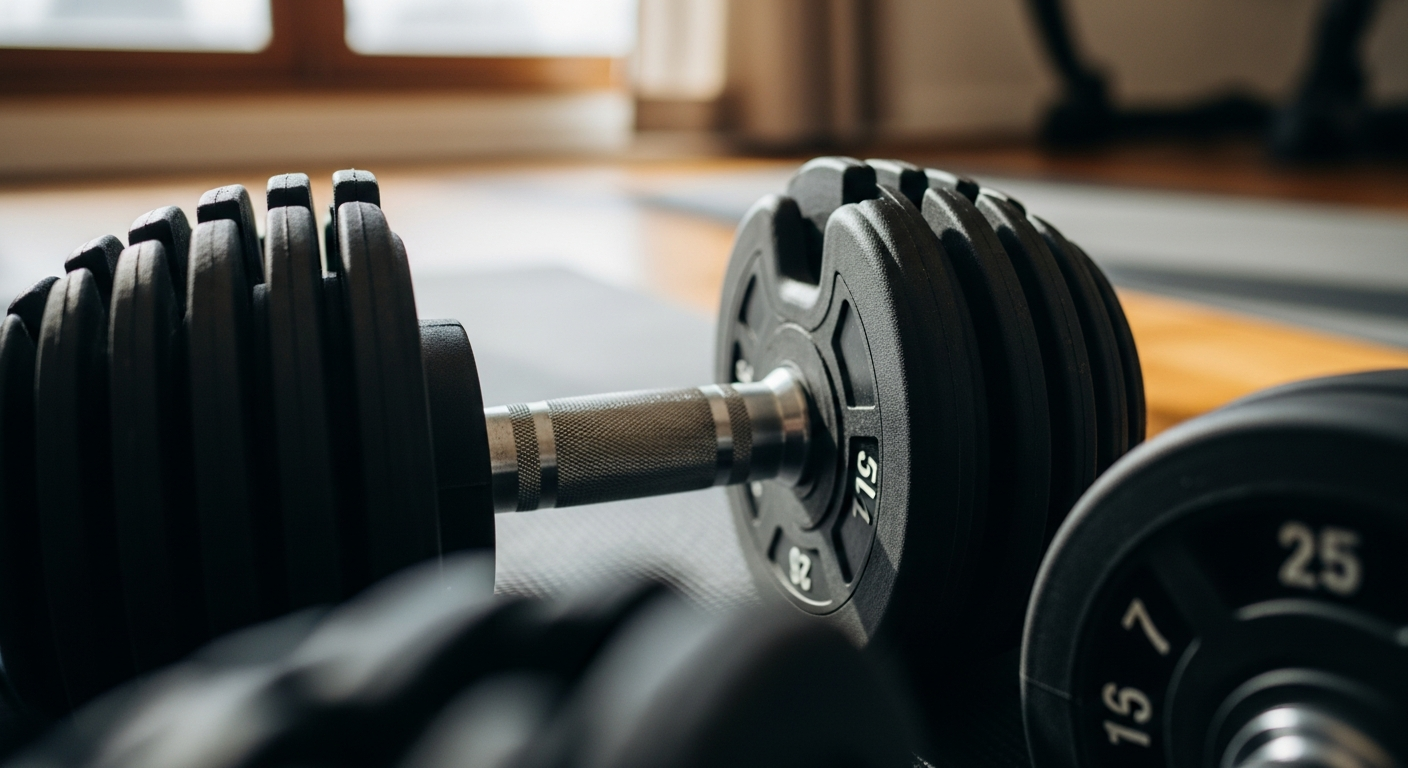
Why Adjustable Dumbbells Transform Home Workouts
Adjustable dumbbells have revolutionized how fitness enthusiasts approach strength training at home. Traditional dumbbell sets require extensive storage space and significant financial investment. In contrast, adjustable options condense an entire weight rack into two compact handles. Furthermore, this innovation addresses the most common complaint among home gym owners: limited space.
The mechanics behind these tools are remarkably simple yet effective. Most designs feature a dial mechanism, pin system, or twist-lock technology. Users can switch from 5 pounds to 50 pounds in mere seconds. Therefore, your workout flow remains uninterrupted between exercises. Additionally, this quick-change capability proves essential during circuit training sessions.
Progressive Overload Made Simple
Building muscle requires consistently challenging your body with increased resistance. Progressive overload forms the foundation of any successful strength program. However, achieving this principle becomes difficult without proper equipment variety. Adjustable dumbbells solve this problem elegantly.
For example, you might start bicep curls at 15 pounds during week one. By week four, you can progress to 20 pounds using the same equipment. Moreover, you can make incremental jumps of 2.5 to 5 pounds depending on your model. This gradual progression prevents plateaus while minimizing injury risk.
Cost-Effectiveness and Long-Term Value
The financial advantages become apparent when comparing initial investments. A complete traditional dumbbell set ranging from 5 to 50 pounds costs between $300 and $600. Meanwhile, quality adjustable dumbbells typically range from $200 to $400 for equivalent weight coverage. Consequently, you save money while gaining functionality.
Beyond the upfront cost, consider the long-term value proposition. As your strength increases, traditional sets require purchasing heavier weights. However, adjustable systems grow with your fitness journey. Additionally, they retain resale value better than individual dumbbells.
Space-Saving Design Benefits
Traditional dumbbell sets require extensive storage solutions. A complete rack typically demands 6 to 8 feet of wall space. Moreover, it needs adequate floor clearance for safe access. Adjustable dumbbells eliminate this spatial burden entirely.
Furthermore, these compact systems occupy roughly the same footprint as a single pair of weights. Most models fit comfortably in a 12-inch by 24-inch area. Therefore, apartment dwellers and home gym enthusiasts gain valuable room for other equipment. Additionally, you can store them under beds or in closets when not in use.
Versatile Weight Range Options
The adjustable mechanism provides remarkable flexibility for diverse training needs. Entry-level users can start with lighter increments of 5 or 10 pounds. Meanwhile, experienced athletes can challenge themselves with maximum loads exceeding 50 pounds per dumbbell.
Progressive overload becomes seamlessly achievable with these systems. For example, you can increase resistance in small 2.5 to 5-pound increments. This gradual progression supports consistent strength gains over time. Consequently, a single set replaces an entire collection of fixed-weight dumbbells.
Accommodating Different Fitness Levels
Beginners benefit from the lower weight settings during their initial training phases. They can master proper form without excessive resistance. However, as their strength develops, the same equipment grows with them.
Advanced lifters appreciate the upper range for intensive muscle-building exercises. They can perform heavy chest presses, rows, and shoulder work effectively. In contrast, purchasing individual dumbbells for each weight increment becomes prohibitively expensive. Therefore, adjustable systems offer superior long-term value for all experience levels.
4. Kettlebell Set
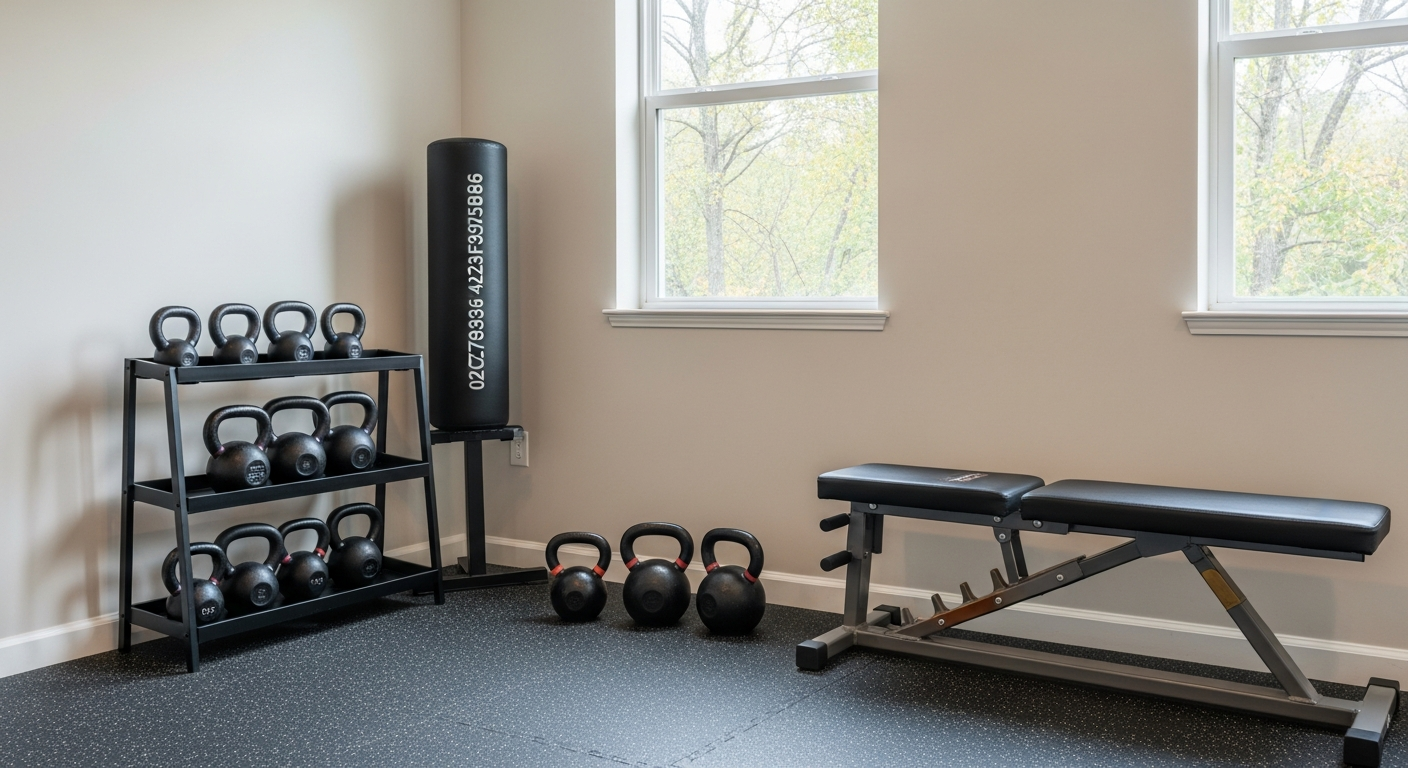
Kettlebells offer unique training benefits through dynamic movements. Their offset center of gravity engages stabilizer muscles differently than dumbbells. You can perform swings, Turkish get-ups, and countless other functional exercises.
Moreover, kettlebell training improves grip strength, power, and cardiovascular endurance simultaneously. Start with one or two weights that challenge you appropriately. Most people benefit from having 15-25 pound and 25-40 pound options.
Strength Training Essentials
5. Pull-Up Bar
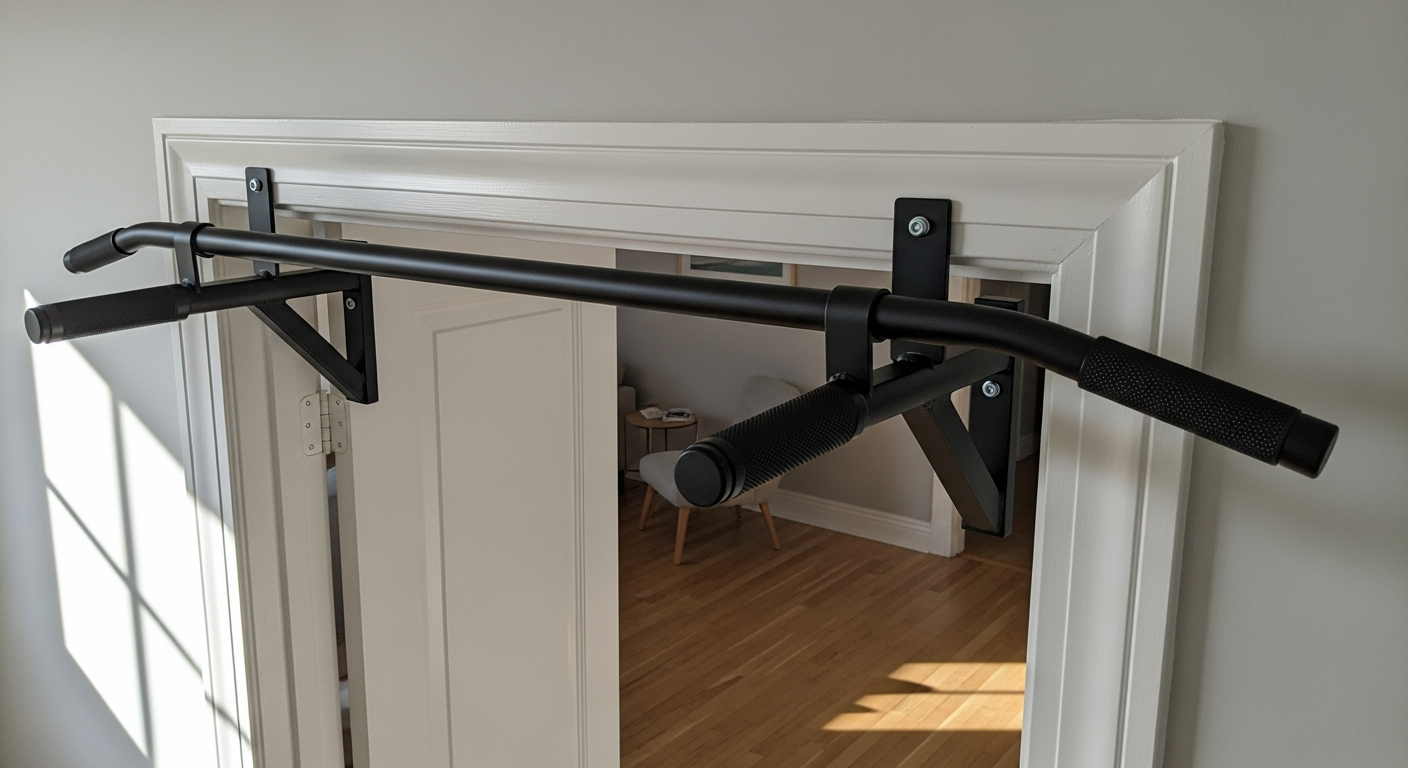
A doorway pull-up bar provides upper body strength training without permanent installation. Pull-ups and chin-ups build back, arm, and core strength effectively. These bars typically support various grip positions for exercise variety.
In addition, many models include padding for comfort during hanging exercises. You can also use them for resistance band anchoring. Installation takes minutes, and removal is equally simple.
6. Bench (Adjustable)
Unlocking Total Body Versatility
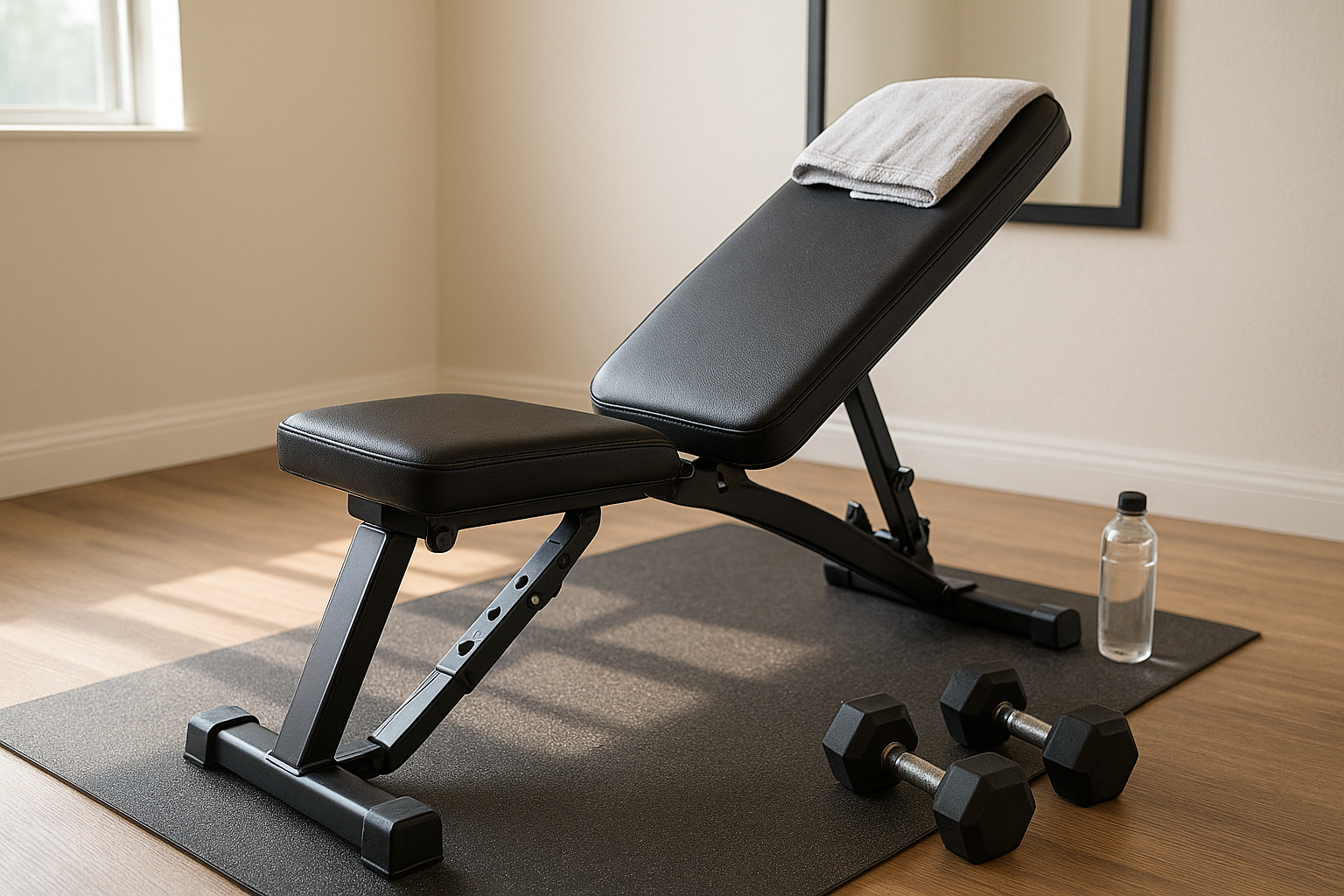
An adjustable bench serves as the cornerstone of a functional home gym. Without one, your training remains limited to standing or floor exercises. However, adding this piece of equipment instantly unlocks hundreds of new movements. Consequently, it maximizes the potential of your dumbbells and barbells. It effectively transforms a small corner into a comprehensive fitness station.
Targeting Muscles from Every Angle
The true magic lies in the mechanism’s adjustability. For instance, shifting from a flat position to an incline changes the focus entirely. Specifically, this adjustment targets the upper pectorals and front deltoids. Meanwhile, a decline setting shifts stress to the lower chest. Thus, you achieve comprehensive muscle development without needing multiple machines.
Consider how angles change the stimulus:
- Flat Position: Builds general strength for chest and triceps.
- Incline Setting: Isolates the upper chest and shoulders.
- Decline Angle: Increases activation in the lower chest.
- 90-Degree Upright: Supports the back for heavy overhead presses.
Beyond Basic Presses
Versatility extends far beyond basic chest pressing. You can utilize the bench for supported rows to build a thick back. Additionally, it provides stability for seated shoulder presses. This support protects your lower back during heavy lifts. Therefore, it is essential for safe training. Even isolation moves like bicep curls become stricter when seated.
Lower Body and Core Applications
Furthermore, do not overlook lower body applications. The bench acts as a sturdy platform for Bulgarian split squats. Similarly, it is perfect for weighted step-ups or hip thrusts. Moreover, you can perform incline leg raises to torch your core. As a result, it becomes a truly full-body tool. This adaptability makes it a smart investment for any fitness enthusiast.
Assessing Build Quality and Weight Capacity
Investing in a heavy-duty frame is crucial for safety and longevity. For instance, look for benches constructed with 11-gauge or 12-gauge steel. These durable materials prevent dangerous wobbling during heavy lifts. Additionally, check the total weight capacity rating carefully. This number must include your own body weight plus your maximum lift load. Consequently, a standard 300-pound limit is often insufficient for serious lifters. Instead, aim for a capacity of at least 600 to 1,000 pounds. This ensures the equipment remains rigid and secure under pressure.
Furthermore, the design of the base impacts your stability significantly. A wide footprint offers superior balance during complex movements. However, the feet should not obstruct your natural stance during a bench press. Also, look for high-quality rubber feet on the base. These small additions protect your floor and prevent sliding.
The Nuances of Padding and Upholstery
Regarding comfort, the density of the foam pad is paramount. Surprisingly, overly soft cushioning can actually hinder your performance. It reduces your leverage and compromises your spinal alignment. Ideally, you want high-density foam that feels firm yet supportive. This type of padding provides a stable platform for driving power. In contrast, cheap foam compresses too easily over time.
In addition, the upholstery material plays a vital role in your workout. Grippy vinyl prevents you from sliding off the bench while sweating. Thus, you maintain proper shoulder positioning throughout the movement. Finally, consider the stitching and stapling on the underside. reinforced stitching ensures the cover will not tear after months of use.
Key features to inspect:
- Pad Thickness: Aim for 2 to 3 inches of thickness.
- Pad Width: 12 inches is standard for optimal shoulder support.
- Gap Size: For adjustable benches, ensure the gap between seats is minimal.
7. Barbell and Weight Plates
Understanding the Olympic Barbell System
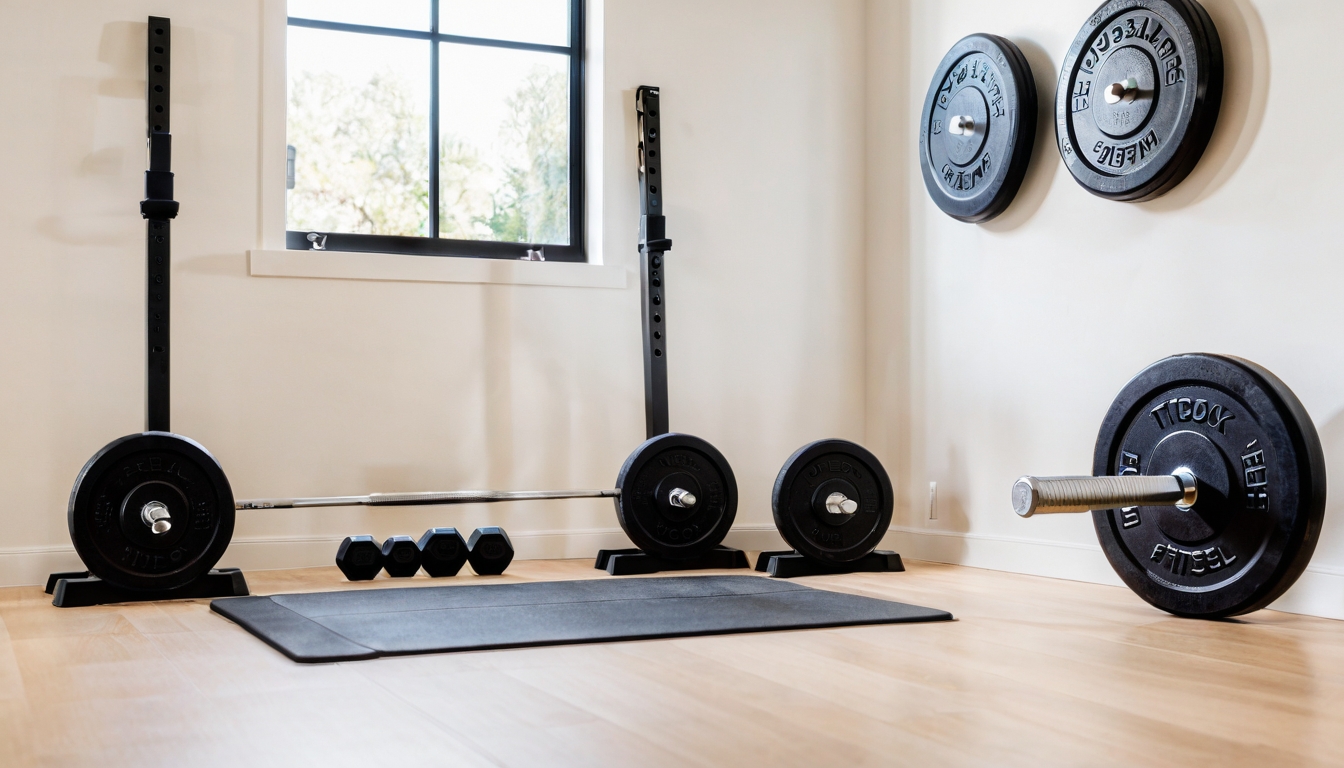
The Olympic barbell represents the foundation of serious strength training. This standardized equipment measures seven feet long for men’s bars. It weighs exactly 45 pounds without any additional plates attached. Moreover, the bar features rotating sleeves at both ends. These sleeves reduce wrist strain during explosive lifts like cleans and snatches.
Furthermore, the knurling pattern on the bar provides essential grip security. The textured surface prevents slipping during heavy compound movements. Most quality bars include center knurling for back squats. However, some lifters prefer smooth centers to protect their necks.
Building Your Weight Plate Collection
Starting your plate collection requires strategic planning and budgeting. Initially, purchase pairs of 45-pound, 25-pound, and 10-pound plates. Additionally, invest in smaller 5-pound and 2.5-pound plates for incremental progression. These smaller plates enable precise weight increases of just five pounds per session.
Iron plates offer the most economical option for home gyms. They’re durable and cost-effective for long-term use. Alternatively, bumper plates provide superior floor protection and noise reduction. These rubber-coated plates can be safely dropped from overhead positions. Consequently, they’re ideal for Olympic lifting movements and high-intensity training.
For example, a beginner might start with 135 pounds total. This includes the 45-pound bar plus two 45-pound plates. As a result, you can perform squats, deadlifts, and bench presses effectively.
Mastering Compound Movements for Total Body Strength
Compound exercises engage multiple joints and muscle groups simultaneously. The barbell back squat activates quadriceps, hamstrings, glutes, and core muscles. Meanwhile, conventional deadlifts target the posterior chain comprehensively. This includes spinal erectors, glutes, hamstrings, and trapezius muscles.
Therefore, these movements deliver superior results compared to isolation exercises. They trigger greater hormonal responses for muscle growth. Furthermore, compound lifts improve coordination and athletic performance significantly.
The bench press develops chest, shoulders, and triceps together. Similarly, the overhead press builds shoulder strength while engaging core stability. In contrast, isolation movements like bicep curls work single muscle groups. However, both training styles have their place in balanced programs.
Progressive Overload and Safety Considerations
Gradual weight progression prevents injury and ensures consistent strength gains. Add just 5-10 pounds per week to your working sets. Moreover, prioritize proper form over lifting heavier weights prematurely. Video recording your lifts helps identify technique flaws early.
Additionally, invest in essential safety equipment for home training. Power racks with adjustable safety pins prevent crushing injuries. Rubber flooring protects your foundation and reduces noise levels. Consequently, your home gym becomes safer and more functional overall.
Nevertheless, proper form is crucial before adding significant weight. Consider starting with lighter training bars if you’re new to barbell exercises. Bumper plates protect floors and reduce noise during drops.
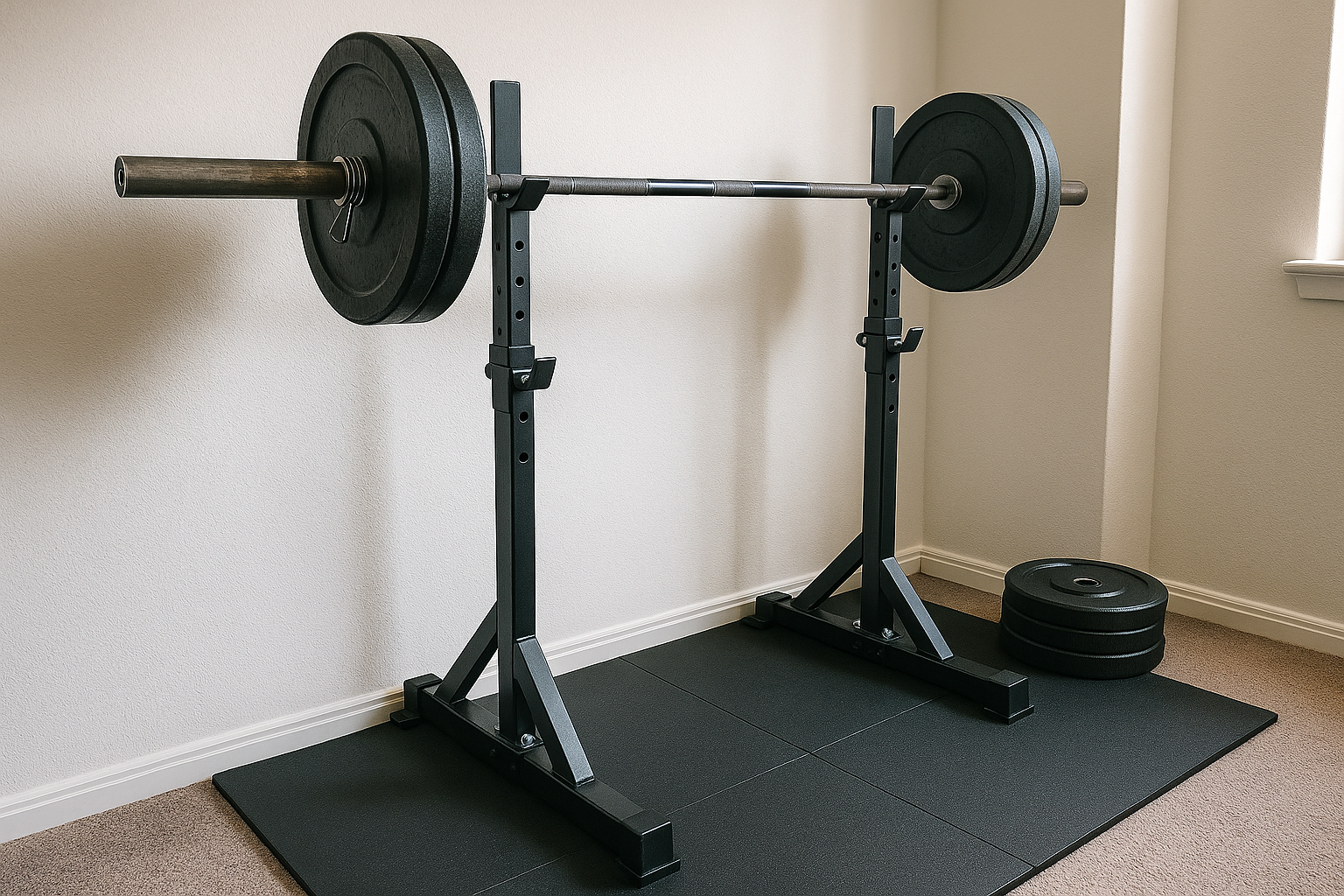
8. Power Rack or Squat Stand
A power rack provides safety and versatility for heavy lifting. Safety bars catch the barbell if you fail during squats or bench presses. This equipment lets you train confidently without a spotter.
Additionally, power racks often include pull-up bars and attachment points for accessories. They’re significant investments but transform your home gym into a comprehensive strength training facility. Squat stands offer a more compact alternative for limited spaces.
Cardio Equipment Fundamentals
9. Jump Rope
Maximum Calorie Burn in Minimum Space
Jump ropes stand out as one of the most space-efficient cardio tools available for home gyms. Furthermore, they require only a few feet of clearance in any direction. You can set up your workout in a bedroom, garage, or even outdoors. Additionally, the compact design means you can store your rope in a drawer or hang it on a hook. This makes jump ropes ideal for apartment dwellers with limited square footage.
Cost-Effective Fitness Investment
The affordability factor makes jump ropes accessible to virtually everyone. Moreover, quality ropes typically cost between $10 and $40 depending on features. Basic models work perfectly for beginners starting their fitness journey. Meanwhile, weighted ropes and speed ropes offer advanced options for experienced athletes. Consequently, you won’t need to sacrifice quality despite the low price point. The minimal investment delivers maximum cardiovascular benefits without breaking your budget.
Impressive Calorie-Burning Potential
Jump rope training can torch approximately 10-16 calories per minute. For example, a 150-pound person burns roughly 200-300 calories in just 20 minutes. In contrast, many other cardio activities require longer sessions for similar results. Therefore, busy professionals appreciate the time efficiency this equipment provides. Additionally, the high-intensity nature creates an afterburn effect. Your metabolism stays elevated for hours after completing your workout session.
Enhanced Athletic Performance Benefits
Beyond calorie burning, jump ropes dramatically improve coordination and footwork. Athletes in boxing, basketball, and soccer regularly incorporate rope training into their routines. Furthermore, the rhythmic jumping pattern enhances timing and spatial awareness. Your brain and muscles learn to work together more efficiently. As a result, you develop better balance and agility over time. Moreover, this translates into improved performance across various sports and physical activities.
Customizable Intensity Levels
The versatility of jump rope workouts accommodates all fitness levels seamlessly. However, beginners can start with basic two-foot jumps at a comfortable pace. Meanwhile, intermediate users might incorporate single-leg hops or side-to-side movements. Advanced athletes can attempt double-unders, where the rope passes twice per jump. Additionally, you can modify speed to create interval training protocols. Consequently, the same simple tool grows with your fitness progression. Therefore, you never outgrow your jump rope as your abilities improve.
Furthermore, jump rope training strengthens calves, improves bone density, and enhances cardiovascular endurance. Modern weighted handles and adjustable lengths accommodate different skill levels. Just ensure you have adequate ceiling height for safe use.
10. Stationary Bike or Spin Bike
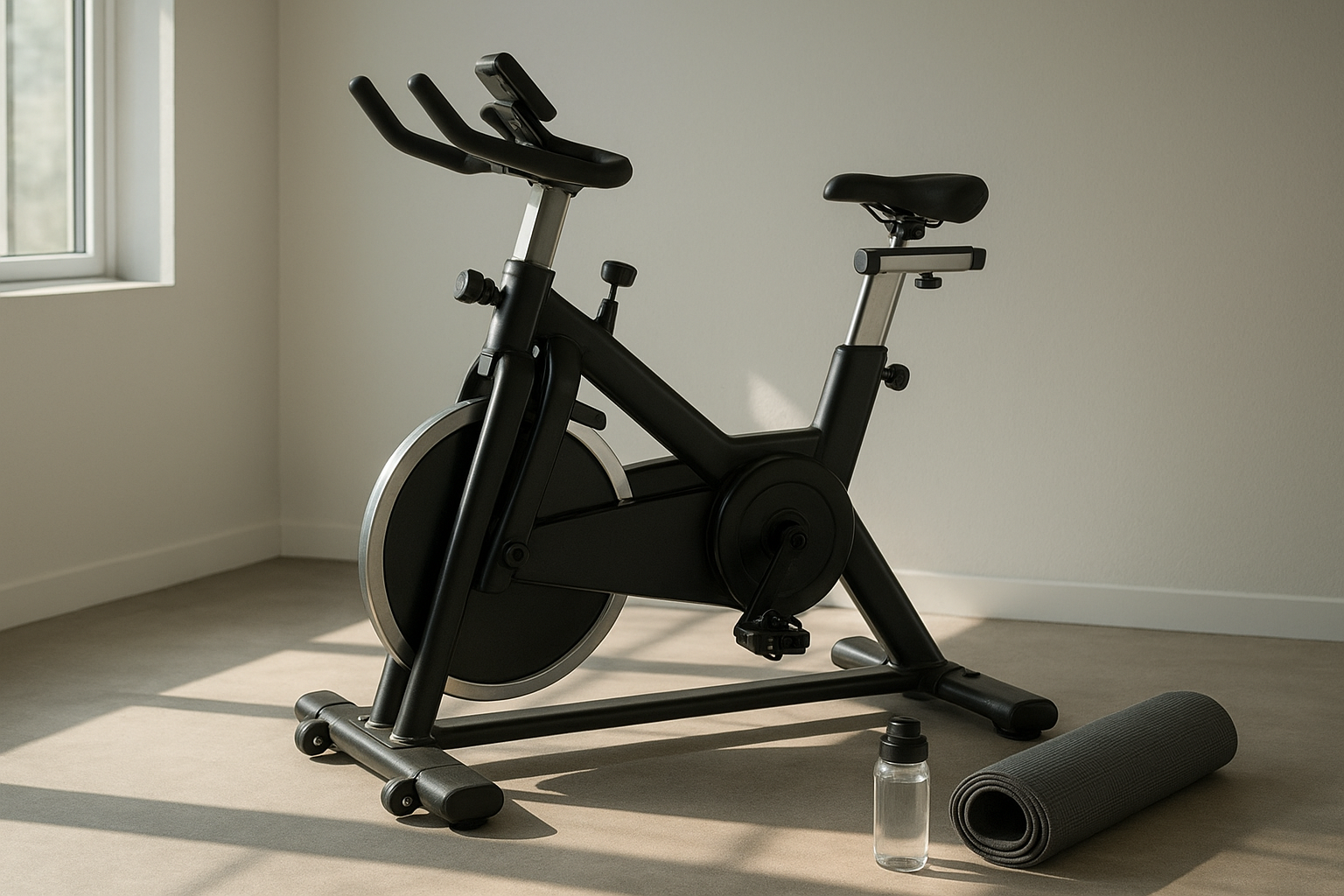
Stationary bikes remain a staple in home gyms for very good reasons. They offer an incredibly accessible entry point for beginners. Furthermore, seasoned athletes utilize them to maintain cardiovascular endurance without pounding their joints. Unlike running on concrete, cycling significantly reduces stress on the knees and hips. Consequently, this equipment is ideal for ensuring long-term fitness sustainability. You can train hard daily without risking overuse injuries common in high-impact sports.
Versatile Training Applications
These machines excel during several distinct training phases beyond just burning calories. For instance, a light five-minute ride effectively increases body temperature before lifting weights. This prepares cold muscles for heavier loads. Additionally, bikes are excellent tools for active recovery days. Gentle movement helps flush out metabolic waste and reduces stiffness. Therefore, you can recover faster from strenuous workouts and return to training sooner.
Choosing the Right Style
Different bike styles cater to specific fitness goals and comfort levels. Spin bikes are designed to closely mimic the experience of outdoor road cycling. They allow for standing climbs and high-intensity sprints. Moreover, their heavy flywheels create smooth momentum for a more challenging workout.
In contrast, recumbent bikes prioritize comfort and lumbar support. The reclined seated position distributes weight more evenly across the body. As a result, they are safer for individuals with lower back issues or balance concerns. Meanwhile, upright bikes offer a middle ground, saving space while providing a standard riding feel.
Boosting Intensity and Engagement
Modern indoor cycles often feature advanced technology to keep you motivated. Many models now include connected apps for streaming live classes. Consequently, you can join a virtual community directly from your living room.
For those seeking maximum calorie burn, High-Intensity Interval Training (HIIT) is highly effective on these machines. You can easily alternate between high resistance and rest periods. Specifically, try this simple routine to boost your heart rate:
- Warm-up: Pedal at a low resistance for 3 minutes.
- Sprint: Increase resistance and pedal hard for 30 seconds.
- Recover: Lower resistance and pedal slowly for 30 seconds.
- Repeat: Cycle through these steps for 15 to 20 minutes.
Meanwhile, recumbent bikes provide back support for those with mobility concerns. Many models now include digital displays tracking distance, speed, and calories. Consider your space and budget when choosing between upright and recumbent styles.
11. Treadmill
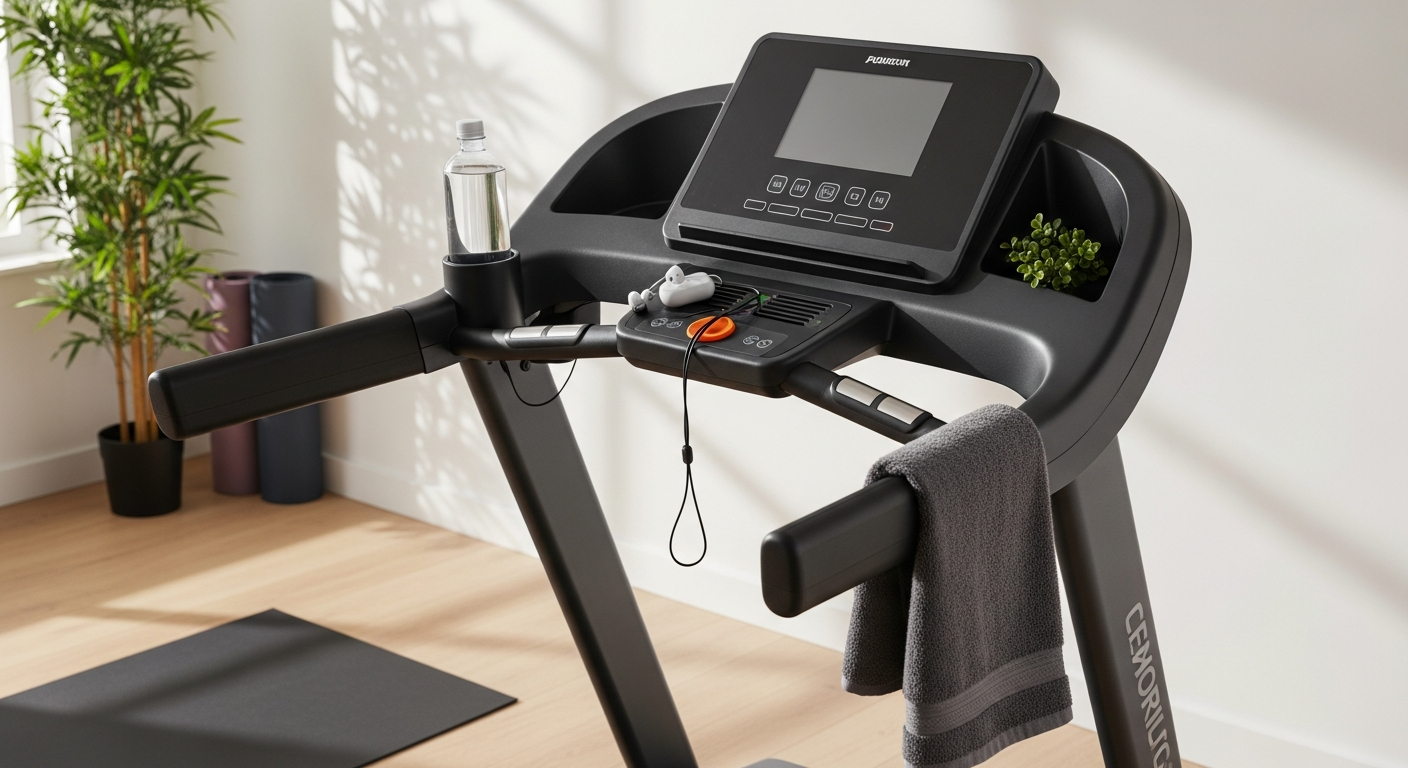
Treadmills remain popular for indoor running and walking. They offer controlled environments regardless of weather conditions. Modern treadmills include incline adjustments that simulate outdoor terrain.
Space and Investment Considerations
Quality treadmills demand both physical room and financial commitment from buyers. Most premium models measure between 6 to 7 feet in length. Additionally, they typically span 3 feet in width. Therefore, you’ll need approximately 20 to 30 square feet of dedicated floor space. Furthermore, manufacturers recommend leaving clearance around the machine for safety. This means your actual space requirement often exceeds 40 square feet.
The financial investment can be substantial for home fitness enthusiasts. Entry-level treadmills start around $500 to $800 for basic functionality. However, mid-range models with better motors typically cost $1,200 to $2,500. Moreover, commercial-grade home treadmills can exceed $3,000 to $5,000. Consequently, this represents a significant purchase decision for most households.
Folding Treadmill Trade-offs
Folding treadmills offer an attractive solution for space-constrained homes. These models feature decks that lift vertically for storage. As a result, they reduce the footprint by 50% or more when not in use. For example, a folded unit might only occupy 2 feet of floor depth.
Nevertheless, this convenience comes with performance compromises. The folding mechanism introduces additional moving parts and connection points. Therefore, these models often exhibit more wobbling during intense workouts. Furthermore, the frame construction must accommodate the hinge system. This typically results in lighter-duty materials compared to non-folding alternatives.
Weight capacity frequently differs between folding and stationary models. Standard folding treadmills support 250 to 300 pounds maximum. In contrast, fixed-frame models commonly handle 350 to 400 pounds. Additionally, the running surface on folding versions tends to be shorter. This can feel restrictive for taller users or those with longer strides.
Joint Protection Features
Cushioning systems play a critical role in protecting your knees and ankles. Running on concrete or asphalt generates significant impact forces. However, proper treadmill cushioning can reduce this impact by 20% to 40%. Therefore, examining the deck suspension becomes essential during selection.
Look for treadmills featuring multi-zone cushioning technology for optimal joint protection. These systems provide firmer support at the front for push-off. Meanwhile, they offer softer absorption at the rear for landing. For instance, brands like NordicTrack and Sole incorporate adjustable cushioning settings. Consequently, users can customize firmness based on their preferences and workout types.
The deck thickness also influences shock absorption capabilities. Premium treadmills utilize decks measuring 1 inch or thicker. Moreover, they incorporate elastomer cushions or spring systems beneath the belt. As a result, each footstrike feels noticeably softer than outdoor running surfaces.
12. Rowing Machine
Rowing machines provide full-body cardio workouts that engage 85% of your muscles. They combine cardiovascular training with strength building effectively. Water, air, and magnetic resistance systems each offer distinct feel and benefits.
Specifically, rowing develops back, leg, and core strength while improving endurance. These machines fold for storage in many cases. They’re excellent alternatives for people who find running uncomfortable.
Recovery and Mobility Tools
13. Foam Roller
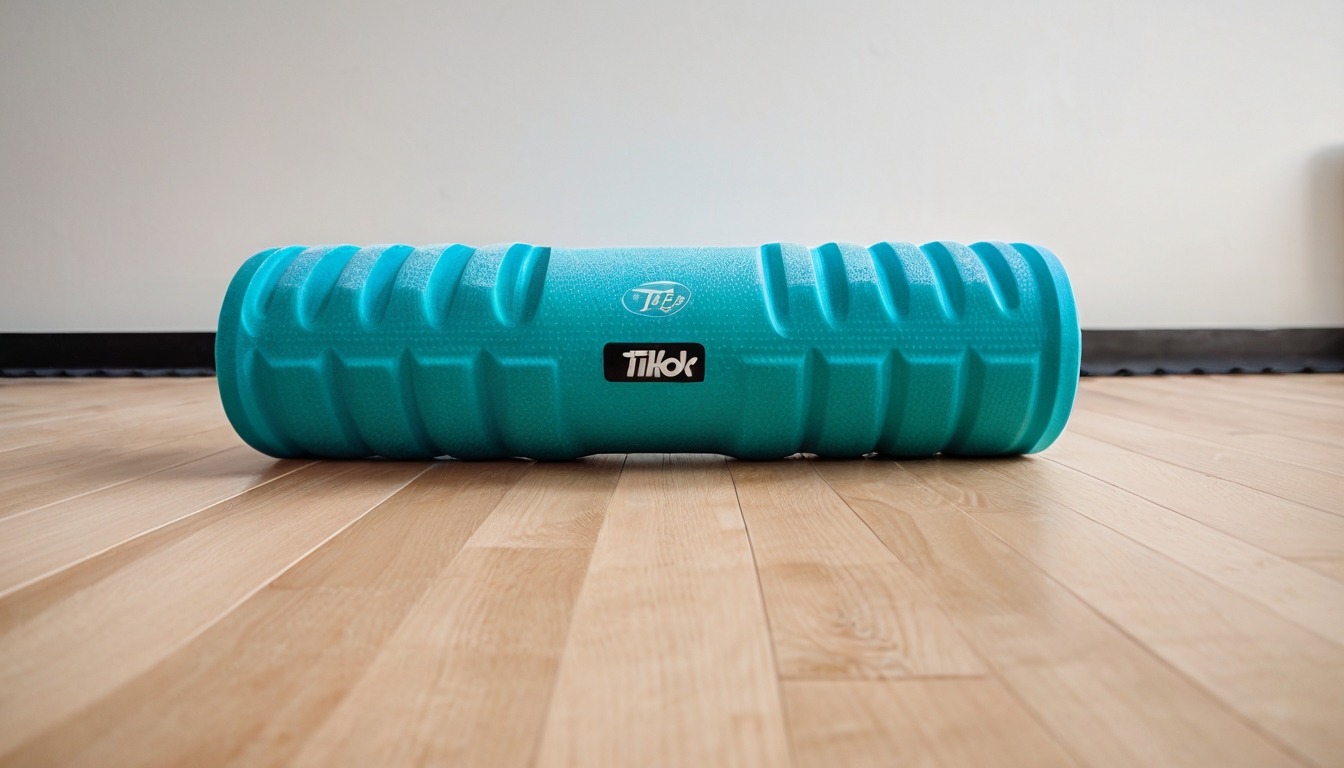
Foam rollers facilitate self-myofascial release to reduce muscle tension. Rolling before workouts improves mobility and activation. Post-workout rolling accelerates recovery and reduces soreness.
In particular, different densities and textures target various needs. Beginners should start with softer rollers before progressing to firmer options. Textured rollers provide deeper tissue work for experienced users.
14. Massage Ball Set
Precision Recovery with Massage Balls
Massage balls excel at pinpoint muscle relief where larger equipment falls short. These compact recovery tools can navigate into tight spaces around your shoulder blades. Furthermore, they apply concentrated pressure to stubborn knots in your neck and upper back. The small surface area creates focused compression that penetrates deep tissue layers effectively.
Targeted Relief for Common Problem Areas
Your feet benefit tremendously from massage ball therapy after long workouts. Simply roll the arch of your foot over the ball to release plantar fascia tension. Additionally, these tools address hip flexor tightness by pressing against a wall. The gluteal muscles respond particularly well to this targeted approach. Meanwhile, positioning a ball between your back and a wall allows gravity to enhance the pressure naturally.
Size Variations for Different Applications
Small balls measuring 2-3 inches diameter work best for precise trigger points. These compact options fit perfectly under your feet or between shoulder blades. Moreover, they travel easily in gym bags for post-workout recovery sessions. Medium-sized balls around 4-5 inches provide broader coverage for larger muscle groups. Consequently, they distribute pressure across the quadriceps and hamstrings more comfortably.
Larger massage balls spanning 6-7 inches function similarly to foam rollers but with better control. Therefore, they serve as excellent alternatives for back muscles and IT bands. The varied sizing options ensure you can address every muscle group with appropriate pressure intensity.
Consequently, regular use helps prevent injuries and maintains muscle health. Lacrosse balls offer firm pressure, while softer options provide gentler release. Keep a set near your workout area for convenient use.
15. Stretching Strap
Stretching straps improve flexibility safely and effectively. They help you achieve deeper stretches without compromising form. Multiple loops provide various grip options for different stretches.
Moreover, these straps benefit yoga practitioners and athletes equally. They’re particularly useful for hamstring, shoulder, and hip flexibility work. Lightweight and portable, they’re perfect for travel workouts too.
Functional Training Equipment
16. Stability Ball
Core Engagement Through Instability
Stability balls create a dynamic workout environment that challenges your body in unique ways. The unstable surface forces your core muscles to constantly adjust and stabilize. This engagement happens automatically during every movement. Therefore, you’re working multiple muscle groups simultaneously without extra effort. Your deep abdominal muscles activate to maintain balance throughout each exercise.
Versatile Exercise Applications
These inflatable spheres transform traditional exercises into full-body challenges. For example, performing crunches on a stability ball increases the range of motion. Your abs stretch further backward, creating a more complete contraction. Meanwhile, plank variations become significantly more demanding when your feet rest on the ball. Additionally, wall squats gain an extra dimension of difficulty with the ball between your back and the wall.
Balance training exercises include simple seated bounces for beginners. Advanced users can attempt single-leg stands or push-up variations. Furthermore, you can incorporate the ball into stretching routines for deeper flexibility work. Physical therapists often recommend these exercises for rehabilitation purposes.
Functional Benefits Beyond Fitness
Stability balls double as ergonomic seating solutions for home offices. Sitting on the ball engages your core throughout the workday. Consequently, many people report improved posture and reduced back pain. However, experts recommend alternating between the ball and regular chairs. This prevents muscle fatigue from extended use. Moreover, the active sitting position promotes better circulation compared to static desk chairs.
Additionally, choose appropriate sizes based on your height for optimal effectiveness. Properly inflated balls should indent slightly when you sit. Anti-burst construction provides safety during intense exercises.
17. Medicine Ball
Building Explosive Strength with Medicine Balls
Medicine balls have revolutionized functional training in home gyms. These versatile tools weigh anywhere from 2 to 50 pounds, offering options for beginners and athletes alike. Furthermore, their textured rubber surface provides secure grip during intense movements. The weighted sphere design challenges your body in ways traditional dumbbells cannot match.
Dynamic Power Development
Overhead slams transform medicine balls into explosive power builders. This movement engages your entire kinetic chain from shoulders to core. Additionally, wall throws develop upper body speed and coordination simultaneously. Rotational throws target obliques while improving athletic performance. These ballistic exercises burn calories rapidly while building functional strength.
Core Training Applications
Medicine ball exercises excel at developing rotational core strength. For example, Russian twists with added weight intensify oblique engagement significantly. Moreover, seated throws force your abs to stabilize against dynamic forces. Woodchoppers replicate real-world movement patterns that traditional crunches miss entirely. Consequently, athletes from golf to baseball incorporate these movements regularly.
Partner Training Benefits
Working with a training partner multiplies medicine ball effectiveness. Meanwhile, chest pass drills improve reaction time and communication between partners. Sit-up tosses add accountability and competitive motivation to core workouts. Therefore, couples and workout buddies find medicine balls particularly engaging. The social element transforms mundane exercises into interactive challenges.
Selecting Appropriate Weight
Beginners should start with 6 to 10-pound balls for controlled movements. However, slam exercises require heavier weights ranging from 15 to 30 pounds. As a result, many home gym owners invest in multiple weights. Soft-shell medicine balls protect floors during high-impact throws. In contrast, firm balls work better for precise partner passes.
Furthermore, textured surfaces improve grip during dynamic movements. Soft-shell options protect floors and reduce noise. These versatile tools bridge strength and cardio training effectively.
18. Suspension Trainer
Mastering Bodyweight Resistance
Suspension training systems utilize gravity to create a challenging workout environment. Consequently, you are in complete control of the resistance level. By simply stepping forward or backward, you alter the leverage angle. Therefore, the same equipment works for both novices and elite pros. You do not need heavy iron weights to build significant muscle.
Additionally, this method is incredibly low-impact on your joints. Because your feet or hands are anchored, you have more stability control. However, the workout remains intense. This unique combination allows for rehabilitation and high-performance training alike.
Unmatched Core Activation
Unlike static gym machines, suspension straps are inherently unstable. As a result, your core must engage constantly to maintain balance. This involuntary contraction builds deep abdominal strength rapidly. Furthermore, it improves your overall posture and joint stability.
Every exercise becomes a total-body movement. For instance, a simple chest press also challenges your legs and back. Thus, you burn more calories in less time. You cannot “cheat” the movement by relying on momentum.
Key exercises include:
- Atomic Push-ups: Blast your chest and abs simultaneously.
- Pistol Squats: Master single-leg balance with support.
- Inverted Rows: Strengthen your upper back without strain.
The Ultimate Travel Gym
Space efficiency is a massive advantage for home gym owners. In fact, the entire kit fits into a small mesh pouch. You can toss it into a drawer when you finish. Moreover, it is the perfect companion for frequent travelers.
Installation is versatile and takes only seconds. You can anchor the system to a sturdy doorframe safely. Alternatively, wrap the durable straps around a tree branch at the park. Consequently, the world becomes your personal training facility.
Indeed, suspension training improves functional strength, balance, and core stability simultaneously. Adjusting body angles changes exercise difficulty without additional equipment. They’re perfect for travelers and minimalists.
19. Plyo Box
Plyo boxes develop explosive power through jumping exercises. Box jumps, step-ups, and elevated push-ups utilize these versatile platforms. Adjustable or stackable options provide multiple height settings.
Building Your Foundation with Box Jumps
Beginners should start at 12 to 18 inches to develop confidence and technique. This conservative approach allows your body to adapt gradually. Furthermore, you can focus on landing softly with bent knees. Your weight should distribute evenly across both feet upon contact. Additionally, practice stepping down rather than jumping down initially. This method protects your joints from excessive impact.
As your skill improves, increase height incrementally by 6 inches. However, rushing this progression often leads to poor form. Moreover, many experienced athletes maintain lower heights to emphasize speed and power. The goal isn’t always maximum height but rather explosive movement quality.
Choosing Between Wooden and Foam Options
Wooden plyo boxes provide exceptional stability and can support heavy, repeated use. They typically last for years in busy home gyms. These sturdy platforms don’t compress or shift during explosive movements. Additionally, wooden boxes often feature multiple height options in one unit. For example, a three-sided box might offer 20, 24, and 30-inch surfaces.
In contrast, foam boxes prioritize safety over longevity. They significantly reduce shin scrape injuries during missed jumps. Furthermore, foam options work perfectly for beginners still developing coordination. The softer material provides psychological comfort when attempting new heights. However, they may compress slightly over time with heavy use. Therefore, serious athletes often keep both types available.
Universal Benefits Across Training Goals
Box jumps enhance explosive power regardless of your athletic background. Basketball players improve their vertical leap significantly. Meanwhile, runners develop stronger leg drive for uphill sprints. Additionally, CrossFit enthusiasts incorporate boxes into metabolic conditioning circuits.
These tools also improve neuromuscular coordination and balance. Your nervous system learns to fire muscle groups simultaneously. Consequently, this translates to better performance in virtually any sport. Moreover, weekend warriors use boxes for low-impact cardio alternatives. Even rehabilitation programs incorporate step-ups on lower boxes for recovery.
Specialized Equipment and Accessories
20. Weight Lifting Belt
Weight lifting belts provide core support during heavy compound lifts. They increase intra-abdominal pressure, protecting your spine under load. Use them for near-maximal squats, deadlifts, and overhead presses.
Nevertheless, don’t rely on belts for every workout. Developing natural core strength remains essential. Reserve belt use for your heaviest working sets.
21. Wrist Wraps and Lifting Straps
Wrist wraps stabilize wrists during pressing movements with heavy weights. Lifting straps improve grip during pulling exercises like deadlifts and rows. Both accessories help you train harder without grip or wrist limitations.
Specifically, use these tools strategically rather than constantly. Building natural grip and wrist strength prevents over-reliance. They’re most beneficial during high-volume or maximum-effort training sessions.
22. Workout Timer
Relying on a smartphone for timing often leads to distractions. Notifications pop up, and your focus breaks instantly. Dedicated workout timers solve this problem effectively. They serve as a visual anchor during intense sessions. Consequently, you maintain the intended intensity without unnecessary pauses. Furthermore, the loud beeps signal start and stop times clearly. This audio cue lets you keep your head down and work.
Visibility remains a top priority for effective gym timers. Squinting at a small watch screen ruins your flow. In contrast, oversized LED digits are visible from a distance. You can check your remaining seconds while mid-squat. Additionally, adjustable brightness settings suit different lighting conditions. Whether in a dim garage or bright room, clarity is guaranteed.
Versatile Programming Options
Modern timers come pre-loaded with essential training protocols. These presets save you setup time before workouts. For example, Tabata mode automates the 20-work/10-rest cycle. Similarly, fight-gone-bad timers track boxing rounds perfectly. You can also customize intervals for specific goals. Therefore, the device adapts to your evolving fitness needs.
Beyond standard intervals, these devices support advanced training styles. EMOM (Every Minute on the Minute) is a popular feature. The timer buzzes at the top of every minute. This keeps your pacing consistent and honest. Moreover, count-up and count-down functions offer flexibility. You can time a plank or cap a workout duration easily. As a result, your training becomes more structured and measurable.
Convenience and Mounting
Convenience features make these tools even more user-friendly. Most units include a remote control for easy adjustments. Consequently, you never have to touch the mounted unit. This is helpful if the timer is high up. Furthermore, consider these specific mounting options for your space:
- Magnetic backing: Sticks securely to power racks.
- Wall mounts: Permanent placement for dedicated spaces.
- Tripod stands: Portable solutions for outdoor sessions.
Finally, battery life is a key consideration. Many models are rechargeable via USB. This eliminates the need for constant battery changes. However, some heavy-duty models require a wall outlet. Therefore, check your gym’s layout before purchasing. Ultimately, a good timer transforms a casual space into a pro gym.
Additionally, audible alerts signal transitions between work and rest periods. This allows you to focus on exercise execution rather than watching clocks. Many affordable options include magnetic backs for easy mounting.
23. Mirrors
Mirrors provide essential feedback for maintaining proper exercise form. They help you identify and correct technique issues independently. Full-length mirrors work best for observing complete movement patterns.
Furthermore, mirrors make spaces feel larger and brighter. Position them to view yourself from multiple angles during key exercises. Shatterproof options provide safety in active training environments.
24. Flooring Mats
Protective flooring absorbs impact, reduces noise, and protects surfaces beneath equipment. Interlocking rubber tiles install easily and provide cushioning for dropped weights. They define your workout space visually and functionally.
Moreover, proper flooring prevents equipment damage and extends its lifespan. Consider thickness based on your equipment and floor type. Dense rubber works best for heavy lifting areas.
25. Storage Solutions
Organized storage keeps equipment accessible and your space functional. Wall-mounted racks hold dumbbells, kettlebells, and resistance bands efficiently. Vertical storage maximizes floor space for actual training.
Protecting Your Investment Through Smart Organization
Proper storage solutions serve as the foundation for long-term equipment preservation. Moreover, organized spaces prevent unnecessary wear and tear on your fitness gear. Dumbbells scattered across floors develop chips and cracks over time. Resistance bands tangled together lose their elasticity faster. Additionally, yoga mats left unrolled collect dust and deteriorate prematurely. Therefore, dedicated storage extends the lifespan of every piece you own.
Furthermore, systematic organization directly impacts your workout consistency. When equipment sits in chaotic piles, motivation diminishes quickly. However, a well-arranged gym space invites immediate action. For example, weight racks displaying dumbbells by size eliminate decision fatigue. Consequently, you spend less time searching and more time exercising.
Creating Seamless Workout Transitions
Clear storage systems transform your exercise routine into a fluid experience. Meanwhile, accessible equipment placement reduces rest time between sets. Wall-mounted holders keep resistance bands within arm’s reach. Consequently, circuit training becomes more effective and engaging. Additionally, designated spots for each item create visual cues for workout planning.
For instance, color-coded storage bins help categorize accessories by function. One bin holds yoga props while another contains cardio equipment. As a result, switching between workout styles takes mere seconds. Moreover, this efficiency maintains your elevated heart rate during training sessions.
Scaling Your Storage Infrastructure
Investment in quality storage should evolve alongside your fitness journey. Initially, basic wall hooks and shelves suffice for minimal equipment. However, expanding collections demand more sophisticated solutions. Therefore, consider modular systems that accommodate growth. Furthermore, adjustable racks adapt to changing equipment sizes and types.
Additionally, premium storage options offer superior durability and functionality. Heavy-duty steel racks support substantial weight loads safely. Moreover, they maintain structural integrity through years of daily use. In contrast, cheaper alternatives may wobble or collapse under stress.
Making Smart Equipment Choices
Prioritize equipment that aligns with your specific fitness goals. Strength-focused athletes need different tools than cardio enthusiasts. Consider your available space, budget, and training preferences carefully.
Start with foundational items like mats, resistance bands, and adjustable dumbbells. These versatile pieces support diverse workouts without overwhelming your space or finances. Add specialized equipment gradually as your needs and skills develop.
Quality matters more than quantity when building your home gym. Durable equipment lasts years and maintains safety throughout intense workouts. Research reviews and warranties before making significant purchases.
Your home gym should evolve with your fitness journey. Reassess your equipment needs quarterly and adjust accordingly. This approach ensures your investment continues supporting your health and performance goals effectively.
When setting up your home workout space, starting with a quality yoga mat provides the perfect foundation for stretching, core work, and floor exercises that complement any fitness routine. Building strength without bulky machines becomes incredibly efficient when you add a resistance band set that offers progressive resistance levels and comes with accessories for targeting every major muscle group. For those serious about building muscle and increasing overall strength, investing in adjustable dumbbells eliminates the need for multiple weight sets while providing versatility for everything from bicep curls to shoulder presses. Protecting your flooring while adding stability during heavy lifts becomes simple with weight plates designed specifically to be gentle on surfaces while maintaining durability through intense training sessions. Recovery is just as important as the workout itself, which is why having a foam roller set helps release muscle tension and improve flexibility between training days without requiring a professional massage therapist. Upper body development reaches new heights when you install a doorway pull-up bar that transforms any standard doorframe into a station for building back strength and improving grip endurance. Adding variety to your core training and improving balance becomes engaging and effective with a stability ball that challenges your body in ways traditional floor exercises simply cannot match. Keeping your growing collection of weights organized and easily accessible requires a dumbbell rack that prevents clutter and makes transitioning between exercises quick and seamless during circuit training. Maximizing vertical space while keeping bands, jump ropes, and other accessories within reach becomes effortless with a wall storage rack featuring multiple hooks designed specifically for home gym organization. Finally, transporting your mat to different rooms or outdoor spaces for variety in your training environment is made convenient with a yoga mat strap that keeps everything rolled tightly and comfortable to carry wherever your fitness journey takes you.
*As an Amazon Associate, I earn from qualifying purchases.