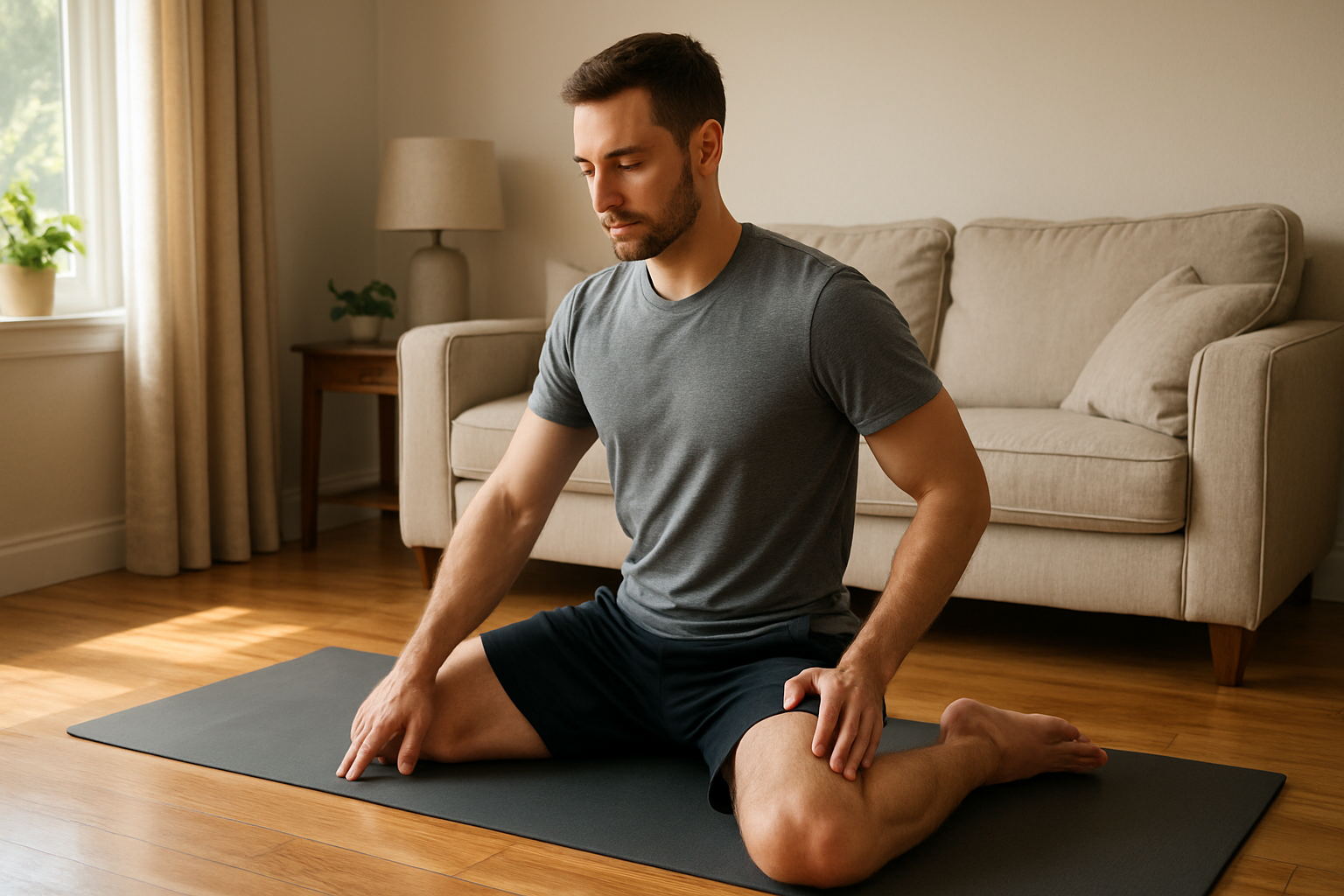
Picture this: you’re setting up for an overhead press, you drive the bar up, and your coach or training partner tells you to “get your head through” — but no matter how hard you try, it just won’t happen. Or maybe you’ve noticed that your posture has started to resemble a question mark after years of desk work. If either of those sounds familiar, I can almost guarantee that thoracic spine mobility exercises are the missing piece you’ve been overlooking. I’ve seen this pattern with hundreds of people, and once we address the t-spine, everything from pressing strength to everyday posture clicks into place fast.
Affiliate Disclosure: This post contains affiliate links. As an Amazon Associate, I earn from qualifying purchases. This comes at no extra cost to you, and I only recommend products I genuinely believe in.
What Is the Thoracic Spine and Why Does It Get So Stiff?
Let’s get clear on anatomy real quick — don’t worry, I’ll keep it simple. Your spine has three main sections: the cervical spine (your neck), the thoracic spine (mid-back, running from roughly your shoulder blades down to your lower ribs), and the lumbar spine (your lower back). The thoracic spine is made up of 12 vertebrae, and unlike the lumbar spine, it’s designed to rotate and extend. The problem? Modern life is absolutely terrible for it.
Sitting at a desk, hunching over a phone, long drives, even heavy bench pressing without balancing it with pulling work — all of it pushes the thoracic spine into a rounded, flexed position called kyphosis. Over time, the joints, muscles, and connective tissue adapt to that position and essentially “lock in” there. You lose extension (the ability to arch back) and rotation, and that’s when everything upstream and downstream starts to suffer.
How a Stiff T-Spine Wrecks Your Overhead Press and Posture
Here’s the connection most people don’t realize: when you press something overhead, your body needs to create a straight line from your hips through your shoulders to your wrists. To do that efficiently and safely, your thoracic spine has to extend. If it can’t, your body compensates — usually by dumping into your lower back (lumbar hyperextension) or flaring your ribs aggressively. Both patterns increase injury risk and limit how much weight you can move.
Research backs this up. A study published in the Journal of Strength and Conditioning Research found that thoracic mobility directly influences shoulder mechanics and overhead performance. When the t-spine is restricted, the scapula (shoulder blade) can’t rotate properly, which puts excess stress on the rotator cuff and limits the range of motion you need for a safe, strong press.
And posture? A stiff thoracic spine is the engine driving that forward-head, rounded-shoulder look. Your neck and lower back don’t cause that posture — they’re just reacting to what’s happening in the middle of your back. Fix the t-spine, and the rest tends to follow.
Thoracic Spine Mobility Exercises You Should Be Doing
Alright, let’s get into the good stuff. These are the movements I come back to again and again with clients, and they work. Aim to do this routine three to five times per week — it only takes about 10 to 15 minutes.
1. Foam Roller Thoracic Extension
This is the foundational drill. Place a foam roller horizontally across your mid-back, support your head with your hands, and gently extend backward over the roller. Hold each position for a few seconds, then shift the roller up or down an inch and repeat. You’re mobilizing each segment of the thoracic spine individually, which is exactly what it needs. Do two to three passes up and down the t-spine.
2. Thread the Needle
Start on all fours. Take one arm and slide it along the floor underneath your other arm, rotating your upper body toward the floor. This is a killer thoracic rotation drill. Hold for two seconds at the end range, return, and repeat for eight to ten reps per side. You’ll feel this one immediately.
3. Open Book Stretch
Lie on your side with your knees stacked and bent at 90 degrees. Extend your arms straight out in front of you. Take the top arm and rotate it open toward the floor behind you, following it with your eyes and letting your chest open up. Hold two to three seconds, return, and go for eight reps per side. This is one of the best drills for thoracic rotation you’ll ever find.
4. Doorway or Stick-Assisted Overhead Reach
Grip a mobility stick or dowel rod with both hands overhead and work on pressing up while cuing your ribs down and your t-spine into extension. This bridges mobility work directly into the overhead press pattern. Brilliant drill for anyone who presses regularly.
Gear I Recommend for Thoracic Mobility Work
You don’t need a ton of equipment, but the right tools make this work noticeably more effective. Here’s what I actually use and recommend.
Chirp Wheel Foam Roller — This thing is a game-changer for targeted spinal work. The narrow, spine-channeling design means the pressure hits the muscles on either side of your vertebrae rather than directly on the bone, which is far more comfortable and effective than a standard flat roller. It supports up to 500 lbs and the foam density is just right. Check out the Chirp Wheel on Amazon.
RAD Roller Stiff Peanut Massage Ball — Think of this as a more targeted version of the foam roller. The double-ball “peanut” shape straddles your spine so you get direct pressure into the thoracic paraspinals without grinding on vertebrae. It’s excellent for getting into specific stuck segments. Grab the RAD Roller Peanut on Amazon.
Amazon Basics High-Density Foam Roller (18 Inch) — If you’re just getting started and want a no-frills, reliable option that does the job, this is it. High density means it won’t go soft on you after a few weeks, and the 18-inch size is ideal for thoracic work. Solid value. Pick up the Amazon Basics Foam Roller here.
Mobility Mentor Yoga Stick — For the stick-assisted overhead drills I mentioned above, this bamboo mobility stick is a fantastic tool. It’s sturdy, comfortable to grip, and long enough to give you the leverage you need for thoracic extension and overhead patterning work. See the Mobility Mentor Yoga Stick on Amazon.
Scisum Adjustable Yoga