Tag: body recomposition

  • Body Recomposition: How to Lose Fat and Gain Muscle at the Same Time

    Body Recomposition: How to Lose Fat and Gain Muscle at the Same Time

    • Skipping sleep. Muscle is built during recovery, not during the workout itself. Less than 7 hours of sleep per night significantly impairs muscle protein synthesis and increases cortisol, a stress hormone that promotes fat storage.
    • Not eating enough protein. This is the number one nutrition mistake. If your protein is low, your body will sacrifice muscle to meet its needs, especially in a

      You’ve probably heard someone at the gym say, “You can’t lose fat and build muscle at the same time — pick one.” I used to believe that too. But here’s the truth: body recomposition — losing fat and gaining muscle simultaneously — is absolutely possible, and it’s one of the most rewarding fitness goals you can chase. Whether you’re just starting out, returning after a long break, or stuck in a frustrating plateau, understanding how to body recomposition lose fat gain muscle the right way can completely change the game for you.

      This post contains affiliate links. As an Amazon Associate, I earn from qualifying purchases. If you click a product link and make a purchase, I may earn a small commission at no extra cost to you. I only recommend products I genuinely believe in.

      What Is Body Recomposition and Why Is It So Hard to Pull Off?

      Body recomposition means you’re changing the ratio of fat to muscle in your body — shrinking fat mass while building lean muscle — ideally at the same time. Sounds simple, right? The reason most people struggle is that fat loss and muscle gain traditionally require opposite conditions. Fat loss generally needs a calorie deficit (eating less than you burn), while muscle gain typically calls for a calorie surplus (eating more). So how do you do both at once?

      The answer lies in strategic nutrition, smart training, and patience. Body recomposition isn’t the fastest route to either goal in isolation, but it’s an incredibly effective approach for people who want to look and feel better without the classic “bulk and cut” cycle that leaves you perpetually feeling either too soft or too depleted.

      The Science Behind Body Recomposition: Lose Fat and Gain Muscle at the Same Time

      Protein Is Your Best Friend

      Research consistently shows that high protein intake is the single most important dietary factor in body recomposition. A landmark study published in the American Journal of Clinical Nutrition found that individuals eating a high-protein diet while in a caloric deficit were able to gain lean muscle while losing fat simultaneously. Aim for 0.7 to 1 gram of protein per pound of bodyweight per day. Protein preserves and builds muscle tissue, keeps you fuller longer, and has a higher thermic effect — meaning your body burns more calories just digesting it.

      Getting enough protein doesn’t have to be complicated. I keep a quality whey protein isolate in my kitchen at all times. Two I’ve been rotating lately are Musclesport Lean Whey Revolution in Protella and the Cinna Crunch flavor. Each scoop delivers 25 grams of protein with low calories, low carbs, and low fat — a perfect fit for someone in a body recomposition phase where every macro counts.

      Train With Resistance — Every Single Week

      Cardio burns calories, but resistance training is what signals your body to hold onto and build muscle while you’re in a deficit. Aim for at least 3 to 4 strength training sessions per week, focusing on compound movements like squats, deadlifts, bench press, rows, and overhead press. Progressive overload — gradually increasing the weight, reps, or difficulty over time — is the engine that drives muscle growth. Without it, your body has no reason to change.

      Eat at a Slight Calorie Deficit (Or Close to Maintenance)

      For body recomposition, you don’t need an aggressive deficit. A modest 200–300 calorie deficit per day is often enough to trigger fat loss without cannibalizing muscle mass. Some people — especially beginners or those returning to training — can actually achieve recomposition eating near or at maintenance calories, as long as protein is high and training is consistent. The key is not slashing calories so aggressively that your body breaks down muscle for fuel.

      How to Track Your Progress the Right Way

      Here’s a mistake I see constantly: people judge their progress purely by the number on the bathroom scale. During body recomposition, the scale might barely move — or not move at all — even when you’re losing fat and gaining muscle simultaneously. That’s because muscle and fat can shift in opposite directions at nearly the same rate. If you’re only watching your weight, you’ll think nothing is working and quit.

      What you actually need to track is your body composition — specifically your body fat percentage and muscle mass. That’s where a quality smart body composition scale becomes a total game-changer.

      Gear I Recommend for Tracking Body Composition

      • InBody Dial H30 Body Composition Scale — InBody is one of the most trusted names in body composition measurement. This smart scale tracks BMI, body fat percentage, and muscle mass, and syncs with an app so you can see your trends over time. If you want professional-grade insights at home, this is it.
      • InBody Dial H20 Body Composition Scale — A slightly more accessible option from InBody that still delivers highly accurate readings for body fat, muscle mass, and weight. Great for anyone who wants reliable InBody technology without going all the way to the H30.
      • arboleaf Smart Scale — 8-Electrode Dual-Frequency BIA — This one is seriously impressive for the price. Using dual-frequency bioelectrical impedance analysis (BIA — a method that sends a small electrical signal through the body to estimate tissue composition), it tracks over 50 metrics including segmental muscle mass (meaning it breaks down readings by body region). The app experience is excellent and makes progress tracking genuinely motivating.

      I recommend taking a weekly measurement at the same time of day — first thing in the morning, before eating or drinking — for the most consistent data. Over 8 to 12 weeks, you’ll start to see the real story of what your body is doing.

      Common Body Recomposition Mistakes to Avoid

      • Skipping sleep. Muscle is built during recovery, not during the workout itself. Less than 7 hours of sleep per night significantly impairs muscle protein synthesis and increases cortisol, a stress hormone that promotes fat storage.
      • Not eating enough protein. This is the number one nutrition mistake. If your protein is low, your body will sacrifice muscle to meet its needs, especially in a
  • Cardio vs Weights for Fat Loss: What the Research Says Might Surprise You

    Cardio vs Weights for Fat Loss: What the Research Says Might Surprise You

    • Cellucor SuperHD Thermogenic Fat Burner — This is a well-known thermogenic supplement containing Capsimax (a concentrated capsaicin extract), green tea extract, and 160mg of caffeine. Thermogenics work by slightly raising your body temperature and metabolic rate. The ingredients in SuperHD have actual research behind them. If you tolerate caffeine well and want an energy boost alongside appetite control,

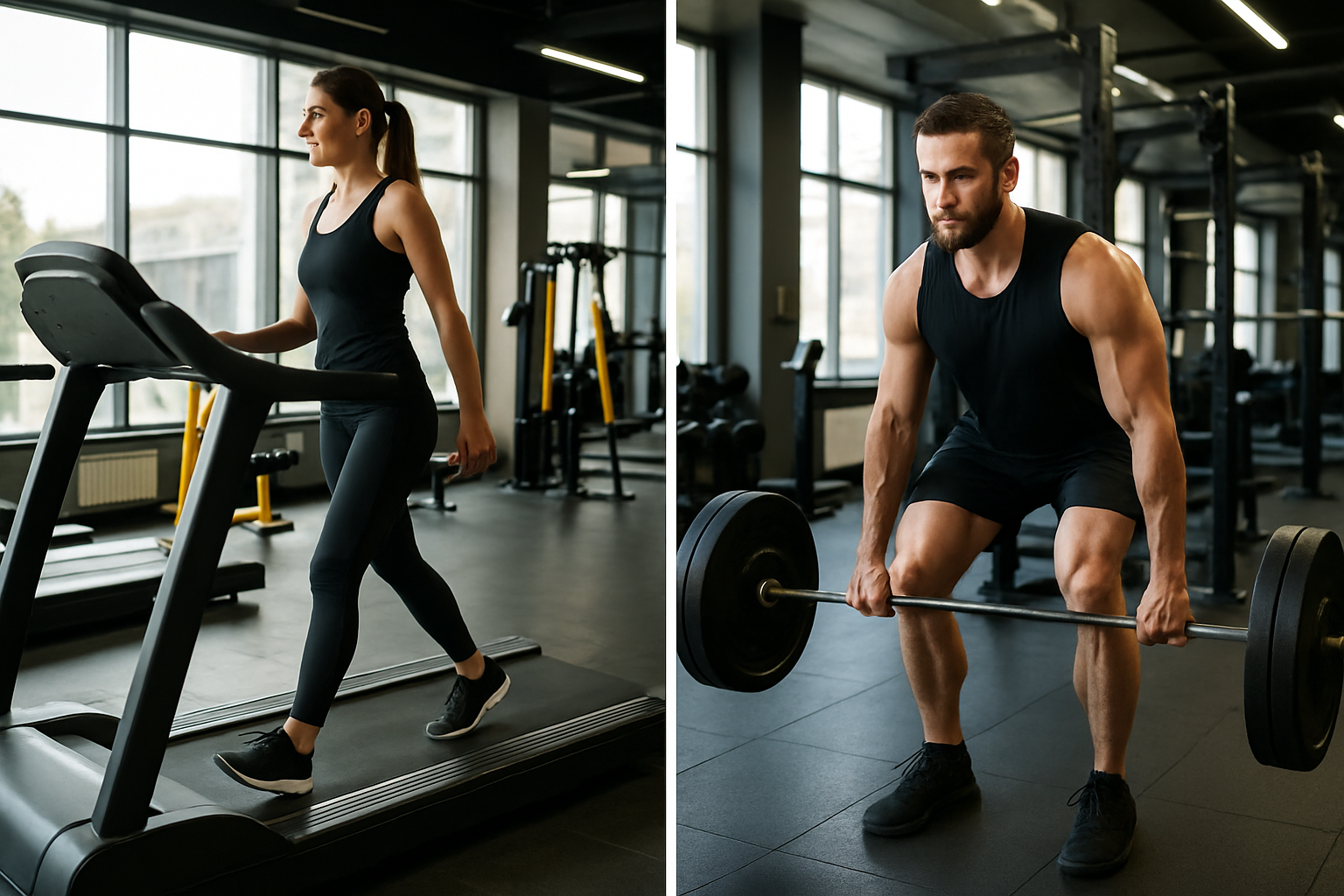
      You’ve seen it happen a hundred times at the gym — someone hops on the treadmill for 45 minutes every single day, works up a serious sweat, and then wonders why the scale barely moves after two months. Maybe that someone is you. I’ve been there, and I’ve trained dozens of clients who’ve been there too. The question of cardio vs weights for fat loss is honestly one of the most debated topics in the fitness world, and the answer is way more nuanced — and exciting — than most people expect.

      This post contains affiliate links. As an Amazon Associate, I earn from qualifying purchases. This means I may earn a small commission if you purchase through my links, at no extra cost to you. I only recommend products I genuinely believe in.

      The Cardio vs Weights for Fat Loss Debate: What Science Actually Says

      Let’s cut straight to it. When researchers compare cardio-only programs to resistance training-only programs for fat loss, the results are fascinating. A landmark study published in the Journal of Applied Physiology found that while aerobic exercise (cardio) was more effective at burning calories during the workout itself, resistance training (weight lifting) produced superior changes in body composition over time. Why? Two words: metabolic rate.

      When you lift weights, you build and preserve lean muscle mass. Muscle is metabolically active tissue, meaning it burns calories even while you’re sitting on the couch watching Netflix. In fact, research suggests that each pound of muscle burns roughly 6–10 calories per day at rest. That might not sound like a lot, but add 5–10 pounds of lean muscle over a few months and your resting metabolism gets a meaningful, permanent upgrade. Cardio doesn’t deliver that same lasting effect.

      On the flip side, don’t count cardio out entirely. Aerobic exercise is incredible for cardiovascular health, mood regulation, and yes — burning a significant number of calories in a single session. A 45-minute run can torch 400–600 calories depending on your size and pace. That’s real energy expenditure you can’t ignore.

      The Real Winner: Why You Don’t Have to Choose

      Here’s the truth that most clickbait articles won’t tell you — the best approach for fat loss isn’t cardio OR weights. It’s a smart combination of both. A 2012 study from Duke University looked at three groups: cardio only, resistance training only, and a combined group. The combined group lost the most fat and made the greatest improvements in body composition. Not shocking when you think about it, but it’s good to have the data backing it up.

      Here’s how I’d break it down for most people looking to lose fat:

      • Lift weights 3–4 times per week. Focus on compound movements — squats, deadlifts, bench press, rows. These hit multiple muscle groups and burn more calories than isolation exercises.
      • Do 2–3 cardio sessions per week. These don’t need to be brutal. Brisk walking, cycling, or even a light jog is enough to create meaningful calorie burn without destroying your recovery.
      • Prioritize walking. This one surprises people. Walking is low-impact, sustainable, and incredibly effective for burning fat without spiking cortisol (the stress hormone that can actually make fat loss harder).
      • Nail your nutrition. Exercise matters, but you simply cannot out-train a bad diet. A calorie deficit — eating slightly fewer calories than you burn — is non-negotiable for fat loss.

      A Note on EPOC — The Afterburn Effect

      You might have heard trainers talk about EPOC, which stands for Excess Post-Exercise Oxygen Consumption. In plain English, it’s the extra calories your body burns after a workout while it recovers. High-intensity resistance training and HIIT (High-Intensity Interval Training) produce a significantly greater EPOC effect than steady-state cardio. So even after you rack the weights, your body is still working hard. That’s a bonus burn you get from lifting that a slow jog simply doesn’t match.

      Gear I Recommend to Support Your Fat Loss Training

      The right equipment can make it dramatically easier to stay consistent — and consistency is everything when it comes to fat loss. Here are some products I genuinely recommend:

      Walking Pads and Home Treadmills

      Since I just made the case for walking as a fat-loss tool, let me give you some solid options for getting your steps in without leaving home. These are especially great if you’re short on time, work from home, or just hate the gym treadmill scene.

      • Walking Pad Treadmill for Home (Folding with Handle Bar) — This compact, foldable option is perfect for small spaces and slides right under a bed when you’re done. Quiet motor, easy to use, and it gets the job done. Great for morning walks while you answer emails.
      • CURSOR FITNESS Walking Pad with 15% Incline — If you want to level up, this one goes up to a 15% incline and speeds of 6.2 MPH. Incline walking is one of the most underrated fat-burning tools out there — it dramatically increases calorie burn without the joint stress of running. Supports up to 300 lbs and comes with a remote control.
      • 15% Incline Treadmill with 400LB Capacity and Handrails — A heavy-duty option with a powerful 3.0 HP motor, handrails for stability, and a generous 400-pound weight capacity. The three LED displays keep your speed, time, and distance front and center so you stay motivated.

      Supplements Worth Considering

      I want to be upfront here: no supplement replaces real food, consistent training, and a calorie deficit. That said, a few evidence-supported ingredients can give you a legitimate edge when used alongside a solid program. Here are two options I feel comfortable recommending:

      • Cellucor SuperHD Thermogenic Fat Burner — This is a well-known thermogenic supplement containing Capsimax (a concentrated capsaicin extract), green tea extract, and 160mg of caffeine. Thermogenics work by slightly raising your body temperature and metabolic rate. The ingredients in SuperHD have actual research behind them. If you tolerate caffeine well and want an energy boost alongside appetite control,